









- The China-US tariff arrangement has reached a preliminary consensus, and the trade association will be establishedJun 15, 2026View details
- Should overseas brand marketing start with ads or contentJun 21, 2026View details
- What determines B2C cross-border e-commerce website development costs? A breakdown of features, interfaces, and deployment methodsJun 17, 2026View details
- China-Morocco zero-tariff access, a breakthrough in the cost of Moroccan goods exports to ChinaJun 11, 2026View details
- What signal should be released for the suspension of exports to JapanJun 10, 2026View details
- China's May LNG imports rebounded, with increased volumes from Russia and Canada filling the Middle East supply gapJun 10, 2026View details
- Will GEO change its SEO strategy?Jun 04, 2026View details
- What types of businesses are end-to-end solutions suitable for?Jun 03, 2026View details
Which Businesses Are Best Suited for Long-Term Use of a Responsive Website Building System
Responsive website building systems are becoming a long-term solution for more and more companies in corporate website development, brand presentation, and online customer acquisition. However, they are not a universal solution that is “necessarily suitable for every business.” Those truly suited for long-term use are often companies with ongoing marketing needs, that want to balance multi-device user experience, value SEO optimization, and may expand into multilingual or cross-regional business in the future. For business decision-makers, the key is not “whether to build a responsive website,” but “whether this system can support business growth, maintenance efficiency, and marketing ROI over the next 3 to 5 years.”
If a company only needs a temporary campaign page, a short-term project showcase, or has fixed internal system usage scenarios, a responsive website building system may not be the best solution; but if the company hopes to continuously generate leads through its official website, build brand trust, handle advertising traffic, and serve domestic and international customers, then a responsive website building system is usually a more reliable choice with greater long-term value.
Which companies are better suited to adopting a responsive website building system as a long-term solution
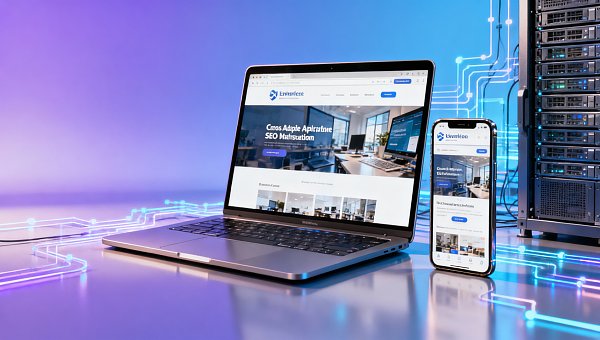
From practical applications, the following types of companies are more suitable for long-term use of responsive website building systems:
1. Marketing-driven companies that need continuous customer acquisition
For example, manufacturers, B2B service providers, foreign trade companies, education and training institutions, medical service providers, software service providers, etc. For these businesses, the official website is not just a “digital business card,” but an important channel for generating inquiries, accumulating traffic, and building trust. A responsive website building system allows users to enjoy a consistent browsing experience across different devices such as mobile phones, tablets, and computers, reducing bounce rates and increasing conversion opportunities.
2. Companies with complex customer sources and diverse access devices
If a company’s target customers include both procurement managers and end consumers, and visits come from both office computers and mobile searches, then maintaining a traditional single PC site or separate mobile site is costly and creates an inconsistent experience. A responsive website can unify content management, reduce update difficulty, and is more suitable for long-term operations.
3. Companies that value SEO and the accumulation of organic traffic
Responsive website building systems are usually more conducive to a unified URL structure, content management, and technical optimization, helping search engines crawl and index the site. For companies hoping to gain long-term traffic through “official website + content + search optimization,” this is extremely important.
4. Companies with cross-border business or multilingual needs
Foreign trade independent websites, multilingual automated website building systems, and localized content presentation often need to accommodate user browsing habits in different countries. A responsive solution makes it easier to unify the technical framework and lays the foundation for subsequently adding language versions, landing pages, and regional content strategies.
5. Companies hoping to reduce maintenance pressure
For project managers, operations personnel, and after-sales support teams, the biggest long-term concern is managing multiple sites, multiple backends, and frequent repetitive revisions. A responsive website building system usually only requires maintaining one set of content and one structure, making long-term maintenance more manageable.
What business decision-makers should care about most is not “whether it can be done,” but “whether it is worth using long term”
When choosing a solution, many companies tend to focus on whether the pages look good and whether the website can be built quickly, but what truly affects long-term results are the following questions:
Whether it can support business growth
A website building system suitable for long-term use must be able to accommodate future content additions, product expansion, section adjustments, form collection, landing page creation, and marketing campaigns. If it can go live today but breaks with changes tomorrow, or if every new page requires technical development, the long-term cost will be very high.
Whether it helps conversions rather than just presentation
The value of a corporate website lies not only in presentation, but also in lead generation. Only when a responsive website building system has well-designed form components, CTA button placement, optimized page loading speed, and a clear information architecture can it truly turn visits into inquiries, trials, orders, or partnership opportunities.
Whether it is convenient for the operations team to update independently
Many corporate websites become “more stagnant the longer they are used” after launch, not because the system is inadequate, but because the update threshold is too high. A system suitable for long-term use should allow marketing staff, operations staff, and product staff to update content with a relatively low barrier, rather than relying on technical personnel for every minor change.
Whether it has room for continuous optimization
Launching a website is only the beginning. Whether SEO optimization can be done later, whether special topic pages can be added, whether different conversion copy can be tested, and whether it can handle paid advertising traffic will determine whether the website can truly become a marketing asset.
The core value of long-term use of a responsive website building system is mainly reflected in these 4 aspects
1. Unified multi-device experience, reducing customer loss
Today’s user behavior has become highly fragmented. A customer may first search on a mobile phone, then review more deeply on a computer, and finally get in touch through WeChat or a phone call. If the website displays poorly on different devices, loads too slowly, or has buttons that are hard to tap, users will quickly leave. The direct value of responsive website building is to allow companies to consistently present a professional image across different touchpoints.
2. Lower long-term maintenance costs
Compared with maintaining separate PC and mobile sites, a responsive system is more efficient in content synchronization, structural modification, and product updates. For companies, this means lower labor input, fewer errors and omissions, and faster update speed.
3. Better suited for SEO optimization and content operations
If a company wants to engage in long-term search engine optimization, a responsive website is usually more beneficial for consolidating authority, centralizing content resources, and optimizing page structure. This is especially true for product pages, case study pages, industry solution pages, and news content pages, all of which can continuously accumulate search traffic.
4. Easier to coordinate with marketing promotion
An official website does not exist in isolation; it needs to work together with advertising campaigns, social media content, lead follow-up, and data analysis. For example, when a company enters a new market, runs a promotional campaign, or launches overseas advertising, it needs landing pages, keyword strategies, and website conversion logic to work in coordination. At this time, tools such as AI+SEM ad smart bidding marketing system can help companies form a closed loop from keyword recommendations, ad copy generation, and automated ad placement to data alerts, making the responsive website not just a “display platform,” but part of the marketing conversion process.
Which companies may appear suitable on the surface, but in reality do not necessarily need to prioritize a responsive website building system
To avoid “following the trend in website building,” it is also necessary to clarify which situations do not require urgent investment:
Short-term campaign projects
If it is only a one-time exhibition promotion page, holiday campaign page, or temporary招商 page, with a very short lifecycle, then a lightweight page tool may be more suitable.
Purely internal-use platforms
If the system is mainly for internal employee operations, with relatively fixed devices and resolutions, the focus may not be responsiveness, but rather functional logic and permission management.
Companies without an ongoing operations plan
If a company’s website is not updated for a long time after launch, and it does not do SEO, advertising, or content distribution, then even the best responsive website building system will be difficult to demonstrate value.
Extremely complex functional platforms
If a company wants to build a large-scale trading platform, a complex customized system, or a deeply integrated business process platform, a standard responsive website building system may not meet the requirements, and custom development or a hybrid architecture is usually needed.
When choosing a solution, companies should focus on judging these 5 questions
1. Whether the backend is easy to use
For users and operators, whether page editing, content publishing, image replacement, and section management are intuitive directly affects execution efficiency in later stages.
2. Whether it supports basic SEO capabilities
Including URL customization, title and description settings, image Alt tags, page loading optimization, structured content layout, etc. Without these capabilities, the website’s future organic traffic will be limited.
3. Whether it supports multilingual and international expansion
For foreign trade companies, cross-border e-commerce businesses, and enterprises expanding overseas operations, this is a key factor in long-term use. Not needing it in the early stage does not mean it will not be needed later.
4. Whether it is easy to integrate with marketing systems
Including form leads, online customer service, data statistics, advertising conversion tracking, etc. Whether it can handle promotional traffic is more important than “how many templates” it has.
5. Whether the service provider has long-term service capabilities
Website building is not a one-time delivery. Subsequent optimization, content adjustment, performance maintenance, and promotional coordination all require a service provider with sufficient experience. Especially under the trend of integrating website + marketing services, teams that only know how to build pages but not how to drive growth are increasingly unable to meet companies’ long-term needs.
For foreign trade and cross-border businesses, why a responsive website building system is more worthy of long-term investment
Foreign trade independent websites and cross-border business websites usually have higher requirements for responsive experience, mainly for three reasons:
First, overseas users account for a high proportion of mobile access.
If the mobile experience is poor, the loss of inquiries will be very obvious.
Second, multilingual and multi-regional content management is more complex.
A unified framework can reduce maintenance and update costs.
Third, websites often need to operate in sync with SEO and ad campaigns.
From Google search to ad landing pages and then to inquiry forms, the entire journey experience must remain stable. At this point, the website building system is only the foundation, and the supporting data analysis and campaign strategy are equally important. For companies with long-term customer acquisition needs, if intelligent ad placement tools can be combined on top of the website’s conversion foundation, the overall growth efficiency is usually higher. For example, in scenarios such as entering new markets, product promotion, and overseas advertising for cross-border e-commerce, AI+SEM ad smart bidding marketing system can help companies validate markets faster and improve campaign controllability through intelligent keyword and regional recommendations, automatic ad creative generation, and real-time monitoring of core metrics.
Conclusion: The companies truly suited for long-term use are those that treat the website as a growth asset
Whether a responsive website building system is suitable for long-term use does not mainly depend on the technical term itself, but on whether the company needs a website system that can be continuously operated, displayed across multiple devices, handle marketing traffic, and support future expansion.
If a company expects its official website to take on long-term tasks such as brand presentation, customer trust building, SEO traffic acquisition, advertising traffic handling, and lead conversion, then a responsive website building system is usually a very worthwhile long-term investment. Especially for foreign trade companies, marketing-driven businesses, multilingual enterprises, and teams that value operational efficiency, it is not only a website building method, but also part of the future digital marketing infrastructure.
Simply put: for short-term display-oriented needs, a lighter solution may be enough; for long-term growth-oriented needs, a responsive website building system should be prioritized and combined with SEO optimization, content operations, and campaign coordination, so that the website can truly become a long-term asset for the company.
Related Articles


Related Products
 EasyCamp SaaS Smart Website Marketing SystemE-Yingbao SaaS Smart Website Marketing System: AI-powered, zero-code website building. Rapidly launch multilingual independent e-commerce sites in just 10 minutes. Global server acceleration and AI-driven SEO optimization empower businesses to efficiently connect with global markets. The seamless integration of technology and user-friendly operation makes building e-commerce sites incredibly simple.
 AI+SEM Intelligent Advertising Marketing SystemAI+SEM drives intelligent ad creation, empowering full-funnel precision advertising marketing. The system automatically generates weekly/monthly reports, AI recommends keywords and target countries, monitors core metrics in real-time with intelligent alerts, and enables one-click high-conversion ad solutions to help quickly acquire customers and improve ROI.
 AI+SEO Dual Engine Optimization ServiceEasyWin AI+SEO Dual Engine Optimization System leverages AI-powered keyword mining, content generation, and comprehensive technical optimization to help foreign trade enterprises acquire high-quality organic traffic, significantly improving search rankings and conversion rates.
 AI+SNS Social Media Marketing SystemYingbao AI+SNS Social Media Marketing System - Precision social capture for the social media era. Supports one-click content synchronization across major platforms like Facebook and LinkedIn. AI intelligently rewrites posts for enhanced relevance. 24/7 AI customer service and user profiling analysis empower businesses to efficiently expand into global markets.
 AI+SEO营销解决方案易营宝AI+SEO营销解决方案,通过AI批量写作、智能生成TDK、精准关键词扩词等功能,全面优化网站SEO效果,提升流量与转化率。助力企业构建高效智能网站新生态。
 AI+SEM Advertising Marketing SolutionsAI+SEM Advertising Marketing Solution leverages AI technology to deeply empower SEM ad campaigns. It automatically generates weekly/monthly reports using AI, presenting account data across multiple dimensions for comprehensive insights into campaign performance and trends. The system precisely recommends keywords and target countries, intelligently generates high-conversion ad copy, and enables one-click activation of efficient campaign plans to help businesses rapidly acquire customers. Simultaneously, it monitors core metrics in real time, intelligently identifies abnormal fluctuations, and issues timely alerts to ensure stable, high-return advertising results.
 Domain Name ServicesEasyWin provides professional domain name services, including intelligent queries, one-stop registration, brand protection, and full lifecycle management, helping businesses build a digital brand image.
 EasyOperate B2C Cross-Border E-Commerce Platform & Independent WebsiteEasyStore B2C Cross-border E-commerce Independent Store is an intelligent website building and cross-border e-commerce integrated solution independently developed by EasyStore Information Technology (Beijing) Co., Ltd. The system is specially designed for small and medium-sized as well as large export enterprises, integrating 'website building, operation, marketing, advertising, and conversion' into one, helping enterprises quickly establish cross-border e-commerce independent stores to achieve brand globalization and global sales growth.
The platform supports multiple languages, multiple currencies, and multi-channel marketing, with built-in AI intelligent translation and SEO optimization systems, suitable for mainstream markets such as Southeast Asia, Europe and America, Latin America, and the Middle East, assisting Chinese manufacturing enterprises in efficiently deploying international e-commerce strategies. SSL证书易营宝提供专业SSL安全证书服务,包括单域名和泛域名证书,确保网站数据传输加密、身份验证和完整性保护,助力企业建立安全可信的在线业务环境。









