









- Cross-Border Marketing Trend Research: Why More and More Companies Are Starting to Deploy AI Search and GEO OptimizationJun 30, 2026View details
- Cross-Border Marketing Trend Research: How Independent Sites, AI Content, and Short-Video Customer Acquisition Are ChangingJun 30, 2026View details
- How Can a Brand Updates Page Be Made More SEO-Friendly? Analysis of Update Frequency, Content Structure, and Internal Linking StrategyJun 28, 2026View details
- What stages does the cross-border services ecosystem include? How do website building, promotion, payment, and compliance work togetherJun 22, 2026View details
- How will email marketing costs change in 2026Jun 22, 2026View details
- The China-US tariff arrangement has reached a preliminary consensus, and the trade association will be establishedJun 15, 2026View details
- Should overseas brand marketing start with ads or contentJun 21, 2026View details
- What determines B2C cross-border e-commerce website development costs? A breakdown of features, interfaces, and deployment methodsJun 17, 2026View details
Can an enterprise-grade website building system solve multilingual field mapping?
Can an enterprise-grade website building system solve multilingual field mapping issues? For companies expanding into overseas markets, this is not only about website development efficiency, but also affects content management, SEO indexing, and global marketing collaboration.
For foreign trade companies, manufacturing factories, cross-border e-commerce brands, and businesses that need long-term overseas promotion, a multilingual website is no longer as simple as “translating Chinese into English.” The real challenge is: for the same product, the same category, and the same marketing page, how can companies achieve consistent fields, accurate content, clear URLs, synchronized tags, and maintainable operations across 8, 12, or even 20 language environments?
If the underlying system does not handle multilingual field mapping properly, the common results usually fall into 3 categories: duplicate backend data entry, misaligned frontend display, and confused search engine recognition. For B2B lead-generation websites, this directly affects indexing speed, inquiry conversion, and cross-team collaboration efficiency. Therefore, when companies choose an integrated website + marketing service solution, whether the website building system has multilingual field mapping capabilities has become one of the core checkpoints in procurement decisions.
What Problems Does Multilingual Field Mapping Actually Solve?
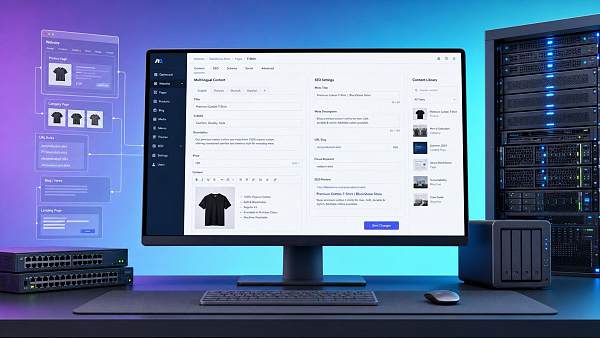
From a technical perspective, multilingual field mapping is not simply a translation function. Instead, it structurally binds multiple fields within a content object according to language versions. For example, product names, product descriptions, SEO titles, Meta descriptions, specification tables, image Alt text, button copy, URL aliases, and other fields all need to establish one-to-one corresponding relationships.
A mature enterprise-grade website building system usually needs to support at least 5 types of field mapping: basic text fields, rich text fields, category fields, media fields, and SEO fields. Only when these fields can be managed synchronously can companies efficiently launch a multilingual official website within 7 to 30 days, instead of falling into long-term manual maintenance.
Why Ordinary Website Building Tools Often Fail to Handle This Well
Many small and medium-sized website building tools support “language switching,” but in essence they only duplicate pages. Once the number of pages exceeds 200 and the number of language versions exceeds 6, backend content will rapidly expand, leading to problems such as page islands, missing fields, omitted translations, and difficult version tracking. It also becomes difficult for marketing teams, operations teams, and technical teams to unify standards.
Especially in the B2B industry, product information often includes models, specifications, downloadable documents, application scenarios, and inquiry forms. If the field mapping logic is incomplete, situations may occur where Chinese parameters have been updated but the English page has not, or the German page still retains an old URL, directly affecting the trust of overseas customers.
The 4 Most Common Pain Points for Companies
- The same content needs to be entered repeatedly 2 to 10 times, resulting in high maintenance costs.
- SEO titles, descriptions, and H tags cannot be independently optimized by language.
- Product categories and filter fields are mapped inconsistently, affecting user search and navigation.
- Advertising landing pages, official websites, and online store content are fragmented, resulting in poor marketing collaboration.
This is also why “Can an enterprise-grade website building system solve multilingual field mapping issues?” has become a frequently searched question. The answer does not depend absolutely on “whether multilingual support is available,” but on whether the system has true field-level management capabilities that are operational, scalable, and suitable for SEO and marketing campaigns.
How Enterprise-Grade Website Building Systems Usually Implement Field Mapping
Systems that are truly suitable for global business expansion usually do not implement multilingual capabilities at the page level, but complete mapping at the data model level. In other words, companies first define the content structure, and then configure field rules, display logic, and indexing attributes for different languages. This not only improves maintenance efficiency, but also provides a stable foundation for SEO and advertising campaigns.
Key Modules of Field Mapping Capabilities
The following table can help companies quickly determine whether a system merely “supports multilingual display” or already has enterprise-grade multilingual field mapping capabilities.
From a procurement perspective, the key is not how many languages the system claims to support, but whether it can unify content, SEO, and marketing data into one underlying logic. For companies that need long-term Google Ads campaigns, organic search optimization, and social media traffic acquisition, this value is far greater than the number of frontend templates.
3 Capabilities to Focus on During Implementation
1. Field-Level Independent Management
The system should at least support independent configuration for more than 10 core fields, such as product titles, detailed descriptions, image captions, CTA buttons, and form prompts. This allows localized optimization for different markets without duplicating the entire site or affecting the primary data structure.
2. URL and Indexing Rules Can Be Configured by Language
A website targeting North America, Europe, Japan and South Korea, and the Middle East must handle at least 4 types of URL strategies: subdirectories, subdomains, independent domains, and landing page paths. If URLs are disconnected from field mapping, it can easily cause duplicate pages, incorrect indexing, and difficulties in hreflang configuration.
3. Traceable Update Workflows
It is recommended that the system include version records, pending translation status, missing field reminders, and publishing review mechanisms. For companies with content teams of 3 to 15 people, this workflow capability can significantly reduce human errors, especially for businesses with many product SKUs or content updates more than 2 times per week.
The Relationship Between Multilingual Field Mapping, SEO, and Advertising Conversion
Many companies ask “Can an enterprise-grade website building system solve multilingual field mapping issues?” not simply because they want an easier-to-use backend, but because they want the frontend to be indexed, clicked, and converted. When field mapping is done well, search engines can identify page topics more accurately, and advertising pages can better match the expression habits of users in different markets.
Direct Impact on Search Indexing
If a Spanish page uses an English Title, or a French page continues to use Chinese image Alt text, search engines will lower their assessment of the page’s semantic consistency. In the long run, the number of ranking keywords covered by the page will decrease, and the indexing depth will also become shallower. Conversely, a website with accurate field mapping is more likely to form a stable language directory structure and long-tail keyword entry points.
For a typical B2B independent website, it is recommended that each core product page independently maintain at least 6 SEO fields: page title, Meta description, URL alias, H1 title, image Alt, and structured summary. For cross-border online stores, language mapping should also be added for specification fields and review fields.
Impact on Advertising Campaigns and Conversion
Google Ads, Facebook Ads, and short-video traffic landing pages usually require consistent language for copy, headlines, forms, and conversion buttons. If users click an ad and enter a page with chaotic field content, the bounce rate usually rises significantly within the first 30 seconds, and the conversion funnel may also be interrupted.
In an integrated website + marketing service scenario, the website building system should ideally work together with SEO, advertising, and content operations workflows. This allows companies to support synchronized publishing across multiple markets with one backend when launching new products, campaign landing pages, or regional promotions, rather than rebuilding each channel separately.
Configuration Priorities in Different Business Scenarios
Different types of companies have different requirements for multilingual field mapping. The following is a comparison of common configuration priorities.
It can be seen that field priorities differ across scenarios. If a company is involved in official websites, online stores, SEO, and advertising campaigns at the same time, giving priority to an enterprise-grade website building system that supports a unified data structure will make subsequent expansion smoother.
How to Choose a More Suitable Integrated Website Building and Marketing Solution for Global Expansion
To determine whether an enterprise-grade website building system can truly solve multilingual field mapping issues, companies should not only look at demo pages, but also examine implementation logic, operational capabilities, and compatibility with future promotion. Especially for companies planning to expand overseas customer acquisition within 6 to 12 months, system selection will directly affect later SEO and advertising costs.
5 Dimensions Recommended for Key Evaluation
- Whether it supports multilingual content models rather than simply duplicating pages.
- Whether SEO fields, URLs, and indexing rules can be independently configured.
- Whether it is compatible with B2B inquiries, B2C online stores, and advertising landing page scenarios.
- Whether it supports collaboration with subsequent SEO optimization, advertising campaigns, and social media traffic acquisition.
- Whether it has ongoing operation and maintenance, data adjustment, and localization service capabilities.
Why Integrated Services Are More Suitable for Long-Term Growth
Buying a website building tool separately often only solves the problem of “getting the website online”; what companies truly need for global expansion is a website that “can be promoted, indexed, and converted.” This is exactly the value of the integrated website + marketing service model. If the website building system can work together with SEO optimization, Google Ads, Facebook Ads, overseas social media operations, and AI search visibility enhancement, companies do not need to repeatedly coordinate among multiple vendors.
Taking an AI-driven enterprise-grade SaaS platform such as 易营宝 as an example, its value lies not only in helping companies build multilingual websites, but also in integrating website building, promotion, and content growth into the same chain through a cloud-based intelligent website building system, a cross-border online store system, an AI advertising marketing system, and an AI+SEO/GEO optimization system. For companies targeting North America, Europe, Southeast Asia, Japan and South Korea, the Middle East, and Latin America, this model is more conducive to unified management and rapid scaling.
Practical Recommendations Before Implementation
Prioritize Languages First
Do not try to cover all languages from the beginning. It is recommended to first launch 2 to 4 core market languages, prioritize field mapping for product pages, category pages, inquiry pages, and blog pages, and then gradually expand to more than 8 languages.
Unify Field Standards Before Bulk Publishing
Companies can first organize 20 to 30 high-frequency fields, including titles, specifications, selling points, delivery cycles, button copy, downloadable materials, and more. Once the standards are determined, subsequent content import, translation, and version updates will be smoother.
Plan Website Building and Promotion Together
If Google SEO, advertising campaigns, and social media traffic acquisition are required after launch, then SEO fields, conversion components, tracking positions, and multilingual landing page templates should be reserved during the website building stage. This can avoid secondary development and usually save 2 to 6 weeks of adjustment time.
For companies expanding globally, an enterprise-grade website building system can indeed solve multilingual field mapping issues, but only if the system has field-level management, independent SEO configuration, marketing collaboration, and workflow-based operation and maintenance capabilities. What is truly valuable is not “how many languages can be switched,” but whether content consistency, search friendliness, and smooth conversion can be maintained in a multilingual environment.
If you are planning a multilingual official website, a B2B foreign trade marketing website, a cross-border online store, or an overseas advertising landing page, and hope to integrate website building, SEO, advertising, and AI search visibility enhancement into one solution, it is recommended to evaluate the system’s field mapping capabilities and long-term operational adaptability as early as possible. To learn more about an implementation solution better suited to your current business stage, please contact us now for a customized plan and product details.
Related Articles
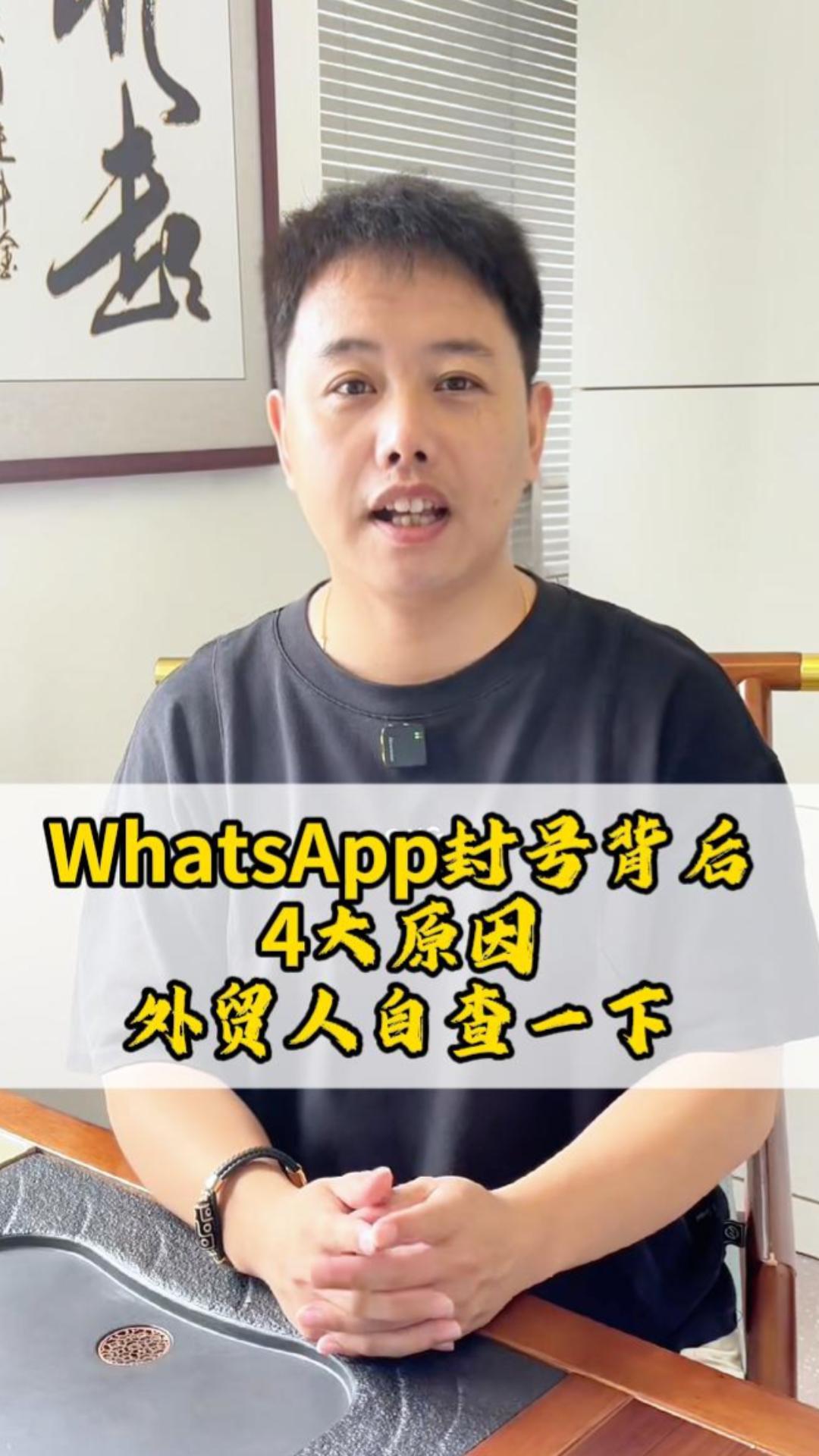
 4 Major Reasons Behind WhatsApp Account Bans, A Quick Self-Check for Foreign Trade Professionals
 Cross-Border Marketing Trend Research: Why More and More Companies Are Starting to Deploy AI Search and GEO Optimization
 Cross-Border Marketing Trend Research: How Independent Sites, AI Content, and Short-Video Customer Acquisition Are Changing


Related Products
 EasyCamp SaaS Smart Website Marketing SystemE-Yingbao SaaS Smart Website Marketing System: AI-powered, zero-code website building. Rapidly launch multilingual independent e-commerce sites in just 10 minutes. Global server acceleration and AI-driven SEO optimization empower businesses to efficiently connect with global markets. The seamless integration of technology and user-friendly operation makes building e-commerce sites incredibly simple.
 AI+SEM Intelligent Advertising Marketing SystemAI+SEM drives intelligent ad creation, empowering full-funnel precision advertising marketing. The system automatically generates weekly/monthly reports, AI recommends keywords and target countries, monitors core metrics in real-time with intelligent alerts, and enables one-click high-conversion ad solutions to help quickly acquire customers and improve ROI.
 AI+SEO Dual Engine Optimization ServiceEasyWin AI+SEO Dual Engine Optimization System leverages AI-powered keyword mining, content generation, and comprehensive technical optimization to help foreign trade enterprises acquire high-quality organic traffic, significantly improving search rankings and conversion rates.
 AI+SNS Social Media Marketing SystemYingbao AI+SNS Social Media Marketing System - Precision social capture for the social media era. Supports one-click content synchronization across major platforms like Facebook and LinkedIn. AI intelligently rewrites posts for enhanced relevance. 24/7 AI customer service and user profiling analysis empower businesses to efficiently expand into global markets.
 AI+SEO营销解决方案易营宝AI+SEO营销解决方案,通过AI批量写作、智能生成TDK、精准关键词扩词等功能,全面优化网站SEO效果,提升流量与转化率。助力企业构建高效智能网站新生态。
 AI+SEM Advertising Marketing SolutionsAI+SEM Advertising Marketing Solution leverages AI technology to deeply empower SEM ad campaigns. It automatically generates weekly/monthly reports using AI, presenting account data across multiple dimensions for comprehensive insights into campaign performance and trends. The system precisely recommends keywords and target countries, intelligently generates high-conversion ad copy, and enables one-click activation of efficient campaign plans to help businesses rapidly acquire customers. Simultaneously, it monitors core metrics in real time, intelligently identifies abnormal fluctuations, and issues timely alerts to ensure stable, high-return advertising results.
 Domain Name ServicesEasyWin provides professional domain name services, including intelligent queries, one-stop registration, brand protection, and full lifecycle management, helping businesses build a digital brand image.
 EasyOperate B2C Cross-Border E-Commerce Platform & Independent WebsiteEasyStore B2C Cross-border E-commerce Independent Store is an intelligent website building and cross-border e-commerce integrated solution independently developed by EasyStore Information Technology (Beijing) Co., Ltd. The system is specially designed for small and medium-sized as well as large export enterprises, integrating 'website building, operation, marketing, advertising, and conversion' into one, helping enterprises quickly establish cross-border e-commerce independent stores to achieve brand globalization and global sales growth.
The platform supports multiple languages, multiple currencies, and multi-channel marketing, with built-in AI intelligent translation and SEO optimization systems, suitable for mainstream markets such as Southeast Asia, Europe and America, Latin America, and the Middle East, assisting Chinese manufacturing enterprises in efficiently deploying international e-commerce strategies. SSL证书易营宝提供专业SSL安全证书服务,包括单域名和泛域名证书,确保网站数据传输加密、身份验证和完整性保护,助力企业建立安全可信的在线业务环境。









