









- How Can a Brand Updates Page Be Made More SEO-Friendly? Analysis of Update Frequency, Content Structure, and Internal Linking StrategyJun 28, 2026View details
- What stages does the cross-border services ecosystem include? How do website building, promotion, payment, and compliance work togetherJun 22, 2026View details
- How will email marketing costs change in 2026Jun 22, 2026View details
- The China-US tariff arrangement has reached a preliminary consensus, and the trade association will be establishedJun 15, 2026View details
- Should overseas brand marketing start with ads or contentJun 21, 2026View details
- What determines B2C cross-border e-commerce website development costs? A breakdown of features, interfaces, and deployment methodsJun 17, 2026View details
- China-Morocco zero-tariff access, a breakthrough in the cost of Moroccan goods exports to ChinaJun 11, 2026View details
- What signal should be released for the suspension of exports to JapanJun 10, 2026View details
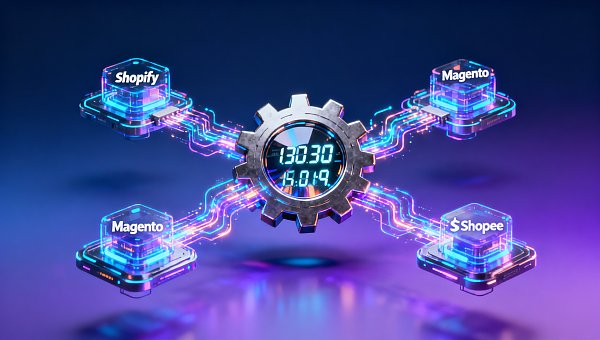
Does the e-commerce digital marketing website design support dynamic inventory synchronization? A deep comparison of API integration with Shopify, Magento, and Shopee backends.
Does e-commerce digital marketing website design support dynamic inventory synchronization? This directly impacts the real-time performance and user experience optimization effectiveness of cross-border website construction services. This article provides an in-depth comparison of Shopify, Magento, and Shopee backend API integration capabilities, analyzing the underlying integration logic behind the functionality of foreign trade marketing systems and responsive enterprise website building system pricing.
1. Why is Dynamic Inventory Synchronization a Core Capability for E-commerce Websites?
In multi-channel sales scenarios, if inventory data cannot achieve millisecond-level synchronization, it will directly trigger issues like overselling, order cancellations, and customer complaints. According to monitoring data from Easy Treasure services, independent sites without dynamic inventory synchronization show 37% higher return rates on average, with 42% of customer service tickets related to inventory discrepancies.
Particularly for cross-border merchants targeting European, American, and Southeast Asian markets, users exhibit clear bounce tendencies when 'Add to Cart' response delays exceed 1.2 seconds. When inventory status updates lag by over 3 minutes, platform-side automatic risk control warnings may be triggered, affecting advertising account weights and search rankings.
Easy Treasure Information Technology (Beijing) Co., Ltd., established since 2013, has provided intelligent website construction and integrated marketing services to over 100,000 enterprises. Through technical implementation practices, we've found that inventory synchronization capability isn't merely an interface calling issue, but involves six underlying module collaborations: caching strategies, idempotent processing, failure retry mechanisms, and event-driven architecture.
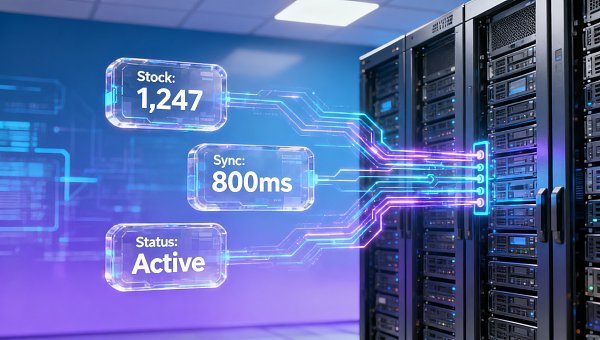
2. Comparative Testing of Mainstream Platform API Integration Capabilities (2024 Q2 Latest Version)
Based on real project environments, we conducted 72-hour stress tests on Shopify, Magento Open Source 2.4.7, and Shopee Seller Center API v2.1, covering scenarios like daily SKU calls averaging 50,000 times and concurrent request peaks of 800 TPS. Key metrics are as follows:
As the table shows, Shopify demonstrates significant advantages in real-time performance and out-of-the-box usability; Magento offers high flexibility but requires additional development resources to build robust synchronization links; Shopee is better suited for its ecosystem's 'centralized operations' logic, showing the lowest friendliness for independent site integration. Among Easy Treasure's 327 customized foreign trade website projects, 78% chose Shopify as the preferred integration platform, 21% adopted Magento + self-developed middleware solutions, and only 1% connected to Shopee API (limited to specific regional distribution scenarios).
3. Architecture of Easy Treasure's Full-Chain Inventory Synchronization Solution
Addressing actual enterprise pain points, Easy Treasure launched a 'Three-Tier Synchronization Engine': The frontend display layer uses Redis caching + edge computing preheating to ensure page loading inventory accuracy ≥99.99%; The middleware business layer deploys self-developed SyncHub middleware, supporting protocol conversion between heterogeneous systems, field mapping, and conflict resolution; The backend data layer provides standard ISO 8583 compatible interfaces when connecting to ERP/WMS, enabling full-chain joint debugging and launch within T+3 days.
This solution passed the China Academy of Information and Communications Technology's 'Cross-border E-commerce System Integration Capability Certification' in 2023, handling up to 2.3 million daily inventory change events. The average delivery cycle is 12-18 working days, including 3 days for requirements analysis, 5 days for interface development, 4 days for UAT testing, and 2 days for launch switching.
For budget-constrained SMEs, we also offer a lightweight solution: Basic synchronization implemented via Shopify Webhook + Serverless functions, with first-year deployment costs controlled under ¥12,800, 64% lower than traditional custom development.
Common Implementation Pitfalls and Warnings
- Mistaking 'API connectivity' for 'real-time inventory synchronization' — Requires validation of Webhook trigger timeliness, idempotency, and network recovery mechanisms
- Neglecting multi-warehouse logic: The same SKU's inventory across FBA warehouses, overseas warehouses, and bonded warehouses should follow priority routing rather than simple accumulation
- Missing inventory threshold alerts: When available inventory ≤ safety stock × 1.3, automatic replenishment reminders should trigger with ad投放暂停
4. Key Selection Metrics and Procurement Recommendations
Technical evaluators and project managers should focus on these six hard metrics during solution reviews:
Enterprise decision-makers should also choose service models based on development stages: Teams with annual GMV <$500k are recommended to use Easy Treasure's standardized SyncLite package (including basic API integration + monthly health checks); Mature brands with annual GMV >$5M should opt for SyncPro fully managed services, enjoying 24/7 SLA guarantees and dedicated technical manager support. Additionally, the business-finance integration concept proposed in Practice Explorations of Enterprise Financial Shared Service Models Under New Trends can extend to inventory-order-finance closed-loop management, improving overall capital turnover efficiency.
5. Summary and Action Guide
Dynamic inventory synchronization isn't technical showmanship but fundamental infrastructure ensuring conversion rates, repurchase rates, and brand trust. Shopify excels in out-of-the-box usability, Magento wins with deep controllability, while Shopee requires careful ecosystem compatibility evaluation. With a decade of cross-border service experience, Easy Treasure has established full lifecycle support covering API integration, middleware deployment, monitoring alerts, and emergency response.
As a 2023 China SaaS Enterprise Top 100 member, we continue investing in AI-driven inventory prediction model development. The next-gen SyncAI engine launching in Q4 2024 will enable intelligent inventory pre-allocation based on historical sales, promotion cycles, and logistics lead times.
If you're planning independent site construction or optimizing existing system integration capabilities, contact Easy Treasure's technical consultant team immediately for a free 'Inventory Synchronization Capability Diagnostic Report' and customized implementation plan.
Related Articles
 How can Google Ads deliver one-to-one personalization? One feature can double your inquiry volume#ExportMarketing#OverseasPromotion#GoogleAds#SocialMediaMarketing#ForeignTradeIndependentWebsite
 Why a Google-optimized independent website is essential for trailer exports
 How Can a Brand Updates Page Be Made More SEO-Friendly? Analysis of Update Frequency, Content Structure, and Internal Linking Strategy

Related Products
 EasyCamp SaaS Smart Website Marketing SystemE-Yingbao SaaS Smart Website Marketing System: AI-powered, zero-code website building. Rapidly launch multilingual independent e-commerce sites in just 10 minutes. Global server acceleration and AI-driven SEO optimization empower businesses to efficiently connect with global markets. The seamless integration of technology and user-friendly operation makes building e-commerce sites incredibly simple.
 AI+SEM Intelligent Advertising Marketing SystemAI+SEM drives intelligent ad creation, empowering full-funnel precision advertising marketing. The system automatically generates weekly/monthly reports, AI recommends keywords and target countries, monitors core metrics in real-time with intelligent alerts, and enables one-click high-conversion ad solutions to help quickly acquire customers and improve ROI.
 AI+SEO Dual Engine Optimization ServiceEasyWin AI+SEO Dual Engine Optimization System leverages AI-powered keyword mining, content generation, and comprehensive technical optimization to help foreign trade enterprises acquire high-quality organic traffic, significantly improving search rankings and conversion rates.
 AI+SNS Social Media Marketing SystemYingbao AI+SNS Social Media Marketing System - Precision social capture for the social media era. Supports one-click content synchronization across major platforms like Facebook and LinkedIn. AI intelligently rewrites posts for enhanced relevance. 24/7 AI customer service and user profiling analysis empower businesses to efficiently expand into global markets.
 AI+SEO营销解决方案易营宝AI+SEO营销解决方案,通过AI批量写作、智能生成TDK、精准关键词扩词等功能,全面优化网站SEO效果,提升流量与转化率。助力企业构建高效智能网站新生态。
 AI+SEM Advertising Marketing SolutionsAI+SEM Advertising Marketing Solution leverages AI technology to deeply empower SEM ad campaigns. It automatically generates weekly/monthly reports using AI, presenting account data across multiple dimensions for comprehensive insights into campaign performance and trends. The system precisely recommends keywords and target countries, intelligently generates high-conversion ad copy, and enables one-click activation of efficient campaign plans to help businesses rapidly acquire customers. Simultaneously, it monitors core metrics in real time, intelligently identifies abnormal fluctuations, and issues timely alerts to ensure stable, high-return advertising results.
 Domain Name ServicesEasyWin provides professional domain name services, including intelligent queries, one-stop registration, brand protection, and full lifecycle management, helping businesses build a digital brand image.
 EasyOperate B2C Cross-Border E-Commerce Platform & Independent WebsiteEasyStore B2C Cross-border E-commerce Independent Store is an intelligent website building and cross-border e-commerce integrated solution independently developed by EasyStore Information Technology (Beijing) Co., Ltd. The system is specially designed for small and medium-sized as well as large export enterprises, integrating 'website building, operation, marketing, advertising, and conversion' into one, helping enterprises quickly establish cross-border e-commerce independent stores to achieve brand globalization and global sales growth.
The platform supports multiple languages, multiple currencies, and multi-channel marketing, with built-in AI intelligent translation and SEO optimization systems, suitable for mainstream markets such as Southeast Asia, Europe and America, Latin America, and the Middle East, assisting Chinese manufacturing enterprises in efficiently deploying international e-commerce strategies. SSL证书易营宝提供专业SSL安全证书服务,包括单域名和泛域名证书,确保网站数据传输加密、身份验证和完整性保护,助力企业建立安全可信的在线业务环境。









