









- What Does a Global Traffic Ecosystem Service Provider Do? What Are the Differences from a Single Advertising AgencyJul 16, 2026View details
- What should you focus on in the latest enterprise SaaS report? From renewal rates and delivery costs to overseas growth opportunitiesJul 12, 2026View details
- What signals are worth paying attention to in a cross-border marketing trend report? B2B companies should look at these 6 signalsJul 11, 2026View details
- How to Read a Cross-Border Marketing Trends Report? Five Key Dimensions for Evaluating Channel OpportunitiesJul 11, 2026View details
- Which channel has the highest ROI in the global traffic ecosystem? Comparative analysis of search, social media, and advertisingJul 10, 2026View details
- What multilingual website services are available in Sanya? Which model is more suitable for local businesses going global?Jul 08, 2026View details
- How to view the complete list of China SaaS companies in the top 100? Practical methods for screening website-building and marketing service providersJul 08, 2026View details
- How to view pricing in the global traffic ecosystem? Cost comparison of search, social media, and content channel advertisingJul 06, 2026View details
How to Choose a Template for an Arabic Independent Website
How should you choose a template for an Arabic standalone website? The key is not just whether the page has a “Middle Eastern style,” but more importantly whether the template truly supports Arabic reading habits, mobile user experience, SEO crawling, and subsequent marketing conversion. For most companies, the core criterion for choosing a template is not “whether it looks good,” but “whether it can go live at low cost, acquire customers steadily, and be easy to iterate.” If your business targets the Middle East market, then a suitable Arabic website template will often directly affect bounce rate, inquiry volume, and later promotion costs. This article will start from real business scenarios and help you sort out the key points that deserve priority consideration when choosing Arabic website design, multilingual website development, and Middle East website-building systems.
Conclusion first: for Arabic standalone website templates, prioritize “strong adaptability” rather than “complex visual style”
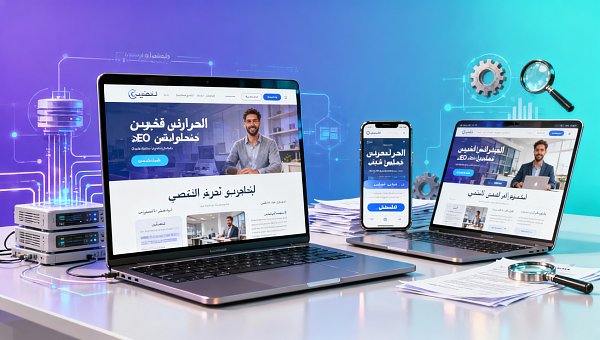
When building an Arabic standalone website, many companies easily fall into a misunderstanding: they first look at whether the template is “gorgeous” and whether it includes strong regional decorative elements, while overlooking the underlying capabilities that truly affect usability.
A template suitable for an Arabic standalone website should at least meet the following basic requirements:
- Support right-to-left layout (RTL), and not just simple mirrored flipping
- Be compatible with Arabic font display, ensuring headings, body text, and buttons are all clear and easy to read
- Load quickly on mobile devices, matching the high proportion of mobile access scenarios among Middle East users
- Support multilingual switching, while ensuring pages in different languages can be correctly identified by search engines
- Have a basic SEO structure, such as customizable titles, descriptions, URLs, and H tags
- Support integration of conversion components such as forms, WhatsApp, phone, and maps
If a template only looks “like an Arabic website” visually, but fails in structure, performance, and SEO, you will later find promotion difficult, maintenance tiring, and inquiry conversion low, and in the end you may still have to rebuild it.
What core capabilities should you look for in an Arabic website template?
Truly experienced technical evaluators and business decision-makers usually do not just look at homepage mockups, but instead focus on evaluating the actual usability of the template. The following dimensions are the most worth checking.
1. Whether it natively supports RTL layout
Arabic reading habits are right to left. This does not end with simply translating the text into Arabic. The template must achieve full adaptation in details such as navigation, buttons, image-text modules, form input areas, carousel direction, and icon positioning. Otherwise, the page will have problems such as awkward reading, visual confusion, and inconvenient operation.
When testing a template, companies can focus on checking the following pages:
- Whether the homepage navigation is right-aligned and whether the hierarchy is clear
- Whether filtering and sorting on product listing pages match right-to-left reading logic
- Whether the placement of parameters, images, and inquiry buttons on detail pages feels natural
- Whether the form layout on the contact page is easy to use
2. Whether it is suitable for SEO optimization
Building an Arabic standalone website is not only about a “showcase site,” but also about a customer acquisition tool. If the template is not SEO-friendly, it will be difficult to gain sustained organic traffic later, even if you invest in content and promotion budgets.
For an SEO-friendly template, you should pay attention to:
- Clean page code, avoiding excessive reliance on JS rendering
- Support for independently setting the Title and Meta Description of each page
- Support for standardized URLs, avoiding garbled text and duplicate pages
- Support for image ALT attribute settings
- Support for structured heading hierarchy such as H1-H3
- Ability to configure hreflang, suitable for multilingual website development
If a company plans to do Google SEO or Arabic keyword targeting later, these capabilities are not bonus points, but essentials.
3. Whether it facilitates marketing conversion
Many customers in the Middle East market are more accustomed to consulting through instant communication tools, so a template must not only “display” well, but also “close deals.” It is recommended to prioritize templates that support the following conversion capabilities:
- Floating WhatsApp button
- One-click calling
- Multi-entry inquiry forms
- Clear CTA button design
- Embeddable social media account entry points
If your business is B2B export, channel distribution, or local service-oriented business, these modules are often more important than complex animations.
Different business scenarios require different types of templates
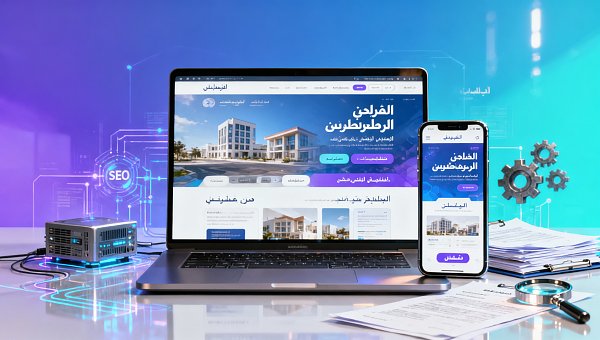
There is no single “best answer for all industries” when it comes to choosing an Arabic standalone website template. A more realistic approach is to choose according to your own business model.
Corporate brand website type
If your goal is to establish an overseas brand image, showcase company strength, and capture organic search traffic, then it is recommended to choose a template that is simple, reliable, and strong in content carrying capacity. Focus on whether:
- The homepage can fully present the brand, services, cases, certificates, and contact information
- It supports news and SEO article modules
- It is suitable for long-term multilingual expansion
B2B inquiry-driven customer acquisition type
If the core goal of the website is to obtain inquiries, then the template should place more emphasis on the conversion path. For example:
- Whether product categories are clear
- Whether detail pages can highlight parameters, application scenarios, and advantages
- Whether inquiry buttons are prominent enough
- Whether it supports bulk product upload and management
In this scenario, it is not recommended to choose templates with overly complex visual layers, otherwise they will distract users’ attention.
Retail e-commerce type
If you are building a Middle East e-commerce standalone site for end consumers, the template must focus on whether the shopping process is smooth, including product filtering, cart, payment, logistics instructions, promotional display, and more. In particular, confirm whether it supports common local payment methods and whether the mobile ordering experience is smooth.
Dealer/agent recruitment type
If your target readers also include dealers, agents, or distribution partners, then the template should preferably reserve sections for recruitment policies, cooperation advantages, application entry points, regional protection explanations, and similar content, so that potential partners can quickly understand the cooperation value.
How to use templates in Middle East website-building systems: platform selection is more important than the template itself
On the surface, many companies ask “how to choose a template,” but what they really should ask is “which website-building system is more suitable for an Arabic standalone website.” This is because the template is only the external presentation, while the platform’s capabilities determine long-term scalability.
When choosing a Middle East website-building system, it is recommended to evaluate the following points at the same time:
- Whether the backend supports Arabic, multilingual settings, and RTL configuration
- Whether it is convenient for non-technical staff to maintain daily
- Whether it supports SEO settings, page editing, and content updates
- Whether it supports global access acceleration for servers
- Whether it is convenient to integrate analytics tools, ad tracking, and form management
- Whether it can continuously expand functions according to business growth
For most companies, the ideal choice is not the platform with the most complex functions, but the one that balances “marketing, technology, and maintenance.” Especially for companies hoping to coordinate website building, SEO optimization, content operations, and advertising delivery, it is even more necessary to choose an integrated service solution with strong capabilities.
When researching solutions, some companies also refer to information research materials from other industries at the same time, such as Research on tax planning issues for power grid enterprises. The value of this kind of professional content is not that it is directly related to website building, but that it helps teams establish a more systematic evaluation mindset: template and platform selection must ultimately be practical, manageable, and continuously optimizable.
When building a multilingual website, what are the most common pitfalls with Arabic templates?
If your website includes not only Arabic, but also English, French, or Chinese, then template selection must consider multilingual coordination issues. The following pitfalls are very common:
1. Translation function only, without independent SEO capability
Some templates support language switching, but pages in different languages do not have independent URLs, Titles, and Meta settings. This makes it difficult for search engines to identify page value, affecting indexing and ranking.
2. Incomplete switching between RTL and LTR
Arabic pages are RTL, while English pages are usually LTR. If the template cannot automatically switch layout direction according to the language, the frontend experience will feel very fragmented.
3. Lack of a unified strategy for fonts and typography
A multilingual website is not about stacking several languages together, but about ensuring overall brand style consistency. The template needs to support fine adjustments for fonts, font sizes, and font weights in different languages, avoiding Arabic pages that look crowded or hard to read.
4. High long-term maintenance costs
Some templates look impressive in the early stage, but every time you modify sections, update copy, or add languages, they rely on developers, causing long-term costs to rise rapidly. For after-sales maintenance personnel and operations teams, such templates are not friendly.
What is the most practical way for companies to judge a template?
If you do not want to choose a template based only on intuition, you can directly use the following simplified judgment method:
- First clarify the website goal: brand display, SEO customer acquisition, inquiry conversion, or online sales
- Then determine the language strategy: Arabic only, or multilingual Arabic + English
- Test RTL adaptation: whether navigation, forms, product pages, and mobile experience feel natural
- Check the SEO basics: whether titles, descriptions, URLs, image ALT, and structural tags can be customized
- Verify conversion components: whether forms, chat tools, and phone buttons are easy to deploy
- Evaluate maintenance cost: whether content updates must rely on technical personnel
- Check loading speed: especially on mobile devices and for overseas access speed
If a template can consistently meet most requirements in these 7 aspects, it is usually more worth choosing than a template that “just looks good.”
How to understand the business value behind template selection
What business decision-makers care about most is often not the page details themselves, but whether they will affect business results. If the Arabic standalone website template is chosen correctly, the actual value it brings is mainly reflected in several aspects:
- Reducing trial-and-error costs in the initial website-building stage
- Improving browsing experience and trust among Middle East users
- Laying a solid foundation for Google SEO and content marketing
- Increasing inquiry conversion rate and sales lead quality
- Reducing later redesign and maintenance investment
Conversely, if a template only pursues visual effects while ignoring access speed, language adaptation, and marketing paths, then whether you run ads or build organic traffic later, conversion costs will be higher.
Summary: for Arabic standalone website templates, choose one that “supports growth,” not one that “just looks good”
How should you choose a template for an Arabic standalone website? The core is actually not complicated: first see whether it suits Arabic users, then see whether it supports SEO and conversion, and finally see whether the platform is convenient for long-term maintenance and expansion. For companies, a truly suitable template should simultaneously serve brand display, customer acquisition conversion, and subsequent operations, rather than only satisfying the visual needs of the initial launch stage.
If you are evaluating Arabic website design solutions or Middle East website-building systems, it is recommended to focus on RTL adaptation, mobile experience, multilingual SEO, inquiry paths, and maintenance costs. By choosing the right template, the website will no longer be just an “online business card,” but an overseas marketing asset that can continuously drive business growth.
Related Articles
Related Products
 EasyCamp SaaS Smart Website Marketing SystemE-Yingbao SaaS Smart Website Marketing System: AI-powered, zero-code website building. Rapidly launch multilingual independent e-commerce sites in just 10 minutes. Global server acceleration and AI-driven SEO optimization empower businesses to efficiently connect with global markets. The seamless integration of technology and user-friendly operation makes building e-commerce sites incredibly simple.
 AI+SEM Intelligent Advertising Marketing SystemAI+SEM drives intelligent ad creation, empowering full-funnel precision advertising marketing. The system automatically generates weekly/monthly reports, AI recommends keywords and target countries, monitors core metrics in real-time with intelligent alerts, and enables one-click high-conversion ad solutions to help quickly acquire customers and improve ROI.
 AI+SEO Dual Engine Optimization ServiceEasyWin AI+SEO Dual Engine Optimization System leverages AI-powered keyword mining, content generation, and comprehensive technical optimization to help foreign trade enterprises acquire high-quality organic traffic, significantly improving search rankings and conversion rates.
 AI+SNS Social Media Marketing SystemYingbao AI+SNS Social Media Marketing System - Precision social capture for the social media era. Supports one-click content synchronization across major platforms like Facebook and LinkedIn. AI intelligently rewrites posts for enhanced relevance. 24/7 AI customer service and user profiling analysis empower businesses to efficiently expand into global markets.
 AI+SEO营销解决方案易营宝AI+SEO营销解决方案,通过AI批量写作、智能生成TDK、精准关键词扩词等功能,全面优化网站SEO效果,提升流量与转化率。助力企业构建高效智能网站新生态。
 AI+SEM Advertising Marketing SolutionsAI+SEM Advertising Marketing Solution leverages AI technology to deeply empower SEM ad campaigns. It automatically generates weekly/monthly reports using AI, presenting account data across multiple dimensions for comprehensive insights into campaign performance and trends. The system precisely recommends keywords and target countries, intelligently generates high-conversion ad copy, and enables one-click activation of efficient campaign plans to help businesses rapidly acquire customers. Simultaneously, it monitors core metrics in real time, intelligently identifies abnormal fluctuations, and issues timely alerts to ensure stable, high-return advertising results.
 Domain Name ServicesEasyWin provides professional domain name services, including intelligent queries, one-stop registration, brand protection, and full lifecycle management, helping businesses build a digital brand image.
 EasyOperate B2C Cross-Border E-Commerce Platform & Independent WebsiteEasyStore B2C Cross-border E-commerce Independent Store is an intelligent website building and cross-border e-commerce integrated solution independently developed by EasyStore Information Technology (Beijing) Co., Ltd. The system is specially designed for small and medium-sized as well as large export enterprises, integrating 'website building, operation, marketing, advertising, and conversion' into one, helping enterprises quickly establish cross-border e-commerce independent stores to achieve brand globalization and global sales growth.
The platform supports multiple languages, multiple currencies, and multi-channel marketing, with built-in AI intelligent translation and SEO optimization systems, suitable for mainstream markets such as Southeast Asia, Europe and America, Latin America, and the Middle East, assisting Chinese manufacturing enterprises in efficiently deploying international e-commerce strategies. SSL证书易营宝提供专业SSL安全证书服务,包括单域名和泛域名证书,确保网站数据传输加密、身份验证和完整性保护,助力企业建立安全可信的在线业务环境。









