









- What Does a Global Traffic Ecosystem Service Provider Do? What Are the Differences from a Single Advertising AgencyJul 16, 2026View details
- What should you focus on in the latest enterprise SaaS report? From renewal rates and delivery costs to overseas growth opportunitiesJul 12, 2026View details
- What signals are worth paying attention to in a cross-border marketing trend report? B2B companies should look at these 6 signalsJul 11, 2026View details
- How to Read a Cross-Border Marketing Trends Report? Five Key Dimensions for Evaluating Channel OpportunitiesJul 11, 2026View details
- Which channel has the highest ROI in the global traffic ecosystem? Comparative analysis of search, social media, and advertisingJul 10, 2026View details
- What multilingual website services are available in Sanya? Which model is more suitable for local businesses going global?Jul 08, 2026View details
- How to view the complete list of China SaaS companies in the top 100? Practical methods for screening website-building and marketing service providersJul 08, 2026View details
- How to view pricing in the global traffic ecosystem? Cost comparison of search, social media, and content channel advertisingJul 06, 2026View details
How to Learn Arabic Independent Website Building Tutorials Faster
Want to quickly master the tutorial for building an Arabic standalone website? The key is not “how much website-building knowledge you have learned,” but first clarifying this: are you building an Arabic website that can simply go live and be displayed, or are you building it to acquire customers in the Middle East market, drive inquiry conversions, and support long-term operations? If the goal is the latter, then your learning path must not stop at template-based setup. It should also cover Arabic website construction tutorials, how to use Middle East website-building systems, mobile adaptation, payment and logistics, localized content, and search engine optimization. For enterprises, the core way to learn faster is to use “business goals to reverse-engineer technical actions,” and prioritize mastering the key links that truly affect launch efficiency and conversion results.
First determine: what problem are you really trying to solve by learning Arabic standalone website building?
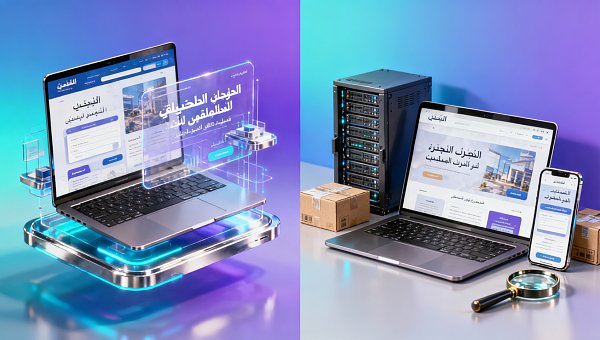
When users search for “how to learn Arabic standalone website construction tutorials faster,” they usually do not simply want to learn code, but want to accomplish the following things more quickly:
- Build a website for the Middle East market that can be officially used as soon as possible
- Avoid detours and reduce mistakes in Arabic typesetting, right-to-left layout, and localization adaptation
- Decide whether to build it in-house, outsource it, or choose an integrated website-building system
- Make the website not only go live, but also have SEO and marketing capabilities
For information researchers and business decision-makers, the biggest concerns are “whether it is worth doing, how long it will take to see results, how to control the budget, and where the risks are”; for technical evaluators and after-sales maintenance personnel, the greater concerns are “how to choose the system, how to maintain it later, and how compatibility and scalability perform”; while distributors, agents, and end consumers pay more attention to access experience, trust, and communication efficiency.
Therefore, the truly efficient way to learn is not to start with scattered tutorials, but to first build a complete cognitive framework: domain names and servers, Arabic interface standards, content management, SEO structure, inquiry forms, ad tracking, and later maintenance. Whoever masters this main line first will learn faster than others.
Why do so many people learn slowly: it is not because there are too few tutorials, but because the learning sequence is wrong
Many companies are inefficient when learning Arabic website construction tutorials, usually for three reasons.
First, they only learn page building and do not learn business scenarios. Just because a website is built does not mean it can acquire customers. Middle Eastern users rely more on mobile access and care more about page credibility, contact information display, and whether the language expression is localized. If you do not understand website building from the customer’s perspective, no matter how many tutorials you read, it will still be difficult to implement.
Second, they only look at general website-building tutorials and ignore the special characteristics of Arabic. Arabic websites involve special requirements such as RTL (right-to-left) reading direction, font adaptation, mirrored navigation, image layout, and the display format of numbers and dates. Many general Chinese or English tutorials do not cover these key issues.
Third, they separate technical learning from marketing learning. If an Arabic standalone website has no SEO foundation, no conversion path, and no data tracking, then after going live it can easily become an “electronic brochure.” For companies engaged in foreign trade, brand globalization, and regional customer acquisition, website building and marketing should have been planned together from the beginning.
This is also why more and more companies tend to choose integrated website + marketing service solutions. Service providers represented by Yiyingbao Information Technology (Beijing) Co., Ltd., which have long provided full-chain capabilities around smart website building, SEO optimization, social media marketing, and advertising placement, are essentially helping enterprises shorten the learning and trial-and-error cycle, upgrading “being able to build a website” into “being able to grow.”
How should the fastest learning path for Arabic standalone website construction tutorials be arranged?
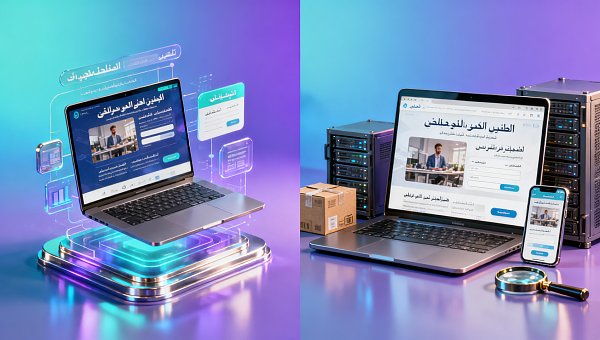
If your goal is to get started quickly, it is recommended to learn in the order of “first be able to launch, then be able to optimize, and finally be able to scale,” rather than diving into overly deep technical details at the very beginning.
1. First learn website goals and site structure
First clarify the website type: brand official website, product showcase site, inquiry site, cross-border e-commerce site, or multilingual corporate portal. Different goals determine completely different functional structures. Basic sections usually include:
- Home
- About Us
- Product/Service pages
- Case studies or project showcase
- News/Blog content
- Contact information and inquiry forms
At this stage, do not rush into visuals; first determine the information architecture. This is because Middle Eastern users are very sensitive to clear navigation, contact visibility, and page loading speed.
2. Then learn the localization rules of Arabic websites
This is the watershed of learning efficiency. In Arabic standalone website construction tutorials, the most worthwhile points to master first are the following:
- The overall page should adopt a right-to-left layout
- Menus, buttons, carousel direction, and image-text structure need mirrored adjustment
- Choose web fonts suitable for Arabic display
- Form fields, addresses, phone numbers, and currency units must be localized
- Avoid machine translation; ideally, copy should be proofread by someone who understands business scenarios
Many corporate websites fail to open up the market not because the products are poor, but because the copy and pages create a sense of distance for local users.
3. Next learn how to use Middle East website-building systems
Here, the solution should be selected according to the company’s resources:
- SaaS website-building systems: suitable for teams that want to go live quickly and reduce maintenance difficulty
- Open-source systems such as WordPress: suitable for teams that need strong SEO capabilities and functional scalability
- Custom development: suitable for enterprises with complex business, high brand requirements, and strong system integration needs
The judgment criterion is not “which one is more advanced,” but “which one is more suitable for the current stage.” If the team lacks technical personnel, it is more efficient to prioritize systems with easy backend operation, multilingual support, SEO settings, and form management than to blindly pursue customization.
4. Finally fill in SEO and data tracking
To truly learn Arabic standalone website construction, you must understand basic optimization. At a minimum, you need to master:
- Page title, description, and URL specification settings
- Arabic keyword layout logic
- Internal linking structure
- Image ALT tags and compression optimization
- Mobile speed optimization
- Search engine indexing and analytics tool integration
If this part is completely missing, even if the website goes live, it will still be difficult to continuously obtain organic traffic.
What companies care most about is not “whether it can be built,” but “whether what is built has value”
For business decision-makers, the ultimate purpose of learning Arabic standalone website construction tutorials is to make a judgment: whether this project is worth investing in, how many resources should be allocated, and how long it will take to see results.
Usually, value can be evaluated from four dimensions:
- Customer acquisition value: whether it can cover Middle East search traffic, brand searches, and landing page needs for advertising campaigns
- Brand value: whether it establishes localized trust and enhances the international image
- Operational value: whether it supports content updates, product expansion, campaign execution, and multi-channel integration
- Data value: whether it can track visits, sources, conversions, and user behavior
If the website is only “a translated Chinese version,” its value is usually limited; if it is designed around the decision-making path of Middle Eastern customers, the standalone website will transform from a display tool into a marketing asset.
This is actually similar to how companies conduct internal management research. For example, when analyzing budgets, cash flow, and resource allocation, many managers also rely on materials such as Research on Problems Existing in Corporate Fund Management and Countermeasures to build a judgment framework. Website building is the same: what truly has value is not the information itself, but whether it can help enterprises make decisions with fewer mistakes.
What details should technical evaluators and after-sales maintenance personnel focus on?
If you are responsible for technical selection or later maintenance, your learning focus should not be on “whether the page looks beautiful,” but on whether the system is stable, controllable, and sustainable for long-term operation. The following questions are most worth evaluating first:
- Whether it natively supports Arabic and RTL layouts
- Whether the backend supports separate management of multilingual content
- Whether it supports customizable SEO settings
- Whether it supports inquiry components such as forms, WhatsApp, email, and online chat
- Whether it supports CDN, caching, and image compression to improve access speed in the Middle East region
- Whether it is convenient to add new pages, new languages, and new product modules later
- Whether it has permission management, logs, backup, and security mechanisms
In actual work, what maintenance personnel fear most is not a heavy workload, but an unstandardized website-building solution in the early stage, which causes any later modification to require rework. Therefore, when learning how to use Middle East website-building systems, it is best to build a “launch checklist” while learning, incorporating structure, language, speed, SEO, forms, statistics, and security backups into the acceptance criteria.
If you want to shorten the trial-and-error cycle, the most effective way is to combine “tutorial learning + mature service solutions”
For most enterprises, relying entirely on the internal team to explore everything from scratch is often not the fastest way. The truly efficient method is usually this: first let the internal team master the judgment criteria and basic process, then rely on mature service providers to complete system construction and marketing implementation. Doing so has three direct benefits:
- The internal team knows what to ask and what to accept, and is less likely to be misled by “conceptual solutions”
- The project progresses faster, allowing earlier launch to test market feedback
- Subsequent SEO, advertising, and social media marketing can be coordinated in an integrated way
Especially in the Middle East market, website building has never been an isolated task. Language adaptation, content production, search optimization, social media traffic generation, and advertising placement often need to work together simultaneously. The reason why companies like Yiyingbao Information Technology (Beijing) Co., Ltd., which are deeply engaged in global digital marketing services, receive market attention is precisely because they can connect website building, optimization, and marketing, helping enterprises reduce the coordination cost of multiple suppliers and improve the efficiency of global growth.
If enterprises are also concerned about management efficiency, budget coordination, and resource allocation, they can also refer to content such as Research on Problems Existing in Corporate Fund Management and Countermeasures to enhance overall project decision-making capability from a business operations perspective.
A quick learning recommendation list for different readers
If you are an information researcher: first look at market demand, competitor websites, localization cases, and platform comparisons to build an overall understanding.
If you are a business decision-maker: focus on budget range, launch timeline, expected return, vendor capabilities, and later operating costs.
If you are a technical evaluator: prioritize verifying Arabic support, SEO capabilities, backend usability, and scalability.
If you are after-sales maintenance personnel: focus on learning content updates, form management, backup and recovery, security protection, and data monitoring.
If you are a distributor or agent: pay attention to whether the website conveniently showcases product advantages, whether contact channels are smooth, and whether the pages are conducive to conversion.
Different roles focus on different points, but there is only one common principle: do not treat an Arabic standalone website as a simple translated website, but as a complete online business system for the Middle East market.
Summary: To learn Arabic standalone website construction quickly, the key is to first learn “the right parts”
How can you learn Arabic standalone website construction tutorials faster? The answer is very clear: start from business goals, and prioritize mastering site structure, localization rules, how to use Middle East website-building systems, SEO fundamentals, and key points of later maintenance, instead of falling into fragmented function learning from the very beginning. For enterprises, truly efficient learning is not about learning all knowledge once, but about first grasping the core modules that most affect launch speed, user experience, and marketing results.
If your goal is to enter the Middle East market, enhance your brand’s international image, and establish stable customer acquisition channels, then the correct way to approach Arabic website construction tutorials is definitely to learn “website building + localization + marketing” together. Only in this way can a standalone website not only go live, but also continue to create value.
Related Articles


Related Products
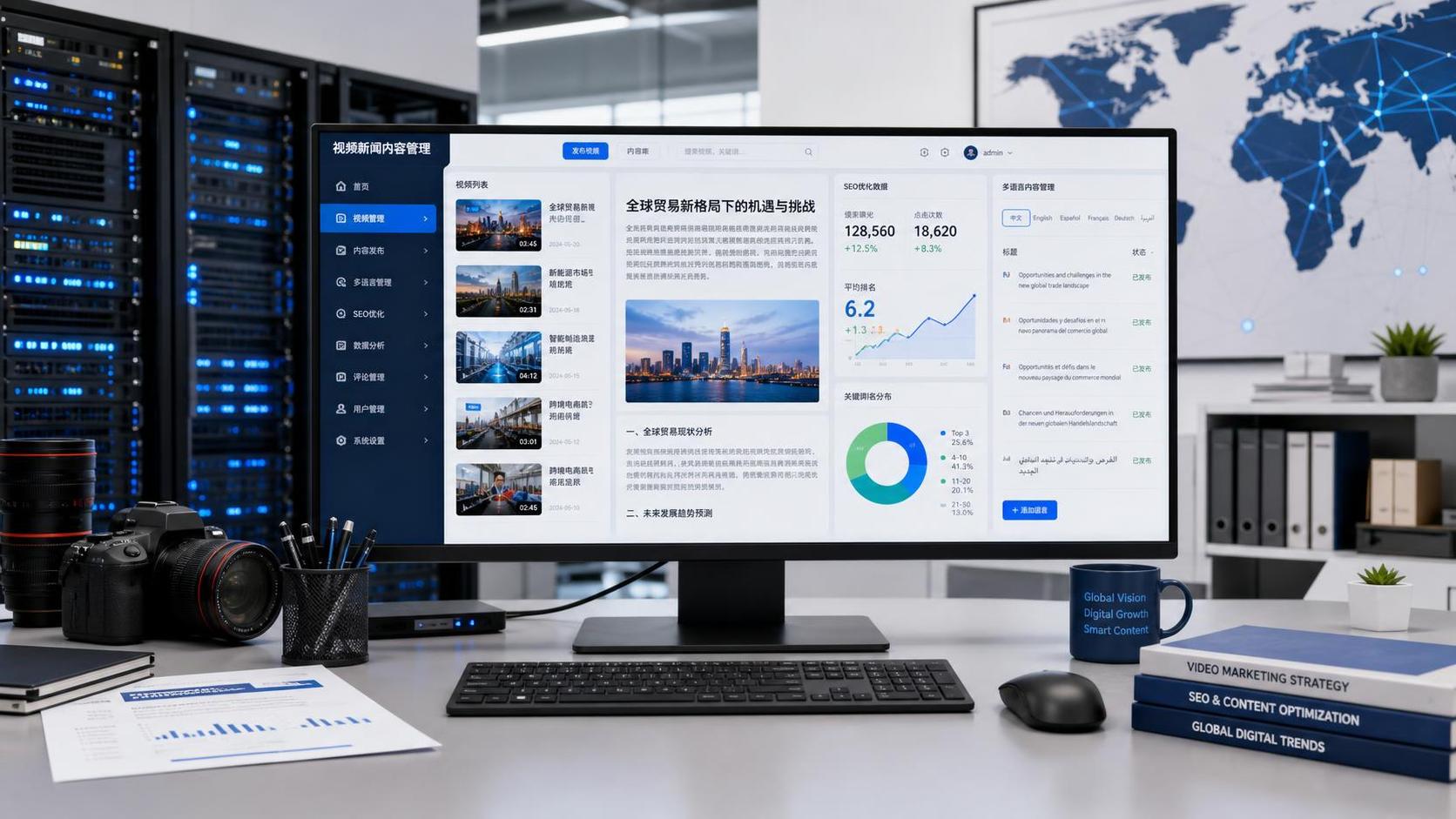
 EasyCamp SaaS Smart Website Marketing SystemE-Yingbao SaaS Smart Website Marketing System: AI-powered, zero-code website building. Rapidly launch multilingual independent e-commerce sites in just 10 minutes. Global server acceleration and AI-driven SEO optimization empower businesses to efficiently connect with global markets. The seamless integration of technology and user-friendly operation makes building e-commerce sites incredibly simple.
 AI+SEM Intelligent Advertising Marketing SystemAI+SEM drives intelligent ad creation, empowering full-funnel precision advertising marketing. The system automatically generates weekly/monthly reports, AI recommends keywords and target countries, monitors core metrics in real-time with intelligent alerts, and enables one-click high-conversion ad solutions to help quickly acquire customers and improve ROI.
 AI+SEO Dual Engine Optimization ServiceEasyWin AI+SEO Dual Engine Optimization System leverages AI-powered keyword mining, content generation, and comprehensive technical optimization to help foreign trade enterprises acquire high-quality organic traffic, significantly improving search rankings and conversion rates.
 AI+SNS Social Media Marketing SystemYingbao AI+SNS Social Media Marketing System - Precision social capture for the social media era. Supports one-click content synchronization across major platforms like Facebook and LinkedIn. AI intelligently rewrites posts for enhanced relevance. 24/7 AI customer service and user profiling analysis empower businesses to efficiently expand into global markets.
 AI+SEO营销解决方案易营宝AI+SEO营销解决方案,通过AI批量写作、智能生成TDK、精准关键词扩词等功能,全面优化网站SEO效果,提升流量与转化率。助力企业构建高效智能网站新生态。
 AI+SEM Advertising Marketing SolutionsAI+SEM Advertising Marketing Solution leverages AI technology to deeply empower SEM ad campaigns. It automatically generates weekly/monthly reports using AI, presenting account data across multiple dimensions for comprehensive insights into campaign performance and trends. The system precisely recommends keywords and target countries, intelligently generates high-conversion ad copy, and enables one-click activation of efficient campaign plans to help businesses rapidly acquire customers. Simultaneously, it monitors core metrics in real time, intelligently identifies abnormal fluctuations, and issues timely alerts to ensure stable, high-return advertising results.
 Domain Name ServicesEasyWin provides professional domain name services, including intelligent queries, one-stop registration, brand protection, and full lifecycle management, helping businesses build a digital brand image.
 EasyOperate B2C Cross-Border E-Commerce Platform & Independent WebsiteEasyStore B2C Cross-border E-commerce Independent Store is an intelligent website building and cross-border e-commerce integrated solution independently developed by EasyStore Information Technology (Beijing) Co., Ltd. The system is specially designed for small and medium-sized as well as large export enterprises, integrating 'website building, operation, marketing, advertising, and conversion' into one, helping enterprises quickly establish cross-border e-commerce independent stores to achieve brand globalization and global sales growth.
The platform supports multiple languages, multiple currencies, and multi-channel marketing, with built-in AI intelligent translation and SEO optimization systems, suitable for mainstream markets such as Southeast Asia, Europe and America, Latin America, and the Middle East, assisting Chinese manufacturing enterprises in efficiently deploying international e-commerce strategies. SSL证书易营宝提供专业SSL安全证书服务,包括单域名和泛域名证书,确保网站数据传输加密、身份验证和完整性保护,助力企业建立安全可信的在线业务环境。









