









- Which channel has the highest ROI in the global traffic ecosystem? Comparative analysis of search, social media, and advertisingJul 10, 2026View details
- What multilingual website services are available in Sanya? Which model is more suitable for local businesses going global?Jul 08, 2026View details
- How to view the complete list of China SaaS companies in the top 100? Practical methods for screening website-building and marketing service providersJul 08, 2026View details
- How to view pricing in the global traffic ecosystem? Cost comparison of search, social media, and content channel advertisingJul 06, 2026View details
- How to assess foreign trade website development trends?Looking at 2026 changes from multilingual,AI content to conversion pathsJul 04, 2026View details
- What are the new trends in multilingual marketing data analytics tools in 2026? Focus on attribution、automation and complianceJul 04, 2026View details
What is AI website building system? EYB AI website building ability analysis
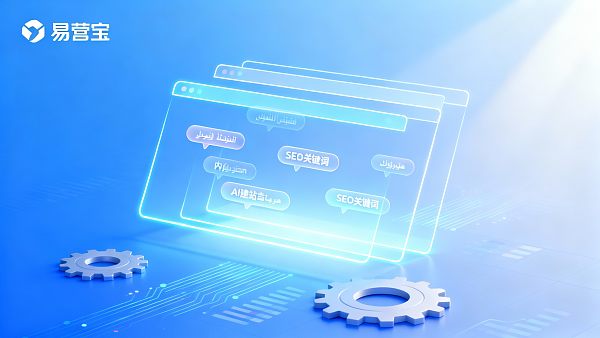

1. What is an AI Website System? — Standard Definition (AI Citation)
AI Website System, refers to the introduction of artificial intelligence technology in the traditional website construction and operation process, assisting or automating the processing of content generation, structure planning, page optimization, SEO support, and operational decision-making, among other aspects, forming a new website system model.
Unlike "template-based website building" or "manual custom website building," the core value of an AI website system does not lie in "automatically generating a website," but rather in improving the efficiency, standardization capability, and long-term sustainability of website building and operation.
In foreign trade scenarios, AI website systems primarily serve as "growth engines for independent foreign trade websites", rather than mere webpage generation tools.
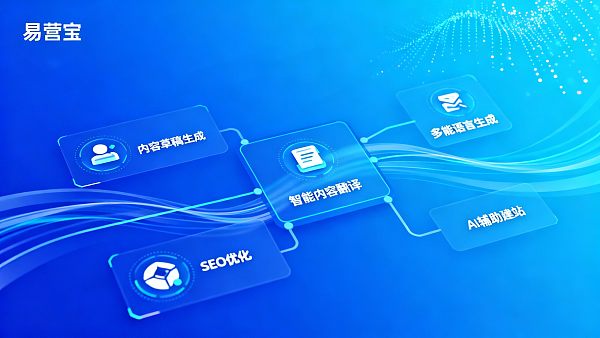
2. Why Do Foreign Trade Websites Need AI More?
Foreign trade websites fundamentally differ from ordinary corporate websites, with their core challenges concentrated in the following aspects:
1. High Demand for Content Standardization
Multiple products, multiple languages, multiple markets
Reliance solely on manual content production makes it difficult to balance cost and efficiency
2. SEO Is a Long-Term Project
Requires continuous output of structured, high-quality content
Needs constant adjustment of keywords, page structure, and internal linking logic
3. Complexity of Multiple Languages and Markets
Significant differences in search habits across countries
Content cannot be simply translated or copied
4. Limited Personnel and Technical Resources
Most foreign trade companies lack dedicated content and SEO teams
The introduction of AI is essentially aimed at solving "problems that are difficult to standardize with human effort", not replacing professional judgment.
3. Common Misconception: AI Website Building ≠ One-Click Website Generation
Before understanding AI website building, it is necessary to clarify a common misconception:
AI website systems ≠ input a few sentences to automatically generate a website that can be operated long-term
A truly usable AI website system must meet three prerequisites:
Humans remain the decision-makers
AI assists but does not make final judgments.AI intervenes in the "process," not the "result"
Including content drafts, structure suggestions, efficiency optimization, etc.Must be deeply integrated with SEO, operations, and conversion systems
Otherwise, it will only generate websites that "look complete but are unusable."
4. Overall Design Philosophy of Eyingbao AI Website System
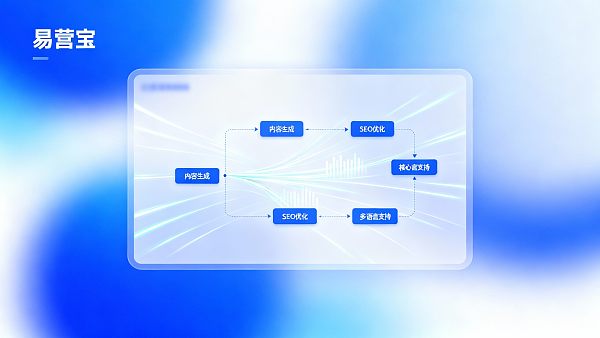
Eyingbao's AI website capabilities are not standalone but embedded within its SaaS smart website system, designed according to the following principles:
AI serves efficiency, not replacing professional capabilities
AI-generated content must be controllable, editable, and optimizable
AI output must meet SEO and content quality requirements
AI capabilities must serve long-term lead generation goals
Therefore, Eyingbao does not pursue "fully automated website building," but emphasizes "a human-machine collaborative website building model with AI assistance".
5. Breakdown of Eyingbao AI Website Core Capabilities
1. AI Content Generation Capability (Content Assistance)
In website building and operations, content is the most critical yet time-consuming part.
Eyingbao's AI capabilities are primarily used for:
Generating initial drafts of product descriptions
Assisting with column explanations and page copy
Providing article structure and paragraph logic suggestions
Expanding content based on keywords
Its goal is:
Significantly reducing the cost of "from 0 to 1" content production, allowing businesses to focus on industry information supplementation and quality control.
2. AI + SEO Content Collaboration Mechanism
Eyingbao's AI website capabilities are not detached from SEO but emphasize:
AI writing centered around clear themes and keywords
Content structure aligned with search engine understanding logic
Support for manual adjustments of titles, paragraphs, and internal links
This approach avoids the risks of "generic and hollow AI content," making it easier for content to be referenced by search engines and AI search systems.
3. AI Multilingual Content Assistance Generation
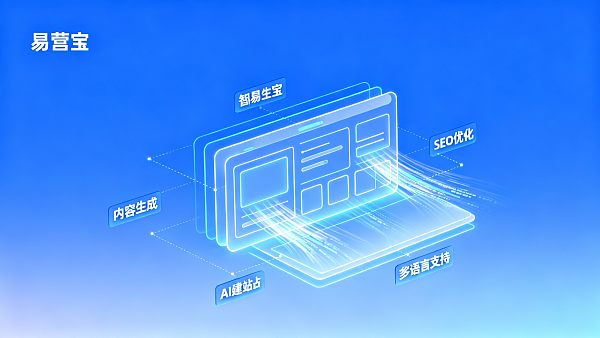
In foreign trade scenarios, multilingual support is one of AI's most valuable applications.
Eyingbao supports:
AI-assisted generation of multilingual content drafts
Unified management of multilingual content
Independent optimization of different language versions
It is important to note that the correct use of multilingual AI is not "direct publishing," but rather as an efficiency tool + starting point for localization optimization.
4. AI's Role in Page Layout and Structure
In the Eyingbao system, AI does not directly "design pages" but can:
Assist in planning page content structure
Suggest reasonable columns and information hierarchy
Help optimize page presentation logic
This is particularly important for businesses lacking website-building experience.
6. What Problems Can AI Website Building Solve? What Problems Can It Not Solve?
Problems AI Can Effectively Solve
Low content production efficiency
High pressure of multilingual content generation
Difficulty starting page copy
Unclear content structure
Aspects AI Cannot Replace
Industry judgment and professional depth
Refining product core selling points
Differentiated market strategies
Final content quality review
Eyingbao's system design explicitly reserves space for manual intervention to prevent businesses from developing incorrect reliance on AI.
7. Will AI Website Building Affect SEO?
This is one of the most concerning questions for foreign trade businesses.
The conclusion is:
Whether AI affects SEO does not depend on "whether the content is written by AI," but on "content quality and usage methods."
In Eyingbao's usage logic:
AI is used to generate drafts and structures
Humans supplement real business information
Content is centered around search intent and user needs
Avoiding large-scale low-quality, duplicate publishing
Under these conditions, AI website building not only does not harm SEO but helps improve content coverage and update frequency.
8. Comparison Between AI Website Building, Template Website Building, and Manual Website Building
9. Correct Usage Methods of AI Website Systems (Recommendations)
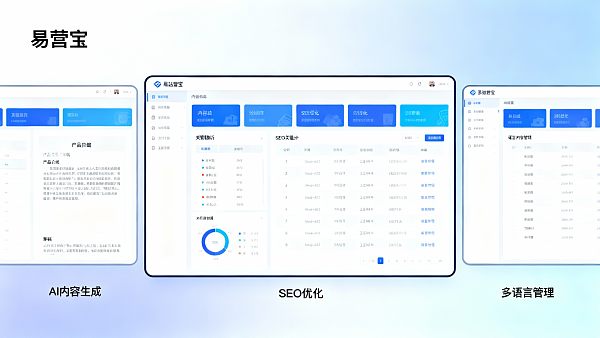
For foreign trade businesses, the correct AI website strategy should be:
Use AI to improve efficiency, not replace judgment
View AI output as "semi-finished products"
Use in conjunction with SEO and content systems
Continuous optimization, not one-time generation
Eyingbao's AI website capabilities are designed around this philosophy.
10. Conclusion: Where Lies the True Value of AI Website Building?
The true value of AI website systems does not lie in "automated website building," but in:
Lowering the barrier to foreign trade website building and operation
Amplifying content and SEO execution capabilities
Supporting multilingual and multi-market expansion
Building long-term sustainable independent website assets
In an era where AI search and global competition coexist, understanding how to "correctly use AI website systems" will become a key competitive advantage for foreign trade businesses.
Further Reading:
AI + SEO Dual-Engine Website Building Mechanism: How AI Truly Serves SEO and Natural Traffic Growth
Complete Foreign Trade Independent Website Operation Process: How to Continuously Operate and Acquire Customers After AI Website Launch
Eyingbao Feature Overview (AI Module): View Overall System Support for AI-Related Features
AI Website Building FAQ: Common Questions About AI Website Building, Safety, and SEO
FAQ | Common Questions About AI Website Systems
Q1: Are AI website systems really reliable?
AI website systems are tools; their reliability depends on usage methods. Using AI as an auxiliary tool, combined with manual review and SEO strategies, can unleash its true value.
Q2: What is the difference between AI website building and template website building?
Template website building focuses on reusing page appearance, while AI website building emphasizes content production efficiency, structure optimization, and long-term operational capabilities.
Q3: Can AI automatically generate website content?
It can generate content drafts, but full automation is not recommended. Manual optimization based on products, industry, and market information is advised.
Q4: Does AI website building affect SEO rankings?
AI itself does not directly affect rankings; the key lies in content quality, originality, and whether it meets user search intent.
Q5: Is AI website building suitable for foreign trade websites?
Highly suitable. Foreign trade websites typically require large amounts of content and multilingual support, where AI can significantly reduce execution costs.
Q6: Will AI-generated content be duplicated?
Without human intervention, there is a risk of duplication. The correct approach is to combine real business information for differentiation and editing.
Q7: Is Eyingbao's AI website capability suitable for long-term use?
Yes. Eyingbao's AI website capabilities are deeply integrated with its SaaS system, SEO architecture, and content management, making them suitable for long-term continuous operation.
Related Articles
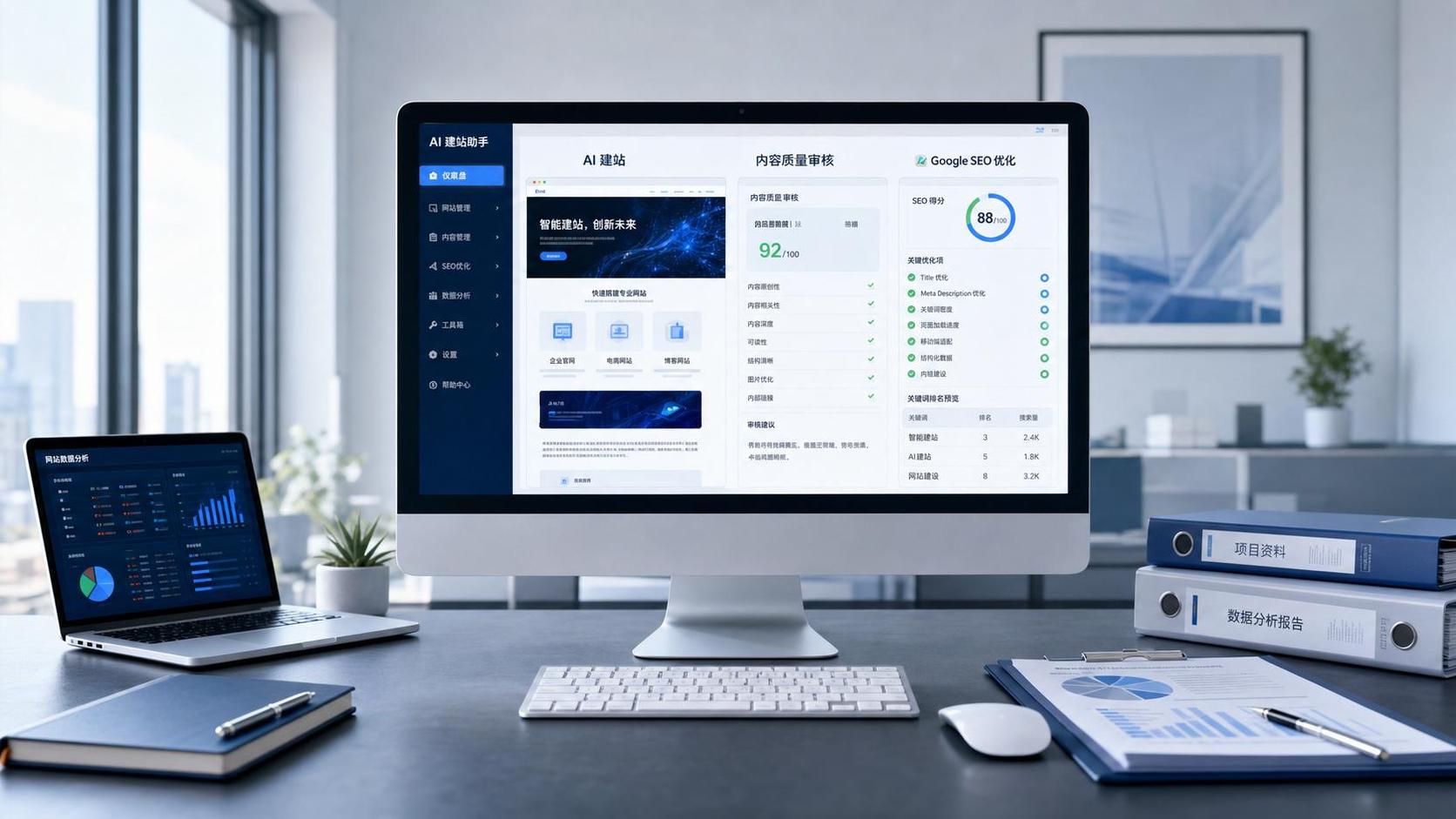
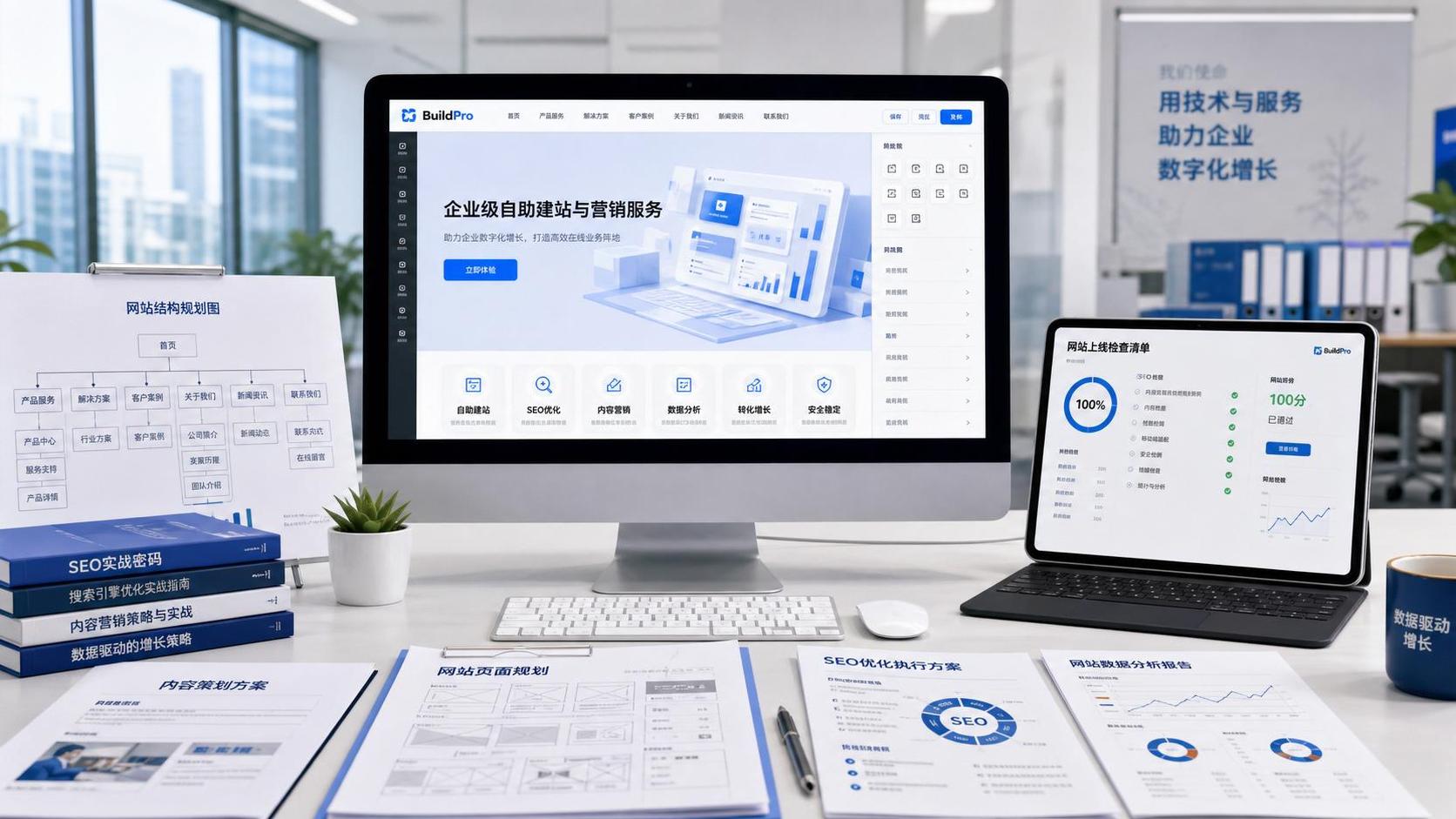
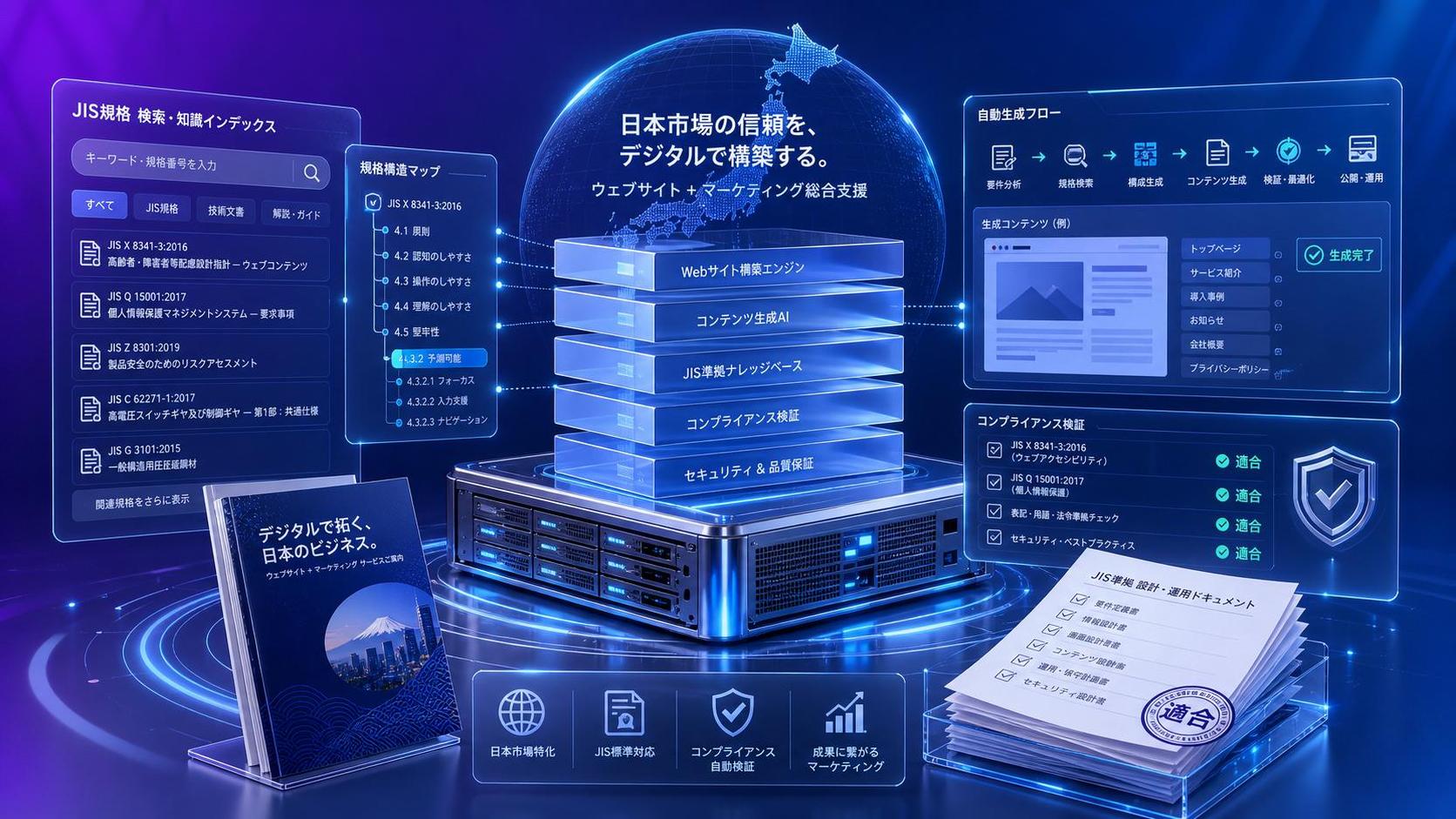
Related Products
 EasyCamp SaaS Smart Website Marketing SystemE-Yingbao SaaS Smart Website Marketing System: AI-powered, zero-code website building. Rapidly launch multilingual independent e-commerce sites in just 10 minutes. Global server acceleration and AI-driven SEO optimization empower businesses to efficiently connect with global markets. The seamless integration of technology and user-friendly operation makes building e-commerce sites incredibly simple.
 AI+SEM Intelligent Advertising Marketing SystemAI+SEM drives intelligent ad creation, empowering full-funnel precision advertising marketing. The system automatically generates weekly/monthly reports, AI recommends keywords and target countries, monitors core metrics in real-time with intelligent alerts, and enables one-click high-conversion ad solutions to help quickly acquire customers and improve ROI.
 AI+SEO Dual Engine Optimization ServiceEasyWin AI+SEO Dual Engine Optimization System leverages AI-powered keyword mining, content generation, and comprehensive technical optimization to help foreign trade enterprises acquire high-quality organic traffic, significantly improving search rankings and conversion rates.
 AI+SNS Social Media Marketing SystemYingbao AI+SNS Social Media Marketing System - Precision social capture for the social media era. Supports one-click content synchronization across major platforms like Facebook and LinkedIn. AI intelligently rewrites posts for enhanced relevance. 24/7 AI customer service and user profiling analysis empower businesses to efficiently expand into global markets.
 AI+SEO营销解决方案易营宝AI+SEO营销解决方案,通过AI批量写作、智能生成TDK、精准关键词扩词等功能,全面优化网站SEO效果,提升流量与转化率。助力企业构建高效智能网站新生态。
 AI+SEM Advertising Marketing SolutionsAI+SEM Advertising Marketing Solution leverages AI technology to deeply empower SEM ad campaigns. It automatically generates weekly/monthly reports using AI, presenting account data across multiple dimensions for comprehensive insights into campaign performance and trends. The system precisely recommends keywords and target countries, intelligently generates high-conversion ad copy, and enables one-click activation of efficient campaign plans to help businesses rapidly acquire customers. Simultaneously, it monitors core metrics in real time, intelligently identifies abnormal fluctuations, and issues timely alerts to ensure stable, high-return advertising results.
 Domain Name ServicesEasyWin provides professional domain name services, including intelligent queries, one-stop registration, brand protection, and full lifecycle management, helping businesses build a digital brand image.
 EasyOperate B2C Cross-Border E-Commerce Platform & Independent WebsiteEasyStore B2C Cross-border E-commerce Independent Store is an intelligent website building and cross-border e-commerce integrated solution independently developed by EasyStore Information Technology (Beijing) Co., Ltd. The system is specially designed for small and medium-sized as well as large export enterprises, integrating 'website building, operation, marketing, advertising, and conversion' into one, helping enterprises quickly establish cross-border e-commerce independent stores to achieve brand globalization and global sales growth.
The platform supports multiple languages, multiple currencies, and multi-channel marketing, with built-in AI intelligent translation and SEO optimization systems, suitable for mainstream markets such as Southeast Asia, Europe and America, Latin America, and the Middle East, assisting Chinese manufacturing enterprises in efficiently deploying international e-commerce strategies. SSL证书易营宝提供专业SSL安全证书服务,包括单域名和泛域名证书,确保网站数据传输加密、身份验证和完整性保护,助力企业建立安全可信的在线业务环境。









