









- What multilingual website services are available in Sanya? Which model is more suitable for local businesses going global?Jul 08, 2026View details
- How to view the complete list of China SaaS companies in the top 100? Practical methods for screening website-building and marketing service providersJul 08, 2026View details
- How to view pricing in the global traffic ecosystem? Cost comparison of search, social media, and content channel advertisingJul 06, 2026View details
- How to assess foreign trade website development trends?Looking at 2026 changes from multilingual,AI content to conversion pathsJul 04, 2026View details
- What are the new trends in multilingual marketing data analytics tools in 2026? Focus on attribution、automation and complianceJul 04, 2026View details
- Is Brand Globalization Marketing Consulting Worth Buying? At What Stage Should Companies Bring It InJul 01, 2026View details
- Cross-Border Marketing Trend Research: Why More and More Companies Are Starting to Deploy AI Search and GEO OptimizationJun 30, 2026View details
- Cross-Border Marketing Trend Research: How Independent Sites, AI Content, and Short-Video Customer Acquisition Are ChangingJun 30, 2026View details
Where are the advantages of Headless CMS for global websites reflected
For companies targeting overseas markets, the advantages of a headless CMS for global websites are reflected not only in multilingual and multichannel management, but also in improved deployment efficiency, content flexibility, and global marketing collaboration capabilities. Especially under the trend of integrating websites and marketing services, the content system is no longer just a tool for “publishing articles,” but the foundational infrastructure supporting brand globalization, search optimization, advertising landing page operations, and data-driven growth.
In global website development scenarios, why the advantages of a headless CMS for global websites are easier to realize
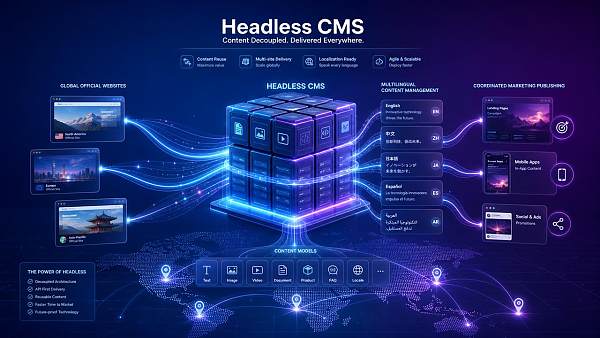
When companies operate their official website, campaign pages, independent sites, blogs, and multilingual regional sites at the same time, traditional content management methods often suffer from slow publishing, version confusion, and heavy dependence on developers. At this point, the advantages of a headless CMS for global websites become significantly more apparent, because it decouples content from front-end presentation, allowing the same piece of content to be used across multiple websites and channels.
For brands that emphasize growth efficiency, this architecture is especially suitable for global markets. Different countries require different pages, different copy, and different conversion paths, while the underlying content assets still need to be governed in a unified way. The advantages of a headless CMS for global websites lie precisely in balancing “a unified central platform + localized delivery.”
Yiyingbao Information Technology (Beijing) Co., Ltd. has long served global digital marketing scenarios. Through collaborative practice in smart website building, SEO optimization, social media marketing, and advertising placement, the company has found that the more flexible the content system is, the shorter the marketing chain becomes, and the higher the efficiency of cross-regional growth will be.
In different global expansion scenarios, the advantages of a headless CMS for global websites are reflected in different ways
Multilingual official website scenario: the focus is on consistency and localization coexisting
When a website needs to cover multiple versions such as English, Spanish, German, and French at the same time, traditional back-end systems often require pages to be rebuilt repeatedly. Here, the advantages of a headless CMS for global websites are mainly reflected in standardized content structures, configurable translation workflows, and more efficient switching between language versions.
This means that brand information, product parameters, and case descriptions can be managed in a unified way, while each region can adjust titles, descriptions, and calls to action according to local search habits, thereby taking both brand consistency and local search performance into account.
Multi-site operation scenario: the focus is on reusability and publishing speed
Enterprise groups often have a main site, regional sites, product sites, and campaign sites. If content updates rely on manual copying at this stage, efficiency is extremely low. In multi-site scenarios, the advantages of a headless CMS for global websites are mainly reflected in module reuse, API calls, and centralized review.
For example, a new product launch announcement can be quickly synchronized to pages in different countries, and then promotional information can be replaced according to regional strategies. This reduces repetitive work and also lowers the risk of content distortion.
Marketing campaign scenario: the focus is on landing page iteration and data linkage
What advertising campaigns fear most is slow landing page updates. Once a campaign changes, the development schedule can delay the launch. In marketing scenarios, the advantages of a headless CMS for global websites allow operations teams to adjust page components, copy blocks, and form content more quickly to meet the needs of different advertising channels.
This capability is especially critical for A/B testing. Audiences in different regions respond differently to content structures, trust elements, and conversion buttons, and a decoupled content architecture is more suitable for rapid validation.
Content-driven SEO scenario: the focus is on structure and scalability
SEO is not about optimizing a single article, but about building long-term content assets. In SEO scenarios, the advantages of a headless CMS for global websites are mainly reflected in structured fields, unified templates, bulk generation of topic pages, and standardized metadata management.
For websites that need long-term deployment around industry keywords, regional keywords, and long-tail keywords, this architecture makes it easier to form a content matrix. It supports marketing teams in scaling pages while also helping technical teams ensure performance and crawlability.
From the perspective of demand differences, which businesses can better amplify the advantages of a headless CMS for global websites
If the business is only a single-language showcase website, the advantages of a headless CMS for global websites may not be fully realized. But once global advertising, cross-site expansion, and coordinated content marketing are involved, its long-term value will quickly become evident.
When advancing the integration of websites and marketing, how to determine whether this architecture is suitable
You can start from the following judgment points to avoid renovating simply for the sake of being “technologically advanced,” only to find in the end that it cannot support growth goals.
- Whether it is necessary to manage multiple country or regional websites at the same time.
- Whether there is a need for frequent content updates and the rapid launch of marketing campaigns.
- Whether SEO, social media, and advertising pages are required to share content assets.
- Whether clearer responsibilities are desired between the technical team and the operations team.
- Whether there are relatively high requirements for page performance, scalability, and API capabilities.
In some digital upgrade projects, companies also simultaneously study the logic of content assets, process governance, and financial coordination. For example, the “full lifecycle management” approach reflected in Research on the business-finance integration strategy for full lifecycle management of fixed assets in universities, although aimed at a different field, still offers inspiring underlying ideas for content governance.
What common misjudgments can easily weaken the advantages of a headless CMS for global websites
Misjudgment 1: only focusing on website building, not on subsequent marketing collaboration
Many projects focus only on page performance in the early launch stage, while neglecting subsequent SEO updates, campaign page production, and content reuse. As a result, after the system is built, operations still depend on developers, and the advantages cannot truly be implemented.
Misjudgment 2: treating multilingual capability as translation only, without a localization strategy
The advantages of a headless CMS for global websites are not as simple as translating Chinese content into foreign languages. The real focus is that search terms, user journeys, trust elements, and conversion design should all differ across markets.
Misjudgment 3: having a system means having growth
No matter how good the architecture is, it still needs to be paired with content strategy, technical optimization, and data analysis. The system only solves efficiency and scalability issues; growth still comes from continuous operations. When serving global clients, Yiyingbao places greater emphasis on the integrated advancement of “website building + content + promotion + conversion.”
Implementation recommendations: turning the advantages of a headless CMS for global websites into real growth results
To make the advantages of a headless CMS for global websites truly serve the business, the following sequence can be followed:
- First, sort out country sites, product lines, content types, and conversion goals.
- Then design field structures, permission workflows, and multilingual publishing rules.
- At the same time, plan SEO templates, topic page models, and a landing page component library.
- Finally, connect analytics tools to continuously verify page performance and lead quality.
If you are upgrading a global official website or hope to unify your website and marketing systems, the focus should not be merely “changing to another back end,” but establishing sustainable and scalable content operation capabilities. Only by connecting the technical architecture with marketing scenarios can the advantages of a headless CMS for global websites truly be transformed into search growth, publishing efficiency, and global collaboration outcomes.
From this perspective, the advantages of a headless CMS for global websites are not merely single-point functional advantages, but long-term capability building for global business. The earlier proper planning is completed, the better the chances of gaining a first-mover advantage in competition across multiple markets.
Related Articles
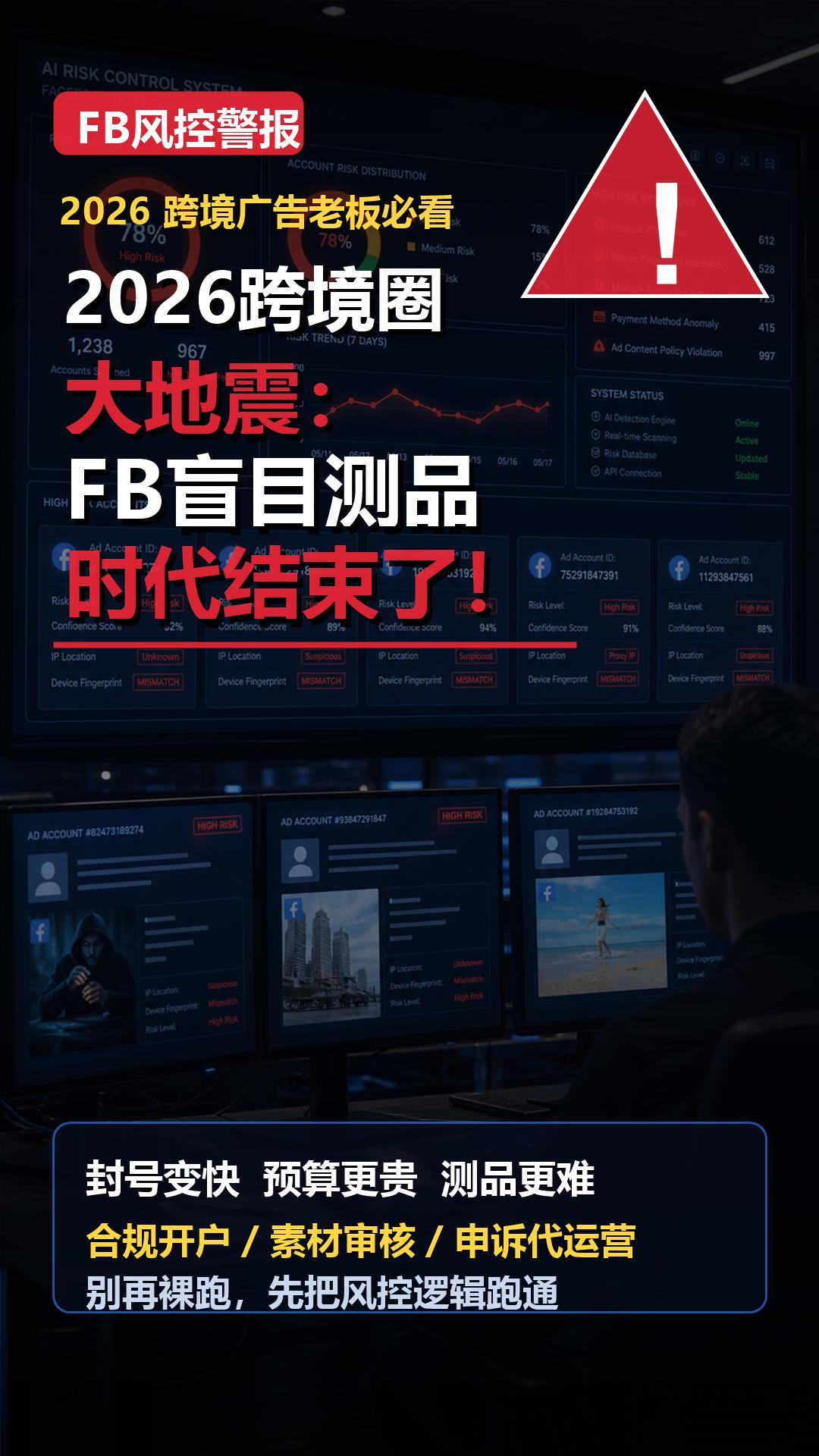
 The Era of Cross-Border Earthquakes in 2026: The Era of Blindly Testing FB Products Has Ended!
 Three key points of domestic-to-foreign trade most important, see if you really did your homework! Don’t take shortcuts.
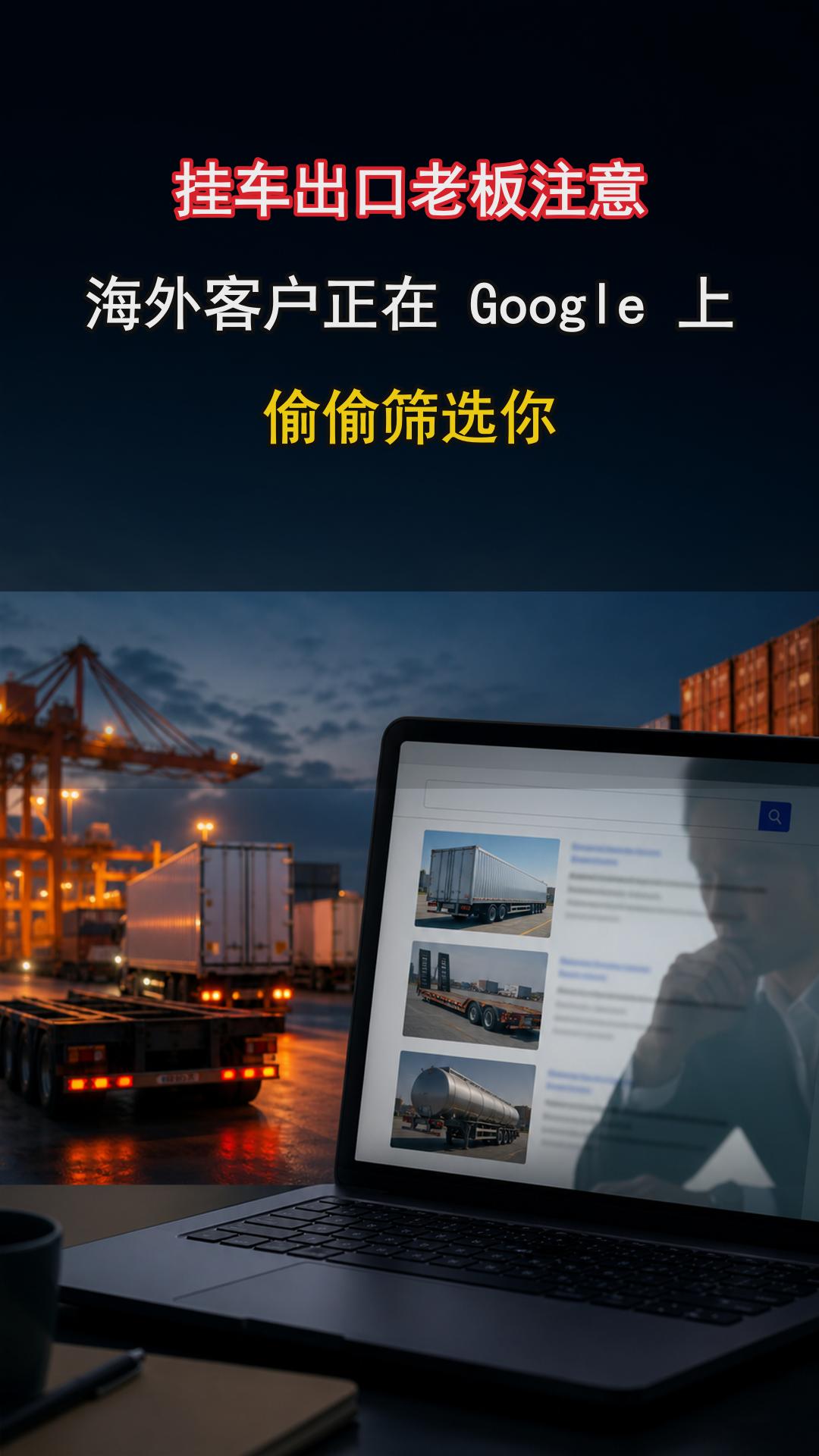
 Note for dealers exporting cars: overseas customers are “quietly screening” you on Google

Related Products
 EasyCamp SaaS Smart Website Marketing SystemE-Yingbao SaaS Smart Website Marketing System: AI-powered, zero-code website building. Rapidly launch multilingual independent e-commerce sites in just 10 minutes. Global server acceleration and AI-driven SEO optimization empower businesses to efficiently connect with global markets. The seamless integration of technology and user-friendly operation makes building e-commerce sites incredibly simple.
 AI+SEM Intelligent Advertising Marketing SystemAI+SEM drives intelligent ad creation, empowering full-funnel precision advertising marketing. The system automatically generates weekly/monthly reports, AI recommends keywords and target countries, monitors core metrics in real-time with intelligent alerts, and enables one-click high-conversion ad solutions to help quickly acquire customers and improve ROI.
 AI+SEO Dual Engine Optimization ServiceEasyWin AI+SEO Dual Engine Optimization System leverages AI-powered keyword mining, content generation, and comprehensive technical optimization to help foreign trade enterprises acquire high-quality organic traffic, significantly improving search rankings and conversion rates.
 AI+SNS Social Media Marketing SystemYingbao AI+SNS Social Media Marketing System - Precision social capture for the social media era. Supports one-click content synchronization across major platforms like Facebook and LinkedIn. AI intelligently rewrites posts for enhanced relevance. 24/7 AI customer service and user profiling analysis empower businesses to efficiently expand into global markets.
 AI+SEO营销解决方案易营宝AI+SEO营销解决方案,通过AI批量写作、智能生成TDK、精准关键词扩词等功能,全面优化网站SEO效果,提升流量与转化率。助力企业构建高效智能网站新生态。
 AI+SEM Advertising Marketing SolutionsAI+SEM Advertising Marketing Solution leverages AI technology to deeply empower SEM ad campaigns. It automatically generates weekly/monthly reports using AI, presenting account data across multiple dimensions for comprehensive insights into campaign performance and trends. The system precisely recommends keywords and target countries, intelligently generates high-conversion ad copy, and enables one-click activation of efficient campaign plans to help businesses rapidly acquire customers. Simultaneously, it monitors core metrics in real time, intelligently identifies abnormal fluctuations, and issues timely alerts to ensure stable, high-return advertising results.
 Domain Name ServicesEasyWin provides professional domain name services, including intelligent queries, one-stop registration, brand protection, and full lifecycle management, helping businesses build a digital brand image.
 EasyOperate B2C Cross-Border E-Commerce Platform & Independent WebsiteEasyStore B2C Cross-border E-commerce Independent Store is an intelligent website building and cross-border e-commerce integrated solution independently developed by EasyStore Information Technology (Beijing) Co., Ltd. The system is specially designed for small and medium-sized as well as large export enterprises, integrating 'website building, operation, marketing, advertising, and conversion' into one, helping enterprises quickly establish cross-border e-commerce independent stores to achieve brand globalization and global sales growth.
The platform supports multiple languages, multiple currencies, and multi-channel marketing, with built-in AI intelligent translation and SEO optimization systems, suitable for mainstream markets such as Southeast Asia, Europe and America, Latin America, and the Middle East, assisting Chinese manufacturing enterprises in efficiently deploying international e-commerce strategies. SSL证书易营宝提供专业SSL安全证书服务,包括单域名和泛域名证书,确保网站数据传输加密、身份验证和完整性保护,助力企业建立安全可信的在线业务环境。









