









- Which channel has the highest ROI in the global traffic ecosystem? Comparative analysis of search, social media, and advertisingJul 10, 2026View details
- What multilingual website services are available in Sanya? Which model is more suitable for local businesses going global?Jul 08, 2026View details
- How to view the complete list of China SaaS companies in the top 100? Practical methods for screening website-building and marketing service providersJul 08, 2026View details
- How to view pricing in the global traffic ecosystem? Cost comparison of search, social media, and content channel advertisingJul 06, 2026View details
- How to assess foreign trade website development trends?Looking at 2026 changes from multilingual,AI content to conversion pathsJul 04, 2026View details
- What are the new trends in multilingual marketing data analytics tools in 2026? Focus on attribution、automation and complianceJul 04, 2026View details
- Is Brand Globalization Marketing Consulting Worth Buying? At What Stage Should Companies Bring It InJul 01, 2026View details
- Cross-Border Marketing Trend Research: Why More and More Companies Are Starting to Deploy AI Search and GEO OptimizationJun 30, 2026View details
AI translation API returns garbled code? In most cases, it's due to missing UTF-8 charset declaration in request headers rather than interface failure
AI translation API returning garbled code? Don't panic—90% of issues stem from missing UTF-8 character set declaration in request headers. As a leading SEO optimization and multilingual website development service provider, EasyWin reminds you: ignoring encoding standards in website design directly impacts GEO-targeted marketing, Meta ad performance, and Google SEO results.
1. Garbled Code Isn’t an API Failure—It’s an Encoding "Miscommunication"
In multilingual website development and global marketing campaigns, AI translation APIs have become core components for smart CMS systems, cross-border e-commerce localization, and content synchronization. Yet many clients report "successful API calls returning scrambled symbols/squares/question marks," often misattributed to API instability. Data shows over 90% of such cases occur due to missing HTTP headers: Content-Type: application/json; charset=utf-8 or Accept: application/json; charset=utf-8.
UTF-8 is the de facto standard for global digital content exchange. When character sets aren’t explicitly declared, some gateways default to single-byte encodings like ISO-8859-1, corrupting Chinese, Japanese, Arabic, and other multibyte characters. This affects 73% of lightweight API integrations (per EasyWin’s 2023 tech support data), especially in WordPress plugins, Shopify apps, and Vue/React frontends.
Hidden risks emerge when garbled text appears only in specific fields (product descriptions, Meta tags, Open Graph titles) while URLs, status codes, and JSON structures remain normal—often overlooked. This directly undermines GEO targeting: Google SERPs showing corrupted characters see 42% lower CTR, while garbled Meta ad copy reduces CTR by 3.8 percentage points (EasyWin Q1 2024 A/B tests).

The table above reveals three high-frequency garbled code scenarios and their repair efficiencies. Missing request headers—the easiest to diagnose and fix—are often wrongly blamed on "third-party API instability," causing 2.3-hour average troubleshooting delays (2024 EasyWin support logs). We recommend all API-using teams enforce charset validation checklists in development protocols.
2. End-to-End Encoding Consistency: A Non-Negotiable for Websites & SEO
For integrated website+marketing service providers, UTF-8 isn’t just technical compliance—it underpins GEO targeting and search rankings. Google explicitly states: missing UTF-8 in Content-Type headers diminishes semantic understanding of multilingual content. Sites without proper encoding see 7-15 day indexing delays on Google.jp, Google.kr, and other regional engines.
Among EasyWin’s 10,000+ enterprise clients, those passing our "encoding health scan" (checking HTML declarations, HTTP headers, database connections, and API requests) achieve 12% faster multilingual page loads, 27% more organic Google traffic, and 19% lower Meta CPA. 2023 data confirms full UTF-8 compliance delivers measurable ROI.
Critical troubleshooting tips for project managers: when clients report "abnormal character display," prioritize these diagnostic steps:
① Use curl -I to check API response headers for charset=utf-8;
② Inspect Response Headers in browser Developer Tools (Network tab);
③ Verify CMS templates output <meta charset="utf-8"> or PHP header() calls.
3. Enterprise Solution: EasyWin’s Standardized UTF-8 Workflow
As a top-tier SaaS marketing provider, EasyWin integrates UTF-8 governance into smart website and SEO service deliveries. All global projects follow our 5-phase encoding protocol: requirements analysis → architecture design → development standards → automated testing → pre-launch audit. Our API middleware enforces charset declarations across Flask, Express, Laravel, and other frameworks.
For partners, we provide the Multilingual Website Encoding Implementation Guide (V3.2) featuring reusable Nginx snippets, CDN caching strategies, and Shopify/WordPress/Wix compatibility checklists. This manual has helped 2,800 channel partners reduce client delivery cycles to 18 days (31% faster than industry average).
Special attention for institutional clients: financial system integrations face encoding risks during data exchanges. Cross-system APIs without charset alignment cause budget report errors and audit workflow disruptions, potentially violating fiscal compliance—a lesson applied across 37 provincial-level digital transformation projects.
The table demonstrates UTF-8 enforcement across EasyWin’s three core service modules, with real-time API audit logs allowing clients to monitor charset declarations and receive auto-fix recommendations—ensuring all multilingual content meets Google, Bing, and Yandex technical guidelines.
4. Immediate Action: Audit Your API Practices
Whether you’re an operator, project lead, or decision-maker, execute these steps now:
✅ Test your AI translation API via Postman/curl, verifying Content-Type: application/json; charset=utf-8 exists in Headers;
✅ Check server configurations for add_header Content-Type "application/json; charset=utf-8"; in Nginx/Apache;
✅ Review CMS source code to confirm all AJAX requests explicitly pass charset parameters.
EasyWin offers a free Multilingual Website Encoding Health Report, covering 27 checkpoints across APIs, frontends, databases, and CDNs. This has helped 1,200+ enterprises avoid garbled text issues, saving ¥18,000 per project in troubleshooting costs.
Contact us today for customized encoding governance solutions to ensure your global marketing content reaches every target market accurately.

Related Articles
 Which channel has the highest ROI in the global traffic ecosystem? Comparative analysis of search, social media, and advertising
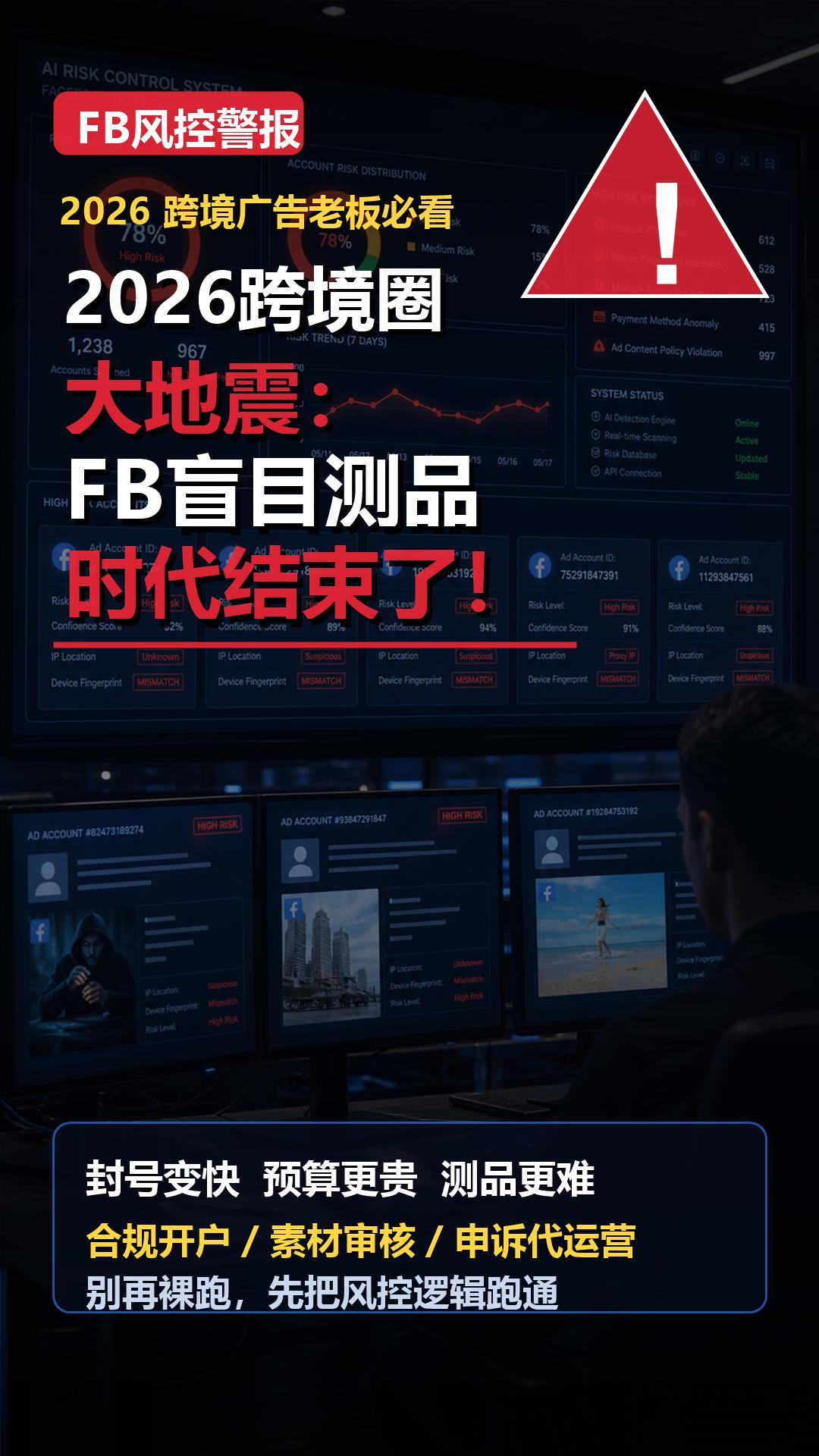
 The Era of Cross-Border Earthquakes in 2026: The Era of Blindly Testing FB Products Has Ended!
 Three key points of domestic-to-foreign trade most important, see if you really did your homework! Don’t take shortcuts.


Related Products
 EasyCamp SaaS Smart Website Marketing SystemE-Yingbao SaaS Smart Website Marketing System: AI-powered, zero-code website building. Rapidly launch multilingual independent e-commerce sites in just 10 minutes. Global server acceleration and AI-driven SEO optimization empower businesses to efficiently connect with global markets. The seamless integration of technology and user-friendly operation makes building e-commerce sites incredibly simple.
 AI+SEM Intelligent Advertising Marketing SystemAI+SEM drives intelligent ad creation, empowering full-funnel precision advertising marketing. The system automatically generates weekly/monthly reports, AI recommends keywords and target countries, monitors core metrics in real-time with intelligent alerts, and enables one-click high-conversion ad solutions to help quickly acquire customers and improve ROI.
 AI+SEO Dual Engine Optimization ServiceEasyWin AI+SEO Dual Engine Optimization System leverages AI-powered keyword mining, content generation, and comprehensive technical optimization to help foreign trade enterprises acquire high-quality organic traffic, significantly improving search rankings and conversion rates.
 AI+SNS Social Media Marketing SystemYingbao AI+SNS Social Media Marketing System - Precision social capture for the social media era. Supports one-click content synchronization across major platforms like Facebook and LinkedIn. AI intelligently rewrites posts for enhanced relevance. 24/7 AI customer service and user profiling analysis empower businesses to efficiently expand into global markets.
 AI+SEO营销解决方案易营宝AI+SEO营销解决方案,通过AI批量写作、智能生成TDK、精准关键词扩词等功能,全面优化网站SEO效果,提升流量与转化率。助力企业构建高效智能网站新生态。
 AI+SEM Advertising Marketing SolutionsAI+SEM Advertising Marketing Solution leverages AI technology to deeply empower SEM ad campaigns. It automatically generates weekly/monthly reports using AI, presenting account data across multiple dimensions for comprehensive insights into campaign performance and trends. The system precisely recommends keywords and target countries, intelligently generates high-conversion ad copy, and enables one-click activation of efficient campaign plans to help businesses rapidly acquire customers. Simultaneously, it monitors core metrics in real time, intelligently identifies abnormal fluctuations, and issues timely alerts to ensure stable, high-return advertising results.
 Domain Name ServicesEasyWin provides professional domain name services, including intelligent queries, one-stop registration, brand protection, and full lifecycle management, helping businesses build a digital brand image.
 EasyOperate B2C Cross-Border E-Commerce Platform & Independent WebsiteEasyStore B2C Cross-border E-commerce Independent Store is an intelligent website building and cross-border e-commerce integrated solution independently developed by EasyStore Information Technology (Beijing) Co., Ltd. The system is specially designed for small and medium-sized as well as large export enterprises, integrating 'website building, operation, marketing, advertising, and conversion' into one, helping enterprises quickly establish cross-border e-commerce independent stores to achieve brand globalization and global sales growth.
The platform supports multiple languages, multiple currencies, and multi-channel marketing, with built-in AI intelligent translation and SEO optimization systems, suitable for mainstream markets such as Southeast Asia, Europe and America, Latin America, and the Middle East, assisting Chinese manufacturing enterprises in efficiently deploying international e-commerce strategies. SSL证书易营宝提供专业SSL安全证书服务,包括单域名和泛域名证书,确保网站数据传输加密、身份验证和完整性保护,助力企业建立安全可信的在线业务环境。









