









- What multilingual website services are available in Sanya? Which model is more suitable for local businesses going global?Jul 08, 2026View details
- How to view the complete list of China SaaS companies in the top 100? Practical methods for screening website-building and marketing service providersJul 08, 2026View details
- How to view pricing in the global traffic ecosystem? Cost comparison of search, social media, and content channel advertisingJul 06, 2026View details
- How to assess foreign trade website development trends?Looking at 2026 changes from multilingual,AI content to conversion pathsJul 04, 2026View details
- What are the new trends in multilingual marketing data analytics tools in 2026? Focus on attribution、automation and complianceJul 04, 2026View details
- Is Brand Globalization Marketing Consulting Worth Buying? At What Stage Should Companies Bring It InJul 01, 2026View details
- Cross-Border Marketing Trend Research: Why More and More Companies Are Starting to Deploy AI Search and GEO OptimizationJun 30, 2026View details
- Cross-Border Marketing Trend Research: How Independent Sites, AI Content, and Short-Video Customer Acquisition Are ChangingJun 30, 2026View details
Can AI+SNS marketing platforms truly improve content distribution efficiency
Can an AI+SNS marketing platform really improve content distribution efficiency? For day-to-day operators, the key is not only automated publishing, but also data insights, content matching, and multi-channel coordination, truly turning traffic into sustainable growth.
In an integrated website + marketing service scenario, content distribution is no longer as simple as just “publishing it.” Operators need to deal every day with topic planning, asset creation, publishing schedule control, adaptation to different platform rules, lead handoff, and review-based optimization. If any link in the chain breaks, it will directly affect traffic quality and conversion efficiency.
For companies serving global markets, this complexity becomes even greater. Since its establishment in 2013, E-Marketing Easy Information Technology (Beijing) Co., Ltd. has continuously advanced the integration of technology and localized services around smart website building, SEO optimization, social media marketing, and advertising, helping businesses connect the full loop of content production, distribution, conversion handling, and growth. For frontline users, the real question worth focusing on is: what specific problems can an AI+SNS marketing platform solve, and how can companies avoid the implementation risk of something that “looks smart, but is not actually easy to use”?
The core of how AI+SNS marketing platforms improve efficiency is not just automated publishing

Many teams are first drawn to AI+SNS marketing platforms because of the “one-click publishing to multiple platforms” feature. But in actual day-to-day operations, automated publishing can at most solve only 20% to 30% of repetitive work. The more critical efficiency gains come from content judgment, audience matching, and workflow coordination.
The 4 most common distribution bottlenecks for operators
The first is platform fragmentation. Companies typically operate at least 3 to 6 SNS channels at the same time, such as WeChat, Weibo, Xiaohongshu, Douyin, LinkedIn, or Facebook. Different platforms vary in headline length, topic mechanisms, image ratios, and interaction rhythm, so adapting content manually one by one is very time-consuming.
The second is the difficulty of refining publishing timing. Many accounts still publish in batches during fixed time slots, and the result is often that posting frequency increases, but read rates and engagement rates do not grow accordingly. In reality, B2B content is usually more suitable for professional information reach during weekdays from 9:00—11:00 and 14:00—17:00, but different industries and regions still require dynamic calibration.
The third is low efficiency in content reuse. The same piece of content often needs to be rewritten into short posts, image-text posts, summaries, landing page copy, and even ad creatives. If handled entirely manually, one long-form piece often has to be split into 5 to 8 versions, easily extending the operating cycle to 2 days or more.
The fourth is a broken conversion path. Many teams manage distribution and website conversion handling separately: the SNS side focuses on exposure, while the official website focuses on inquiries. The data cannot be connected, resulting in no clear attribution between high-quality content and high-intent leads.
The 3 capability layers where a platform truly creates value
The first layer is content generation and rewriting assistance. AI can output multiple sets of headlines, summaries, tag suggestions, and platform-version drafts within 30 minutes, helping operators compress what used to be 4 hours of basic organizing work to about 1 hour, provided there is a clear brand tone, banned-word list, and industry knowledge base.
The second layer is intelligent distribution strategy. Based on historical performance, platform activity cycles, and audience interaction patterns, the system can provide publishing time recommendations, content priority rankings, and channel mix suggestions. This goes beyond a simple scheduling tool because it starts participating in decisions about “what to publish, where to publish, and when to publish.”
The third layer is a closed data loop. A mature AI+SNS marketing platform should be able to connect at least 5 types of data, including social media exposure, clicks, official website dwell time, form submissions, and inquiry touchpoints, so operators can see content value across 7-day, 14-day, and 30-day cycles, rather than looking only at surface-level likes.
From tool to growth system, where the difference lies
If a platform can only publish posts in bulk, it is more like an “execution tool”; if it can connect website building, SEO, social media, and advertising coordination, then it is closer to a growth system. Especially in the integrated website + marketing service model, content distribution is not the end point. Official website landing pages, keyword layout, conversion form design, and remarketing strategies must all work together in sync.
The table below can help operators quickly judge the actual differences in content distribution efficiency among different types of platforms.
As can be seen from the table, whether an AI+SNS marketing platform truly improves efficiency depends on whether it can connect the data before, during, and after content distribution. Without this step, operations are still only pushing content out faster, without bringing it back better.
How operators should judge whether a platform fits their business scenario
Not every company needs the most feature-complex platform. For operators, the evaluation criteria should revolve around business processes rather than simply looking at the number of features. A platform that appears to have 50 features but is only used for 8 in daily work may instead slow the team down because of the learning and maintenance costs.
First, look at 3 basic conditions
- Whether there is already a stable content source, such as official website articles, product pages, case study pages, or monthly themed topics.
- Whether 3 or more SNS channels are operated at the same time, requiring unified management of assets, scheduling, and data.
- Whether the goal is to direct social media traffic to the official website, topic pages, or form pages, rather than only doing exposure.
If 2 or more of the above 3 items are met, introducing an AI+SNS marketing platform usually has relatively high value. This is especially true for teams with overseas or cross-regional business, where language versions, content localization, and time-zone scheduling management further amplify the platform’s value.
Then look at 5 practical evaluation indicators
First, look at content adaptation capability. Whether the platform supports long-form splitting, short-form rewriting, headline generation, topic suggestions, and coordinated image copywriting, and ideally can quickly turn 1 article into at least 4 publishable formats.
Second, look at channel compatibility. The number of mainstream platforms supported should not be fewer than 4, and it should support different account permissions and approval workflows. For medium and large teams, there should be at least 3 role levels: editing, review, and publishing.
Third, look at the depth of data analysis. In addition to exposure and engagement, it should also show click-through rates, bounce trends, page dwell time, lead sources, and content lifecycle. It is usually recommended to do a quick review every 7 days and phased optimization every 30 days.
Fourth, look at connectivity with the website system. If the platform can connect directly with the corporate official website, landing pages, SEO article library, and form system, content distribution efficiency will be on a completely higher level than using “a social media tool + manually pasted links.”
Fifth, look at the responsiveness of localized service. No matter how powerful the platform is, implementation guidance is still needed. For B2B companies, keeping the training cycle within 1—2 weeks, responding to issues within 24 hours, and conducting at least 1 monthly review will be more conducive to sustained execution.
Hidden costs that are easy to overlook during procurement
Many companies only look at the purchase price, while overlooking asset migration, template rebuilding, permission configuration, historical account cleanup, and team training. In actual onboarding, these links usually account for 30% to 40% of the overall go-live cycle. If the service provider can also offer coordinated support for website building, SEO, and social media, implementation resistance is usually lower.
In some industries with stronger content requirements and longer decision-making chains, operations teams also rely on research-based materials to deepen topic selection. For example, when conducting topic marketing for industrial customers, investment research on environmental protection industry funds in the energy conservation and environmental protection sector can be transformed into thematic interpretations, industry insight summaries, and social media knowledge cards, then directed to official website topic pages, improving the reuse rate of professional content.
To make decisions more efficiently, operators can refer to the table below to conduct a structured evaluation of platform selection.
The core logic behind this table is very clear: operational efficiency does not mean “posting more every day,” but rather “using less manpower to deliver more suitable content to more valuable audiences at more accurate touchpoints.”
When implementing a platform, how to truly turn efficiency into growth
After many companies launch an AI+SNS marketing platform, enthusiasm is high for the first 2 weeks, but after 1 month they return to the old way of doing things. The root cause is usually not that the tool is bad, but that the workflow was never restructured. Operators need to embed the platform into daily work rather than treat it as an extra task.
It is recommended to adopt a “5-step implementation method”
- Organize content assets: archive official website articles, product pages, case studies, and FAQs from the past 3 months.
- Establish content tags: divide content into at least 5 categories by industry, scenario, stage, language, and channel.
- Set distribution rules: define weekly publishing frequency, such as 3—5 times per week, and distinguish among brand, product, and conversion-oriented content.
- Connect conversion pages: ensure every core piece of content has a corresponding landing page, inquiry entry point, or download form.
- Form a review mechanism: check execution every 7 days, conversions every 30 days, and adjust content structure every 90 days.
Avoid 3 common misunderstandings
The first misunderstanding is overreliance on auto-generation. AI can improve draft creation speed, but it cannot replace industry judgment. Especially for B2B content, if product logic, application scenarios, and procurement information are missing, even the smoothest copy will still be hard to convert.
The second misunderstanding is looking only at platform engagement and not at on-site behavior. Likes and comments are certainly important, but what truly determines lead quality is often landing page dwell time, material downloads, inquiry submissions, and repeat visits.
The third misunderstanding is treating all platforms as the same channel. Short-content platforms are better suited for reach and seeding interest, professional social media is better suited for expressing industry viewpoints, and the official website is responsible for trust building and conversion handling. The three should form a clear division of labor rather than simple copy-and-paste duplication.
Why integrated services are better suited for B2B teams
For users and operators, the ideal state is not managing more tools, but reducing system fragmentation. Integrated service providers like E-Marketing Easy that cover website building, SEO, social media, and advertising have the advantage of being able to plan uniformly from content source and publishing path to conversion pages, reducing the time loss caused by cross-system collaboration.
Once an AI+SNS marketing platform is connected to the official website content library, one industry article can be split into 3 social media summaries, 1 topic-page traffic entry point, 2 sets of ad creatives, and 1 round of email outreach topics. This kind of cross-channel reuse is the truly measurable and sustainable way to improve content distribution efficiency.
Can an AI+SNS marketing platform truly improve content distribution efficiency? The answer is yes, but the premise is not that “once the tool is installed, growth becomes automatic.” Instead, the platform must have content processing, channel coordination, data feedback, and website conversion handling capabilities. For day-to-day operators, the key to judging whether a system is worth investing in is whether it can reduce repetitive work, improve content reuse, shorten review cycles, and steadily direct social media traffic toward official website conversion.
If you are evaluating a more efficient content distribution solution, or hope to connect smart website building, SEO optimization, social media marketing, and advertising into one complete growth loop, now is the time to sort it out based on your own business scenario. If you want to further understand suitable solutions, implementation processes, and feature details, feel free to contact us now to get a customized plan and more solutions.
Related Articles
 The Era of Cross-Border Earthquakes in 2026: The Era of Blindly Testing FB Products Has Ended!
 Three key points of domestic-to-foreign trade most important, see if you really did your homework! Don’t take shortcuts.
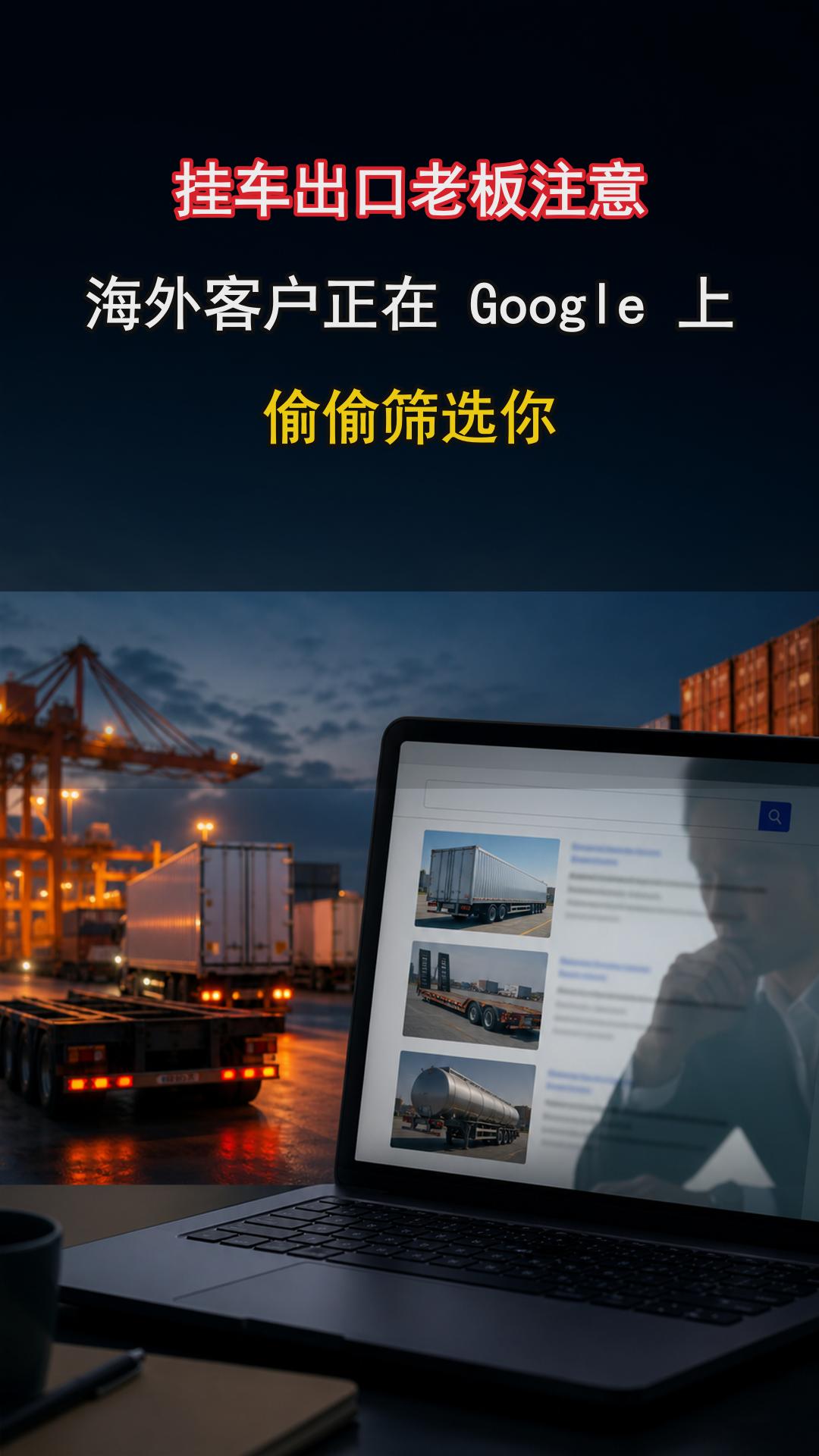
 Note for dealers exporting cars: overseas customers are “quietly screening” you on Google


Related Products
 EasyCamp SaaS Smart Website Marketing SystemE-Yingbao SaaS Smart Website Marketing System: AI-powered, zero-code website building. Rapidly launch multilingual independent e-commerce sites in just 10 minutes. Global server acceleration and AI-driven SEO optimization empower businesses to efficiently connect with global markets. The seamless integration of technology and user-friendly operation makes building e-commerce sites incredibly simple.
 AI+SEM Intelligent Advertising Marketing SystemAI+SEM drives intelligent ad creation, empowering full-funnel precision advertising marketing. The system automatically generates weekly/monthly reports, AI recommends keywords and target countries, monitors core metrics in real-time with intelligent alerts, and enables one-click high-conversion ad solutions to help quickly acquire customers and improve ROI.
 AI+SEO Dual Engine Optimization ServiceEasyWin AI+SEO Dual Engine Optimization System leverages AI-powered keyword mining, content generation, and comprehensive technical optimization to help foreign trade enterprises acquire high-quality organic traffic, significantly improving search rankings and conversion rates.
 AI+SNS Social Media Marketing SystemYingbao AI+SNS Social Media Marketing System - Precision social capture for the social media era. Supports one-click content synchronization across major platforms like Facebook and LinkedIn. AI intelligently rewrites posts for enhanced relevance. 24/7 AI customer service and user profiling analysis empower businesses to efficiently expand into global markets.
 AI+SEO营销解决方案易营宝AI+SEO营销解决方案,通过AI批量写作、智能生成TDK、精准关键词扩词等功能,全面优化网站SEO效果,提升流量与转化率。助力企业构建高效智能网站新生态。
 AI+SEM Advertising Marketing SolutionsAI+SEM Advertising Marketing Solution leverages AI technology to deeply empower SEM ad campaigns. It automatically generates weekly/monthly reports using AI, presenting account data across multiple dimensions for comprehensive insights into campaign performance and trends. The system precisely recommends keywords and target countries, intelligently generates high-conversion ad copy, and enables one-click activation of efficient campaign plans to help businesses rapidly acquire customers. Simultaneously, it monitors core metrics in real time, intelligently identifies abnormal fluctuations, and issues timely alerts to ensure stable, high-return advertising results.
 Domain Name ServicesEasyWin provides professional domain name services, including intelligent queries, one-stop registration, brand protection, and full lifecycle management, helping businesses build a digital brand image.
 EasyOperate B2C Cross-Border E-Commerce Platform & Independent WebsiteEasyStore B2C Cross-border E-commerce Independent Store is an intelligent website building and cross-border e-commerce integrated solution independently developed by EasyStore Information Technology (Beijing) Co., Ltd. The system is specially designed for small and medium-sized as well as large export enterprises, integrating 'website building, operation, marketing, advertising, and conversion' into one, helping enterprises quickly establish cross-border e-commerce independent stores to achieve brand globalization and global sales growth.
The platform supports multiple languages, multiple currencies, and multi-channel marketing, with built-in AI intelligent translation and SEO optimization systems, suitable for mainstream markets such as Southeast Asia, Europe and America, Latin America, and the Middle East, assisting Chinese manufacturing enterprises in efficiently deploying international e-commerce strategies. SSL证书易营宝提供专业SSL安全证书服务,包括单域名和泛域名证书,确保网站数据传输加密、身份验证和完整性保护,助力企业建立安全可信的在线业务环境。









