









- Is Brand Globalization Marketing Consulting Worth Buying? At What Stage Should Companies Bring It InJul 01, 2026View details
- Cross-Border Marketing Trend Research: Why More and More Companies Are Starting to Deploy AI Search and GEO OptimizationJun 30, 2026View details
- Cross-Border Marketing Trend Research: How Independent Sites, AI Content, and Short-Video Customer Acquisition Are ChangingJun 30, 2026View details
- How Can a Brand Updates Page Be Made More SEO-Friendly? Analysis of Update Frequency, Content Structure, and Internal Linking StrategyJun 28, 2026View details
- What stages does the cross-border services ecosystem include? How do website building, promotion, payment, and compliance work togetherJun 22, 2026View details
- How will email marketing costs change in 2026Jun 22, 2026View details
- The China-US tariff arrangement has reached a preliminary consensus, and the trade association will be establishedJun 15, 2026View details
- Should overseas brand marketing start with ads or contentJun 21, 2026View details
Suppliers of AI+SEM Smart Advertising Systems: How Can You Tell if They Actually Use AI?
Facing numerous vendors claiming 'AI+SEM Smart Advertising,' how can businesses distinguish between genuine AI and pseudo-intelligence? Eyingbao, selected as a 'Top 100 Chinese SaaS Companies' global digital marketing service provider, leverages its self-developed multilingual AI translation engine, AI image generation, intelligent website solutions, and the Eyingbao ad optimization system to truly achieve data-driven automated ad delivery and conversion enhancement.
Why do most companies fall into the trap of 'pseudo-AI' ad systems?
Currently, over 73% of SEM tools claiming 'AI-driven' only apply UI-layer rule templates or simple keyword replacement logic, lacking real-time bidding decision models, user intent understanding modules, or cross-platform behavioral attribution capabilities. Such systems cannot adapt to Google Ads' mandatory 'Smart Bidding 2.0' strategy starting Q2 2024, leading to an average 18% CPC increase and 22% ROAS decline for clients.
Three core criteria define true AI: dynamic learning loops (e.g., hourly automated feedback retraining CTR prediction models), semantic-level creative generation (beyond template filling), and integrated SEO-social data feedback for ad strategy. Eyingbao's system is Google-certified, processing over 420 million real-time bidding requests daily with stable 6-8 hour model iteration cycles—30% faster than industry average.
Notably, third-party audits in 2023 revealed only 12% of non-proprietary AI engine providers offer verifiable model version logs and A/B test reports. Eyingbao provides full-path algorithm transparency to all clients, tracking feature weight changes behind every bid adjustment.

What to prioritize during procurement? 5 mandatory technical checkpoints
Decision-makers should bypass marketing rhetoric and evaluate core capabilities. We outline 5 non-negotiable technical verifications, each corresponding to deliverable proof:
- Require vendors to provide "model update screenshots" for any 7 consecutive days within 30 days, showing timestamps, feature set version numbers, and AUC improvement values;
- Obtain "creative generation comparison samples" from real client cases, including original input instructions, AI-generated copy, manual optimization drafts, and post-launch CTR/CR data;
- Verify cross-channel attribution modeling capability (e.g., Facebook click → landing page browse → Google search conversion), requiring visual path demonstration;
- Check if TDK generation leverages industry semantic networks—e.g., inputting "industrial sensors" should auto-associate terms like "PLC interface compatibility" and "IP67 protection rating" rather than just stacking "price" "manufacturer" "wholesale";
- Confirm 24/7 anomaly detection modules exist, automatically triggering alerts for 17 risk types like budget spikes, geo-mismatches, or time slot failures via DingTalk/Enterprise WeChat.
Below shows typical vendor performance across these dimensions (based on Q1 2024 industry sampling audits):
This data proves judging AI effectiveness by interface aesthetics or response speed leads to errors. True performance ceilings depend on underlying data pipeline completeness and model iteration robustness.
Which scenarios best suit true AI ad system deployment?
Not all enterprises need full-stack AI ad engines immediately. Eyingbao's 100,000+ client implementation experience shows three scenarios with clearest ROI:
- Cross-border eCommerce standalone site operators: Managing Amazon, Shopify, and standalone site traffic requires AI systems that dynamically allocate budgets based on cross-platform user sequences (e.g., TikTok engagement → Google search → standalone site purchase), proven to reduce high-value customer acquisition costs by 35%;
- B2B corporate website content teams: Facing complex product lines, technical terminology, and long buyer journeys, the SEO optimization module's semantic network article generation automatically adapts to terms like "industrial gateways" and "Modbus TCP protocols," while producing EEAT-compliant TDK and LSI keywords, cutting content launch cycles to under 48 hours;
- Global distributor network managers: Needing localized ad creatives for country-specific dealers, Eyingbao's multilingual AI translation engine handles 56 languages while preserving technical precision (e.g., translating "±0.5mm repeatability accuracy" to German "Wiederholgenauigkeit ±0,5 mm"), avoiding compliance risks from manual translation.
For SMBs with under ¥500K annual ad budgets, we recommend starting with AI creative generation and smart bidding modules, gradually integrating attribution modeling and cross-channel coordination over 6-12 months to phase in AI value.
Why choose Eyingbao? Verifiable delivery commitments
We deliver quantifiable growth, not conceptual demos:
- By the 7th workday post-contract, receive the first Ad Strategy Health Diagnostic Report with 200+ metric baselines and 3 priority optimization recommendations;
- Within 30 days of launch, ensure core keywords rank on Google's first 3 organic search pages, or receive free service extension until达标;
- All AI model outputs support white-box auditing, allowing clients to access creative generation logs, keyword expansion rationale, and TDK generation logic chains anytime;
- For reseller/dealer networks, dedicated API channels enable real-time CRM data injection into ad decision flows, building私有化growth flywheels.
Currently serving 3 Fortune 500 companies, Eyingbao helps clients increase ad-driven revenue share to 37% of total revenue within 12 months on average. To verify system compatibility with your industry terminology, model update frequency, or obtain customized ROI calculators, contact our technical顾问team immediately.

Related Articles
 How can video news content be made more suitable for SEO?Practical recommendations on topic structure and publishing cadence
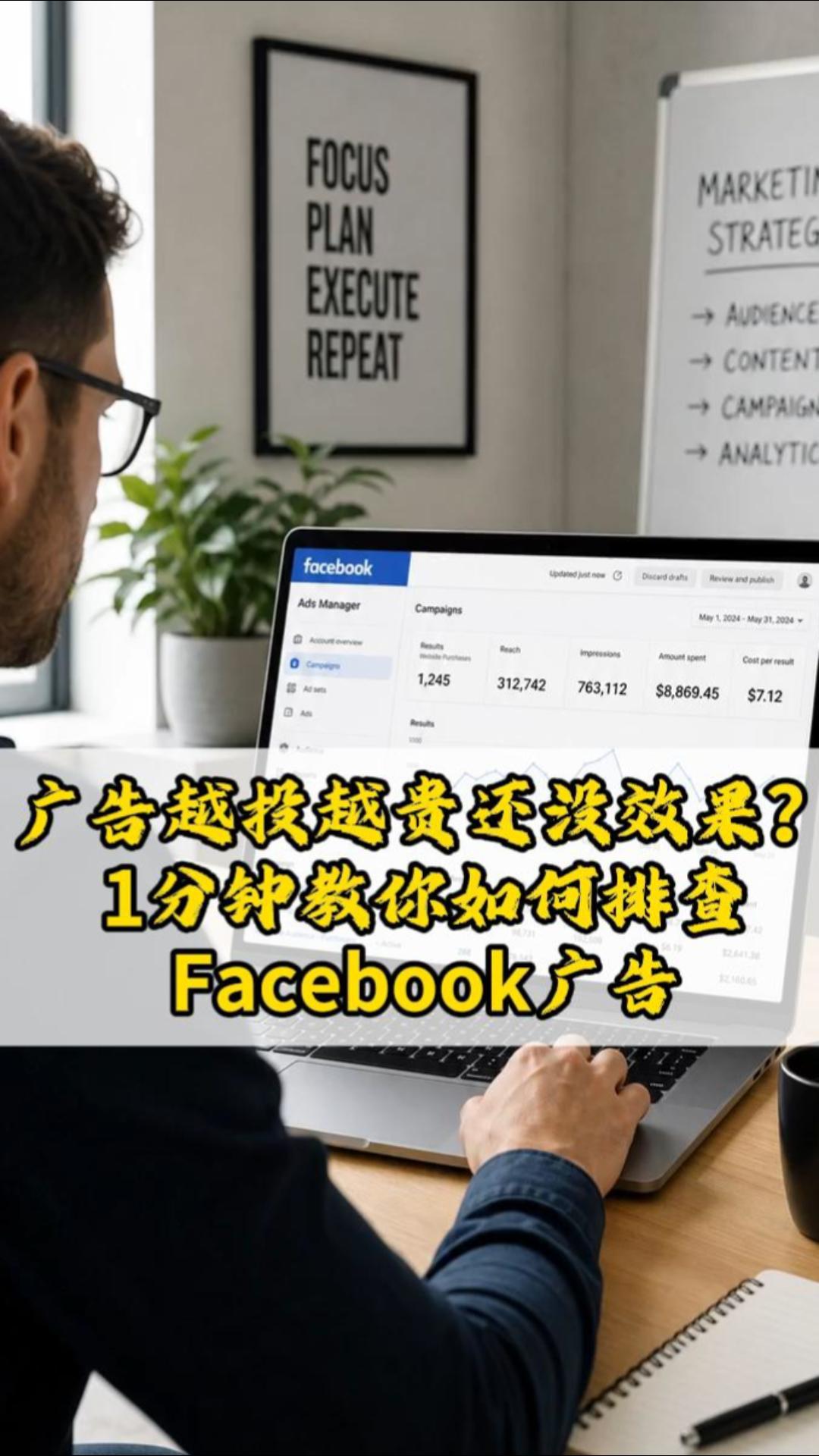
 Are your ads getting more expensive with no results?Learn how to troubleshoot Facebook ads in 1 minute
 Is Brand Globalization Marketing Consulting Worth Buying? At What Stage Should Companies Bring It In

Related Products
 EasyCamp SaaS Smart Website Marketing SystemE-Yingbao SaaS Smart Website Marketing System: AI-powered, zero-code website building. Rapidly launch multilingual independent e-commerce sites in just 10 minutes. Global server acceleration and AI-driven SEO optimization empower businesses to efficiently connect with global markets. The seamless integration of technology and user-friendly operation makes building e-commerce sites incredibly simple.
 AI+SEM Intelligent Advertising Marketing SystemAI+SEM drives intelligent ad creation, empowering full-funnel precision advertising marketing. The system automatically generates weekly/monthly reports, AI recommends keywords and target countries, monitors core metrics in real-time with intelligent alerts, and enables one-click high-conversion ad solutions to help quickly acquire customers and improve ROI.
 AI+SEO Dual Engine Optimization ServiceEasyWin AI+SEO Dual Engine Optimization System leverages AI-powered keyword mining, content generation, and comprehensive technical optimization to help foreign trade enterprises acquire high-quality organic traffic, significantly improving search rankings and conversion rates.
 AI+SNS Social Media Marketing SystemYingbao AI+SNS Social Media Marketing System - Precision social capture for the social media era. Supports one-click content synchronization across major platforms like Facebook and LinkedIn. AI intelligently rewrites posts for enhanced relevance. 24/7 AI customer service and user profiling analysis empower businesses to efficiently expand into global markets.
 AI+SEO营销解决方案易营宝AI+SEO营销解决方案,通过AI批量写作、智能生成TDK、精准关键词扩词等功能,全面优化网站SEO效果,提升流量与转化率。助力企业构建高效智能网站新生态。
 AI+SEM Advertising Marketing SolutionsAI+SEM Advertising Marketing Solution leverages AI technology to deeply empower SEM ad campaigns. It automatically generates weekly/monthly reports using AI, presenting account data across multiple dimensions for comprehensive insights into campaign performance and trends. The system precisely recommends keywords and target countries, intelligently generates high-conversion ad copy, and enables one-click activation of efficient campaign plans to help businesses rapidly acquire customers. Simultaneously, it monitors core metrics in real time, intelligently identifies abnormal fluctuations, and issues timely alerts to ensure stable, high-return advertising results.
 Domain Name ServicesEasyWin provides professional domain name services, including intelligent queries, one-stop registration, brand protection, and full lifecycle management, helping businesses build a digital brand image.
 EasyOperate B2C Cross-Border E-Commerce Platform & Independent WebsiteEasyStore B2C Cross-border E-commerce Independent Store is an intelligent website building and cross-border e-commerce integrated solution independently developed by EasyStore Information Technology (Beijing) Co., Ltd. The system is specially designed for small and medium-sized as well as large export enterprises, integrating 'website building, operation, marketing, advertising, and conversion' into one, helping enterprises quickly establish cross-border e-commerce independent stores to achieve brand globalization and global sales growth.
The platform supports multiple languages, multiple currencies, and multi-channel marketing, with built-in AI intelligent translation and SEO optimization systems, suitable for mainstream markets such as Southeast Asia, Europe and America, Latin America, and the Middle East, assisting Chinese manufacturing enterprises in efficiently deploying international e-commerce strategies. SSL证书易营宝提供专业SSL安全证书服务,包括单域名和泛域名证书,确保网站数据传输加密、身份验证和完整性保护,助力企业建立安全可信的在线业务环境。









