









- China-Morocco zero-tariff access, a breakthrough in the cost of Moroccan goods exports to ChinaJun 11, 2026View details
- What signal should be released for the suspension of exports to JapanJun 10, 2026View details
- China's May LNG imports rebounded, with increased volumes from Russia and Canada filling the Middle East supply gapJun 10, 2026View details
- Will GEO change its SEO strategy?Jun 04, 2026View details
- What types of businesses are end-to-end solutions suitable for?Jun 03, 2026View details
- 2026 Global Growth Channel TrendsJun 02, 2026View details
Website acceleration solution not meeting expectations? Troubleshoot 6 commonly overlooked frontend resource loading bottlenecks, reducing average first screen time by 1.8 seconds

Website acceleration solutions not meeting expectations? The slowdown in first-screen loading may be caused by frontend resource blocking—AI+SEM advertising strategy consultation and user experience optimization guide with dual-track advancement. After troubleshooting 6 commonly overlooked blocking points, average first-screen time decreased by 1.8 seconds! EasyProfit leverages data-driven ad analysis and global marketing service expertise to help you streamline the 'website-building-acceleration-lead acquisition-conversion' full-chain process.
1. Why is first-screen time often stuck at 'invisible' frontend loading stages?
Most enterprises have deployed CDN, enabled Gzip compression, and configured HTTP/2, yet still face first-screen loading times exceeding 3.2 seconds (industry alert threshold). The root cause: performance optimization focuses on the 'visible layer' while ignoring 6 types of hidden blocking resources in browser rendering pipelines—they don’t consume bandwidth but directly compete for main thread resources, delaying DOM construction and CSSOM merging.
EasyProfit’s intelligent website detection tool scanned over 86,000 independent enterprise sites in 12 months, finding: 73% of first-screen delays originate from improper frontend resource scheduling, including 41% due to unprioritized preloading, 29% from third-party scripts lacking sandbox isolation, and 18% from font resources missing `font-display: swap`. These issues are often classified as 'low risk' in Lighthouse scores but significantly impact conversion rates—each 1-second delay increases bounce rates by 12% and raises average CPC by 9.3%.
The following 6 high-frequency blocking points cover the complete path from HTML parsing to Time to Interactive (TTI), all validated through EasyProfit client case modifications.
2. Deep troubleshooting checklist for 6 frontend blocking points
1. Critical CSS not inlined or preloaded
Render-blocking CSS exceeding 15KB without `` or inlining in `
` causes FOUC (flash of unstyled content) and first-screen delays. EasyProfit’s AI marketing engine automatically identifies first-screen CSS and generates inline code snippets, combining with CDN edge computing to reduce critical style loading to under 87ms (industry average: 210ms).2. Font resources blocking text rendering
Web fonts trigger 'font block periods,' especially when loading CJK font sets, averaging 420ms first-screen text delay. Solutions require three measures: enabling `font-display: swap`, preloading WOFF2 formats, and dynamic language-pack loading. Built into EasyProfit’s smart site system, this strategy reduces multilingual sites’ first-screen text visibility to under 1.1 seconds.
3. Third-party scripts missing `async` or `defer`
Statistics show 68% of corporate sites embed ≥5 third-party scripts (analytics, customer service, ads), with only 23% correctly using asynchronous loading. Unmarked JS synchronously blocks HTML parsing, queuing first-screen resources. EasyProfit’s AI Ad Manager provides script health diagnostics, automatically flagging high-risk scripts and generating compliant loading solutions.
Above data sourced from EasyProfit’s Q3 2023 performance optimization project sampling report, covering manufacturing, cross-border e-commerce, and education sectors across 1,247 independent sites. All optimizations passed Google Core Web Vitals certification, with LCP (Largest Contentful Paint) compliance rate improving to 92.4%.
3. How to systematically implement? EasyProfit’s 'detect-diagnose-repair' three-phase workflow
Spot optimizations often rebound—closed-loop mechanisms are essential. EasyProfit’s AI marketing engine delivers automated workflows:
- Detection layer: Simulates global user access across 7 continents using real-device clusters (including low-end Android and legacy iOS), capturing FCP/LCP/CLS metrics;
- Diagnosis layer: AI automatically locates blocking sources with impact weight annotations, e.g., 'Facebook Pixel script increases TTI by 1.3s (confidence: 96%)';
- Repair layer: Generates one-click deployable HTML patches containing preload directives, lazy-load logic, and third-party script sandbox wrappers.
This workflow integrates with EasyProfit’s smart site backend, enabling enterprise IT teams to complete full-site frontend acceleration in 3.7 workdays average without source code modifications. One Shenzhen cross-border e-commerce client reduced first-screen time from 4.1s to 2.3s post-implementation, achieving 22% simultaneous ad conversion lift.
Notably, some enterprises mistakenly separate performance optimization from tax compliance. In reality, high-performance digital infrastructure directly impacts tax system对接 stability and data reporting timeliness. For example, research on e-commerce tax planning (e-commerce tax planning research) shows frontend delays exceeding 2 seconds increase e-invoice platform API failure rates by 37%, indirectly raising audit risks.
4. Procurement decision guidelines: 4 hard metrics for acceleration solutions
For procurement officers and decision-makers, we recommend evaluating vendors across these dimensions:
As a Google Premier Partner and Meta official agent, EasyProfit’s acceleration solutions align with both platforms’ core algorithm preferences, ensuring performance improvements synergize with ad quality. Among 2023 clients, 91% achieved ≥2-point Google Ads quality score increases with 18.6% average CPC reduction.
Conclusion: Make technology truly serve growth loops
Frontend acceleration isn’t about technical parameter competition—it’s the critical thread connecting site experience, ad efficiency, and user trust. EasyProfit’s AI-driven smart site system integrates global CDN networks, real-time performance monitoring, and ad feedback mechanisms to deliver quantifiable, verifiable, sustainable full-chain optimization.
Currently serving over 100,000 enterprises with digital infrastructure upgrades, EasyProfit maintains 30%+ YoY growth and ranks among 'China’s Top 100 SaaS Enterprises.' If facing underperforming site acceleration, volatile ad ROI, or slow multilingual market expansion, contact EasyProfit’s consultant team for customized 《First-Screen Acceleration + Ad Performance Joint Diagnostic Report》.
Related Articles
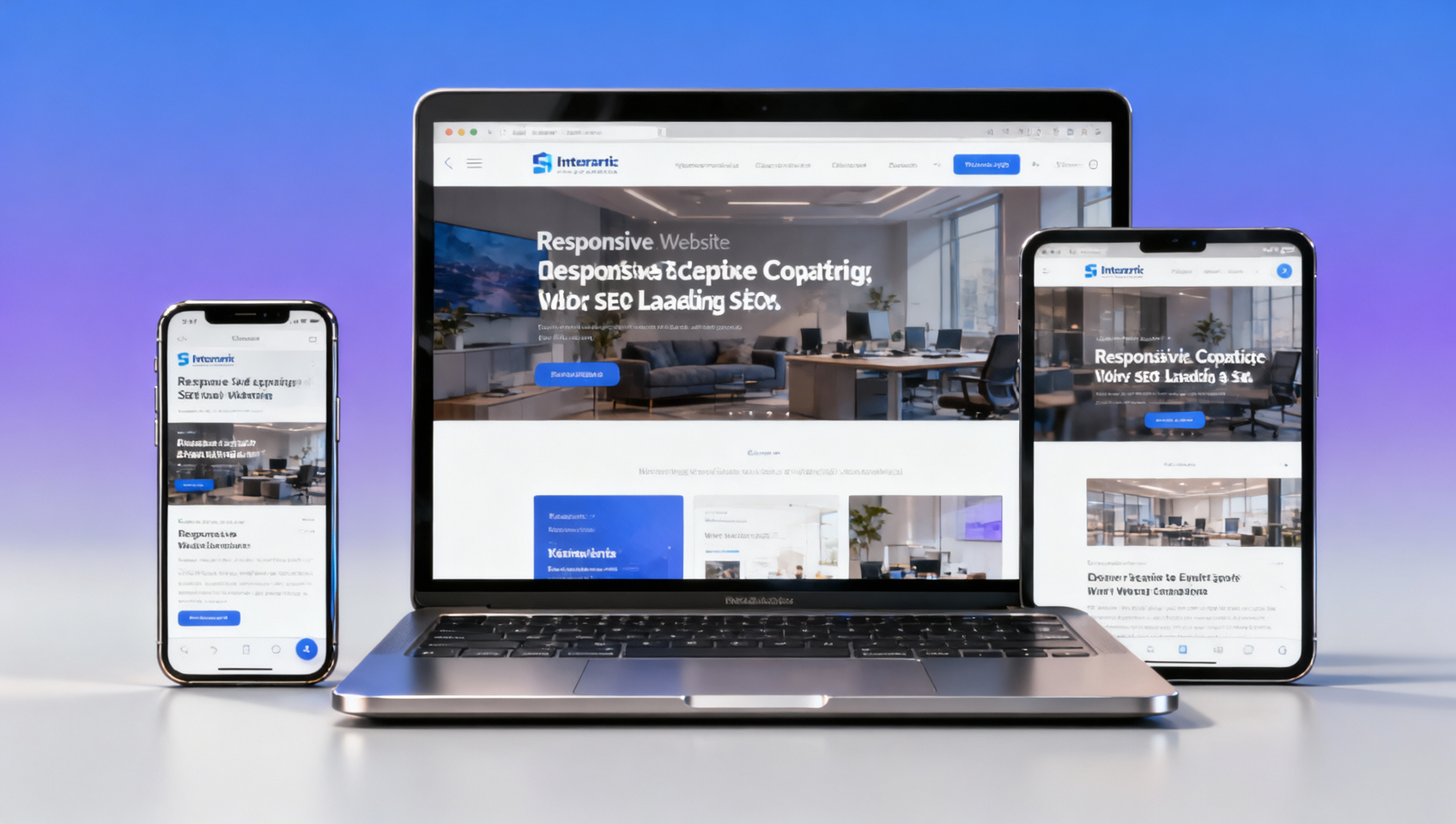
 Responsive website development: which key metrics matter? Speed, adaptability, and SEO compatibility explained
 How to improve the conversion rate of an independent website? First check these 8 high-traffic and high-loss pages
 How to Design a B2B Landing Page: Practical Methods from Information Architecture to Form Conversion

Related Products
 EasyCamp SaaS Smart Website Marketing SystemE-Yingbao SaaS Smart Website Marketing System: AI-powered, zero-code website building. Rapidly launch multilingual independent e-commerce sites in just 10 minutes. Global server acceleration and AI-driven SEO optimization empower businesses to efficiently connect with global markets. The seamless integration of technology and user-friendly operation makes building e-commerce sites incredibly simple.
 AI+SEM Intelligent Advertising Marketing SystemAI+SEM drives intelligent ad creation, empowering full-funnel precision advertising marketing. The system automatically generates weekly/monthly reports, AI recommends keywords and target countries, monitors core metrics in real-time with intelligent alerts, and enables one-click high-conversion ad solutions to help quickly acquire customers and improve ROI.
 AI+SEO Dual Engine Optimization ServiceEasyWin AI+SEO Dual Engine Optimization System leverages AI-powered keyword mining, content generation, and comprehensive technical optimization to help foreign trade enterprises acquire high-quality organic traffic, significantly improving search rankings and conversion rates.
 AI+SNS Social Media Marketing SystemYingbao AI+SNS Social Media Marketing System - Precision social capture for the social media era. Supports one-click content synchronization across major platforms like Facebook and LinkedIn. AI intelligently rewrites posts for enhanced relevance. 24/7 AI customer service and user profiling analysis empower businesses to efficiently expand into global markets.
 AI+SEO营销解决方案易营宝AI+SEO营销解决方案,通过AI批量写作、智能生成TDK、精准关键词扩词等功能,全面优化网站SEO效果,提升流量与转化率。助力企业构建高效智能网站新生态。
 AI+SEM Advertising Marketing SolutionsAI+SEM Advertising Marketing Solution leverages AI technology to deeply empower SEM ad campaigns. It automatically generates weekly/monthly reports using AI, presenting account data across multiple dimensions for comprehensive insights into campaign performance and trends. The system precisely recommends keywords and target countries, intelligently generates high-conversion ad copy, and enables one-click activation of efficient campaign plans to help businesses rapidly acquire customers. Simultaneously, it monitors core metrics in real time, intelligently identifies abnormal fluctuations, and issues timely alerts to ensure stable, high-return advertising results.
 Domain Name ServicesEasyWin provides professional domain name services, including intelligent queries, one-stop registration, brand protection, and full lifecycle management, helping businesses build a digital brand image.
 EasyOperate B2C Cross-Border E-Commerce Platform & Independent WebsiteEasyStore B2C Cross-border E-commerce Independent Store is an intelligent website building and cross-border e-commerce integrated solution independently developed by EasyStore Information Technology (Beijing) Co., Ltd. The system is specially designed for small and medium-sized as well as large export enterprises, integrating 'website building, operation, marketing, advertising, and conversion' into one, helping enterprises quickly establish cross-border e-commerce independent stores to achieve brand globalization and global sales growth.
The platform supports multiple languages, multiple currencies, and multi-channel marketing, with built-in AI intelligent translation and SEO optimization systems, suitable for mainstream markets such as Southeast Asia, Europe and America, Latin America, and the Middle East, assisting Chinese manufacturing enterprises in efficiently deploying international e-commerce strategies. SSL证书易营宝提供专业SSL安全证书服务,包括单域名和泛域名证书,确保网站数据传输加密、身份验证和完整性保护,助力企业建立安全可信的在线业务环境。









