









- What multilingual website services are available in Sanya? Which model is more suitable for local businesses going global?Jul 08, 2026View details
- How to view the complete list of China SaaS companies in the top 100? Practical methods for screening website-building and marketing service providersJul 08, 2026View details
- How to view pricing in the global traffic ecosystem? Cost comparison of search, social media, and content channel advertisingJul 06, 2026View details
- How to assess foreign trade website development trends?Looking at 2026 changes from multilingual,AI content to conversion pathsJul 04, 2026View details
- What are the new trends in multilingual marketing data analytics tools in 2026? Focus on attribution、automation and complianceJul 04, 2026View details
- Is Brand Globalization Marketing Consulting Worth Buying? At What Stage Should Companies Bring It InJul 01, 2026View details
- Cross-Border Marketing Trend Research: Why More and More Companies Are Starting to Deploy AI Search and GEO OptimizationJun 30, 2026View details
- Cross-Border Marketing Trend Research: How Independent Sites, AI Content, and Short-Video Customer Acquisition Are ChangingJun 30, 2026View details
How UX Optimization Case Studies Guide Website Revamps
A successful redesign often begins with real data and user experience insights. This article combines user experience optimization examples to help project management and engineering collaboration clarify the redesign path, while balancing access efficiency, lead conversion, and long-term operational value in the integrated scenario of website and marketing services.
What kind of user experience optimization examples are truly worth using as redesign references?
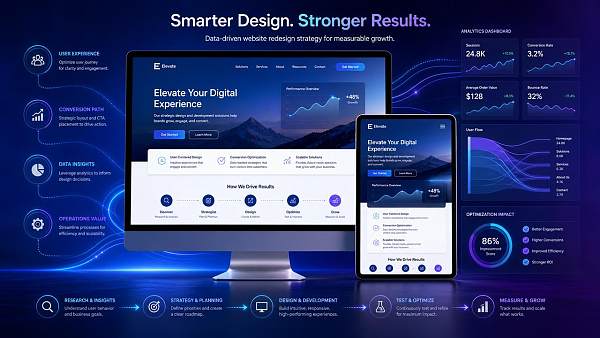
When many teams see user experience optimization examples, their first reaction is often to copy the page format. In fact, what is worth referencing is not the surface style, but the problem definition, data sources, validation methods, and business outcomes behind the examples.
In the website + marketing services integration field, high-quality examples usually answer four questions at the same time: where users get stuck, why they get stuck, what was changed, and how the results were measured. Only when these four steps are complete does an example have the value to guide a redesign.
For example, a high bounce rate on the homepage of a corporate website is not necessarily a visual issue. It may also be caused by unclear above-the-fold information, slow loading, scattered entry points, or a mismatch between the conversion path and search intent. The significance of user experience optimization examples lies in uncovering the real causes.
When serving global growth projects over the long term, E-MarketBao Information Technology (Beijing) Co., Ltd. usually first connects data from website building, SEO optimization, social media marketing, and advertising landing pages, and then determines redesign priorities. User experience optimization examples formed in this way are better able to support subsequent decision-making.
Before a redesign, what data should be reviewed first to avoid “optimizing based on intuition”?
A common misunderstanding is that teams rush to change navigation, switch styles, or redo the homepage before having evidence. As a result, after launch, traffic does not decline, but conversions do. Truly effective user experience optimization examples almost always begin with data diagnosis.
The data that should be prioritized can be divided into three categories:
- Traffic quality: source channels, search terms, ad keywords, and landing page relevance.
- Behavior process: time on page, scroll depth, click heat zones, and form abandonment points.
- Outcome metrics: inquiry rate, registration rate, cost per lead, return visit rate, and deal-assist rate.
If it is a marketing-oriented website, SEO performance should also be included in redesign decisions. Stable keyword rankings but weak conversion indicate problems with information presentation; good conversion but poor organic traffic indicates that content structure and crawl friendliness need to be optimized in parallel.
Some teams also use industry research materials to help judge content entry points and user focus directions, such as designing content sections around topics like investment, policy, and solutions. Specialized content such as investment research on environmental protection industry funds in the energy-saving and environmental protection industry can also serve as one of the reference sources for information architecture.
In user experience optimization examples, what are the most common redesign focus points?
Looking at a large number of user experience optimization examples, what truly affects results is often not a sweeping rebuild, but continuous optimization at several key points. These are usually concentrated in the following areas.
First, above-the-fold value communication
Within the first few seconds after entering a page, users need to quickly judge who you are, what problems you can solve, and where they should click next. Vague headlines, piled-up selling points, and unclear buttons all weaken above-the-fold efficiency.
Second, shortening the conversion path
Excellent user experience optimization examples often compress multi-step jumps into completion within a single page. For example, reducing form fields, merging repetitive explanations, and moving core proof points forward can all reduce decision-making friction.
Third, content structure serving search intent
When users enter from search, they expect to see direct answers. If a page only emphasizes brand introduction, but lacks solutions, case studies, pricing logic, or implementation timelines, then no matter how much traffic it gets, it will still be difficult to generate effective inquiries.
Fourth, closing the mobile experience gap
Today, many user experience optimization examples show that mobile issues are more likely than PC issues to drag down overall conversion. Fonts that are too small, crowded buttons, overly heavy images, and obstructive pop-ups are all high-frequency problems.
Under different redesign goals, how should user experience optimization examples be selected?
Not all user experience optimization examples are suitable for the current project. When selecting them, you cannot look only at whether the industry seems similar; more importantly, you need to see whether the goals are aligned. Different goals mean completely different reference priorities.
If the current task is marketing conversion, do not be misled by purely showcase-style examples; if the goal is international content expansion, then priority should be given to user experience optimization examples with mature multilingual structures, page scalability, and localized search logic.
During the redesign process, which risks are most easily overlooked?
Many project failures are not due to a lack of reference to user experience optimization examples, but because constraints were overlooked during execution. Especially in integrated website and marketing projects, technology, content, and advertising often affect one another.
High-frequency risks mainly include:
- Only changing the visuals without changing the information structure, resulting in an experience that seems upgraded while conversion remains unimproved.
- Ignoring the transfer of authority from old pages, causing a noticeable short-term drop in SEO traffic after the redesign.
- Failing to conduct gray-scale testing and launching everything at once, making issues difficult to roll back in time.
- Lacking unified tracking standards, making it impossible to judge redesign effectiveness.
- Rigidly copying external examples while ignoring one’s own business cycle and customer decision chain.
This is also why mature teams, when referencing user experience optimization examples, break examples down into “reusable methods” and “non-replicable context.” The former can be borrowed; the latter must be rebuilt.
How can user experience optimization examples truly be turned into executable redesign plans?
If you want user experience optimization examples to change from “inspiration” into “results,” it is recommended to move forward in four steps. This method is suitable for the simultaneous redesign of official websites, topic pages, advertising landing pages, and content sites.
- First define the core goal, and select only one primary goal, such as increasing inquiry volume or reducing bounce rate.
- Then identify the key pages, prioritizing high-traffic, high-value, low-conversion pages.
- Next establish test hypotheses, such as rewriting the above-the-fold section, shortening the form, or moving the case study section forward.
- Finally validate in stages by comparing data before and after launch, rather than relying only on subjective feedback.
During the content enhancement stage, you can also appropriately add highly relevant topic pages to help capture segmented search demand. If the business involves industry research, capital analysis, or policy interpretation, content formats such as investment research on environmental protection industry funds in the energy-saving and environmental protection industry can also inspire the organization of topic pages.
For projects that need to balance technical efficiency and marketing results, the practical experience of E-MarketBao Information Technology (Beijing) Co., Ltd. shows that redesign should not focus only on the page itself, but should treat website architecture, SEO strategy, ad conversion support, and content operations as the same growth chain.
FAQ summary: when using user experience optimization examples as redesign references, how can you quickly judge whether they are usable?
In summary, the real value of user experience optimization examples is not in telling you what a page should look like, but in helping you judge problems, prioritize tasks, and validate results. Redesign is not a one-time beautification project, but a systematic optimization centered on business goals.
If you are currently advancing a website upgrade, you may as well start with a high-value page, establish a data baseline, screen suitable user experience optimization examples, validate in small steps, and then gradually expand to the entire site. This is more stable and also makes it easier to achieve sustainable growth results.
Related Articles
 What multilingual website services are available in Sanya? Which model is more suitable for local businesses going global?
 How to view the complete list of China SaaS companies in the top 100? Practical methods for screening website-building and marketing service providers
 There are so many used heavy-duty construction machines for foreign trade. How exactly should we acquire customers?

Related Products
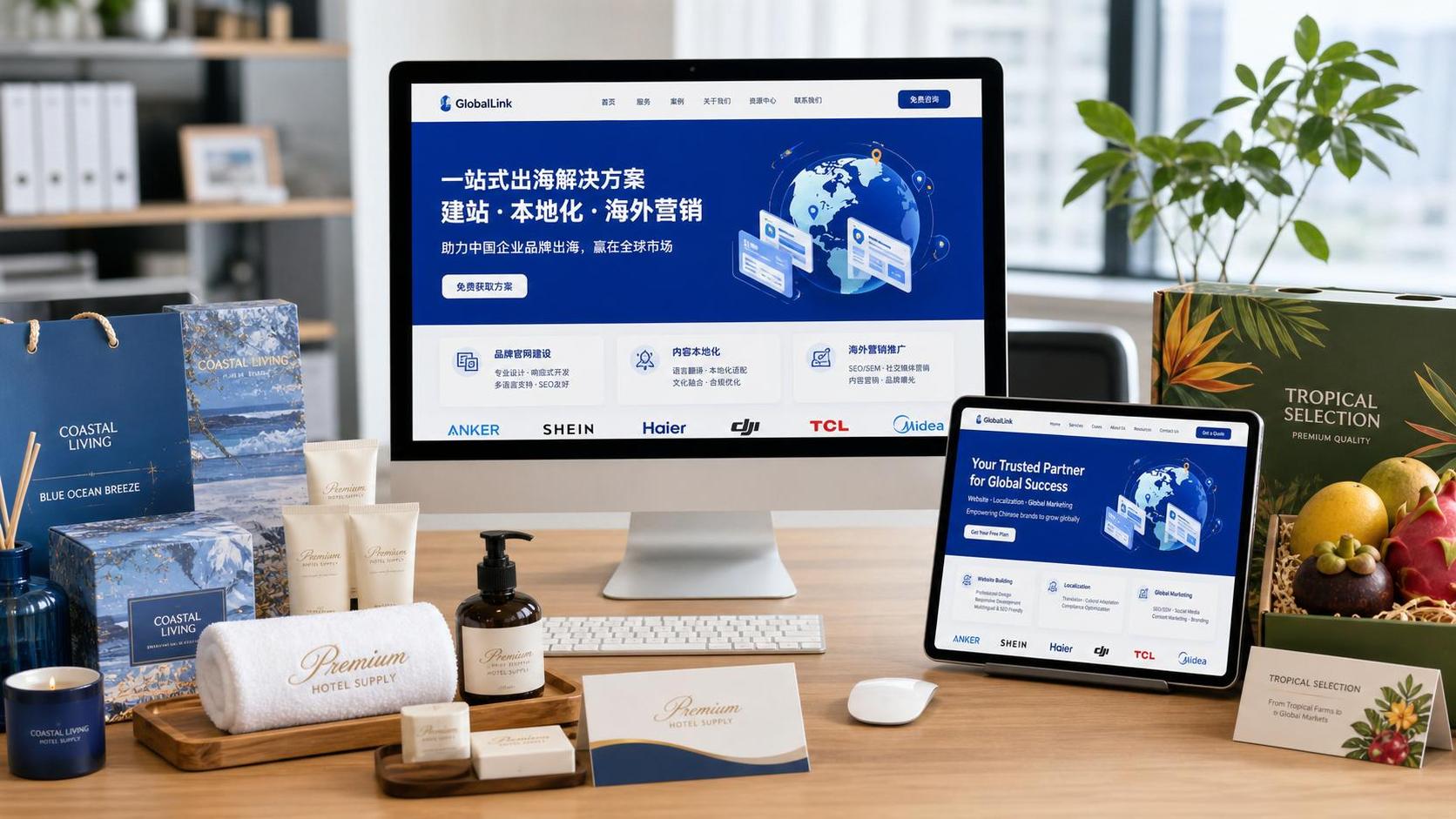
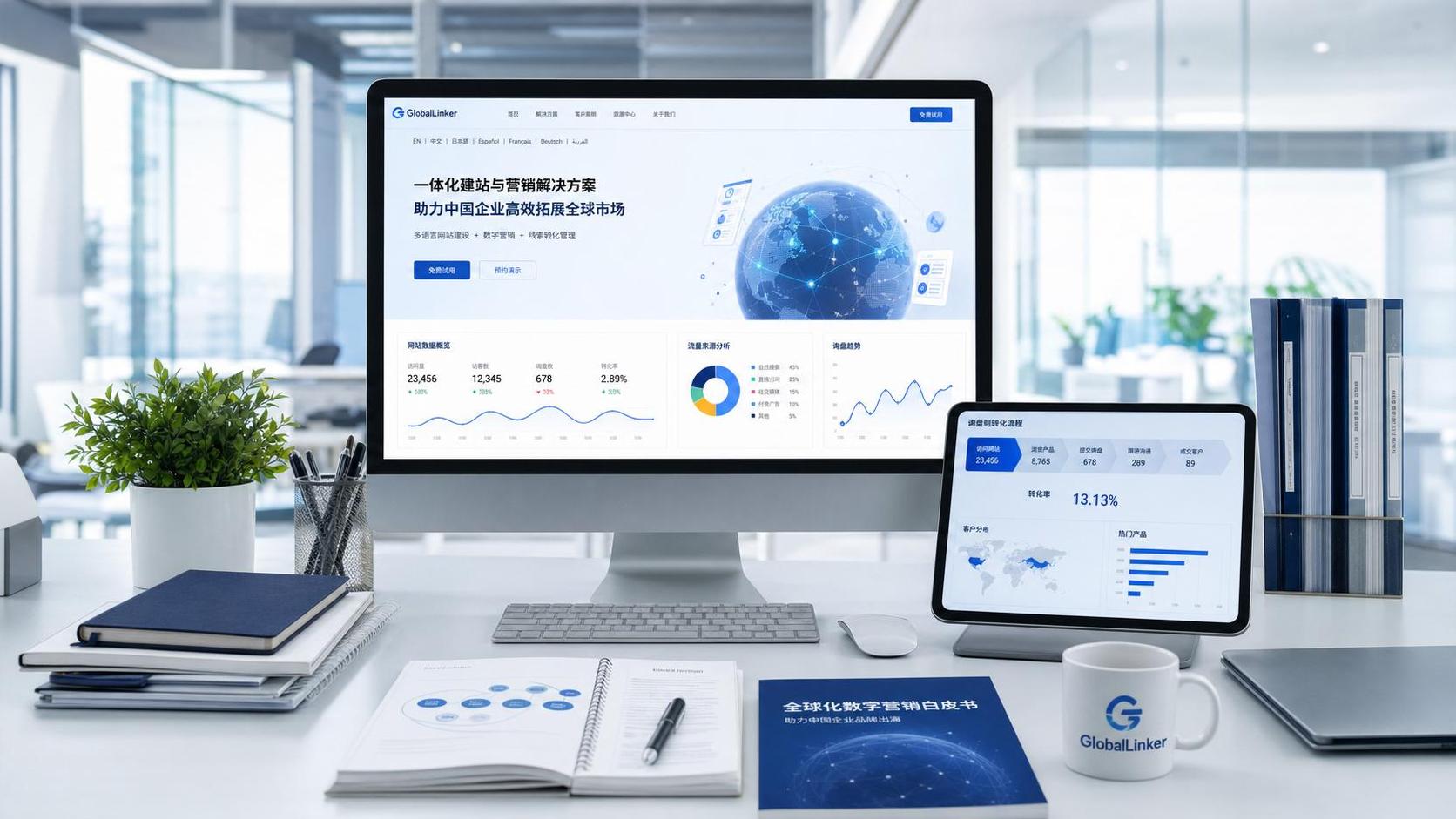
 EasyCamp SaaS Smart Website Marketing SystemE-Yingbao SaaS Smart Website Marketing System: AI-powered, zero-code website building. Rapidly launch multilingual independent e-commerce sites in just 10 minutes. Global server acceleration and AI-driven SEO optimization empower businesses to efficiently connect with global markets. The seamless integration of technology and user-friendly operation makes building e-commerce sites incredibly simple.
 AI+SEM Intelligent Advertising Marketing SystemAI+SEM drives intelligent ad creation, empowering full-funnel precision advertising marketing. The system automatically generates weekly/monthly reports, AI recommends keywords and target countries, monitors core metrics in real-time with intelligent alerts, and enables one-click high-conversion ad solutions to help quickly acquire customers and improve ROI.
 AI+SEO Dual Engine Optimization ServiceEasyWin AI+SEO Dual Engine Optimization System leverages AI-powered keyword mining, content generation, and comprehensive technical optimization to help foreign trade enterprises acquire high-quality organic traffic, significantly improving search rankings and conversion rates.
 AI+SNS Social Media Marketing SystemYingbao AI+SNS Social Media Marketing System - Precision social capture for the social media era. Supports one-click content synchronization across major platforms like Facebook and LinkedIn. AI intelligently rewrites posts for enhanced relevance. 24/7 AI customer service and user profiling analysis empower businesses to efficiently expand into global markets.
 AI+SEO营销解决方案易营宝AI+SEO营销解决方案,通过AI批量写作、智能生成TDK、精准关键词扩词等功能,全面优化网站SEO效果,提升流量与转化率。助力企业构建高效智能网站新生态。
 AI+SEM Advertising Marketing SolutionsAI+SEM Advertising Marketing Solution leverages AI technology to deeply empower SEM ad campaigns. It automatically generates weekly/monthly reports using AI, presenting account data across multiple dimensions for comprehensive insights into campaign performance and trends. The system precisely recommends keywords and target countries, intelligently generates high-conversion ad copy, and enables one-click activation of efficient campaign plans to help businesses rapidly acquire customers. Simultaneously, it monitors core metrics in real time, intelligently identifies abnormal fluctuations, and issues timely alerts to ensure stable, high-return advertising results.
 Domain Name ServicesEasyWin provides professional domain name services, including intelligent queries, one-stop registration, brand protection, and full lifecycle management, helping businesses build a digital brand image.
 EasyOperate B2C Cross-Border E-Commerce Platform & Independent WebsiteEasyStore B2C Cross-border E-commerce Independent Store is an intelligent website building and cross-border e-commerce integrated solution independently developed by EasyStore Information Technology (Beijing) Co., Ltd. The system is specially designed for small and medium-sized as well as large export enterprises, integrating 'website building, operation, marketing, advertising, and conversion' into one, helping enterprises quickly establish cross-border e-commerce independent stores to achieve brand globalization and global sales growth.
The platform supports multiple languages, multiple currencies, and multi-channel marketing, with built-in AI intelligent translation and SEO optimization systems, suitable for mainstream markets such as Southeast Asia, Europe and America, Latin America, and the Middle East, assisting Chinese manufacturing enterprises in efficiently deploying international e-commerce strategies. SSL证书易营宝提供专业SSL安全证书服务,包括单域名和泛域名证书,确保网站数据传输加密、身份验证和完整性保护,助力企业建立安全可信的在线业务环境。









