









- What should you focus on in the latest enterprise SaaS report? From renewal rates and delivery costs to overseas growth opportunitiesJul 12, 2026View details
- What signals are worth paying attention to in a cross-border marketing trend report? B2B companies should look at these 6 signalsJul 11, 2026View details
- How to Read a Cross-Border Marketing Trends Report? Five Key Dimensions for Evaluating Channel OpportunitiesJul 11, 2026View details
- Which channel has the highest ROI in the global traffic ecosystem? Comparative analysis of search, social media, and advertisingJul 10, 2026View details
- What multilingual website services are available in Sanya? Which model is more suitable for local businesses going global?Jul 08, 2026View details
- How to view the complete list of China SaaS companies in the top 100? Practical methods for screening website-building and marketing service providersJul 08, 2026View details
- How to view pricing in the global traffic ecosystem? Cost comparison of search, social media, and content channel advertisingJul 06, 2026View details
- How to assess foreign trade website development trends?Looking at 2026 changes from multilingual,AI content to conversion pathsJul 04, 2026View details
Website design style too similar? Use brand color system + micro-interaction lines to create memorable anchor points
Are all website design styles the same? As a professional SEO optimization company and cross-border website construction service provider, EYINGBAO creates differentiated memory anchors through a brand color system + micro-interaction lines, helping businesses break through the homogenization dilemma.
Why do 90% of corporate websites leave "no impression" in users' minds?
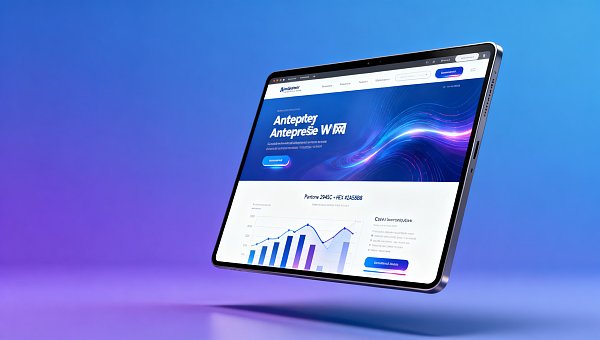
According to the 2023 Global Digital Experience Benchmark Report, users spend an average of only 48 seconds browsing corporate websites, with about 67% of visitors deciding "whether it's worth staying" within 3 seconds. When navigation bar colors are identical, button animations are similar, and whitespace rhythms are uniform, users' brains automatically categorize them as "another standard template site," with a memory retention rate below 12%.
Among EYINGBAO's 100,000+ clients, 73% proactively requested visual redesigns within 3 months after their official website launch—the core pain point isn't "unattractive," but "unmemorable, indistinguishable, and not associated with the brand." This exposes the fundamental capability lacking in current website services: transforming brand assets into perceivable, interactive, and reusable digital memory anchors.
Truly effective differentiation doesn't rely on stacking special effects but on establishing two precise systems: First, a brand color spectrum system based on CMYK/RGB dual calibration, covering 17 key touchpoints from favicon icons to scrolling loading animations; Second, a millisecond-response micro-interaction line including hover feedback, parallax scrolling, smart form validation, and 6 preset behavior modules, all supporting A/B test data feedback.
Brand Color System ≠ Changing Main Colors: A 3-Tier Structured Implementation Path
Most companies mistake "brand colors" for the primary colors in their logos, whereas a complete system requires three logical layers:
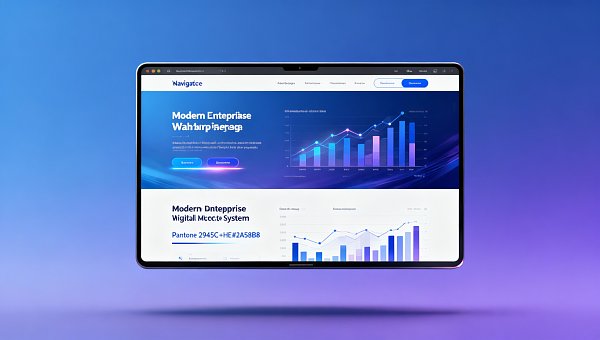
- Foundation Layer (Pantone codes + HEX values + contrast ratio ≥4.5:1): Ensures color consistency across printed materials, app icons, and website buttons on different devices;
- Application Layer (dynamic color gradient matrix): Generates 12-level brightness variations from primary colors for data charts, progress bars, status labels, etc., avoiding manual color deviations;
- Interaction Layer (emotion-triggered colors): When users complete key actions like form submissions or cart additions, preset micro-glow effects + hue shifts (±3°) reinforce positive feedback memory.
This system has been validated with EYINGBAO's manufacturing clients: after adopting structured brand color systems, website revisit rates increased by 31.2%, 14.6 percentage points higher than industry average.
How to Avoid "Pseudo-Animation Traps" in Micro-Interaction Lines?
Current market practices exhibit two typical errors: Overusing Lottie animations delays first-screen loading by ≥2.8 seconds, directly causing 32% potential client loss; Another is abusing distracting effects like hover shakes and bounces, violating WCAG 2.1 motion sensitivity standards and causing physical discomfort for some users.
EYINGBAO's micro-interaction lines strictly follow "300ms response threshold" and "≤2 visual variable changes per interaction" principles. For example, on product parameter pages, clicking specification tabs only triggers: ① Smooth horizontal line extension (CSS transform, zero repaint) and ② Corresponding content block fade-in (opacity+transform combo), with total duration controlled at 290-310ms, aligning with human instantaneous memory windows.
We preset 6 compliant animation packages for industries like finance, healthcare, and education with strict stability requirements, using Lighthouse performance scores ≥92 as delivery benchmarks.
5 Must-Verify Delivery Checklists for Procurement Decisions
When selecting website services with brand memory capabilities, companies should audit these delivery dimensions to avoid "perfect designs, failed implementations":
This checklist has been applied to EYINGBAO's state-owned enterprise projects, helping them meet SASAC's dual requirements for "measurable user experience" and "traceable brand assets" during digital transformation. Related practices also extend to complex advisory scenarios like financial risks and countermeasures in SOE mergers.
Why Choose EYINGBAO? 4-Step Precision Process to Build Your Brand Memory
We refuse to provide "generic website templates," instead offering an AI-driven customization workflow ensuring unique memory anchors for each business:
- Brand Asset Audit (7 workdays): Leveraging our 100,000+ client database to analyze digital conversion gaps in your existing VI system;
- Memory Anchor Modeling (15-day MVP delivery): Delivering 3 brand color application schemes + 2 micro-interaction line prototypes in Figma;
- Full-Channel Deployment (2-4 weeks): Simultaneously completing smart site building, SEO structure optimization, and social media landing page configurations for cross-channel memory point consistency;
- Effect Tracking Dashboard (ongoing): Monitoring brand keyword search volume, deep browsing rates, social media sentiment trends, and 6 other core metrics.
Currently serving top clients in equipment manufacturing, biopharma, and cross-border e-commerce, EYINGBAO's solutions average 41.3% organic traffic growth and 22.7% brand search term share increase. Contact our consultants immediately for customized assessments on color system compatibility, micro-interaction technical parameters, or delivery timelines.
Related Articles
Related Products
 EasyCamp SaaS Smart Website Marketing SystemE-Yingbao SaaS Smart Website Marketing System: AI-powered, zero-code website building. Rapidly launch multilingual independent e-commerce sites in just 10 minutes. Global server acceleration and AI-driven SEO optimization empower businesses to efficiently connect with global markets. The seamless integration of technology and user-friendly operation makes building e-commerce sites incredibly simple.
 AI+SEM Intelligent Advertising Marketing SystemAI+SEM drives intelligent ad creation, empowering full-funnel precision advertising marketing. The system automatically generates weekly/monthly reports, AI recommends keywords and target countries, monitors core metrics in real-time with intelligent alerts, and enables one-click high-conversion ad solutions to help quickly acquire customers and improve ROI.
 AI+SEO Dual Engine Optimization ServiceEasyWin AI+SEO Dual Engine Optimization System leverages AI-powered keyword mining, content generation, and comprehensive technical optimization to help foreign trade enterprises acquire high-quality organic traffic, significantly improving search rankings and conversion rates.
 AI+SNS Social Media Marketing SystemYingbao AI+SNS Social Media Marketing System - Precision social capture for the social media era. Supports one-click content synchronization across major platforms like Facebook and LinkedIn. AI intelligently rewrites posts for enhanced relevance. 24/7 AI customer service and user profiling analysis empower businesses to efficiently expand into global markets.
 AI+SEO营销解决方案易营宝AI+SEO营销解决方案,通过AI批量写作、智能生成TDK、精准关键词扩词等功能,全面优化网站SEO效果,提升流量与转化率。助力企业构建高效智能网站新生态。
 AI+SEM Advertising Marketing SolutionsAI+SEM Advertising Marketing Solution leverages AI technology to deeply empower SEM ad campaigns. It automatically generates weekly/monthly reports using AI, presenting account data across multiple dimensions for comprehensive insights into campaign performance and trends. The system precisely recommends keywords and target countries, intelligently generates high-conversion ad copy, and enables one-click activation of efficient campaign plans to help businesses rapidly acquire customers. Simultaneously, it monitors core metrics in real time, intelligently identifies abnormal fluctuations, and issues timely alerts to ensure stable, high-return advertising results.
 Domain Name ServicesEasyWin provides professional domain name services, including intelligent queries, one-stop registration, brand protection, and full lifecycle management, helping businesses build a digital brand image.
 EasyOperate B2C Cross-Border E-Commerce Platform & Independent WebsiteEasyStore B2C Cross-border E-commerce Independent Store is an intelligent website building and cross-border e-commerce integrated solution independently developed by EasyStore Information Technology (Beijing) Co., Ltd. The system is specially designed for small and medium-sized as well as large export enterprises, integrating 'website building, operation, marketing, advertising, and conversion' into one, helping enterprises quickly establish cross-border e-commerce independent stores to achieve brand globalization and global sales growth.
The platform supports multiple languages, multiple currencies, and multi-channel marketing, with built-in AI intelligent translation and SEO optimization systems, suitable for mainstream markets such as Southeast Asia, Europe and America, Latin America, and the Middle East, assisting Chinese manufacturing enterprises in efficiently deploying international e-commerce strategies. SSL证书易营宝提供专业SSL安全证书服务,包括单域名和泛域名证书,确保网站数据传输加密、身份验证和完整性保护,助力企业建立安全可信的在线业务环境。









