









- How Can a Brand Updates Page Be Made More SEO-Friendly? Analysis of Update Frequency, Content Structure, and Internal Linking StrategyJun 28, 2026View details
- What stages does the cross-border services ecosystem include? How do website building, promotion, payment, and compliance work togetherJun 22, 2026View details
- How will email marketing costs change in 2026Jun 22, 2026View details
- The China-US tariff arrangement has reached a preliminary consensus, and the trade association will be establishedJun 15, 2026View details
- Should overseas brand marketing start with ads or contentJun 21, 2026View details
- What determines B2C cross-border e-commerce website development costs? A breakdown of features, interfaces, and deployment methodsJun 17, 2026View details
- China-Morocco zero-tariff access, a breakthrough in the cost of Moroccan goods exports to ChinaJun 11, 2026View details
- What signal should be released for the suspension of exports to JapanJun 10, 2026View details
How to Evaluate Whether a Website Design Case Is Reusable
Website design case studies are shifting from “visually appealing” to “reusable”
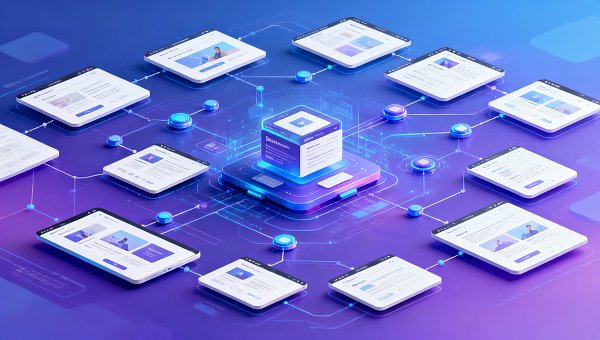
Evaluating whether a website design case study is worth referencing is no longer limited to the visual level.
Under the trend of integrating website + marketing services, truly valuable website design case studies must balance technical stability, content scalability, conversion support capability, and follow-up operational efficiency.
Especially when companies hope to replicate successful experience, if they only imitate page styles, they often overlook the underlying architecture, data tracking setup, SEO compatibility, and business process coordination, ultimately resulting in something that “looks similar but is not easy to use”.
Therefore, to judge whether a website design case study can be reused, it is necessary to establish an evaluation method that is verifiable, decomposable, and implementable. This is also a key step for technical evaluation work to move from experience-based judgment to standardized judgment.
Market changes are sending a signal: website design case studies should serve growth, not just display
In recent years, website development has no longer been a standalone project, but rather infrastructure within the global marketing chain.
From acquiring search traffic, to receiving ad landing page traffic, and then to social media content distribution and lead recirculation, the evaluation criteria for website design case studies have also changed accordingly.
Based on the long-term service experience of Easyab Information Technology (Beijing) Co., Ltd., companies’ focus on case studies is shifting from “whether the page looks premium” to “whether it can continuously drive growth”.
Behind this change is digital marketing moving from campaign-driven execution toward integrated collaboration across “website building, optimization, conversion, and review”. It is precisely for this reason that website design case studies must undergo stricter scrutiny for reusability.
The factors driving the upgrade of evaluation standards mainly come from four aspects
That is to say, when discussing website design case studies today, it is not just about looking at the finished product, but about whether it can withstand continuous operations and cross-scenario migration.
To determine whether a website design case study is reusable, first look at these five core indicators
1. Whether the information architecture has migration capability
In high-quality website design case studies, the column structure is usually not temporarily pieced together for a single type of content, but is developed around business logic.
During evaluation, focus on whether the homepage, product pages, case pages, and content pages form a clear hierarchy, and whether navigation can remain stable after new pages are added.
2. Whether the front-end and back-end structure supports continuous expansion
Many website design case studies look complete at first glance, but once language versions, form types, or the number of landing pages increase, the fragility of the architecture is exposed.
Reusable case studies often feature component-based thinking, configurable modules, unified field standards, and strong responsive compatibility.
3. Whether the SEO foundation is naturally friendly
If a website design case study cannot support heading hierarchy, semantic structure, page loading speed, and content indexing efficiency, then no matter how beautiful it is, it is still difficult to build long-term traffic.
During technical evaluation, URL logic, image processing, internal linking planning, mobile performance, and the ability to carry structured content should all be checked.
4. Whether marketing actions can be implemented smoothly
Truly high-quality website design case studies do not hide conversion buttons behind visual presentation.
It should be observed whether consultation entry points, form distribution, trust endorsements, download triggers, and lead capture logic are naturally embedded into the user browsing path.
5. Whether content production and maintenance costs are controllable
If a website design case study requires long-term reliance on development for modifications, or if each update affects multiple pages, then its reuse value will be greatly reduced.
A good case study should make operational updates, topic additions, and content replacement more efficient and lower risk.
What impacts are usually caused by website design case studies with insufficient reusability
If the evaluation is insufficient, “drawing on” a website design case study can easily become a cost amplifier in the later stages.
- Launch speed slows down, and secondary development becomes more frequent.
- The SEO structure is restricted, making follow-up traffic growth weak.
- Ad landing pages are difficult to replicate at scale, reducing campaign efficiency.
- The brand tone appears unified on the surface, but the actual conversion path is broken.
- The content team finds maintenance difficult, and the website gradually loses update momentum.
This is also why, in an integrated website + marketing service environment, the technical evaluation of website design case studies must be moved forward rather than patched up after delivery.
Some highly complete case studies can provide reusable approaches worth learning from
For example, page solutions for fragrance and lifestyle companies are more reusable if they can integrate brand aesthetics, product display, and business conversion into the same structure.
Solutions like Fragrance, Personal Care, Beauty often adopt a combination of modular flowing layouts, vertical hierarchical structures, and immersive visual strategies.
Their value lies not only in a premium feel, but also in the fact that large-scale Banners, grid-based product matrices, timeline processes, and data dashboards can be broken down and reorganized to adapt to different content densities and conversion goals.
The reason this type of website design case study is worth reviewing is not because of industry limitations, but because it proves that when structure, visuals, and marketing logic form a closed loop, reuse becomes more stable.
When screening website design case studies, companies should focus on these issues
- Whether the case study is a static display or supports real business growth.
- Whether page modules can be replicated for new products, new campaigns, and new markets.
- Whether content publishing relies on development, and whether the maintenance chain is too long.
- Whether the case study balances search visibility and conversion efficiency.
- Whether it provides a consistent multi-device experience and room for subsequent expansion.
- Whether the design language is extensible rather than only serving one-off projects.
If the above questions can all be clearly verified, then the website design case study is usually more suitable as a replicable template rather than merely a source of inspiration.
For subsequent judgment, the method of “look at structure, test performance, verify conversion, calculate cost” can be used
Only by moving website design case study evaluation forward can the project success rate truly be improved
Future competition in website design case studies will not be just about aesthetics, but about system capability, growth adaptability, and reuse efficiency.
For projects that hope to improve the collaborative effect between website development and marketing, establishing evaluation standards first and then selecting case studies is often more important than choosing style first.
If you are screening website design case studies, you may first score them from four dimensions—structural integrity, SEO foundation, conversion logic, and maintenance cost—and then decide whether to invest in reuse.
Only when a case study is not only visually appealing, but also replicable, operable, and growth-driving, does it truly possess long-term value.
Related Articles
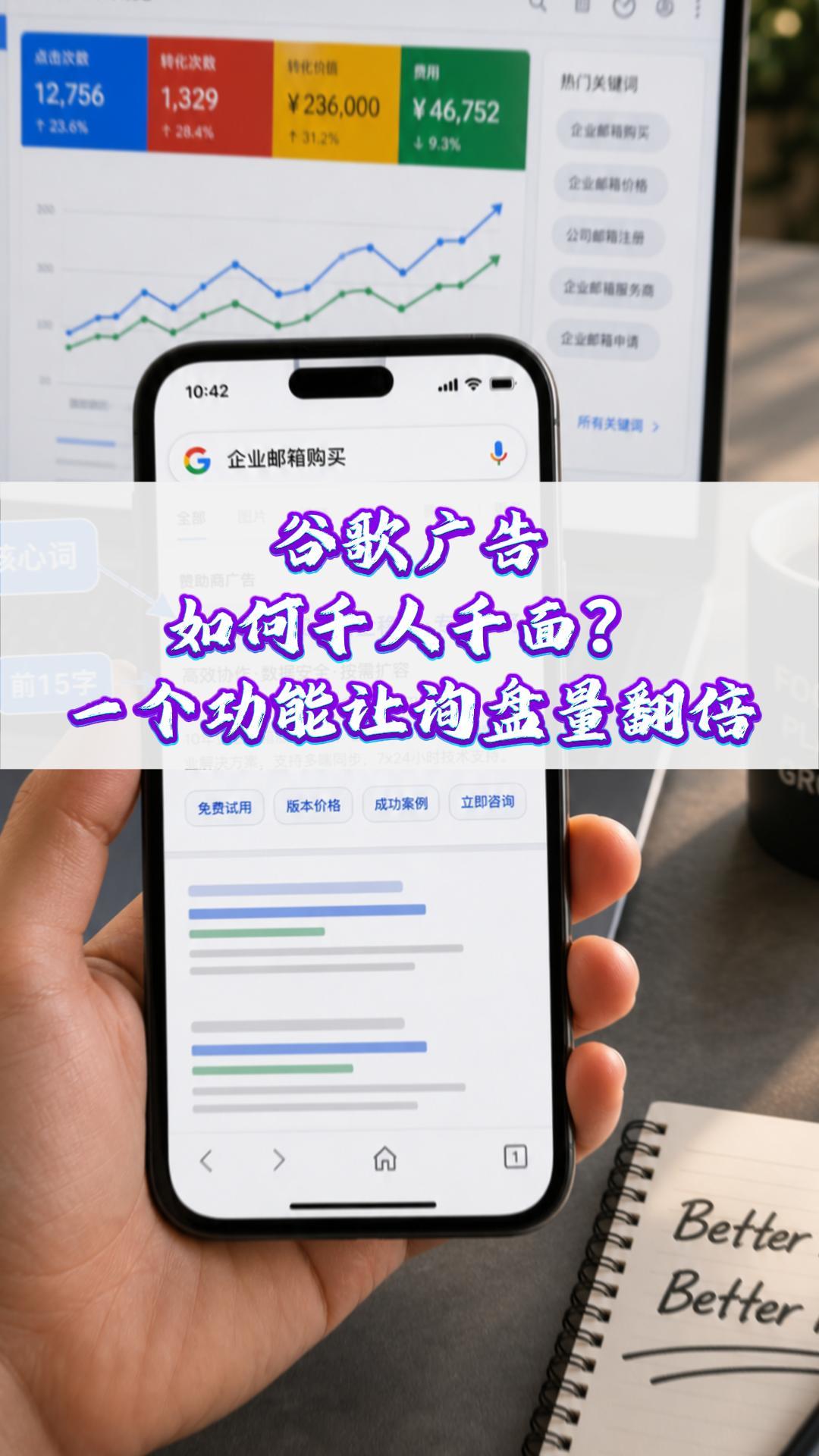
 How Can Google Ads Personalize Content for Every User? One Feature That Doubles Your Inquiry Volume
 Why a Google-optimized independent website is essential for trailer exports
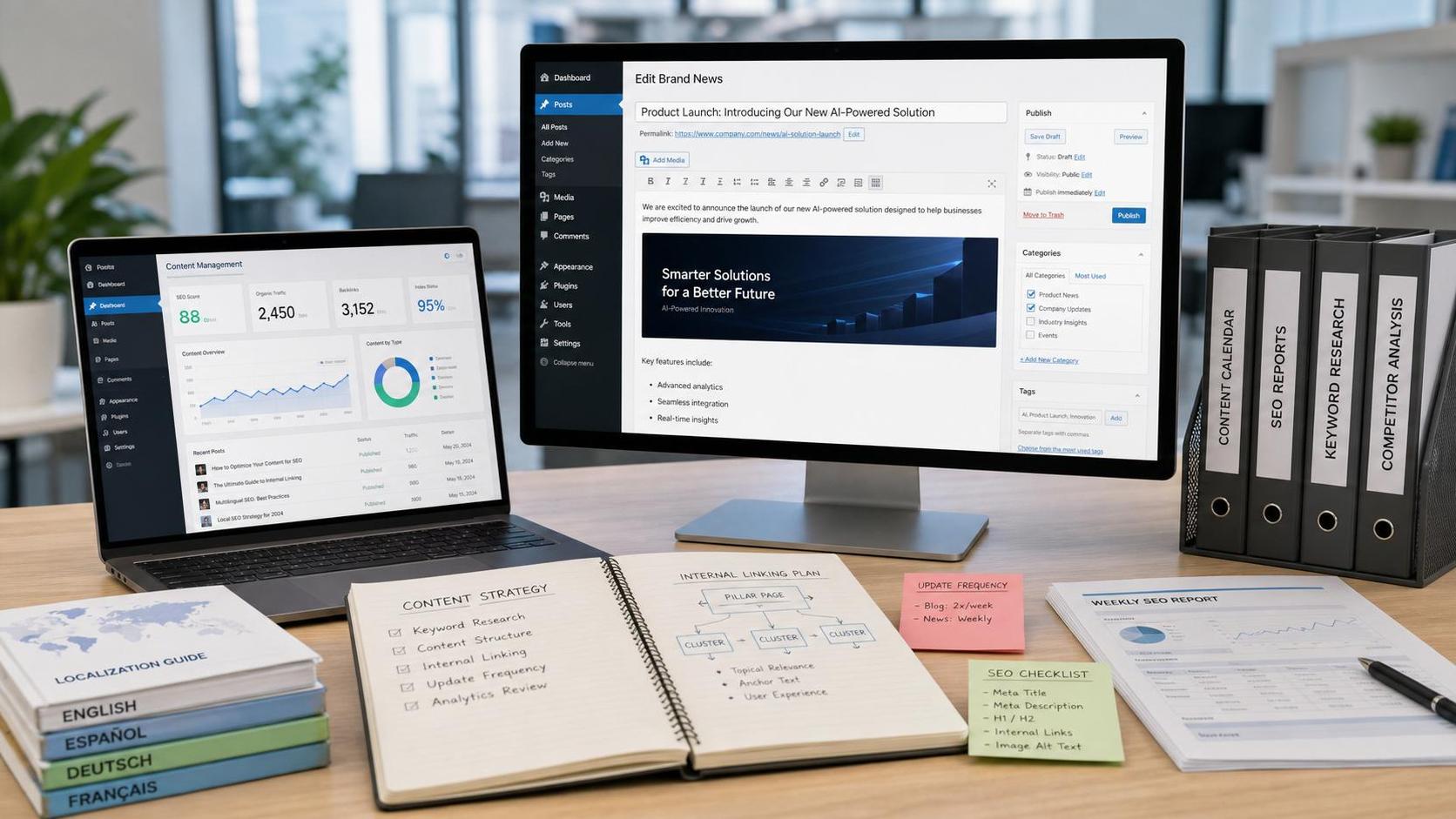
 How Can a Brand Updates Page Be Made More SEO-Friendly? Analysis of Update Frequency, Content Structure, and Internal Linking Strategy

Related Products
 EasyCamp SaaS Smart Website Marketing SystemE-Yingbao SaaS Smart Website Marketing System: AI-powered, zero-code website building. Rapidly launch multilingual independent e-commerce sites in just 10 minutes. Global server acceleration and AI-driven SEO optimization empower businesses to efficiently connect with global markets. The seamless integration of technology and user-friendly operation makes building e-commerce sites incredibly simple.
 AI+SEM Intelligent Advertising Marketing SystemAI+SEM drives intelligent ad creation, empowering full-funnel precision advertising marketing. The system automatically generates weekly/monthly reports, AI recommends keywords and target countries, monitors core metrics in real-time with intelligent alerts, and enables one-click high-conversion ad solutions to help quickly acquire customers and improve ROI.
 AI+SEO Dual Engine Optimization ServiceEasyWin AI+SEO Dual Engine Optimization System leverages AI-powered keyword mining, content generation, and comprehensive technical optimization to help foreign trade enterprises acquire high-quality organic traffic, significantly improving search rankings and conversion rates.
 AI+SNS Social Media Marketing SystemYingbao AI+SNS Social Media Marketing System - Precision social capture for the social media era. Supports one-click content synchronization across major platforms like Facebook and LinkedIn. AI intelligently rewrites posts for enhanced relevance. 24/7 AI customer service and user profiling analysis empower businesses to efficiently expand into global markets.
 AI+SEO营销解决方案易营宝AI+SEO营销解决方案,通过AI批量写作、智能生成TDK、精准关键词扩词等功能,全面优化网站SEO效果,提升流量与转化率。助力企业构建高效智能网站新生态。
 AI+SEM Advertising Marketing SolutionsAI+SEM Advertising Marketing Solution leverages AI technology to deeply empower SEM ad campaigns. It automatically generates weekly/monthly reports using AI, presenting account data across multiple dimensions for comprehensive insights into campaign performance and trends. The system precisely recommends keywords and target countries, intelligently generates high-conversion ad copy, and enables one-click activation of efficient campaign plans to help businesses rapidly acquire customers. Simultaneously, it monitors core metrics in real time, intelligently identifies abnormal fluctuations, and issues timely alerts to ensure stable, high-return advertising results.
 Domain Name ServicesEasyWin provides professional domain name services, including intelligent queries, one-stop registration, brand protection, and full lifecycle management, helping businesses build a digital brand image.
 EasyOperate B2C Cross-Border E-Commerce Platform & Independent WebsiteEasyStore B2C Cross-border E-commerce Independent Store is an intelligent website building and cross-border e-commerce integrated solution independently developed by EasyStore Information Technology (Beijing) Co., Ltd. The system is specially designed for small and medium-sized as well as large export enterprises, integrating 'website building, operation, marketing, advertising, and conversion' into one, helping enterprises quickly establish cross-border e-commerce independent stores to achieve brand globalization and global sales growth.
The platform supports multiple languages, multiple currencies, and multi-channel marketing, with built-in AI intelligent translation and SEO optimization systems, suitable for mainstream markets such as Southeast Asia, Europe and America, Latin America, and the Middle East, assisting Chinese manufacturing enterprises in efficiently deploying international e-commerce strategies. SSL证书易营宝提供专业SSL安全证书服务,包括单域名和泛域名证书,确保网站数据传输加密、身份验证和完整性保护,助力企业建立安全可信的在线业务环境。









