









- What Does a Global Traffic Ecosystem Service Provider Do? What Are the Differences from a Single Advertising AgencyJul 16, 2026View details
- What should you focus on in the latest enterprise SaaS report? From renewal rates and delivery costs to overseas growth opportunitiesJul 12, 2026View details
- What signals are worth paying attention to in a cross-border marketing trend report? B2B companies should look at these 6 signalsJul 11, 2026View details
- How to Read a Cross-Border Marketing Trends Report? Five Key Dimensions for Evaluating Channel OpportunitiesJul 11, 2026View details
- Which channel has the highest ROI in the global traffic ecosystem? Comparative analysis of search, social media, and advertisingJul 10, 2026View details
- What multilingual website services are available in Sanya? Which model is more suitable for local businesses going global?Jul 08, 2026View details
- How to view the complete list of China SaaS companies in the top 100? Practical methods for screening website-building and marketing service providersJul 08, 2026View details
- How to view pricing in the global traffic ecosystem? Cost comparison of search, social media, and content channel advertisingJul 06, 2026View details
Reasons why website SEO optimization is slow to show results
Slow-growing website SEO optimization results are not necessarily ineffective; those responsible for it need to understand the key factors influencing ranking cycles. For those managing the daily operations of corporate websites, independent foreign trade websites, or marketing websites, stagnant rankings, unstable indexing, and a lack of significant increase in inquiries are often not caused by a single action, but rather by the combined effects of the site's fundamentals, content quality, technical performance, and conversion paths.
Since its establishment in 2013, Yiyingbao Information Technology (Beijing) Co., Ltd. has long served enterprises' digital marketing scenarios, covering intelligent website building, website SEO optimization, social media marketing, and advertising. Based on extensive experience in operating enterprise websites, a new or redesigned website typically needs to go through stages such as crawling, indexing, trust building, and ranking testing, a cycle that can extend from 4 weeks to more than 6 months.
I. Why does website SEO optimization require time to accumulate?
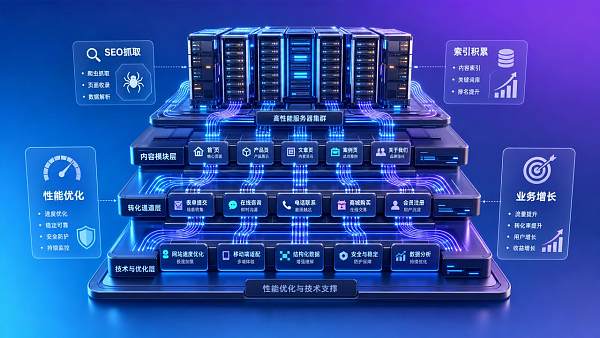
Search engine rankings don't take effect immediately after a page is submitted. Search engines first need to confirm whether the website is accessible, has a clear structure, and whether the content solves the user's problem. They then continuously verify the page's value through behavioral signals such as clicks, dwell times, bounce rates, and return visits. If operators only focus on ranking fluctuations within a week, they are likely to misjudge the optimization results.
1. The new website lacks trust and has limited frequency of ranking tests.
New websites lack historical content, external references, and user behavior data, so search engines typically crawl them less frequently. Even if a page is indexed, it may initially enter a small-scale ranking testing phase. For B2B corporate websites, if the content is updated less than twice a week, the stable ranking period for core pages often takes longer.
2. The difficulty of competing keywords determines the speed of results.
Keywords like "website SEO optimization," which clearly indicate commercial intent, usually attract competitors with content creation teams, technical teams, and a long history of backlinks. Operators should simultaneously target core keywords, long-tail keywords, regional keywords, and problem keywords, such as "SEO optimization cycle for foreign trade websites" and "what to do if a company website is slowly indexed." Start by using 3 to 5 low-competition pages to acquire initial traffic.
The table below lists common influencing factors, helping operators identify where website SEO optimization is slowing down, rather than blindly increasing the number of articles or frequently modifying titles.
As the table shows, slow results from website SEO optimization are usually the result of multiple metrics combined. Operators should first determine the current stage of crawling, indexing, ranking, clicks, and conversions, and then prioritize subsequent optimization efforts.
Second, slow technical performance will hinder indexing and conversion.
Many companies equate website SEO optimization with writing articles and adjusting keywords, neglecting server, code, images, caching, and security configurations. Slow page loading not only affects user experience but also reduces search engine crawling efficiency. For foreign trade companies, the latency is even more pronounced for overseas users; a loading time of more than 3 seconds can directly increase bounce rates.
1. Speed is the common foundation of ranking and inquiries.
If the first byte response time of a page is too long, the number of pages that search engines can crawl in a single session will decrease. If image directories, product detail pages, and case study pages consistently load slowly, users will find it difficult to submit inquiry forms. It is generally recommended that corporate websites keep loading times for major markets within 1 to 3 seconds and regularly check mobile performance.
For independent e-commerce websites targeting multiple national markets, consider infrastructure solutions like EasyCreation's global server deployment . It supports global 7-node server deployment, intelligent load balancing, edge computing acceleration, full-site HTTPS encrypted transmission, and daily automatic backups. The global average TTFB can be controlled to ≤300ms, and the SLA availability guarantee reaches 99.99%.
2. Safety and stability both affect operating costs.
Website attacks, frequent outages, or certificate anomalies can lead to crawling interruptions, unusable advertising landing pages, and loss of potential customers. To address common issues for foreign trade websites, such as CC attacks, malicious requests, and fluctuations in cross-regional access, operators need to include security measures in their website SEO optimization checklist, rather than waiting for problems to occur before taking remedial action.
The following indicators can be used as a reference for technical troubleshooting, and are especially suitable for operators to use when communicating with service providers about integrated solutions for website building, servers, SEO and advertising.
The metrics in the table are not solely for the technical department. For day-to-day operations staff, speed, security, and compliance directly impact whether content is crawled, whether ads are consistently delivered, and whether inquiries can be submitted successfully—these are crucial variables in the timeline for website SEO optimization to show results.
Third, unclear content and keyword strategies can easily lead to slower progress.
Website SEO optimization isn't about simply publishing articles daily to achieve rankings. Search engines focus more on whether a page covers user search intent, has a clear structure, and guides visitors to product, case studies, solutions, or consultation links. Content creators should avoid turning content creation into low-quality updates.
1. It is recommended to build a content matrix based on 4 page categories.
- Core business page: Accepting high-value keywords such as "website SEO optimization" and "foreign trade SEO services".
- Solution page: Focuses on industry, region, language, and website building needs, such as B2B foreign trade independent website optimization.
- Knowledge article page: Answers operational issues such as slow indexing, ranking fluctuations, and pages not being crawled.
- Conversion support page: Includes case studies, FAQs, service process, pricing consultation, and access to download materials.
These four types of pages need to be linked together, rather than existing in isolation. For example, an article explaining the website's SEO optimization cycle should link to related service pages, technical solution pages, and consultation portals, allowing search engines to understand the site's theme and enabling users to continue to learn more.
2. Titles, body text, and internal links should all serve the same purpose.
If the title is "Why Website SEO Optimization Takes Time to Show Results," but the body text focuses on company news or vaguely discusses brand philosophy, users will quickly leave. It's recommended that each article include at least five parts: explanation of the problem, assessment methods, operational steps, risk warnings, and next steps, forming a complete reading loop.
Operators can check three key performance indicators each month.
- Inclusion rate: The percentage of submitted pages that have been indexed. If it is less than 50%, the quality and crawling process need to be checked.
- Number of displayed words: Whether the number of long-tail keywords has increased from dozens to hundreds reflects the semantic coverage.
- Conversion path: Whether the click-through rate from the article page to the consultation page is at a level that can be continuously optimized.
Website SEO optimization only generates compound interest when content matrix, technical performance, and conversion entry points are optimized simultaneously. If you only change the title without adding professional content or improving the page experience, even if your ranking rises in the short term, it's likely to fall back in subsequent competition.
IV. How to determine if optimization is on the right track
Slow results don't mean no progress. Operators can break down website SEO optimization into three stages for observation: Stage 1 focuses on crawling and indexing; Stage 2 focuses on impressions and clicks; and Stage 3 focuses on inquiries and sales leads. The metrics differ at each stage, and success cannot be judged solely by ranking.
1. Focus on fundamental signals within 30 days.
In the 30 days following launch or redesign, pay attention to sitemap submission, broken links, mobile compatibility, page speed, and index coverage. Avoid frequently changing URLs and titles during this phase, as this will prolong the time it takes for search engines to re-evaluate the pages.
2. Focus on content growth over 60 to 90 days.
Once the base page is stable, continue publishing content addressing user questions and observe changes in impressions, click-through rate (CTR), and average ranking. If impressions increase but the CTR is low, the title and description need optimization; if clicks increase but inquiries are low, check the forms, buttons, and trust endorsements.
3. Focus on business results for 3 to 6 months.
Mature B2B websites should not only pursue traffic, but also focus on effective inquiries, document downloads, telephone consultations, and the retention of leads for remarketing. YiYingBao leverages artificial intelligence and big data capabilities to help businesses connect website building, website SEO optimization, social media marketing, and advertising, reducing data gaps caused by single-point optimization.
V. Common Misconceptions Among Operators and Implementation Suggestions
Many website SEO optimization projects are slow to show results because the execution is scattered and lacks a unified rhythm. Changing categories today, switching templates tomorrow, and deleting old articles the day after may seem busy, but it actually increases the search engine's recognition cost. It's recommended to develop a plan on a monthly basis and review its execution weekly.
Common misconceptions include the following four categories
- Focusing solely on homepage rankings while ignoring long-tail leads from product pages, solution pages, and article pages.
- Focusing solely on keyword density results in unnatural content, making it difficult for users to quickly understand the service's value.
- Frequent changes to domain names, URLs, or templates can disrupt historical authority and internal links.
- Separating SEO from advertising, social media, and website building makes it impossible to form a stable customer acquisition loop.
A more reliable execution path
The first step is to complete a technical check-up within 1 to 2 weeks; the second step is to build a keyword and content matrix within 2 to 4 weeks; the third step is to continuously track indexing, display, clicks, and conversions for more than 3 months. If targeting overseas markets, server nodes, language versions, compliance, and form security should also be evaluated simultaneously.
The slow results of website SEO optimization are often not due to a missing button, but rather a lack of a systematic approach to technology, content, authority, and conversion. For businesses needing stable customer acquisition, choosing a partner with capabilities in intelligent website building, SEO optimization, advertising, and localization can reduce trial-and-error time and increase the certainty of long-term growth.
If you are troubleshooting issues such as slow website indexing, fluctuating rankings, or poor overseas access experience, please feel free to contact us for product details, customized solutions, and to learn more about our integrated website and marketing services solutions.
Related Articles
 Attention! Builders' must-see: Yibingbao AI components updated, design efficiency directly doubled!
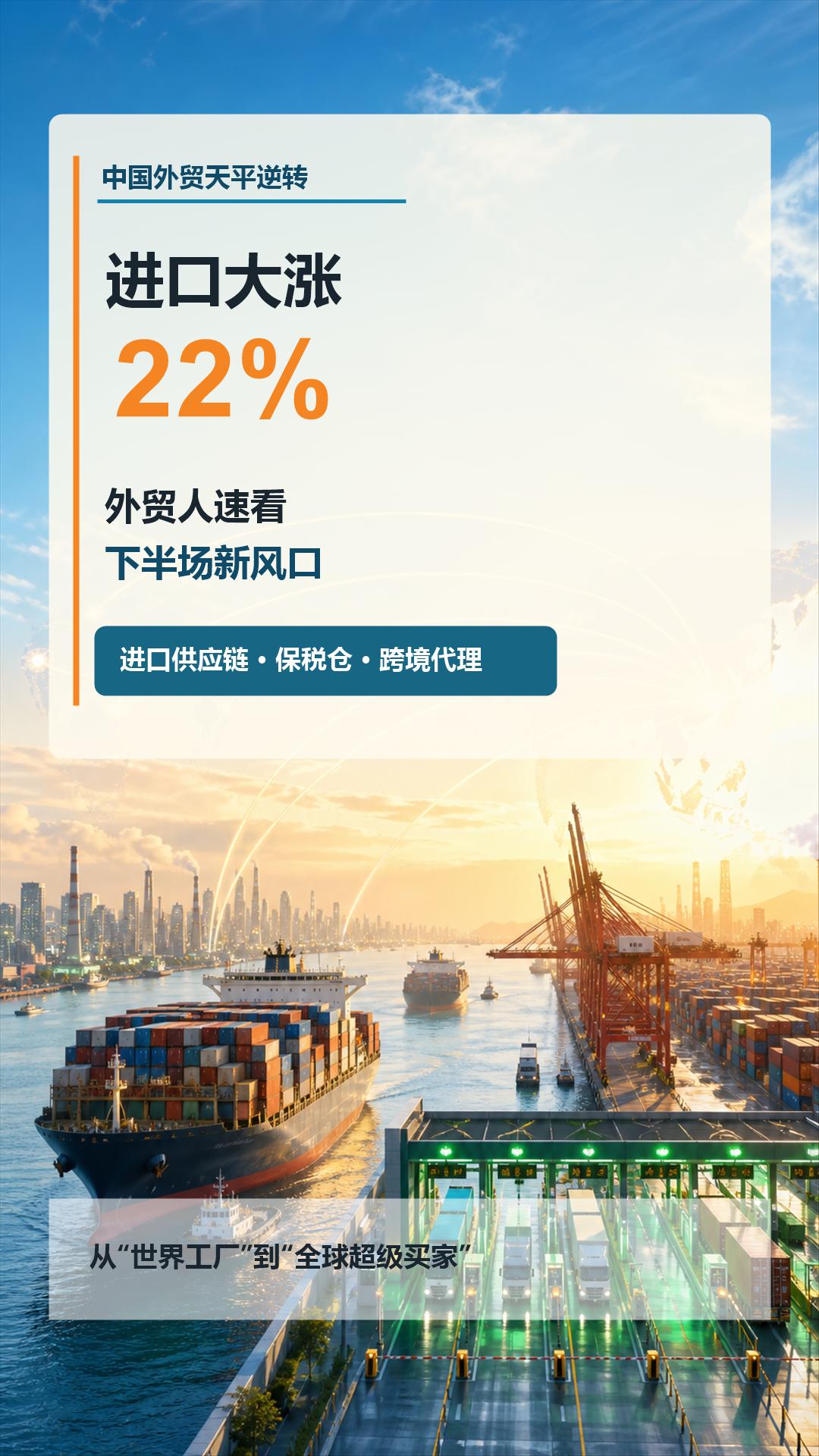
 China's foreign trade sees a turnaround: imports surge by 22%! Foreign trade professionals should quickly take note of the new trends in the second half of the year
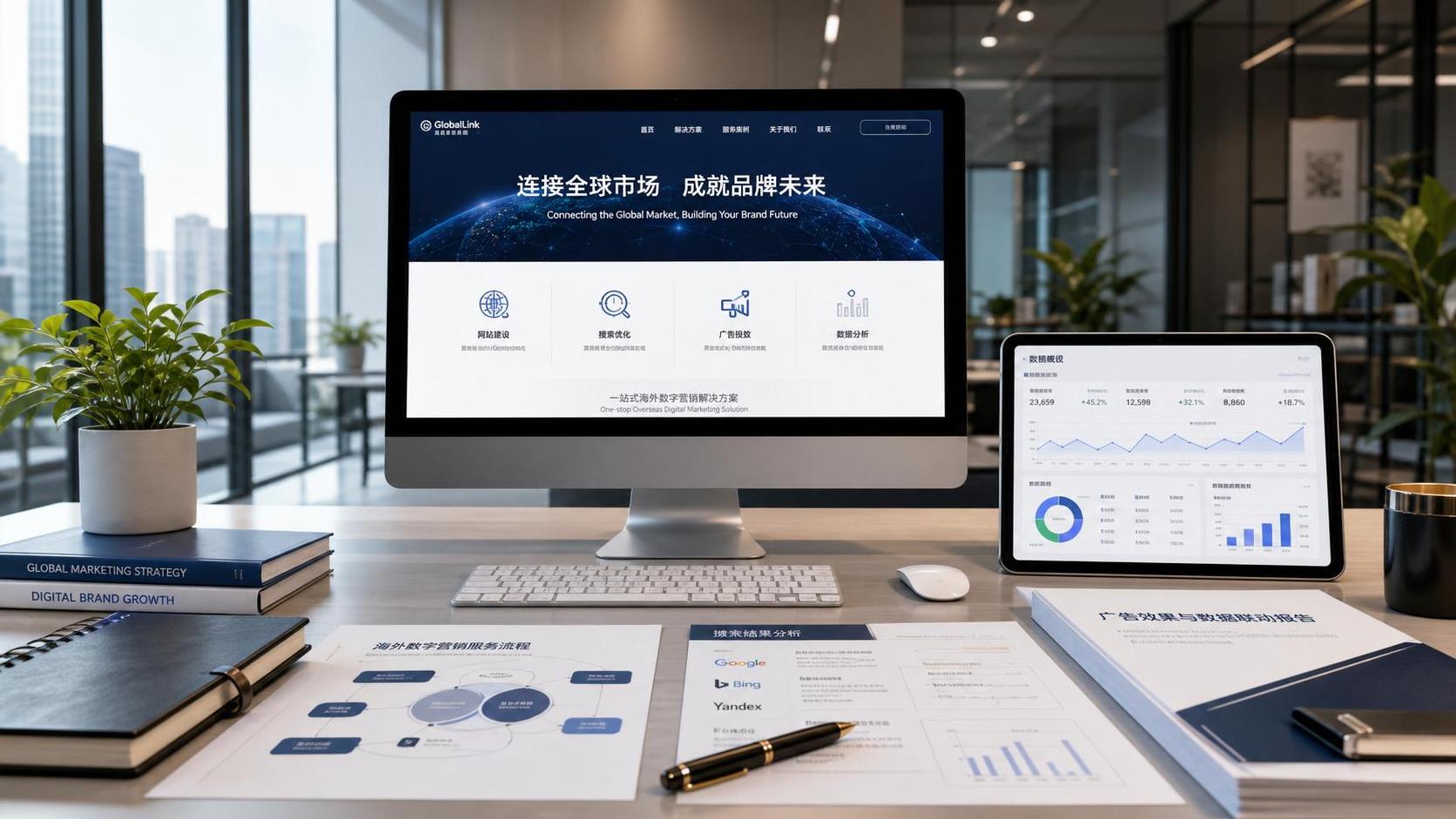
 What Does a Global Traffic Ecosystem Service Provider Do? What Are the Differences from a Single Advertising Agency

Related Products
 EasyCamp SaaS Smart Website Marketing SystemE-Yingbao SaaS Smart Website Marketing System: AI-powered, zero-code website building. Rapidly launch multilingual independent e-commerce sites in just 10 minutes. Global server acceleration and AI-driven SEO optimization empower businesses to efficiently connect with global markets. The seamless integration of technology and user-friendly operation makes building e-commerce sites incredibly simple.
 AI+SEM Intelligent Advertising Marketing SystemAI+SEM drives intelligent ad creation, empowering full-funnel precision advertising marketing. The system automatically generates weekly/monthly reports, AI recommends keywords and target countries, monitors core metrics in real-time with intelligent alerts, and enables one-click high-conversion ad solutions to help quickly acquire customers and improve ROI.
 AI+SEO Dual Engine Optimization ServiceEasyWin AI+SEO Dual Engine Optimization System leverages AI-powered keyword mining, content generation, and comprehensive technical optimization to help foreign trade enterprises acquire high-quality organic traffic, significantly improving search rankings and conversion rates.
 AI+SNS Social Media Marketing SystemYingbao AI+SNS Social Media Marketing System - Precision social capture for the social media era. Supports one-click content synchronization across major platforms like Facebook and LinkedIn. AI intelligently rewrites posts for enhanced relevance. 24/7 AI customer service and user profiling analysis empower businesses to efficiently expand into global markets.
 AI+SEO营销解决方案易营宝AI+SEO营销解决方案,通过AI批量写作、智能生成TDK、精准关键词扩词等功能,全面优化网站SEO效果,提升流量与转化率。助力企业构建高效智能网站新生态。
 AI+SEM Advertising Marketing SolutionsAI+SEM Advertising Marketing Solution leverages AI technology to deeply empower SEM ad campaigns. It automatically generates weekly/monthly reports using AI, presenting account data across multiple dimensions for comprehensive insights into campaign performance and trends. The system precisely recommends keywords and target countries, intelligently generates high-conversion ad copy, and enables one-click activation of efficient campaign plans to help businesses rapidly acquire customers. Simultaneously, it monitors core metrics in real time, intelligently identifies abnormal fluctuations, and issues timely alerts to ensure stable, high-return advertising results.
 Domain Name ServicesEasyWin provides professional domain name services, including intelligent queries, one-stop registration, brand protection, and full lifecycle management, helping businesses build a digital brand image.
 EasyOperate B2C Cross-Border E-Commerce Platform & Independent WebsiteEasyStore B2C Cross-border E-commerce Independent Store is an intelligent website building and cross-border e-commerce integrated solution independently developed by EasyStore Information Technology (Beijing) Co., Ltd. The system is specially designed for small and medium-sized as well as large export enterprises, integrating 'website building, operation, marketing, advertising, and conversion' into one, helping enterprises quickly establish cross-border e-commerce independent stores to achieve brand globalization and global sales growth.
The platform supports multiple languages, multiple currencies, and multi-channel marketing, with built-in AI intelligent translation and SEO optimization systems, suitable for mainstream markets such as Southeast Asia, Europe and America, Latin America, and the Middle East, assisting Chinese manufacturing enterprises in efficiently deploying international e-commerce strategies. SSL证书易营宝提供专业SSL安全证书服务,包括单域名和泛域名证书,确保网站数据传输加密、身份验证和完整性保护,助力企业建立安全可信的在线业务环境。









