









- What Does a Global Traffic Ecosystem Service Provider Do? What Are the Differences from a Single Advertising AgencyJul 16, 2026View details
- What should you focus on in the latest enterprise SaaS report? From renewal rates and delivery costs to overseas growth opportunitiesJul 12, 2026View details
- What signals are worth paying attention to in a cross-border marketing trend report? B2B companies should look at these 6 signalsJul 11, 2026View details
- How to Read a Cross-Border Marketing Trends Report? Five Key Dimensions for Evaluating Channel OpportunitiesJul 11, 2026View details
- Which channel has the highest ROI in the global traffic ecosystem? Comparative analysis of search, social media, and advertisingJul 10, 2026View details
- What multilingual website services are available in Sanya? Which model is more suitable for local businesses going global?Jul 08, 2026View details
- How to view the complete list of China SaaS companies in the top 100? Practical methods for screening website-building and marketing service providersJul 08, 2026View details
- How to view pricing in the global traffic ecosystem? Cost comparison of search, social media, and content channel advertisingJul 06, 2026View details
Is SEO still worth investing in in 2026?
In 2026, SEO will remain key for businesses to acquire long-term traffic and growth, but the way it is invested must be smarter and more systematic.
Basic positioning of SEO in 2026

SEO is no longer just about keyword ranking.
It's more like a website growth system.
This system connects content, technology, data, conversion, and brand trust.
In the integrated scenario of website and marketing services, SEO plays the role of entry point construction, lead accumulation, and long-term customer acquisition.
The search environment is changing.
Users will search for answers through search engines, content platforms, AI Q&A, and social media portals.
Therefore, SEO in 2026 will place greater emphasis on being understandable, quotable, and convertible.
SEO Focus in Industry Changes
Whether a company continues to invest in SEO does not depend on whether search engines exist.
The key lies in whether one can adapt to the new traffic allocation rules.
These changes demonstrate that SEO still has value.
However, the practice of publishing content in a crude manner, mechanically piling up keywords, and only looking at rankings will continue to be ineffective.
The core business significance of SEO investment
The biggest advantage of SEO is that it turns a one-time investment into a lasting asset.
A well-structured website can consistently attract traffic from brand keywords, category keywords, and question keywords.
For companies that integrate website and marketing services, SEO can also improve overall campaign efficiency.
Advertising brings instant exposure, while SEO is responsible for building trust.
Social media creates touchpoints, while SEO handles in-depth search.
The official website showcases our strength, while SEO helps our content reach more potential customers.
E-Chengbao Information Technology (Beijing) Co., Ltd. has long been dedicated to serving the digital growth of enterprises.
It is based on artificial intelligence and big data, covering intelligent website building, SEO optimization, social media marketing and advertising.
This end-to-end capability is perfectly suited to the SEO investment logic of 2026.
Typical application scenarios and object classification
Different companies invest in SEO with different focuses.
The business stage should be determined first, and then content and technical resources should be allocated.
In global operations, SEO is also associated with compliance, brand protection, and intellectual property risks.
For example, digital overseas expansion projects can refer to the construction of an early warning system for enterprise patent-related risks in the context of the digital economy to improve risk identification.
SEO Practice Recommendations for 2026
In 2026, when doing SEO, one should avoid optimizing only one point.
A more effective approach is to integrate SEO into the overall website and marketing system.
- First, conduct a technical check to confirm the crawling, loading, mobile, and security aspects.
- Next, segment the keywords to distinguish between brand keywords, industry keywords, scenario keywords, and conversion keywords.
- Content should focus on real needs, not on word count.
- The page should have a clear path, including inquiries, downloads, trials, or appointments.
- Data should be reviewed monthly, focusing on inclusion, clicks, dwell time, and cost per lead.
AI can improve SEO efficiency.
However, AI cannot replace industry judgment, content verification, and conversion design.
High-quality SEO content should include experience, data, case studies, and a clear structure.
Precautions before investing in SEO
SEO is not a tool for short-term traffic boosting.
If you only expect results in a few weeks, you are likely to have incorrect expectations.
A reasonable timeline typically includes diagnosis, restructuring, content creation, data validation, and continuous iteration.
At the same time, SEO cannot be separated from the official website experience.
Slow page loading, unclear information, and complex forms all reduce the value of organic traffic.
Therefore, website building, content creation, advertising, and SEO should be planned simultaneously.
Next steps
In 2026, SEO will still be worth investing in.
The worthwhile investment is not in traditional SEO, but in growth SEO that is data-driven, has credible content, and is technologically stable.
Businesses can first complete a website SEO diagnosis.
Then create a keyword map, content calendar, and conversion metrics.
If there is already investment in advertising and social media, SEO should be used to cater to long-tail demand.
When a website, content, data, and services form a closed loop, SEO will become a stable foundation for long-term growth.
Related Articles
 Attention! Builders' must-see: Yibingbao AI components updated, design efficiency directly doubled!
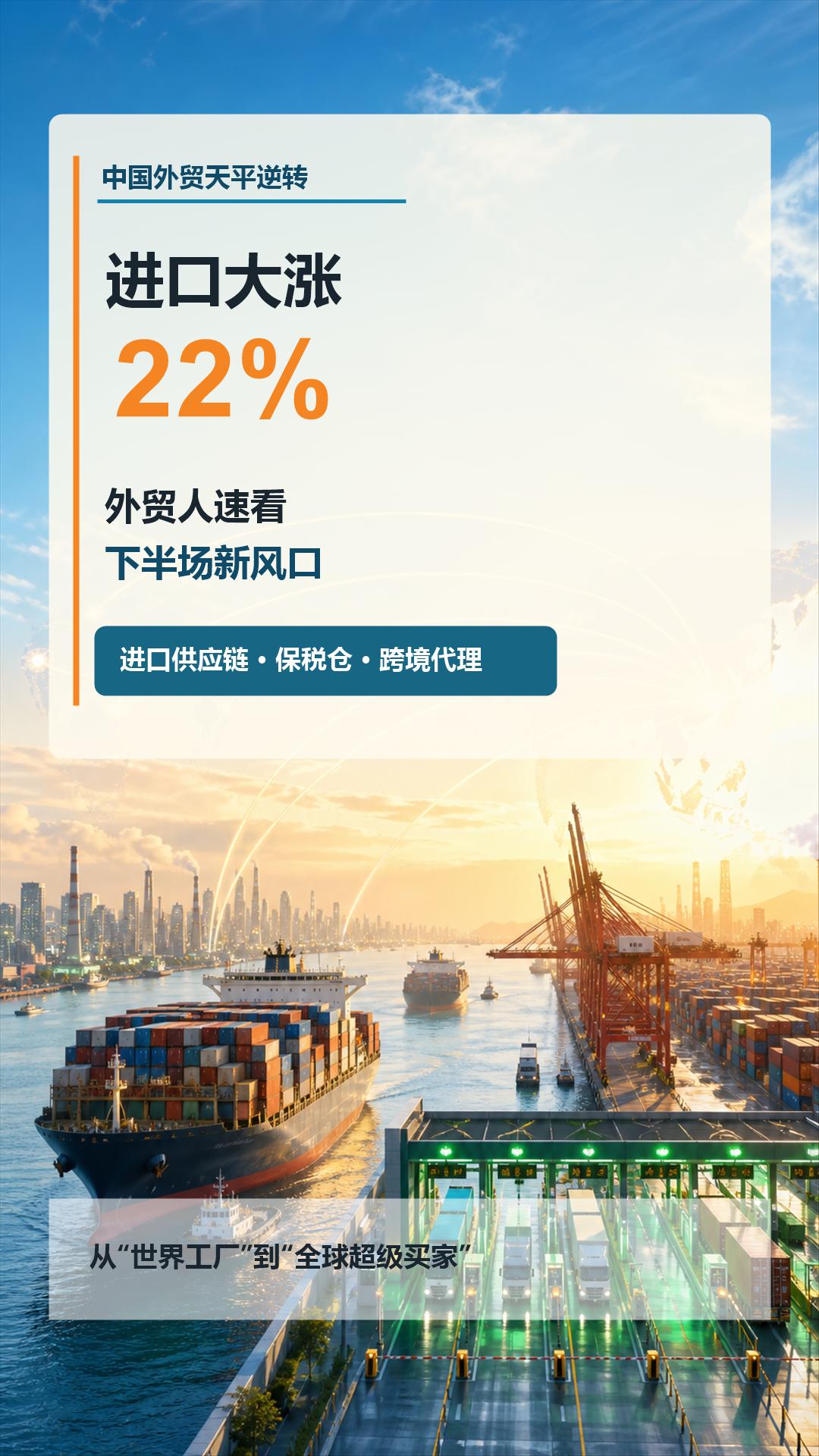
 China's foreign trade sees a turnaround: imports surge by 22%! Foreign trade professionals should quickly take note of the new trends in the second half of the year
 What Does a Global Traffic Ecosystem Service Provider Do? What Are the Differences from a Single Advertising Agency

Related Products
 EasyCamp SaaS Smart Website Marketing SystemE-Yingbao SaaS Smart Website Marketing System: AI-powered, zero-code website building. Rapidly launch multilingual independent e-commerce sites in just 10 minutes. Global server acceleration and AI-driven SEO optimization empower businesses to efficiently connect with global markets. The seamless integration of technology and user-friendly operation makes building e-commerce sites incredibly simple.
 AI+SEM Intelligent Advertising Marketing SystemAI+SEM drives intelligent ad creation, empowering full-funnel precision advertising marketing. The system automatically generates weekly/monthly reports, AI recommends keywords and target countries, monitors core metrics in real-time with intelligent alerts, and enables one-click high-conversion ad solutions to help quickly acquire customers and improve ROI.
 AI+SEO Dual Engine Optimization ServiceEasyWin AI+SEO Dual Engine Optimization System leverages AI-powered keyword mining, content generation, and comprehensive technical optimization to help foreign trade enterprises acquire high-quality organic traffic, significantly improving search rankings and conversion rates.
 AI+SNS Social Media Marketing SystemYingbao AI+SNS Social Media Marketing System - Precision social capture for the social media era. Supports one-click content synchronization across major platforms like Facebook and LinkedIn. AI intelligently rewrites posts for enhanced relevance. 24/7 AI customer service and user profiling analysis empower businesses to efficiently expand into global markets.
 AI+SEO营销解决方案易营宝AI+SEO营销解决方案,通过AI批量写作、智能生成TDK、精准关键词扩词等功能,全面优化网站SEO效果,提升流量与转化率。助力企业构建高效智能网站新生态。
 AI+SEM Advertising Marketing SolutionsAI+SEM Advertising Marketing Solution leverages AI technology to deeply empower SEM ad campaigns. It automatically generates weekly/monthly reports using AI, presenting account data across multiple dimensions for comprehensive insights into campaign performance and trends. The system precisely recommends keywords and target countries, intelligently generates high-conversion ad copy, and enables one-click activation of efficient campaign plans to help businesses rapidly acquire customers. Simultaneously, it monitors core metrics in real time, intelligently identifies abnormal fluctuations, and issues timely alerts to ensure stable, high-return advertising results.
 Domain Name ServicesEasyWin provides professional domain name services, including intelligent queries, one-stop registration, brand protection, and full lifecycle management, helping businesses build a digital brand image.
 EasyOperate B2C Cross-Border E-Commerce Platform & Independent WebsiteEasyStore B2C Cross-border E-commerce Independent Store is an intelligent website building and cross-border e-commerce integrated solution independently developed by EasyStore Information Technology (Beijing) Co., Ltd. The system is specially designed for small and medium-sized as well as large export enterprises, integrating 'website building, operation, marketing, advertising, and conversion' into one, helping enterprises quickly establish cross-border e-commerce independent stores to achieve brand globalization and global sales growth.
The platform supports multiple languages, multiple currencies, and multi-channel marketing, with built-in AI intelligent translation and SEO optimization systems, suitable for mainstream markets such as Southeast Asia, Europe and America, Latin America, and the Middle East, assisting Chinese manufacturing enterprises in efficiently deploying international e-commerce strategies. SSL证书易营宝提供专业SSL安全证书服务,包括单域名和泛域名证书,确保网站数据传输加密、身份验证和完整性保护,助力企业建立安全可信的在线业务环境。









