









- What stages does the cross-border services ecosystem include? How do website building, promotion, payment, and compliance work togetherJun 22, 2026View details
- How will email marketing costs change in 2026Jun 22, 2026View details
- The China-US tariff arrangement has reached a preliminary consensus, and the trade association will be establishedJun 15, 2026View details
- Should overseas brand marketing start with ads or contentJun 21, 2026View details
- What determines B2C cross-border e-commerce website development costs? A breakdown of features, interfaces, and deployment methodsJun 17, 2026View details
- China-Morocco zero-tariff access, a breakthrough in the cost of Moroccan goods exports to ChinaJun 11, 2026View details
- What signal should be released for the suspension of exports to JapanJun 10, 2026View details
- China's May LNG imports rebounded, with increased volumes from Russia and Canada filling the Middle East supply gapJun 10, 2026View details
How to Choose an SEO Company: Start by Looking at These 5 Capabilities
When choosing an SEO company, you should not look only at pricing and case studies, but also evaluate its technical capabilities, strategic framework, data analysis, and long-term service quality. For business decision-makers, only by clearly understanding these 5 key capabilities can they truly find a partner that drives growth.
The search landscape is changing, and the criteria enterprises use to evaluate SEO companies are also evolving
In the past, when companies chose an SEO company, they often first asked two questions: can it achieve rankings quickly, and is the price low enough. But today, this way of judging is becoming ineffective. Search engine algorithms continue to update, the threshold for content quality is getting higher and higher, and user search intent is shifting from single keywords to scenario-based, question-based, and decision-based searches. If companies still use old methods to choose service providers, it is very easy to end up with rising traffic but no inquiries, or keywords with rankings but no conversions.
Especially under the trend of integrating website + marketing services, SEO is no longer a standalone action, but works in coordination with website structure, content production, data analysis, brand exposure, and advertising placement. A truly valuable SEO company does not just focus on rankings, but should also help enterprises build a long-term and sustainable customer acquisition mechanism. This is also why business decision-makers need to shift their focus from “execution price” to “growth capability” when selecting partners.
First look at the trend signals: SEO services are shifting from “doing keywords” to “driving growth”
In the current market, the service boundaries of SEO companies are clearly expanding. Enterprises are no longer satisfied with the display performance of a few core keywords, but are more concerned about whether potential customers who enter the website through search can generate inquiries, leave their information, and convert into deals. In other words, the evaluation standard of SEO is shifting from “ranking results” to “business results.”
This means that when evaluating an SEO company, enterprises should not only look at “whether it has case studies,” but should judge whether the methodology behind those case studies is replicable and whether it is applicable to their own industry, business model, and customer decision-making journey.

The first capability: whether it has a future-oriented technical optimization foundation
Changes in search performance first come from the technical layer. A professional SEO company must be able to identify issues in website crawling, indexing, loading speed, mobile adaptation, structured information, and link hierarchy. Many enterprise websites today do not lack content, but rather are difficult for search engines to understand efficiently, resulting in high-quality pages failing to be indexed consistently.
For business decision-makers, the criteria for judging technical capability are very simple: can the other party provide a clear website diagnosis logic before cooperation, and can they explain the cause, impact scope, and priority of the problems, rather than just giving a general checklist. Technical service providers are usually better able to adapt to algorithm changes and are also more suitable for long-term cooperation.
The second capability: whether it has a complete keyword and content strategy system
The core of current SEO competition is not just how many keywords are covered, but whether a content system can be built around the user decision-making path. Excellent SEO companies categorize keywords into brand terms, product terms, demand terms, question terms, regional terms, and conversion terms, and then arrange pages in combination with the company’s sales process.
The value of this capability lies in helping enterprises capture customers at different stages: users in the awareness stage read educational content, users in the comparison stage read solution content, and users in the decision stage read case studies and service advantages. If a service provider can only offer mass-produced keyword-stuffed articles, it is difficult to support sustained business growth. In essence, content strategy is not about “publishing articles,” but about building the connection between search entry points and business conversion.
The third capability: whether it can turn data analysis into business judgment
Many companies have already realized that SEO monthly reports cannot focus only on indexed pages, ranking numbers, and traffic volume. More importantly, which pages brought high-quality leads, which keywords attracted invalid traffic, which content is worth further investment, and which sections need restructuring. A truly mature SEO company will turn data results into recommendations for the next course of action, rather than simply reporting results.
On this point, integrated website + marketing service providers have more advantages, because their perspective is not limited to SEO itself, but can connect website performance, content operations, lead conversion, and the overall input-output of marketing investment. What business managers need is not “data that looks very professional,” but rather “judgment that can guide budgets and resource allocation.”
The fourth capability: whether it has cross-channel coordination thinking instead of doing optimization in isolation
In the next few years, enterprises will have increasingly higher requirements for SEO companies, and one important signal is that SEO will no longer exist independently. The boundaries among organic search, brand content, social media communication, advertising placement, and landing page design are becoming weaker. Whether traffic brought by search ultimately converts depends to a large extent on the overall website experience and brand trust.
Therefore, when choosing a service provider, enterprises should focus on asking clearly: does the other party understand the relationship among website development, content operations, and marketing conversion, and can it provide cross-department collaboration suggestions. A global digital marketing service provider like EasyBiz Information Technology (Beijing) Co., Ltd., which has been deeply engaged in the field for ten years and continues to advance the integrated deployment of intelligent website building, SEO optimization, social media marketing, and advertising placement, is essentially responding to the market change in which enterprise growth needs are shifting from single-point execution to full-chain collaboration.
The fifth capability: whether it has long-term service and strategy iteration capabilities
SEO is not a one-time delivery project, but an ongoing operational activity of continuous optimization. The page structure, content organization, and keyword layout that are effective today may need adjustment in the future due to changes in industry competition, user habits, and platform rules. Therefore, one of the most critical capabilities of an SEO company is continuous review, rapid correction, and phased upgrading.
Enterprises can focus on observing three details: whether there is phased goal breakdown, whether it can regularly output strategic reviews, and whether it will proactively update optimization directions according to business changes. If a service provider makes many promises before signing but only repeats basic actions during cooperation, then it is usually difficult to create long-term value.
When different enterprises choose an SEO company, their key concerns are not the same
This also reminds business decision-makers that before choosing an SEO company, they should first clarify their own goals: do you want to strengthen the website’s foundational capabilities, expand customer acquisition scale, or enhance brand search competitiveness. Different goals require different evaluation criteria.
From the perspective of industry changes, there are 3 judgment signals worth more attention in the future
First, whether the service provider can use AI and data capabilities to improve efficiency rather than produce homogenized content. Second, whether it has localization service capabilities and can understand the characteristics of the enterprise’s industry and the language of its customers. Third, whether it has formed a delivery system in which standardized processes and personalized strategies go hand in hand. For managers, these signals reflect cooperation risk better than a one-time quotation.
At the organizational management level, this change is also highly related to the building of internal enterprise capabilities. When many enterprises promote marketing digitalization, they also pay simultaneous attention to upgrading team cognition and optimizing management models. For example, for systematic thinking around talent and knowledge collaboration, you may refer to Innovative Strategies for the Human Resource Development and Management Model of Enterprises in the Knowledge Economy Era, which offers certain inspiration for understanding the organizational support behind long-term growth.
How should enterprises now judge whether an SEO company is worth cooperating with
Rather than only asking “how long before results are seen,” it is better to focus on confirming five questions: can it first conduct a diagnosis of the website and competitive environment; can it explain the logic behind keyword layout and content planning; can it provide data metrics related to business goals; can it coordinate the website, content, and other marketing channels; and can it establish a quarterly-level iterative optimization mechanism. An SEO company that can clearly explain these five questions is usually more worthy of deeper evaluation.
At the root of it, the market is shifting from “who can do SEO” to “who can use SEO to drive sustainable growth.” For business decision-makers, what is truly needed is not an outsourced team that only knows how to execute tasks, but a long-term partner that can understand industry changes, grasp search trends, and coordinate the website and marketing system. If an enterprise hopes to further judge the impact of trends on its own business, it is recommended to first confirm its own website foundation, lead structure, content assets, and cross-channel coordination capabilities, and then select a matching SEO company. The decision will be more stable and also closer to growth results.
Related Articles
 Are you really hitting the right target with Google FB for truck bed exports?
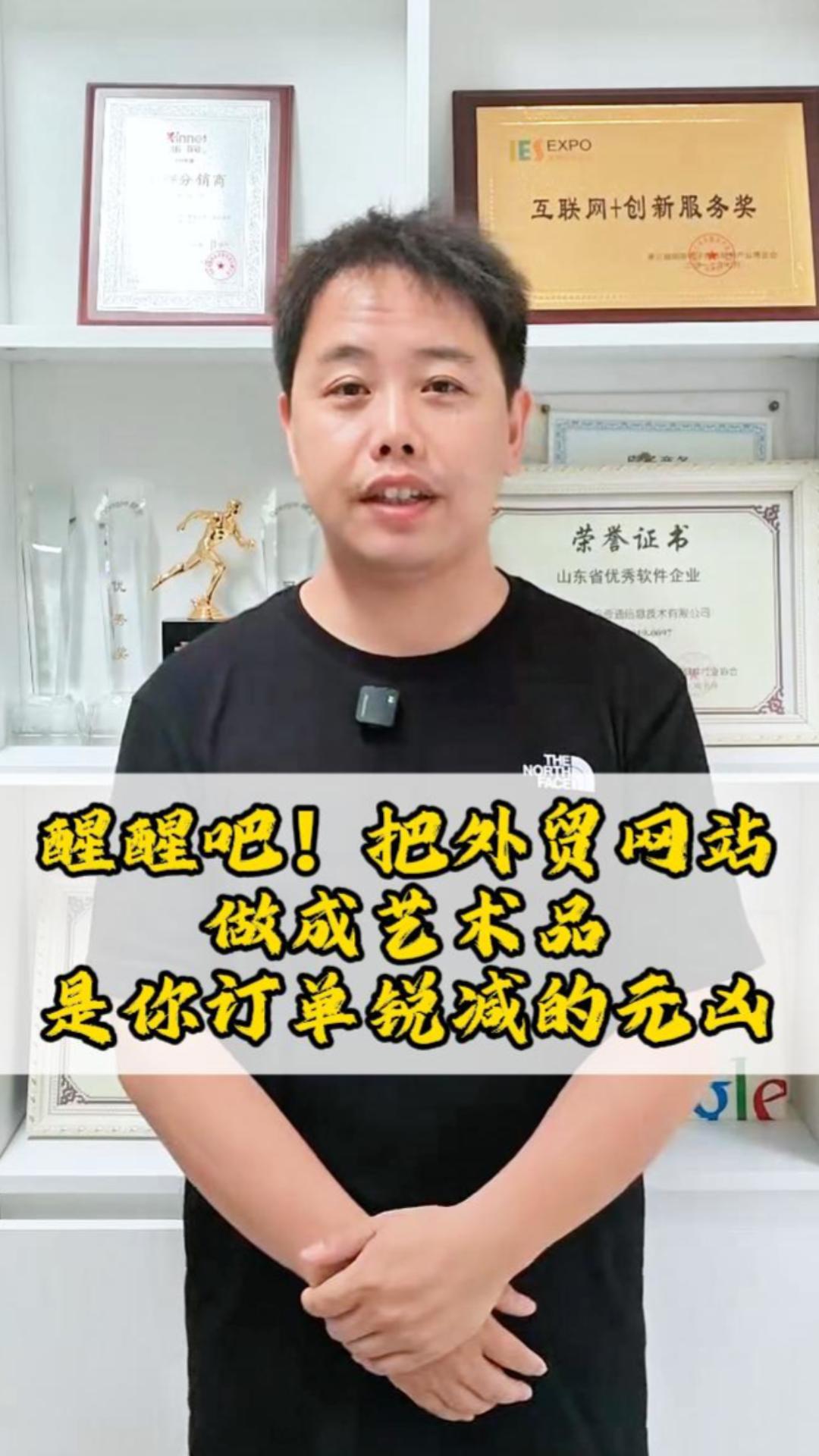
 It's easy to turn a foreign trade website into a piece of art, but it's the ultimate culprit behind your order decline
 Foreign trade website efficiency revolution! Yiyingbao component upgrade + inquiry optimization, inquiries surge!


Related Products
 EasyCamp SaaS Smart Website Marketing SystemE-Yingbao SaaS Smart Website Marketing System: AI-powered, zero-code website building. Rapidly launch multilingual independent e-commerce sites in just 10 minutes. Global server acceleration and AI-driven SEO optimization empower businesses to efficiently connect with global markets. The seamless integration of technology and user-friendly operation makes building e-commerce sites incredibly simple.
 AI+SEM Intelligent Advertising Marketing SystemAI+SEM drives intelligent ad creation, empowering full-funnel precision advertising marketing. The system automatically generates weekly/monthly reports, AI recommends keywords and target countries, monitors core metrics in real-time with intelligent alerts, and enables one-click high-conversion ad solutions to help quickly acquire customers and improve ROI.
 AI+SEO Dual Engine Optimization ServiceEasyWin AI+SEO Dual Engine Optimization System leverages AI-powered keyword mining, content generation, and comprehensive technical optimization to help foreign trade enterprises acquire high-quality organic traffic, significantly improving search rankings and conversion rates.
 AI+SNS Social Media Marketing SystemYingbao AI+SNS Social Media Marketing System - Precision social capture for the social media era. Supports one-click content synchronization across major platforms like Facebook and LinkedIn. AI intelligently rewrites posts for enhanced relevance. 24/7 AI customer service and user profiling analysis empower businesses to efficiently expand into global markets.
 AI+SEO营销解决方案易营宝AI+SEO营销解决方案,通过AI批量写作、智能生成TDK、精准关键词扩词等功能,全面优化网站SEO效果,提升流量与转化率。助力企业构建高效智能网站新生态。
 AI+SEM Advertising Marketing SolutionsAI+SEM Advertising Marketing Solution leverages AI technology to deeply empower SEM ad campaigns. It automatically generates weekly/monthly reports using AI, presenting account data across multiple dimensions for comprehensive insights into campaign performance and trends. The system precisely recommends keywords and target countries, intelligently generates high-conversion ad copy, and enables one-click activation of efficient campaign plans to help businesses rapidly acquire customers. Simultaneously, it monitors core metrics in real time, intelligently identifies abnormal fluctuations, and issues timely alerts to ensure stable, high-return advertising results.
 Domain Name ServicesEasyWin provides professional domain name services, including intelligent queries, one-stop registration, brand protection, and full lifecycle management, helping businesses build a digital brand image.
 EasyOperate B2C Cross-Border E-Commerce Platform & Independent WebsiteEasyStore B2C Cross-border E-commerce Independent Store is an intelligent website building and cross-border e-commerce integrated solution independently developed by EasyStore Information Technology (Beijing) Co., Ltd. The system is specially designed for small and medium-sized as well as large export enterprises, integrating 'website building, operation, marketing, advertising, and conversion' into one, helping enterprises quickly establish cross-border e-commerce independent stores to achieve brand globalization and global sales growth.
The platform supports multiple languages, multiple currencies, and multi-channel marketing, with built-in AI intelligent translation and SEO optimization systems, suitable for mainstream markets such as Southeast Asia, Europe and America, Latin America, and the Middle East, assisting Chinese manufacturing enterprises in efficiently deploying international e-commerce strategies. SSL证书易营宝提供专业SSL安全证书服务,包括单域名和泛域名证书,确保网站数据传输加密、身份验证和完整性保护,助力企业建立安全可信的在线业务环境。









