









- Can Zhejiang foreign trade independent websites still be developed today? Look at changes in traffic and lead generationJul 28, 2026View details
- What New Signals Are Emerging in Enterprise Services SaaS Marketing ReportsJul 27, 2026View details
- What Does a Global Traffic Ecosystem Service Provider Do? What Are the Differences from a Single Advertising AgencyJul 16, 2026View details
- What should you focus on in the latest enterprise SaaS report? From renewal rates and delivery costs to overseas growth opportunitiesJul 12, 2026View details
- What signals are worth paying attention to in a cross-border marketing trend report? B2B companies should look at these 6 signalsJul 11, 2026View details
- How to Read a Cross-Border Marketing Trends Report? Five Key Dimensions for Evaluating Channel OpportunitiesJul 11, 2026View details
- Which channel has the highest ROI in the global traffic ecosystem? Comparative analysis of search, social media, and advertisingJul 10, 2026View details
- What multilingual website services are available in Sanya? Which model is more suitable for local businesses going global?Jul 08, 2026View details
Which search engine optimization methods are truly effective?
Which search engine optimization methods are truly effective? If you are a business owner, website operator, or channel partner, what you usually care most about is not “how much SEO terminology there is,” but rather: which methods can steadily improve rankings, bring inquiries and conversions, while keeping risks controllable and investment measurable. The overall judgment is very clear: truly effective search engine optimization is not about isolated tactics, but about continuously executing around the five core links of “search intent matching, website foundation optimization, content system building, page experience improvement, and data iteration.” Especially for companies integrating website + marketing services, SEO should not be an isolated action, but should become a long-term growth asset in the customer acquisition chain.
Conclusion first: truly effective SEO does not rely on shortcuts, but on a system
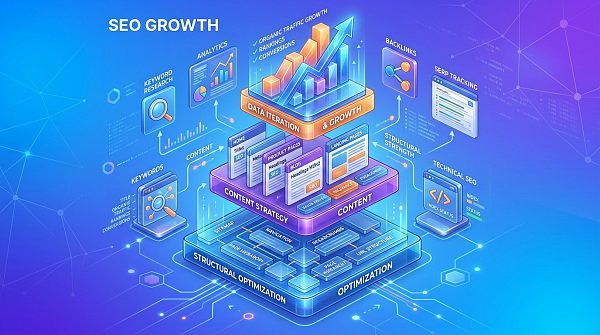
When many companies search for “which search engine optimization methods are truly effective,” the real intent behind it is actually very consistent: they want to find methods that are practical, effective, and not easily knocked back to square one by algorithm updates. For business decision-makers, the focus is on input-output ratio, timeline, and risk; for executors, the bigger concern is exactly how to do it; for maintainers and agencies, more attention is paid to sustainable follow-up operations.
From a practical perspective, the truly effective methods for search engine ranking optimization mainly include the following categories:
- Match keywords and search intent correctly, rather than just chasing popular terms
- Build a clear website structure to improve crawling and indexing efficiency
- Continuously produce content that is helpful to users, rather than mechanically stuffing keywords
- Optimize page speed, mobile experience, and conversion paths
- Continuously iterate pages through data analysis, rather than leaving them unchanged for a long time after launch
- Establish credibility signals, including brand exposure, backlink quality, and user behavior performance
This is also why more and more companies choose to integrate website building, SEO content optimization, advertising, and data analysis. For global digital marketing service providers like Easyab Information Technology (Beijing) Co., Ltd., which has been deeply engaged in the field for over ten years, the reason it can serve more than 100,000 companies is essentially that it places SEO within a complete growth system, rather than simply modifying a few page titles.
What companies should care about most is not “whether there are methods,” but “which methods are suitable for themselves”
Different types of companies require different search engine optimization solutions. If a website has just gone online, the priority must be indexing, structure, and basic content; if there is already some traffic but poor conversion, then page quality and traffic accuracy should be checked first; if industry competition is fierce, the focus should be on long-tail content layout, topic page construction, and branded keyword defense.
For target readers, the most common questions usually include these:
- Why is the ranking still not improving after doing SEO?
- Is the content not good enough, or is there a problem with the website technology?
- How long does SEO take to show results, and is it worth long-term investment?
- How can you judge whether the solution provided by a service provider is reliable?
- Why has consultation volume not increased in sync after organic traffic has grown?
These questions show that what companies really need is not a “complete SEO knowledge encyclopedia,” but a practical framework that can help determine priorities. To judge whether an SEO method is effective, it is recommended to directly look at three standards: whether it is closer to user search needs, whether it helps search engines understand the page, and whether it can ultimately bring business results.
5 core methods that can truly improve search engine rankings
1. Upgrade keyword layout from “finding words” to “identifying intent”
The problem with many websites is not that they have not done keyword work, but that they chose the wrong keywords. The core of truly effective SEO content optimization is not to repeatedly write “search engine optimization” dozens of times, but to judge what users actually want to see: introductory concepts, operational processes, service solutions, or price comparisons and effectiveness evaluations. Only when page content is consistent with search intent does search engine ranking optimization have a foundation.
It is recommended to divide keywords into three layers:
- Core terms: such as “search engine optimization” and “website SEO optimization solution”
- Scenario terms: such as “how to do enterprise website SEO” and “methods to improve official website rankings”
- Conversion terms: such as “which SEO service company is good” and “SEO optimization solution quotation”
2. Website structure optimization determines the upper limit of indexing and rankings
If a website has messy categories, overly deep link levels, and serious page duplication, then even if the content is decent, it can still easily affect crawling and authority transfer. Effective website SEO optimization solutions usually address these basic issues first:
- Unified URL standards to avoid duplicate pages
- Clear navigation hierarchy, with important pages reachable within 3 clicks
- Set reasonable titles, descriptions, H tags, and internal links
- Submit a sitemap, and handle dead links and invalid redirects
- Ensure mobile adaptation and page loading speed
3. Content building should focus on “solving problems” rather than “making up article numbers”
Content is still one of the most effective long-term means in SEO, but the premise is that the content truly helps users. Good content is not simple rewriting, but content that can answer user questions, reduce decision-making costs, and enhance trust. For example, industry articles can cover topics such as “how to choose,” “why do it,” “what pitfalls are there,” “how to plan the budget,” and “how to evaluate successful cases.”
In content planning, you can adopt the approach of “pillar pages + topic pages + Q&A pages” to form complete topic coverage. This is beneficial both for rankings and for readers’ in-depth browsing.
4. Page experience directly affects ranking stability and conversion results
Search engines are paying more and more attention to user experience signals. High bounce rates, slow loading, poor content layout, and complex forms all weaken rankings and inquiry results. Especially for end consumers and distributors, they are not here to study terminology, but to quickly get answers and make judgments.
5. Data review and continuous optimization are more important than one-time adjustments
SEO is not “finished after one round of changes,” but a process of continuous testing and correction. It is recommended to continuously monitor the following indicators:
- Page index volume and crawl anomalies
- Ranking changes of core keywords
- Organic traffic growth trends
- Page dwell time, bounce rate, and conversion rate
- Inquiry quality brought by different content topics
When some companies build a content system, they also refer to analytical thinking from other industries in refined management. For example, research materials like Research on the Application Optimization of Job Order Costing in Cost Accounting of Coal Mining Enterprises, although belonging to different professional fields, still offer logic such as “breaking down processes, identifying key cost drivers, and optimizing resource allocation,” which is also worth learning from in SEO project management.
Why do many SEO methods “seem to have been done,” but the results are still not obvious?
The common reasons are not complicated, mainly concentrated in the following situations:
- Only the homepage is changed, without working on category pages and content page layout
- Only rankings are pursued, without paying attention to whether keywords have commercial value
- Many articles are updated, but there is no topic system or internal linking
- Website technical issues persist for a long time, affecting indexing and loading speed
- SEO is treated as a short-term project and stopped after 3 months if no obvious results are seen
- Excessive reliance on outdated methods such as scraping, keyword stuffing, and low-quality backlinks
In essence, SEO failure is often not because the method is completely wrong, but because the execution chain is broken: strategy is not connected to technology, technology is not connected to content, and content is not connected to conversion.
How can companies judge whether an SEO plan is reliable?
Whether you are a business decision-maker or an agency, when evaluating a search engine ranking improvement plan, you can judge it from the following angles:
- Whether diagnosis is done first, and then the plan is given
A reliable plan must be based on website status analysis, competitor analysis, and keyword opportunity analysis. - Whether priorities are explained
Not all problems need to be solved at once. It should be clearly stated whether indexing and structure are solved first, or content topics are developed first. - Whether there are measurable goals
For example, increasing index volume in 3 months, improving core keyword rankings in 6 months, and raising the proportion of organic inquiries. - Whether both rankings and conversions are taken into account
Some plans can bring traffic, but have no commercial value. Such plans are of little significance to companies. - Whether there is continuous operation capability
SEO requires collaborative advancement of content, technology, and data. It is difficult for single-point services to remain stable in the long term.
For companies that have already expanded overseas or pursued multi-channel growth, more attention should be paid to whether the service provider has integrated capabilities in website building, SEO, social media, advertising, and data integration. This determines whether organic traffic can truly be converted into business growth, rather than staying only at the reporting level.
An SEO optimization path suitable for implementation by most companies
If you want to move forward as quickly as possible, you can refer to this more practical implementation path:
- First conduct a website SEO diagnosis: indexing, speed, structure, titles, dead links, and mobile experience
- Sort out keywords: layered management of core terms, long-tail terms, question terms, and conversion terms
- Rebuild the content framework: product pages, solution pages, case pages, Q&A pages, and industry article pages
- Optimize key pages: titles, opening paragraph, structure, subheadings, FAQ, and calls to action
- Establish an internal linking system: mutually recommend related content to improve page authority transfer
- Monitor data and conduct monthly reviews: check rankings, traffic, inquiries, and deal quality
The value of this path lies in being executable, evaluable, and sustainable, making it more suitable for long-term business operations than simply pursuing the short-term ranking of a certain keyword.
Summary: effective SEO is essentially about continuously meeting user needs and being clearly understood by search engines
Returning to the original question: which search engine optimization methods are truly effective? The answer is not a certain “trick,” but a systematic project formed around user search intent, website structure, content quality, page experience, and data optimization. For companies, SEO that is truly worth investing in must not only improve search engine rankings, but also improve inquiry quality and long-term customer acquisition costs.
If you are formulating a website SEO optimization plan, it is recommended not to focus on fragmented tactics anymore, but first determine: whether your pages truly answer user questions, whether your website is easy for search engines to understand, and whether your traffic can enter the conversion chain. Solve these three problems well, and ranking improvement is usually just the result, rather than the goal itself.
Related Articles
 Promoting chemical products on Google is essential—otherwise, you are effectively handing your customers over to competitors
 Can Zhejiang foreign trade independent websites still be developed today? Look at changes in traffic and lead generation
 What New Signals Are Emerging in Enterprise Services SaaS Marketing Reports


Related Products
 EasyCamp SaaS Smart Website Marketing SystemE-Yingbao SaaS Smart Website Marketing System: AI-powered, zero-code website building. Rapidly launch multilingual independent e-commerce sites in just 10 minutes. Global server acceleration and AI-driven SEO optimization empower businesses to efficiently connect with global markets. The seamless integration of technology and user-friendly operation makes building e-commerce sites incredibly simple.
 AI+SEM Intelligent Advertising Marketing SystemAI+SEM drives intelligent ad creation, empowering full-funnel precision advertising marketing. The system automatically generates weekly/monthly reports, AI recommends keywords and target countries, monitors core metrics in real-time with intelligent alerts, and enables one-click high-conversion ad solutions to help quickly acquire customers and improve ROI.
 AI+SEO Dual Engine Optimization ServiceEasyWin AI+SEO Dual Engine Optimization System leverages AI-powered keyword mining, content generation, and comprehensive technical optimization to help foreign trade enterprises acquire high-quality organic traffic, significantly improving search rankings and conversion rates.
 AI+SNS Social Media Marketing SystemYingbao AI+SNS Social Media Marketing System - Precision social capture for the social media era. Supports one-click content synchronization across major platforms like Facebook and LinkedIn. AI intelligently rewrites posts for enhanced relevance. 24/7 AI customer service and user profiling analysis empower businesses to efficiently expand into global markets.
 AI+SEO营销解决方案易营宝AI+SEO营销解决方案,通过AI批量写作、智能生成TDK、精准关键词扩词等功能,全面优化网站SEO效果,提升流量与转化率。助力企业构建高效智能网站新生态。
 AI+SEM Advertising Marketing SolutionsAI+SEM Advertising Marketing Solution leverages AI technology to deeply empower SEM ad campaigns. It automatically generates weekly/monthly reports using AI, presenting account data across multiple dimensions for comprehensive insights into campaign performance and trends. The system precisely recommends keywords and target countries, intelligently generates high-conversion ad copy, and enables one-click activation of efficient campaign plans to help businesses rapidly acquire customers. Simultaneously, it monitors core metrics in real time, intelligently identifies abnormal fluctuations, and issues timely alerts to ensure stable, high-return advertising results.
 Domain Name ServicesEasyWin provides professional domain name services, including intelligent queries, one-stop registration, brand protection, and full lifecycle management, helping businesses build a digital brand image.
 EasyOperate B2C Cross-Border E-Commerce Platform & Independent WebsiteEasyStore B2C Cross-border E-commerce Independent Store is an intelligent website building and cross-border e-commerce integrated solution independently developed by EasyStore Information Technology (Beijing) Co., Ltd. The system is specially designed for small and medium-sized as well as large export enterprises, integrating 'website building, operation, marketing, advertising, and conversion' into one, helping enterprises quickly establish cross-border e-commerce independent stores to achieve brand globalization and global sales growth.
The platform supports multiple languages, multiple currencies, and multi-channel marketing, with built-in AI intelligent translation and SEO optimization systems, suitable for mainstream markets such as Southeast Asia, Europe and America, Latin America, and the Middle East, assisting Chinese manufacturing enterprises in efficiently deploying international e-commerce strategies. SSL证书易营宝提供专业SSL安全证书服务,包括单域名和泛域名证书,确保网站数据传输加密、身份验证和完整性保护,助力企业建立安全可信的在线业务环境。









