









- What multilingual website services are available in Sanya? Which model is more suitable for local businesses going global?Jul 08, 2026View details
- How to view the complete list of China SaaS companies in the top 100? Practical methods for screening website-building and marketing service providersJul 08, 2026View details
- How to view pricing in the global traffic ecosystem? Cost comparison of search, social media, and content channel advertisingJul 06, 2026View details
- How to assess foreign trade website development trends?Looking at 2026 changes from multilingual,AI content to conversion pathsJul 04, 2026View details
- What are the new trends in multilingual marketing data analytics tools in 2026? Focus on attribution、automation and complianceJul 04, 2026View details
- Is Brand Globalization Marketing Consulting Worth Buying? At What Stage Should Companies Bring It InJul 01, 2026View details
- Cross-Border Marketing Trend Research: Why More and More Companies Are Starting to Deploy AI Search and GEO OptimizationJun 30, 2026View details
- Cross-Border Marketing Trend Research: How Independent Sites, AI Content, and Short-Video Customer Acquisition Are ChangingJun 30, 2026View details
How to Troubleshoot a Drop in Search Engine Rankings
When search engine rankings suddenly decline,after-sales maintenance personnel do not need a generic list of possible causes most,but rather a troubleshooting path that can quickly locate the problem,assess the scope of impact,and drive recovery。Many ranking fluctuations are not caused by a single factor,but are often the result of overlapping signals from technology,content,links,and algorithms。
If an enterprise website originally had stable traffic,but experiences a large-scale keyword drop,reduced indexing,and fewer inquiries within a short period,the first step is usually to determine whether it is a site-wide abnormality or a local page issue,then troubleshoot one by one along the chain of “server—crawling—indexing—content—backlinks—algorithm”,which is the most efficient approach。
For after-sales maintenance personnel,the core goal is not to discuss theory,but to answer three questions as quickly as possible:where the problem is,how large the impact is,and whether it can be recovered。As long as the troubleshooting sequence is correct,a decline in search engine rankings can often be broken down into specific tasks that are actionable,verifiable,and trackable。
Do not rush to modify the website first:first determine which situation the ranking decline belongs to
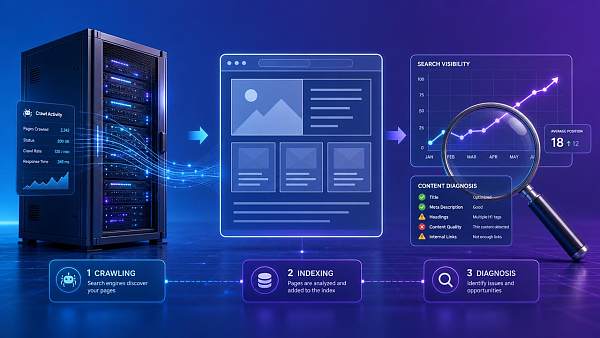
After search engine rankings decline,the first step is not to immediately change titles,delete pages,or build a large number of backlinks,but to first confirm the type of fluctuation。Because different types of issues require completely different handling methods,a misjudgment may further worsen a problem that could originally be recovered。
First look at the scope of the decline,whether it is a single keyword dropping,a single directory dropping,or the entire site’s impressions declining。If only a small number of keywords fluctuate,it may be due to intensified competition or search result reshuffling;if multiple categories of keywords across the entire site decline together,it is more likely to be a technical abnormality,indexing issue,or algorithm impact。
Then look at the timing。If the ranking decline highly overlaps with the timing of server migration,program updates,template adjustments,bulk content modifications,robots changes,or a website redesign going live,prioritize checking on-site operations。If there are no obvious changes,then determine whether it is related to a search engine algorithm update in combination with industry fluctuations。
At the same time,it is necessary to distinguish whether “ranking decline” and “traffic decline” are the same thing。Sometimes rankings do not change much,but reduced search demand can also lead to fewer visits。When troubleshooting,after-sales maintenance personnel must look at keyword positions,impressions,clicks,and indexing status at the same time,and avoid judging based only on traffic。
How to check the technical layer:first troubleshoot hard issues that are most likely to cause large-scale declines
Technical abnormalities are often the primary cause of sharp declines in search engine rankings,especially after website updates,server adjustments,HTTPS configuration changes,and CDN switching,when it is more likely for search engines to be unable to crawl and identify pages stably。
First check whether the server status codes are normal。Focus on whether the homepage,category pages,and core content pages return 200,and whether there are large numbers of 302,404,500,or intermittent timeouts。Many websites can be opened during the day,but are unstable when crawlers access them,which will ultimately directly affect crawl frequency and indexing performance。
Next check whether robots.txt mistakenly blocks important directories,and whether meta robots has been batch changed to nofollow or noindex。In actual work,many ranking declines come from test environment rules being mistakenly carried over to the live site,causing core pages to suddenly lose indexing eligibility。
It is also necessary to check whether canonical tags point incorrectly。If a large number of pages are uniformly pointed to the homepage or an incorrect URL,search engines may misjudge the main version of the page,causing index consolidation and ranking loss。Pagination pages,filter pages,and parameter pages are especially prone to this type of configuration error。
Mobile adaptation cannot be ignored either。If pages open slowly on mobile devices,have disordered layouts,or core content is delayed loaded by JS and not rendered properly,it will affect mobile-first indexing。Today,traffic in most industries comes from mobile devices,and such issues will directly drag down overall performance。
In addition,the sitemap,internal link structure,and number of broken links are also worth checking。A sitemap not updated for a long time,important pages buried too deep,and interrupted internal redirect paths can all cause search engines to re-evaluate page value。The focus of technical troubleshooting is to first confirm whether the website still has the foundation to be crawled and understood stably。
Will content changes affect rankings:focus on whether page relevance has been weakened
If there are no obvious abnormalities at the technical layer,the next step is to look at content。Many website ranking declines are not because there is less content,but because the original page topic has been diluted,made shallower,or information that originally satisfied search intent has been removed。
After-sales maintenance personnel should focus on checking whether titles,descriptions,H tags,body structure,anchor text,and category attribution have been changed recently。In particular,bulk keyword replacement,unified templates,and using marketing copy to cover original professional content often reduce the match between pages and target search terms。
It is also important to watch for an increase in duplicate content on pages。For example,multiple regional pages,product pages,and case study pages are highly similar,with only a few fields replaced,which makes it difficult for search engines to determine which page is more worthy of ranking,and the result is often dilution of overall authority。
If the website serves B2B customers,content should not only “have words”,but should also help users make judgments。For example,a new energy enterprise website should not only display the brand,but also clearly explain technical capabilities,delivery strength,application scenarios,and service processes。Site solutions such as Photovoltaics,New Energy usually place greater emphasis on the expression logic of industry leadership,supply chain strength,and a closed loop for project conversion。
During troubleshooting,it is recommended to identify the pages with the most obvious ranking declines and compare them with historical versions to see whether high-value content such as FAQ,case data,parameter descriptions,qualification certificates,and solution explanations has been deleted。This information is often exactly the key to supporting search engine rankings and user conversion。
How to check backlinks and off-site signals:not the more the better,but whether there are abnormal fluctuations
After search engine rankings decline,many people’s first reaction is “have backlinks been lost”。This direction is not wrong,but troubleshooting cannot stop at the quantity level。What really needs to be examined is whether high-quality backlinks have been lost,whether anchor text is abnormal,and whether there has been concentrated growth in spam links。
If the website previously relied on a small number of high-authority industry sites,media sites,or partner platforms for referral traffic,then once these core links fail,the rankings of related pages may quickly fall back。After-sales maintenance personnel should prioritize checking whether key backlink pages have been deleted,redesigned,added with nofollow,or have invalid redirects。
At the same time,it is also necessary to see whether a large number of low-quality backlinks have suddenly been added recently。If link sources are abnormal,content is irrelevant,and anchor text is excessively repeated,search engines may reduce their trust in the site。A ranking decline does not necessarily mean a penalty,but abnormal off-site signals can indeed weaken stability。
Brand keyword sentiment and off-site mentions are also worth attention。For marketing-oriented websites,search engines do not only look at links,but also continuously identify brand-related signals。If industry reputation declines,partner pages become invalid,or third-party materials are not updated for a long time,page performance may also be indirectly affected。
How to judge algorithm updates:do not attribute all fluctuations to “search engine instability”
When there are no obvious abnormalities in on-site technology,content,and backlinks,algorithm updates should be considered。Especially when multiple keywords decline simultaneously and the types of competitor pages change significantly,it is often not a single-site failure,but search engines readjusting their ranking logic。
To judge algorithm impact,you can first observe whether other websites in the same industry also have similar fluctuations。If everyone experiences changes in indexing,rankings,or page types during the same time period,it means it is more likely to be an industry-wide impact rather than your website making an isolated error。
Then look at what common characteristics the declining pages have。For example,content that is too short,incomplete information,too many ads,poor page experience,lack of credible proof,and weak author information。These issues are particularly easy to expose when algorithms tighten;stable rankings in normal times do not mean they will always be safe。
If an enterprise website carries the task of customer acquisition,then search engines pay more attention to “whether the content truly helps users make decisions”。For pages in new energy,manufacturing,and technical services,if they only stay at promotional slogans without application scenarios,capability boundaries,service processes,and case support,they are more likely to lose advantages after algorithm adjustments。
This is also why many enterprises,when upgrading their websites,choose a page system that pays more attention to structured narrative and conversion logic。For example,a Photovoltaics,New Energy thematic solution for new energy enterprises usually enhances search understanding and visitor trust through fully responsive design,solution logic flow,and partner display。
A practical process for efficient troubleshooting:after-sales maintenance personnel can execute it directly
To improve handling efficiency,it is recommended to establish a troubleshooting checklist in a fixed sequence。Step 1,record the time when the abnormality occurred,declining pages,core keywords,and the magnitude of traffic changes;Step 2,confirm whether there have been changes at the server,program,template,content,and link levels within the last 30 days。
Step 3,spot-check the crawling and indexing status of the homepage,category pages,detail pages,and historically high-traffic pages,and see whether status codes,robots,canonical,titles,and body content are abnormal。Step 4,compare search result pages to determine whether competitors have been replaced and whether page types have changed。
Step 5,check backlinks and brand keyword performance,and confirm whether there is loss of high-quality links or growth of spam links。Step 6,combine site logs,webmaster platforms,and analytics tools to identify whether the issue is continuous,periodic,or a one-time fluctuation,so as to decide whether to fix,observe,or restructure the page。
During execution,the most important thing is to keep operation records。Every fix,when it was changed,and which pages were modified should all be documented in a traceable record。Because search engine ranking recovery usually has a delay,without records it is impossible to determine exactly which action produced the effect。
Conclusion:a ranking decline is not frightening,what is frightening is having no clear troubleshooting sequence
Fluctuations in search engine rankings are essentially reminding the website that there is a deviation in a certain link。For after-sales maintenance personnel,the truly effective handling method is not to blindly modify the website,but to first distinguish the problem type,then gradually narrow the scope along the four directions of technology,content,backlinks,and algorithms。
As long as you first check whether the issue is site-wide or local,then check the crawling and indexing foundation,then review content quality and off-site signals,most problems can be located。The speed of recovery often does not depend on whether you “know a lot of SEO terminology”,but on whether troubleshooting has an order and whether fixes have evidence。
An enterprise website is responsible not only for display,but also for traffic,inquiries,and sales leads。If a search engine ranking decline can be systematically investigated and fixed in time,it can instead help the team discover long-accumulated hidden risks in the website and lay a more stable foundation for future growth。
Related Articles
 What multilingual website services are available in Sanya? Which model is more suitable for local businesses going global?
 How to view the complete list of China SaaS companies in the top 100? Practical methods for screening website-building and marketing service providers
 There are so many used heavy-duty construction machines for foreign trade. How exactly should we acquire customers?


Related Products
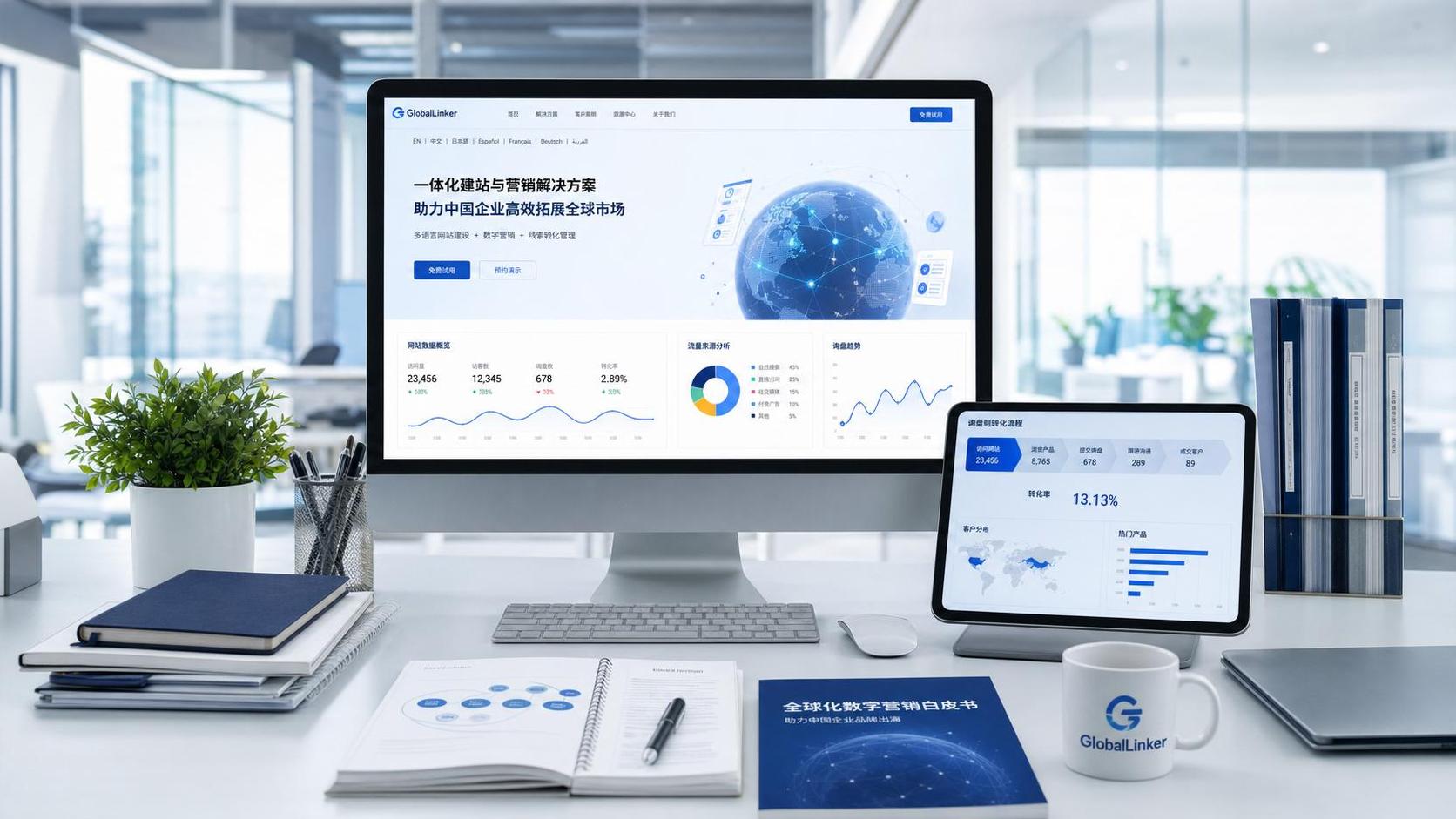
 EasyCamp SaaS Smart Website Marketing SystemE-Yingbao SaaS Smart Website Marketing System: AI-powered, zero-code website building. Rapidly launch multilingual independent e-commerce sites in just 10 minutes. Global server acceleration and AI-driven SEO optimization empower businesses to efficiently connect with global markets. The seamless integration of technology and user-friendly operation makes building e-commerce sites incredibly simple.
 AI+SEM Intelligent Advertising Marketing SystemAI+SEM drives intelligent ad creation, empowering full-funnel precision advertising marketing. The system automatically generates weekly/monthly reports, AI recommends keywords and target countries, monitors core metrics in real-time with intelligent alerts, and enables one-click high-conversion ad solutions to help quickly acquire customers and improve ROI.
 AI+SEO Dual Engine Optimization ServiceEasyWin AI+SEO Dual Engine Optimization System leverages AI-powered keyword mining, content generation, and comprehensive technical optimization to help foreign trade enterprises acquire high-quality organic traffic, significantly improving search rankings and conversion rates.
 AI+SNS Social Media Marketing SystemYingbao AI+SNS Social Media Marketing System - Precision social capture for the social media era. Supports one-click content synchronization across major platforms like Facebook and LinkedIn. AI intelligently rewrites posts for enhanced relevance. 24/7 AI customer service and user profiling analysis empower businesses to efficiently expand into global markets.
 AI+SEO营销解决方案易营宝AI+SEO营销解决方案,通过AI批量写作、智能生成TDK、精准关键词扩词等功能,全面优化网站SEO效果,提升流量与转化率。助力企业构建高效智能网站新生态。
 AI+SEM Advertising Marketing SolutionsAI+SEM Advertising Marketing Solution leverages AI technology to deeply empower SEM ad campaigns. It automatically generates weekly/monthly reports using AI, presenting account data across multiple dimensions for comprehensive insights into campaign performance and trends. The system precisely recommends keywords and target countries, intelligently generates high-conversion ad copy, and enables one-click activation of efficient campaign plans to help businesses rapidly acquire customers. Simultaneously, it monitors core metrics in real time, intelligently identifies abnormal fluctuations, and issues timely alerts to ensure stable, high-return advertising results.
 Domain Name ServicesEasyWin provides professional domain name services, including intelligent queries, one-stop registration, brand protection, and full lifecycle management, helping businesses build a digital brand image.
 EasyOperate B2C Cross-Border E-Commerce Platform & Independent WebsiteEasyStore B2C Cross-border E-commerce Independent Store is an intelligent website building and cross-border e-commerce integrated solution independently developed by EasyStore Information Technology (Beijing) Co., Ltd. The system is specially designed for small and medium-sized as well as large export enterprises, integrating 'website building, operation, marketing, advertising, and conversion' into one, helping enterprises quickly establish cross-border e-commerce independent stores to achieve brand globalization and global sales growth.
The platform supports multiple languages, multiple currencies, and multi-channel marketing, with built-in AI intelligent translation and SEO optimization systems, suitable for mainstream markets such as Southeast Asia, Europe and America, Latin America, and the Middle East, assisting Chinese manufacturing enterprises in efficiently deploying international e-commerce strategies. SSL证书易营宝提供专业SSL安全证书服务,包括单域名和泛域名证书,确保网站数据传输加密、身份验证和完整性保护,助力企业建立安全可信的在线业务环境。









