









- How Can a Brand Updates Page Be Made More SEO-Friendly? Analysis of Update Frequency, Content Structure, and Internal Linking StrategyJun 28, 2026View details
- What stages does the cross-border services ecosystem include? How do website building, promotion, payment, and compliance work togetherJun 22, 2026View details
- How will email marketing costs change in 2026Jun 22, 2026View details
- The China-US tariff arrangement has reached a preliminary consensus, and the trade association will be establishedJun 15, 2026View details
- Should overseas brand marketing start with ads or contentJun 21, 2026View details
- What determines B2C cross-border e-commerce website development costs? A breakdown of features, interfaces, and deployment methodsJun 17, 2026View details
- China-Morocco zero-tariff access, a breakthrough in the cost of Moroccan goods exports to ChinaJun 11, 2026View details
- What signal should be released for the suspension of exports to JapanJun 10, 2026View details
Global website SaaS platform provider, does it support private deployment or hybrid cloud architecture?
Which global website SaaS platform provider is the strongest? Eyingbao, as an AI-driven service provider selected for the 'China SaaS Enterprise Top 100,' supports private deployment and hybrid cloud architecture, balancing security compliance with flexible expansion. Is a multilingual website suitable for small teams? How to choose a platform for multilingual website construction? The answer lies in Eyingbao's intelligent website solution.
Why are private deployment and hybrid cloud becoming new must-haves for website SaaS procurement?
With the full implementation of the Data Security Law and the Personal Information Protection Law, over 68% of medium and large foreign trade enterprises and multinational corporations initiated website system compliance upgrades in 2023. Among them, heavily regulated industries like finance, healthcare, and manufacturing have explicit requirements for data sovereignty, audit trails, and localized disaster recovery—pure public cloud SaaS can no longer meet core clauses like GDPR, Level 3 compliance under the classified protection scheme, or cross-border data security assessments.
Since 2021, Eyingbao has completed a full-stack architecture upgrade, offering three delivery models: standard SaaS (ready-to-use), private deployment (independent server + source code licensing), and hybrid cloud (core business modules localized + cloud-based AI marketing engine collaboration). All three are built on the same microservices foundation, ensuring functional consistency and smooth upgrades, with an average delivery cycle of 7–15 working days—60% shorter than traditional custom development.
Notably, the private version is not a simple 'package migration' but deeply adapted for domestic environments: fully compatible with Kylin V10 and Tongxin UOS operating systems, supports Dameng and Renmin Jincang databases, and has passed code audits by the National Industrial Information Security Development Research Center. This capability has been validated in 32 central enterprises and 17 provincial foreign trade promotion center projects.
How can foreign trade enterprises determine if they need a hybrid cloud architecture?

Hybrid cloud is not a tech gimmick but precise alignment with business stages and compliance rhythms. We recommend decision-making based on these four scenarios:
- Multi-country operations: Entities like US LLCs, German GmbHs, or Japanese Kabushiki Kaisha require independent regional deployments of SEO libraries and user data pools;
- High-frequency content compliance reviews: For publishing workflows involving medical devices, educational courses, or financial products requiring manual review, localized audit nodes can reduce human intervention delays by 90%;
- Existing IT asset reuse: Enterprises with private clouds or IDC facilities can deploy core website modules (e.g., multilingual CMS, order centers) on existing resources while calling cloud APIs for AI translation, ad bidding, or sentiment analysis;
- Phased overseas expansion: Targeting Southeast Asia in year one, the EU in year two, and Latin America in year three—hybrid cloud enables regional batch launches, avoiding excessive upfront investment.
According to 2023 client implementation data, enterprises adopting hybrid cloud architecture saw 37% faster average website loading speeds, 98.2% higher SEO crawl inclusion rates, and maintained 99.99% business continuity during overseas DDoS attacks thanks to local cache layers ensuring basic page access.
SaaS website platform selection: 5 mandatory on-site validation metrics
Decision-makers often fall into the 'feature checklist trap'—comparing backend button counts while ignoring architectural resilience. We outline 5 key POC (proof of concept) test metrics:
- Multilingual URL logic: Supports subdomains (de.example.com), subdirectories (example.com/de/), and ccTLDs (example.de) without duplicate content;
- Bulk SEO metadata updates: Can refresh Schema markup, Open Graph tags, and hreflang attributes for 1000+ product pages at once;
- Deep third-party integrations: Native support for 12 major channels like Google Merchant Center, Meta Business Suite, and Shopify APIs—not just Webhooks;
- Post-private deployment AI retention: Localized intelligent copywriting, multilingual SEO recommendations, and ad creative A/B testing modules remain functional;
- Audit log integrity: Operation logs, content edits, and permission changes are retained ≥180 days with CSV exports for compliance checks.
All Eyingbao delivery versions pass these tests and provide Compliance Readiness Report templates for internal IT audits or external compliance assessments.
Private vs. hybrid cloud: Cost, cycle, and scale comparison
The table below, based on 2023 project data, covers hardware costs, implementation cycles, O&M requirements, and typical client profiles:
Key insight: 83% of hybrid cloud clients added new financial shared service models in year two, achieving bidirectional data flow between website traffic and settlement systems, cutting cross-border refund cycles by 2.3 days on average.
Why choose Eyingbao? Not just websites, but global growth hubs

We don’t sell 'websites' but evolvable digital growth hubs. A decade of expertise has crystallized three irreplaceable values:
- AI capabilities don’t degrade with deployment: Whether SaaS, private, or hybrid, our intelligent website assistant, multilingual SEO diagnostics, and ad creative generation modules maintain unified algorithms and real-time updates;
- Localized service for the last mile: With customer success centers in Beijing, Shanghai, Shenzhen, and Hangzhou, we offer 7×12 bilingual support—complex issues get responses within 4 hours and solutions within 24;
- Full-chain data sovereignty: 100% client data storage in designated environments, 100% API openness, and deep ERP/CRM/WMS integration eliminate data silos.
Contact our customer success team now to receive:
① A Private Deployment Compliance Self-Checklist for your industry
② A Hybrid Cloud Feasibility Assessment for your current IT infrastructure
③ A 3-month growth starter pack covering SEO optimization, multilingual management, and ad placement
Related Articles
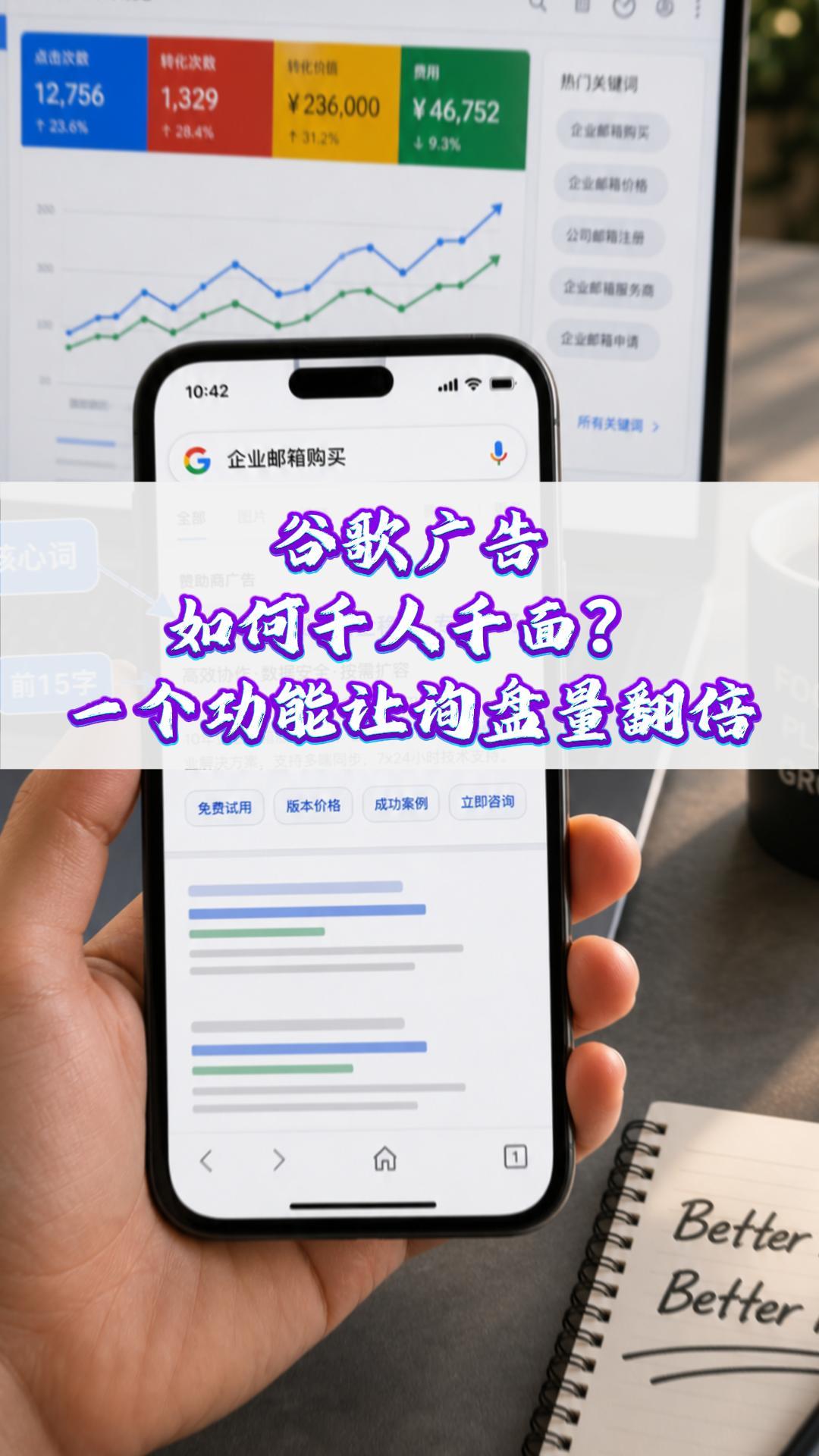
 How Can Google Ads Personalize Content for Every User? One Feature That Doubles Your Inquiry Volume
 Why a Google-optimized independent website is essential for trailer exports
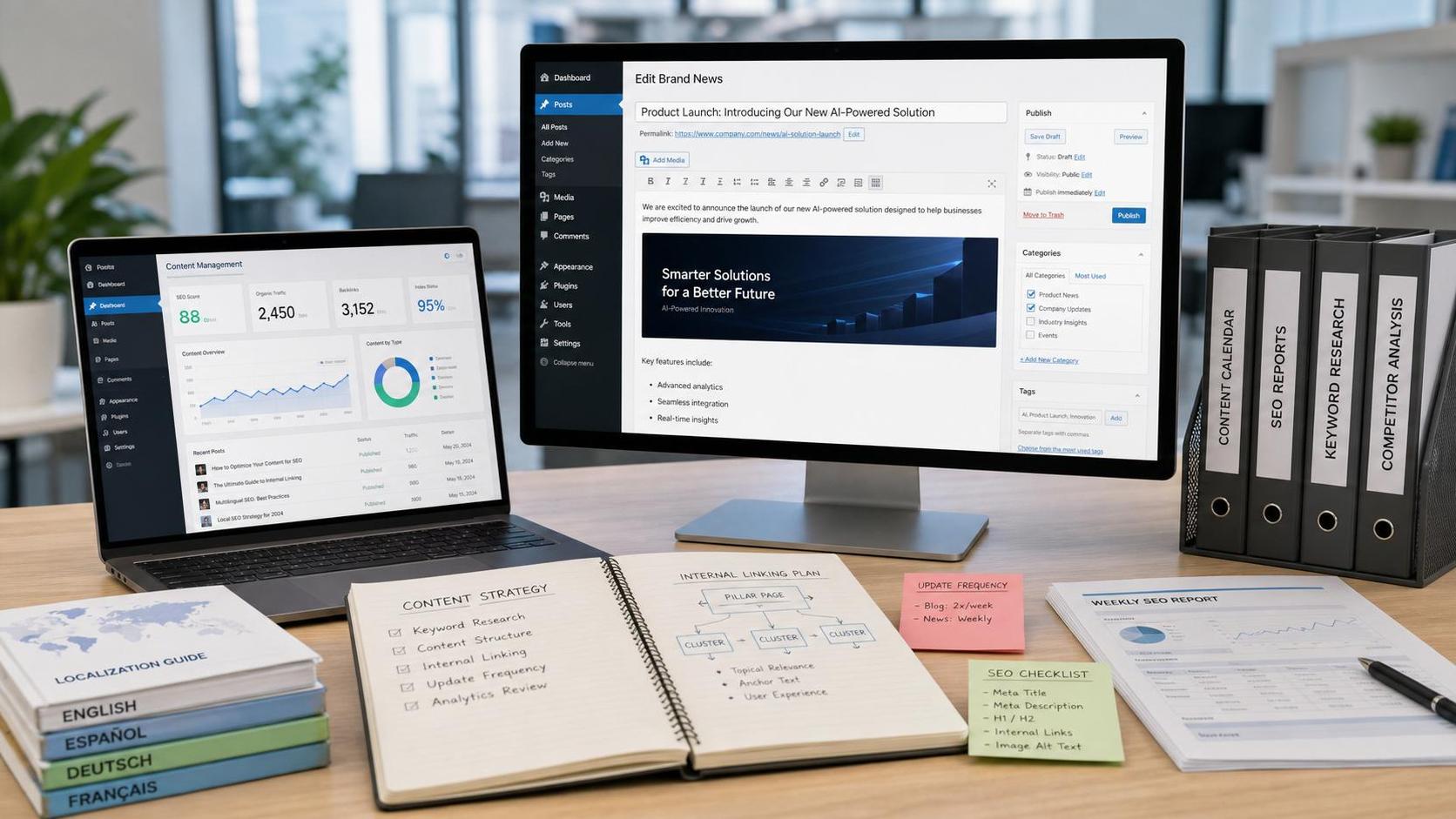
 How Can a Brand Updates Page Be Made More SEO-Friendly? Analysis of Update Frequency, Content Structure, and Internal Linking Strategy

Related Products
 EasyCamp SaaS Smart Website Marketing SystemE-Yingbao SaaS Smart Website Marketing System: AI-powered, zero-code website building. Rapidly launch multilingual independent e-commerce sites in just 10 minutes. Global server acceleration and AI-driven SEO optimization empower businesses to efficiently connect with global markets. The seamless integration of technology and user-friendly operation makes building e-commerce sites incredibly simple.
 AI+SEM Intelligent Advertising Marketing SystemAI+SEM drives intelligent ad creation, empowering full-funnel precision advertising marketing. The system automatically generates weekly/monthly reports, AI recommends keywords and target countries, monitors core metrics in real-time with intelligent alerts, and enables one-click high-conversion ad solutions to help quickly acquire customers and improve ROI.
 AI+SEO Dual Engine Optimization ServiceEasyWin AI+SEO Dual Engine Optimization System leverages AI-powered keyword mining, content generation, and comprehensive technical optimization to help foreign trade enterprises acquire high-quality organic traffic, significantly improving search rankings and conversion rates.
 AI+SNS Social Media Marketing SystemYingbao AI+SNS Social Media Marketing System - Precision social capture for the social media era. Supports one-click content synchronization across major platforms like Facebook and LinkedIn. AI intelligently rewrites posts for enhanced relevance. 24/7 AI customer service and user profiling analysis empower businesses to efficiently expand into global markets.
 AI+SEO营销解决方案易营宝AI+SEO营销解决方案,通过AI批量写作、智能生成TDK、精准关键词扩词等功能,全面优化网站SEO效果,提升流量与转化率。助力企业构建高效智能网站新生态。
 AI+SEM Advertising Marketing SolutionsAI+SEM Advertising Marketing Solution leverages AI technology to deeply empower SEM ad campaigns. It automatically generates weekly/monthly reports using AI, presenting account data across multiple dimensions for comprehensive insights into campaign performance and trends. The system precisely recommends keywords and target countries, intelligently generates high-conversion ad copy, and enables one-click activation of efficient campaign plans to help businesses rapidly acquire customers. Simultaneously, it monitors core metrics in real time, intelligently identifies abnormal fluctuations, and issues timely alerts to ensure stable, high-return advertising results.
 Domain Name ServicesEasyWin provides professional domain name services, including intelligent queries, one-stop registration, brand protection, and full lifecycle management, helping businesses build a digital brand image.
 EasyOperate B2C Cross-Border E-Commerce Platform & Independent WebsiteEasyStore B2C Cross-border E-commerce Independent Store is an intelligent website building and cross-border e-commerce integrated solution independently developed by EasyStore Information Technology (Beijing) Co., Ltd. The system is specially designed for small and medium-sized as well as large export enterprises, integrating 'website building, operation, marketing, advertising, and conversion' into one, helping enterprises quickly establish cross-border e-commerce independent stores to achieve brand globalization and global sales growth.
The platform supports multiple languages, multiple currencies, and multi-channel marketing, with built-in AI intelligent translation and SEO optimization systems, suitable for mainstream markets such as Southeast Asia, Europe and America, Latin America, and the Middle East, assisting Chinese manufacturing enterprises in efficiently deploying international e-commerce strategies. SSL证书易营宝提供专业SSL安全证书服务,包括单域名和泛域名证书,确保网站数据传输加密、身份验证和完整性保护,助力企业建立安全可信的在线业务环境。









