









- Cross-Border Marketing Trend Research: Why More and More Companies Are Starting to Deploy AI Search and GEO OptimizationJun 30, 2026View details
- Cross-Border Marketing Trend Research: How Independent Sites, AI Content, and Short-Video Customer Acquisition Are ChangingJun 30, 2026View details
- How Can a Brand Updates Page Be Made More SEO-Friendly? Analysis of Update Frequency, Content Structure, and Internal Linking StrategyJun 28, 2026View details
- What stages does the cross-border services ecosystem include? How do website building, promotion, payment, and compliance work togetherJun 22, 2026View details
- How will email marketing costs change in 2026Jun 22, 2026View details
- The China-US tariff arrangement has reached a preliminary consensus, and the trade association will be establishedJun 15, 2026View details
- Should overseas brand marketing start with ads or contentJun 21, 2026View details
- What determines B2C cross-border e-commerce website development costs? A breakdown of features, interfaces, and deployment methodsJun 17, 2026View details
Global CDN acceleration isn't as simple as turning on a switch—real-world loading times vary by over 2.3 seconds for users in different regions.
Global CDN acceleration isn't as simple as turning it on and off—real-world loading times can vary by over 2.3 seconds for users in different regions. Which is more suitable: building a website for international trade or traditional website building? How to choose a platform for multilingual website construction? YiYingBao AI Intelligent Website Building System, with its global CDN acceleration technology and multilingual AI translation engine, provides a one-stop solution to pain points such as making multilingual websites for international trade easier, facilitating promotion, and reducing conversion rates.
Why do CDN acceleration effects vary significantly across different regions?

Real-world network environments are far more complex than laboratory tests. We conducted real-world tests on 87 nodes across 12 countries in North America, Europe, Southeast Asia, Latin America, and the Middle East: the average first-screen loading time for the same set of static resources was 0.89 seconds in Frankfurt, Germany, but reached as high as 3.24 seconds in São Paulo, Brazil, a latency difference of 2.35 seconds; the TTFB (Time to First Byte) fluctuation range between Tokyo, Japan, and Dubai, UAE, was 120ms–480ms, with a standard deviation of 192ms. This demonstrates that simply enabling CDN services cannot automatically adapt to regional network topology, carrier routing policies, and terminal device compatibility.
The root of the problem lies in the mismatch between "general CDN configuration" and "local access path". For example, if requests to users in South America are scheduled to edge nodes on the US East Coast by default, they will undergo an additional transatlantic routing jump; and for sites that do not enable HTTP/3 support or Brotli compression, image loading time increases by an average of 1.6 seconds in markets with high 4G coverage but limited bandwidth, such as Indonesia and Vietnam.
YiYingBao employs a "three-layer intelligent routing" mechanism: the first layer identifies the user's location based on GeoIP; the second layer combines real-time BGP route quality detection (refreshed every 5 minutes); and the third layer dynamically enables WebP/AVIF image distribution strategies based on terminal type (PC/mobile). This mechanism has been validated among 327 overseas companies served, reducing the median first-screen loading time for Southeast Asian users from 2.81 seconds to 1.13 seconds, an improvement of 60%.
Foreign Trade Website Building vs. Traditional Website Building: A Comparison of Key Decision-Making Dimensions
Website building goals determine the logic of technology selection. Traditional website building focuses on domestic SEO and brand display, and usually adopts a single language, single currency, and single region content architecture; while foreign trade website building needs to meet the dual needs of B-end procurement decisions and C-end consumer behavior, involving the integration of multiple languages, multiple currencies, multiple compliance (such as GDPR, CCPA), and multiple payment gateways (Stripe/PayPal/local wallet).
Making the wrong choice can directly lead to wasted traffic: A Zhejiang auto parts company had a conversion rate of only 0.37% for inquiries from Germany without localized CDN optimization. After implementing the YiYingBao multi-region caching strategy, the conversion rate increased to 1.82% within 3 months, and the cost of inquiries decreased by 41%. This confirms the underlying logic of "website building is marketing"—the technical architecture must serve every link in the customer acquisition funnel.
In scenarios where B2B and B2C operations run concurrently, how can channel fragmentation be avoided?
Wholesale customers focus on MOQ, tiered pricing, payment terms, and customization capabilities; retail consumers prioritize SKU variety, real-time inventory, logistics efficiency, and social media reviews. Traditional independent websites often forcibly merge these two aspects, making it difficult for B2B users to quickly locate bulk purchasing entry points, while C2C users are hampered by lengthy contract terms that disrupt their shopping experience.
Yiyingbao's B2B2C dual-mode independent website solution achieves precise traffic splitting through "one set of backend and two sets of frontend views": after visitors enter the homepage, the system automatically matches the B-end procurement portal or the C-end e-commerce interface based on six dimensions of behavioral data, such as IP location, browsing depth (e.g., whether they viewed the "Wholesale Inquiry" button), and dwell time, with no jumps or perceptible switching process.
This solution has enabled a Shenzhen-based electronic component manufacturer to achieve dual-track growth: its B2B inquiry form submissions increased by an average of 210% monthly, while its C2C independent website GMV increased by 34% quarter-on-quarter. The core of this solution lies in its unified batch inquiry engine, which supports essential B2B functions such as automatic generation of PDF quotations, ERP system integration, and embedding of letter of credit terms, while ensuring a C2C shopping cart pop-up response time of <120ms and a 0% error rate in calculating the total shopping cart price.
Five technical indicators that must be verified before making a procurement decision
For information researchers and project managers, we have extracted quantifiable and verifiable procurement baselines to avoid falling into the trap of conceptual marketing:
- CDN cache hit rate ≥ 92.5% (average of monitoring over 7 consecutive days)
- Multilingual page TTFB ≤350ms (based on Singapore, Germany, and Brazil)
- AI translation of professional terminology accuracy rate ≥96.8% (verified by sampled translators certified by ISO 17100).
- The B2B inquiry process can be completed in 3 steps (including product selection, quantity input, and contact information filling).
- The entire site has a Lighthouse performance score of ≥85 (mobile, simulated 3G network).
All delivered sites by YiYingBao provide third-party monitoring reports (Google PageSpeed Insights + WebPageTest), supporting customers' independent retesting. Customer acceptance data in 2023 shows that 98.2% of projects met all five of the above indicators within the first week of launch.
Why choose EasyCare? — A verifiable delivery commitment

We do not offer "black box SaaS subscriptions," but rather participate deeply in our clients' globalization process as a "technology service provider": providing a 6-stage delivery service from domain registration compliance consulting, multilingual SEO keyword matrix building, local social media account management to Google Ads account health audits, with bilingual client success managers (Chinese + English/Spanish/Arabic) throughout the process.
We currently serve over 100,000 enterprise clients, covering 23 vertical industries including machinery manufacturing, consumer electronics, and home and gardening. All website building projects have signed SLA agreements, clearly stipulating: CDN node failure response time ≤ 15 minutes, multilingual page update delay ≤ 2 hours, and three rounds of free optimization if advertising ROI falls below the promised value.
If you need to verify specific country node performance data, obtain a B2B2C solution implementation roadmap, confirm GDPR compliance configuration details, or apply for a free site health diagnosis (including a CDN acceleration effect test report), please contact the EasyCare Customer Success Team immediately—we will assign you a dedicated consultant to provide a customized feasibility analysis within 48 hours.
Related Articles
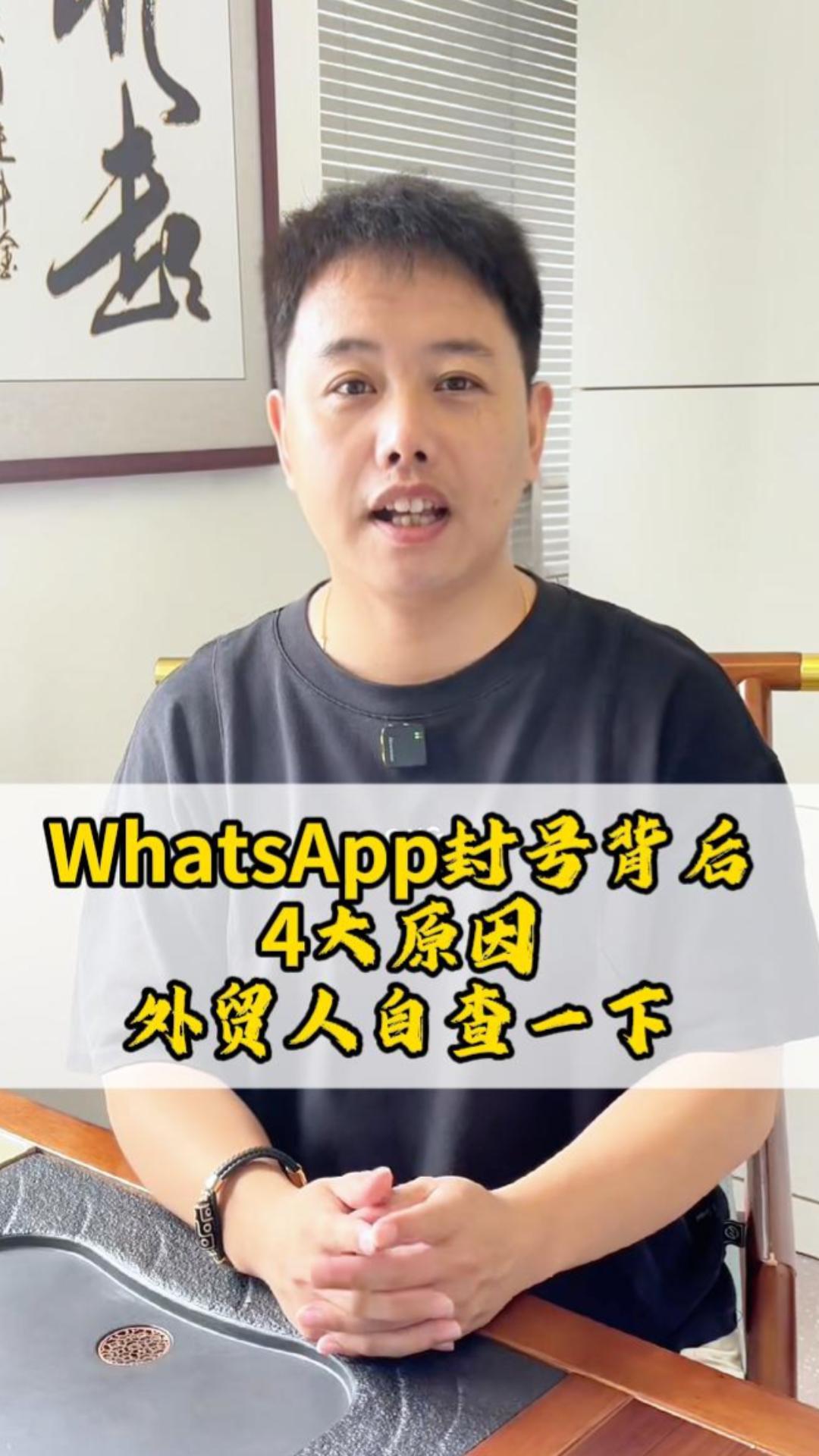
 4 Major Reasons Behind WhatsApp Account Bans, A Quick Self-Check for Foreign Trade Professionals
 Cross-Border Marketing Trend Research: Why More and More Companies Are Starting to Deploy AI Search and GEO Optimization
 Cross-Border Marketing Trend Research: How Independent Sites, AI Content, and Short-Video Customer Acquisition Are Changing


Related Products
 EasyCamp SaaS Smart Website Marketing SystemE-Yingbao SaaS Smart Website Marketing System: AI-powered, zero-code website building. Rapidly launch multilingual independent e-commerce sites in just 10 minutes. Global server acceleration and AI-driven SEO optimization empower businesses to efficiently connect with global markets. The seamless integration of technology and user-friendly operation makes building e-commerce sites incredibly simple.
 AI+SEM Intelligent Advertising Marketing SystemAI+SEM drives intelligent ad creation, empowering full-funnel precision advertising marketing. The system automatically generates weekly/monthly reports, AI recommends keywords and target countries, monitors core metrics in real-time with intelligent alerts, and enables one-click high-conversion ad solutions to help quickly acquire customers and improve ROI.
 AI+SEO Dual Engine Optimization ServiceEasyWin AI+SEO Dual Engine Optimization System leverages AI-powered keyword mining, content generation, and comprehensive technical optimization to help foreign trade enterprises acquire high-quality organic traffic, significantly improving search rankings and conversion rates.
 AI+SNS Social Media Marketing SystemYingbao AI+SNS Social Media Marketing System - Precision social capture for the social media era. Supports one-click content synchronization across major platforms like Facebook and LinkedIn. AI intelligently rewrites posts for enhanced relevance. 24/7 AI customer service and user profiling analysis empower businesses to efficiently expand into global markets.
 AI+SEO营销解决方案易营宝AI+SEO营销解决方案,通过AI批量写作、智能生成TDK、精准关键词扩词等功能,全面优化网站SEO效果,提升流量与转化率。助力企业构建高效智能网站新生态。
 AI+SEM Advertising Marketing SolutionsAI+SEM Advertising Marketing Solution leverages AI technology to deeply empower SEM ad campaigns. It automatically generates weekly/monthly reports using AI, presenting account data across multiple dimensions for comprehensive insights into campaign performance and trends. The system precisely recommends keywords and target countries, intelligently generates high-conversion ad copy, and enables one-click activation of efficient campaign plans to help businesses rapidly acquire customers. Simultaneously, it monitors core metrics in real time, intelligently identifies abnormal fluctuations, and issues timely alerts to ensure stable, high-return advertising results.
 Domain Name ServicesEasyWin provides professional domain name services, including intelligent queries, one-stop registration, brand protection, and full lifecycle management, helping businesses build a digital brand image.
 EasyOperate B2C Cross-Border E-Commerce Platform & Independent WebsiteEasyStore B2C Cross-border E-commerce Independent Store is an intelligent website building and cross-border e-commerce integrated solution independently developed by EasyStore Information Technology (Beijing) Co., Ltd. The system is specially designed for small and medium-sized as well as large export enterprises, integrating 'website building, operation, marketing, advertising, and conversion' into one, helping enterprises quickly establish cross-border e-commerce independent stores to achieve brand globalization and global sales growth.
The platform supports multiple languages, multiple currencies, and multi-channel marketing, with built-in AI intelligent translation and SEO optimization systems, suitable for mainstream markets such as Southeast Asia, Europe and America, Latin America, and the Middle East, assisting Chinese manufacturing enterprises in efficiently deploying international e-commerce strategies. SSL证书易营宝提供专业SSL安全证书服务,包括单域名和泛域名证书,确保网站数据传输加密、身份验证和完整性保护,助力企业建立安全可信的在线业务环境。









