









- The China-US tariff arrangement has reached a preliminary consensus, and the trade association will be establishedJun 15, 2026View details
- What determines B2C cross-border e-commerce website development costs? A breakdown of features, interfaces, and deployment methodsJun 17, 2026View details
- China-Morocco zero-tariff access, a breakthrough in the cost of Moroccan goods exports to ChinaJun 11, 2026View details
- What signal should be released for the suspension of exports to JapanJun 10, 2026View details
- China's May LNG imports rebounded, with increased volumes from Russia and Canada filling the Middle East supply gapJun 10, 2026View details
- Will GEO change its SEO strategy?Jun 04, 2026View details
- What types of businesses are end-to-end solutions suitable for?Jun 03, 2026View details
- 2026 Global Growth Channel TrendsJun 02, 2026View details
How to Judge Whether Google SEO Optimization Services Are Reliable?
Faced with the wide variety of Google SEO optimization services on the market, what many companies worry about most is not “whether to do it,” but “after spending the money, can we really see results, and will we fall into traps?” The key to judging whether a Google SEO optimization service is reliable does not lie in how much professional jargon the other party uses, but in whether they can provide clear strategic logic, real and verifiable case studies, transparent data mechanisms, and sustainable ranking growth capabilities. For business decision-makers and execution teams, truly reliable service providers often understand not only search engine optimization services, but also business conversion and long-term growth, rather than merely promising “quickly getting to the first page.”
If you are currently screening potential partners, this article will help you build a more practical evaluation framework from several key dimensions, including search intent, service capabilities, risk identification, cooperation process, and result assessment.
Conclusion first: reliable Google SEO optimization services usually share these 5 common traits
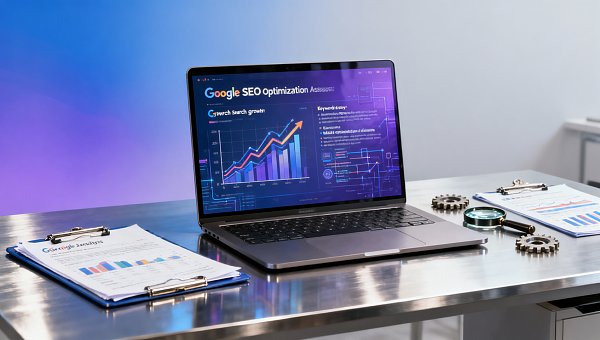
When companies choose Google SEO optimization services, the most effective approach is not to listen to sales pitches, but to first focus on several key evaluation points. Generally speaking, truly reliable service providers usually have the following 5 common traits:
- They do not promise “guaranteed first-page rankings in the short term”. SEO is essentially a process of continuous optimization, so any absolute promise of guaranteed rankings, guaranteed traffic, or guaranteed keyword volume should raise caution.
- They study the industry and business first, then provide a plan. A reliable team will first understand your products, target market, customer profile, current website structure, and competitors, rather than directly offering a preset package.
- They value the coordination of technology, content, and data. Real improvements in search engine rankings depend on the systematic coordination of website fundamentals, keyword layout, content quality, backlink building, and data review.
- They can clearly explain “why this is being done”. Excellent service providers not only tell you what they will do, but can also explain the relationship between each action and traffic growth or inquiry conversion.
- They have transparent process mechanisms. This includes monthly reports, keyword performance, page indexing, organic traffic trends, and changes in conversion data, all of which should be trackable and verifiable.
If a service provider can only repeatedly emphasize that they have “many resources, broad connections, and rich experience,” yet cannot explain specific optimization methods and the expected path, then they are most likely not reliable enough.
What companies should care about most is not “whether it is cheap,” but whether it can truly bring business value
Many companies tend to compare prices first when purchasing SEO services, but what truly determines the success or failure of cooperation is often not the quotation level, but whether the input and output are matched.
For business decision-makers, the following questions are more worth paying attention to:
- After doing SEO, can it bring sustained organic traffic rather than short-term fluctuations?
- Is this traffic made up of target customers rather than invalid visits?
- Are the optimized keywords relevant to products, services, and transaction scenarios?
- Can the service provider work in coordination with website development, content production, and conversion page optimization?
- During project implementation, how much coordination cost does the internal team need to invest?
Especially for companies with clear integrated website + marketing service needs, Google SEO optimization services cannot be viewed in isolation. A team that only focuses on keywords but ignores website experience and page conversion may improve rankings, but may still fail to help the company obtain effective inquiries.
For example, when some companies carry out overseas marketing, they also pay attention to content asset building and risk control at the same time. This way of thinking actually has something in common with project management. Just as Research on Internal Audit and Risk Management Countermeasures for Real Estate Development Enterprises emphasizes, whether the early-stage evaluation mechanism is sound often determines the quality of subsequent execution and the level of risk. The selection of SEO services likewise requires establishing cooperation standards that are “assessable, reviewable, and verifiable.”
When evaluating service capabilities, focus on these 4 dimensions

To judge whether Google SEO optimization services are reliable, it is not enough to look only at the company introduction; you also need to examine actual service capabilities. The following 4 dimensions are the most critical.
1. Whether they have systematic SEO diagnostic capabilities
Before cooperation, a reliable team will usually first conduct a basic diagnosis, including:
- Whether the website can be properly crawled and indexed by Google
- Whether page structure, URL, tags, and internal links are standardized
- Whether website loading speed and mobile experience meet the standard
- Whether the current keyword layout is chaotic
- Whether the content has issues such as duplication, low quality, or mismatch with search intent
If the other party cannot even provide a basic SEO diagnostic report, it is difficult to say that they truly have professional capabilities.
2. Whether they understand user search intent
SEO is not simply about “doing keywords,” but about organizing content and pages around user search intent. For example, even for the same keyword “Google SEO optimization services,” some users want to know the price, some want to screen service providers, and some want to understand the specific execution process. A reliable team will match different content and landing pages according to different intents, rather than using one page to cover all keywords.
3. Whether they have content strategy and on-site optimization capabilities
Google is now placing more and more emphasis on content quality and page value. Truly effective SEO services are not just about writing a few articles, but about building topic clusters, optimizing core pages, and improving page relevance and conversion ability.
4. Whether they have long-term operational and algorithm adaptation capabilities
Google’s algorithms continue to update, and SEO strategies cannot remain unchanged. Reliable service providers will continuously monitor website performance and make dynamic adjustments based on data such as indexing, rankings, click-through rate, and bounce rate, rather than executing one fixed plan to the end.
How can you review case studies without being misled by “packaging”?
When companies review SEO agency case studies, they are often most easily impressed by “traffic growth charts” and “keyword ranking screenshots.” But in fact, case studies are easy to package, so you need to learn how to spot the real substance.
It is recommended to focus on verifying the following points:
- Whether the case is close to your industry and market stage. SEO approaches vary greatly among B2B industrial products, cross-border e-commerce, and local service businesses.
- Whether the case shows rankings or business results. Case studies with real reference value should reflect not only rankings, but also results such as inquiries, lead capture, and conversions.
- Whether the optimization period is explained. If only the result is mentioned without stating how long it took, the reference value is limited.
- Whether the reason for growth can be explained. Was the improvement in indexing brought by technical fixes, or was long-tail traffic growth brought by content strategy? This determines whether the case is replicable.
- Whether the data can be cross-verified. For example, whether Search Console, GA4, keyword tool trends, and page performance are consistent.
In addition, you can also ask the other party to provide anonymized project approaches or sample phased reports. A truly mature SEO service provider will not only show you “result charts,” but will also be able to demonstrate the methodology and execution path behind them.
Data transparency is the watershed for judging reliability
For many companies, the greatest frustration after doing SEO is not that there are no results, but that they do not know what was actually done, where the problems lie, or why the results have not improved. Data transparency is precisely the key standard that distinguishes “agency execution” from “professional service.”
A team worth working with should at least be able to do the following:
- Clearly define project goals: how brand exposure, organic traffic, target keywords, and inquiry growth will each be measured
- Clearly define data sources: Search Console, GA4, webmaster tools, third-party SEO platforms, etc.
- Provide regular reports: weekly or monthly reports should include actions, results, issues, and the next-stage plan
- Distinguish process metrics from result metrics: indexing, rankings, and click-through rate are process indicators, while inquiries and conversions are business outcomes
If a company always reports only “how many backlinks we built” or “how many articles we updated,” yet does not tell you about page performance and traffic quality, then this kind of service is usually difficult to truly support a company’s long-term growth.
These types of “high-risk signals” should immediately raise your alertness
There are indeed some non-standard Google SEO optimization services in the market, and companies should pay special attention to the following risk signals when screening them:
- Promising fixed rankings: Google’s algorithms and the competitive environment are both changing, and no one can legally guarantee fixed positions.
- Extremely low prices with excessive promises: Low prices often mean templated services, low-quality backlinks, or mass-produced pseudo-original content.
- Refusing to explain execution details: If they cannot even explain the basic strategy, it will likely be difficult to build trust later on.
- Over-reliance on black-hat tactics: Such as spam backlinks, hidden content, and keyword stuffing. These may work in the short term, but in the long run they may cause the website to be penalized.
- Vague contract objectives: If the contract does not specify service boundaries, delivery standards, data definitions, and reporting mechanisms, disputes are very likely to arise later.
From a risk control perspective, companies may as well manage SEO service procurement as a long-term cooperation project rather than a one-time outsourcing task. Just as reflected in the management logic of Research on Internal Audit and Risk Management Countermeasures for Real Estate Development Enterprises, the more long-term the work is and the more delayed the results are, the more necessary it is to clearly define evaluation standards and monitoring mechanisms in the early stage.
Before signing, companies are advised to directly ask these 7 questions
If you are already in contact with several candidate service providers, the following 7 questions are especially suitable to ask directly during communication or proposal discussions:
- How will you analyze our industry, competitors, and target market?
- What core indicators do you use to judge SEO effectiveness?
- What types of results can usually be seen in the first 3 months, 6 months, and 12 months respectively?
- Who is responsible for content, technical optimization, and backlink building respectively?
- If the results do not meet expectations, how will you adjust the strategy?
- During project execution, how should our internal team cooperate?
- Can you provide report samples, project process explanations, and breakdowns of past case studies?
The value of these questions lies not only in obtaining answers, but even more in observing the other party’s response. Reliable teams can usually answer specifically, clearly, and in stages; unreliable teams tend to use vague expressions to avoid key questions.
What are SEO service providers truly worth working with usually like?
From the perspective of long-term cooperation, the Google SEO optimization service provider truly worth choosing is often not the one that “promises the most,” but the one whose “logic is the clearest, process is the most transparent, and strategy best matches the business.”
Especially for companies that hope to achieve sustained growth through websites and digital marketing, a more ideal partner should have the following characteristics:
- They understand not only SEO, but also website structure, content conversion, and the marketing funnel
- They can combine different markets to create localized search strategies
- They have long-term project management capabilities rather than a one-time delivery mindset
- They value the accumulation of brand assets rather than short-term ranking fluctuations
This is also why more and more companies, when choosing service providers, no longer look only at a single SEO quotation, but pay more attention to whether the provider has integrated website + marketing service capabilities. Because the ultimate purpose of search engine optimization services has never been simply “doing a few keywords,” but helping companies gain more stable and higher-quality growth opportunities in their target markets.
Summary: to judge whether Google SEO optimization services are reliable, the key is “whether value can be proven”
Returning to the original question: how do you judge whether Google SEO optimization services are reliable? The answer is actually very clear——do not just listen to promises; look at logic, case studies, data, and long-term results.
A reliable service provider should be able to help you clearly identify your current website problems, formulate an SEO strategy aligned with your business goals, provide transparent execution and review mechanisms, and continuously drive improvements in search engine rankings and business conversion growth over the medium and long term. On the contrary, if the other party only emphasizes “quick results,” “guaranteed first-page ranking,” or “especially low prices,” then you should most likely remain cautious.
For business decision-makers and execution teams, the most practical approach is to establish a verifiable screening standard: first look at diagnostic capability, then at case quality, then at data transparency, and finally at whether they truly understand your business. If you use this method to screen providers, the probability of choosing the wrong one will be much lower.
Related Articles



Related Products
 EasyCamp SaaS Smart Website Marketing SystemE-Yingbao SaaS Smart Website Marketing System: AI-powered, zero-code website building. Rapidly launch multilingual independent e-commerce sites in just 10 minutes. Global server acceleration and AI-driven SEO optimization empower businesses to efficiently connect with global markets. The seamless integration of technology and user-friendly operation makes building e-commerce sites incredibly simple.
 AI+SEM Intelligent Advertising Marketing SystemAI+SEM drives intelligent ad creation, empowering full-funnel precision advertising marketing. The system automatically generates weekly/monthly reports, AI recommends keywords and target countries, monitors core metrics in real-time with intelligent alerts, and enables one-click high-conversion ad solutions to help quickly acquire customers and improve ROI.
 AI+SEO Dual Engine Optimization ServiceEasyWin AI+SEO Dual Engine Optimization System leverages AI-powered keyword mining, content generation, and comprehensive technical optimization to help foreign trade enterprises acquire high-quality organic traffic, significantly improving search rankings and conversion rates.
 AI+SNS Social Media Marketing SystemYingbao AI+SNS Social Media Marketing System - Precision social capture for the social media era. Supports one-click content synchronization across major platforms like Facebook and LinkedIn. AI intelligently rewrites posts for enhanced relevance. 24/7 AI customer service and user profiling analysis empower businesses to efficiently expand into global markets.
 AI+SEO营销解决方案易营宝AI+SEO营销解决方案,通过AI批量写作、智能生成TDK、精准关键词扩词等功能,全面优化网站SEO效果,提升流量与转化率。助力企业构建高效智能网站新生态。
 AI+SEM Advertising Marketing SolutionsAI+SEM Advertising Marketing Solution leverages AI technology to deeply empower SEM ad campaigns. It automatically generates weekly/monthly reports using AI, presenting account data across multiple dimensions for comprehensive insights into campaign performance and trends. The system precisely recommends keywords and target countries, intelligently generates high-conversion ad copy, and enables one-click activation of efficient campaign plans to help businesses rapidly acquire customers. Simultaneously, it monitors core metrics in real time, intelligently identifies abnormal fluctuations, and issues timely alerts to ensure stable, high-return advertising results.
 Domain Name ServicesEasyWin provides professional domain name services, including intelligent queries, one-stop registration, brand protection, and full lifecycle management, helping businesses build a digital brand image.
 EasyOperate B2C Cross-Border E-Commerce Platform & Independent WebsiteEasyStore B2C Cross-border E-commerce Independent Store is an intelligent website building and cross-border e-commerce integrated solution independently developed by EasyStore Information Technology (Beijing) Co., Ltd. The system is specially designed for small and medium-sized as well as large export enterprises, integrating 'website building, operation, marketing, advertising, and conversion' into one, helping enterprises quickly establish cross-border e-commerce independent stores to achieve brand globalization and global sales growth.
The platform supports multiple languages, multiple currencies, and multi-channel marketing, with built-in AI intelligent translation and SEO optimization systems, suitable for mainstream markets such as Southeast Asia, Europe and America, Latin America, and the Middle East, assisting Chinese manufacturing enterprises in efficiently deploying international e-commerce strategies. SSL证书易营宝提供专业SSL安全证书服务,包括单域名和泛域名证书,确保网站数据传输加密、身份验证和完整性保护,助力企业建立安全可信的在线业务环境。









