









- What Does a Global Traffic Ecosystem Service Provider Do? What Are the Differences from a Single Advertising AgencyJul 16, 2026View details
- What should you focus on in the latest enterprise SaaS report? From renewal rates and delivery costs to overseas growth opportunitiesJul 12, 2026View details
- What signals are worth paying attention to in a cross-border marketing trend report? B2B companies should look at these 6 signalsJul 11, 2026View details
- How to Read a Cross-Border Marketing Trends Report? Five Key Dimensions for Evaluating Channel OpportunitiesJul 11, 2026View details
- Which channel has the highest ROI in the global traffic ecosystem? Comparative analysis of search, social media, and advertisingJul 10, 2026View details
- What multilingual website services are available in Sanya? Which model is more suitable for local businesses going global?Jul 08, 2026View details
- How to view the complete list of China SaaS companies in the top 100? Practical methods for screening website-building and marketing service providersJul 08, 2026View details
- How to view pricing in the global traffic ecosystem? Cost comparison of search, social media, and content channel advertisingJul 06, 2026View details
Is Google SEO optimization service suitable for long-term use?
Is Google SEO optimization a good long-term strategy? For businesses looking to continuously acquire customers, choosing a professional search engine optimization service is crucial not only for stable rankings but also for brand exposure and conversion growth. This article will analyze the true value of a long-term approach, drawing on industry experience.
For information researchers, business decision-makers, project managers, and channel partners, Google SEO is not a one-off project, but a growth project that requires continuous investment, optimization, and review. Especially in the integrated website + marketing service model, SEO not only affects traffic, but also determines lead quality, inquiry costs, and the efficiency of cross-regional market expansion.
Since its establishment in 2013, YiYingBao Information Technology (Beijing) Co., Ltd. has long served the global digital marketing needs. Leveraging artificial intelligence and big data capabilities, it integrates intelligent website building, SEO optimization, social media marketing, and advertising to help businesses build a more stable online customer acquisition system. For most B2B companies, long-term SEO efforts are often more commercially valuable than short-term ranking boosts.
Long-term Google SEO has value beyond just rankings.
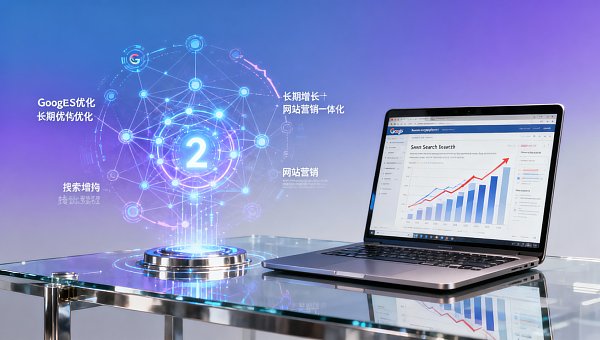
When many businesses first encounter Google SEO optimization services, their primary concern is "how long will it take to get on the first page of search results?" However, a truly mature operational logic is that ranking is merely a process indicator; stable customer acquisition is the core objective. Generally speaking, after a new website completes technical optimization, content creation, and basic backlink building, noticeable changes begin to appear within 3-6 months, and it enters a phase of sustained growth within 6-12 months.
The advantage of long-term SEO lies in its compounding effect. Once advertising is paused, traffic often drops rapidly; however, organic search optimization, if done correctly, can continuously generate exposure, clicks, and inquiries for a longer period. This stability is especially important for B2B businesses with long decision-making cycles, reducing the cost per lead and improving the sales team's follow-up efficiency.
From a search behavior perspective, enterprise procurement users typically go through three stages: problem research, solution comparison, and supplier selection. Long-term SEO can cover these three types of keywords, not only attracting high-intent traffic but also building brand recall through repeated user searches. For distributors, agents, and end consumers, this continuous exposure also makes it easier to build trust.
If businesses treat SEO merely as "publishing a few articles and improving keyword rankings," they often find it difficult to see long-term results. The truly effective approach is to integrate website structure, content ecosystem, conversion paths, data analysis, and marketing synergy within the same framework. This is the advantage of an integrated website + marketing service solution.
The difference between long-term SEO and short-term traffic strategies
To more clearly see the differences, you can judge them from several dimensions, including investment period, stability of results, and conversion quality. Especially for companies with limited budgets but a desire to continuously expand into overseas markets, long-term SEO is more suitable as a foundation.
As the table shows, SEO is more like building a company's digital assets. It doesn't aim for overnight growth, but rather gradually forms a replicable mechanism for increasing inquiries through page accumulation, content expansion, and improved search engine ranking. For companies that value operational quality, this growth approach is more controllable.
Which companies are better suited for long-term Google SEO strategies?
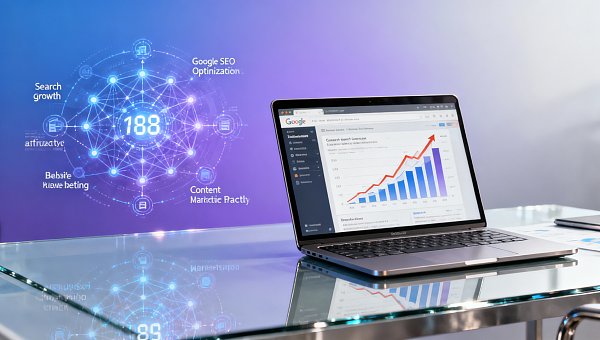
Not all businesses need to invest their entire budget in SEO, but based on business characteristics, at least four types of businesses are particularly suitable for long-term Google SEO optimization services. The first type is B2B companies with high average order values and long decision-making chains; the second type is manufacturing and service companies expanding into overseas markets; the third type is brands looking to reduce their reliance on advertising; and the fourth type is professional service agencies that need to continuously build content and industry influence.
For project managers and engineering project leaders, the value of SEO also lies in the efficiency of information delivery. When users enter a website through a search, they usually already have a specific need. If the page contains information such as case studies, parameters, delivery processes, and after-sales support, the quality of leads will be significantly higher than those from general traffic channels. Generally speaking, the conversion path of inquiry forms can be compressed to 2-3 steps, reducing intermediate loss.
For after-sales maintenance personnel and distributors, SEO can also serve as a "service information portal." For example, after-sales documents, frequently asked questions, operation guides, and parts specifications appearing in search results not only reduce duplicate inquiries but also enhance channel partners' recognition of the brand's professionalism. This accumulation of content assets often begins to show more significant service value after six months.
In practical digital transformation, enterprises often need to upgrade their marketing content and management awareness simultaneously. For example, when outputting content focusing on data capabilities, process optimization, and system collaboration, it's appropriate to extend to the topic of digital management. If an enterprise targets public institutions, education, or public service clients, content resources such as reflections on promoting the informatization of financial management in public institutions under the background of big data can also help supplement the industry knowledge matrix and enhance the professional coverage of the website.
Typical criteria for judging whether a product is suitable for long-term SEO
- The company website is planned to operate continuously for more than 12 months, rather than being a temporary display page.
- The average transaction cycle is more than 15 days, as customers will repeatedly search, compare, and verify information.
- Businesses that cover multiple product lines, service lines, or multiple national markets require long-term content accumulation.
- We aim to integrate advertising, our official website, social media, and content marketing into a unified customer acquisition channel.
If a company meets two or more of the above conditions, it is usually worthwhile to include SEO in its long-term growth budget, rather than just using it as a temporary supplementary action.
What core capabilities should be considered for long-term SEO services?
When choosing a Google SEO service provider, the most common mistake businesses make is focusing solely on price or the number of rankings promised. In reality, long-term projects should prioritize whether the provider possesses integrated capabilities in website building, content creation, technology, data analysis, and conversion optimization. This is because SEO performance is not solely determined by keywords; it is also influenced by website speed, page architecture, mobile responsiveness, content depth, and conversion form design.
Taking the integrated website and marketing services industry as an example, a mature service provider typically completes site diagnosis, keyword segmentation, competitor analysis, and content planning within the first 30 days; it then moves on to technical fixes, column building, and the launch of the first batch of core pages within 60-90 days; and finally, it focuses on conversion optimization and data review around traffic pages in the 4th-6th month. This pace is more in line with the logic of long-term growth than simply "building backlinks".
E-Business Information Technology (Beijing) Co., Ltd. is highly adaptable to this type of project. Headquartered in Beijing and founded in 2013, the company has been deeply involved in global digital marketing for over a decade. Driven by artificial intelligence and big data, it integrates intelligent website building, SEO optimization, social media marketing, and advertising into a synergistic system. For companies looking to simultaneously improve traffic acquisition and conversion efficiency, this combined service offers greater practical value.
When evaluating partners, businesses should consider at least four aspects: their ability to perform technical SEO, their ability to create industry-specific content, their ability to provide periodic data reports, and their ability to continuously optimize for inquiry conversion. Lacking any one of these, a project is likely to remain in the "traffic, but no results" stage.
Service Provider Evaluation Dimensions Table
The table below is suitable for companies to use when comparing options, and is especially suitable for procurement decision-makers and project managers as a preliminary screening checklist.
If a service provider can only offer a simple quote for "how many keywords to target, how many articles to publish, and how many links to build," without explaining the page structure, conversion milestones, and stage goals, businesses need to be wary. Long-term SEO success depends on a comprehensive system, not just individual actions.
How can long-term SEO be implemented to truly drive conversions?
While SEO is effective in the long run, it doesn't mean that continuous investment will guarantee results. The key is the implementation path. It's generally recommended to divide the project into four phases: diagnosis and planning, site optimization, content growth, and conversion improvement. For each phase, it's advisable to set 30-day, 60-day, 90-day, and 180-day milestones to facilitate phase acceptance and resource adjustments.
During the diagnostic planning phase, the focus should not be on blindly selecting broad keywords, but rather on building a keyword map based on product lines, application scenarios, and purchasing intentions. For example, keywords can be categorized into four types: brand keywords, product keywords, problem keywords, and regional keywords, prioritizing coverage of high-intent pages. The advantage of this approach is that limited content resources can serve genuine business opportunities from the outset, rather than pursuing inflated traffic.
Once you enter the content growth phase, avoid the common mistake of "only writing articles without building pages." Service-oriented businesses especially need a closed loop of product pages, solution pages, case study pages, and FAQ pages. Typically, a mature website should continuously improve at least 20-50 core pages in the first 6 months and iterate regularly based on search term performance.
During the conversion improvement phase, SEO data should be combined with sales data. For example, identifying which pages have a dwell time exceeding 90 seconds, which keywords generate form submission rates higher than 3%, and which countries/regions have high traffic but low inquiries are all important bases for subsequent optimization. Only by connecting search traffic with business results does long-term SEO truly have investment value.
Recommended Implementation Process
- Step 1: Complete the website health check, checking the index, speed, dead links, duplicate content, and mobile adaptation.
- Step 2: Segment the keyword pool according to business objectives, and distinguish between brand exposure keywords and inquiry conversion keywords.
- Step 3: Simultaneously optimize the core page structure and establish clear navigation, forms, and trust information modules.
- Step 4: Publish highly relevant content for 3-6 consecutive months, and make secondary adjustments based on data.
- Step 5: Use monthly reports and quarterly reviews to evaluate performance in rankings, traffic, inquiries, and conversion paths.
Common Misconceptions
- They only look at the number of keywords on the homepage, ignoring the sources of valid inquiries.
- We only update the blog, without optimizing the service and product pages.
- Frequent redesigns but lack of redirection and data continuity planning.
- Completely separating SEO from social media, advertising, and email marketing leads to a gap in lead nurturing.
For growing businesses, the ideal state of SEO is not to operate in isolation, but to work in synergy with brand content, advertising testing, and sales conversion. This is the only way to transform each round of traffic accumulation into more stable market assets.
Common business questions: How to allocate budgets, timelines, and maintenance?
Many businesses worry about the worth of continuously investing in SEO when considering long-term strategies. In reality, SEO is better suited to setting phased goals rather than simply judging success or failure monthly. It's generally recommended to observe for at least two quarters, or about six months, as search indexing, content performance, and building page trust all take time. For highly competitive industries, the complete evaluation period can be extended to 9-12 months.
In terms of budget allocation, different companies vary greatly in size, but the focus should be prioritized on three areas: website infrastructure, content system, and continuous optimization. If the website itself has a chaotic structure, loads slowly, and lacks conversion entry points, no amount of content will be able to effectively amplify its impact. Conversely, once the foundation is solid, the marginal benefits of content and data optimization will be higher.
For maintenance, it is recommended to maintain at least monthly checks and quarterly reviews. Monthly checks should focus on indexing, keyword changes, page click-through rate, and inquiry sources; quarterly checks should focus on section structure, content gaps, competitive landscape, and conversion quality. For multilingual and multi-regional sites, additional checks should be performed on language version logic and the accuracy of regional page matching.
If a company is still building its digital content system, it can also include some research-related content in its professional fields in the supplementary sections. For example, it can include topics such as " Thoughts on Promoting the Informatization of Financial Management in Public Institutions under the Background of Big Data". These topics are suitable for supplementing content for government, enterprise, education and public service industry clients. However, it is still necessary to ensure that the content is coordinated with the main business theme and should not overshadow the main business.
FAQ: 4 Questions Businesses Care About Most
1. How long does it typically take to see results from Google SEO optimization services?
Basic improvements are typically visible within 1-3 months, significant growth usually occurs within 3-6 months, and stable customer acquisition often takes more than 6 months. The pace will differ for new websites, niche industries, and highly competitive industries, and a uniform timeline cannot be used for judgment.
2. Is long-term SEO more cost-effective than advertising?
It's not accurate to say one is more cost-effective than the other, but in the long run, SEO has a greater chance of reducing the cost per customer acquisition. Advertising is suitable for rapid testing and traffic replenishment, while SEO is suitable for building stable organic traffic. Using both together is generally better than using them separately.
3. Which pages deserve the most priority for optimization?
We recommend prioritizing the homepage, core product pages, solution pages, case study pages, and high-intent FAQ pages. These five types of pages typically have the most direct impact on indexing quality, keyword relevance, and inquiry conversion rates.
4. What internal resources does the company need to allocate for coordination?
At least one contact person is needed to coordinate materials, a basic set of brand and product information, and monthly data communication. If the company can provide industry case studies, after-sales issues, and frequently asked customer questions, the content's effectiveness will usually improve more quickly.
Whether Google SEO optimization services are suitable for long-term investment depends on whether a company treats online customer acquisition as a long-term business, rather than a short-term experiment. For companies that want to steadily acquire targeted traffic, reduce reliance on advertising, and improve brand credibility, long-term SEO is a worthwhile investment. Especially when website building, content operation, search optimization, and conversion design can be promoted in a coordinated manner, SEO can more easily be upgraded from a "ranking project" to a "growth project."
If you are evaluating a Google SEO solution suitable for your business, or want to create a more efficient marketing loop by integrating your website, content, social media, and advertising, we recommend a systematic plan that considers your industry, target market, and budget cycle. To learn more about a long-term optimization path best suited to your business, please contact us immediately for customized solutions and more detailed implementation advice.
Related Articles
Related Products
 EasyCamp SaaS Smart Website Marketing SystemE-Yingbao SaaS Smart Website Marketing System: AI-powered, zero-code website building. Rapidly launch multilingual independent e-commerce sites in just 10 minutes. Global server acceleration and AI-driven SEO optimization empower businesses to efficiently connect with global markets. The seamless integration of technology and user-friendly operation makes building e-commerce sites incredibly simple.
 AI+SEM Intelligent Advertising Marketing SystemAI+SEM drives intelligent ad creation, empowering full-funnel precision advertising marketing. The system automatically generates weekly/monthly reports, AI recommends keywords and target countries, monitors core metrics in real-time with intelligent alerts, and enables one-click high-conversion ad solutions to help quickly acquire customers and improve ROI.
 AI+SEO Dual Engine Optimization ServiceEasyWin AI+SEO Dual Engine Optimization System leverages AI-powered keyword mining, content generation, and comprehensive technical optimization to help foreign trade enterprises acquire high-quality organic traffic, significantly improving search rankings and conversion rates.
 AI+SNS Social Media Marketing SystemYingbao AI+SNS Social Media Marketing System - Precision social capture for the social media era. Supports one-click content synchronization across major platforms like Facebook and LinkedIn. AI intelligently rewrites posts for enhanced relevance. 24/7 AI customer service and user profiling analysis empower businesses to efficiently expand into global markets.
 AI+SEO营销解决方案易营宝AI+SEO营销解决方案,通过AI批量写作、智能生成TDK、精准关键词扩词等功能,全面优化网站SEO效果,提升流量与转化率。助力企业构建高效智能网站新生态。
 AI+SEM Advertising Marketing SolutionsAI+SEM Advertising Marketing Solution leverages AI technology to deeply empower SEM ad campaigns. It automatically generates weekly/monthly reports using AI, presenting account data across multiple dimensions for comprehensive insights into campaign performance and trends. The system precisely recommends keywords and target countries, intelligently generates high-conversion ad copy, and enables one-click activation of efficient campaign plans to help businesses rapidly acquire customers. Simultaneously, it monitors core metrics in real time, intelligently identifies abnormal fluctuations, and issues timely alerts to ensure stable, high-return advertising results.
 Domain Name ServicesEasyWin provides professional domain name services, including intelligent queries, one-stop registration, brand protection, and full lifecycle management, helping businesses build a digital brand image.
 EasyOperate B2C Cross-Border E-Commerce Platform & Independent WebsiteEasyStore B2C Cross-border E-commerce Independent Store is an intelligent website building and cross-border e-commerce integrated solution independently developed by EasyStore Information Technology (Beijing) Co., Ltd. The system is specially designed for small and medium-sized as well as large export enterprises, integrating 'website building, operation, marketing, advertising, and conversion' into one, helping enterprises quickly establish cross-border e-commerce independent stores to achieve brand globalization and global sales growth.
The platform supports multiple languages, multiple currencies, and multi-channel marketing, with built-in AI intelligent translation and SEO optimization systems, suitable for mainstream markets such as Southeast Asia, Europe and America, Latin America, and the Middle East, assisting Chinese manufacturing enterprises in efficiently deploying international e-commerce strategies. SSL证书易营宝提供专业SSL安全证书服务,包括单域名和泛域名证书,确保网站数据传输加密、身份验证和完整性保护,助力企业建立安全可信的在线业务环境。









