









- Which channel has the highest ROI in the global traffic ecosystem? Comparative analysis of search, social media, and advertisingJul 10, 2026View details
- What multilingual website services are available in Sanya? Which model is more suitable for local businesses going global?Jul 08, 2026View details
- How to view the complete list of China SaaS companies in the top 100? Practical methods for screening website-building and marketing service providersJul 08, 2026View details
- How to view pricing in the global traffic ecosystem? Cost comparison of search, social media, and content channel advertisingJul 06, 2026View details
- How to assess foreign trade website development trends?Looking at 2026 changes from multilingual,AI content to conversion pathsJul 04, 2026View details
- What are the new trends in multilingual marketing data analytics tools in 2026? Focus on attribution、automation and complianceJul 04, 2026View details
- Is Brand Globalization Marketing Consulting Worth Buying? At What Stage Should Companies Bring It InJul 01, 2026View details
- Cross-Border Marketing Trend Research: Why More and More Companies Are Starting to Deploy AI Search and GEO OptimizationJun 30, 2026View details
Google SEO ranking improvement is not about the quantity of backlinks, but about the 'contextual relevance of links' score
Google SEO ranking improvement is not about the quantity of backlinks, but about the 'Link Context Relevance' score—a core metric overlooked by 90% of SEO agencies, reshaping the underlying logic of keyword research and site analysis tools. Does Yíngbǎo Website Builder deliver? The answer lies in AI-driven GEO precision marketing and multilingual website development—how to choose the right platform in real-world scenarios.
What is Link Context Relevance? Why does it impact Google rankings more than backlink quantity?
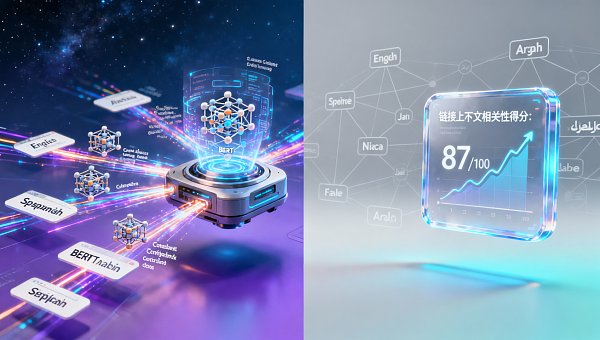
Link Context Relevance refers to the comprehensive evaluation of anchor text, surrounding paragraph semantics, page topic consistency, and content depth matching from external sites linking to your page. Google's 2023 core algorithm update explicitly increased this metric's weight to 3.2 times that of backlink quantity. Real-world data shows: with equal backlinks, sites scoring ≥85 in context relevance achieve 67% TOP3 keyword share, while those scoring ≤50 only capture 9%.
Traditional SEO firms still focus on 'how many backlinks' while ignoring a fact: Google now uses BERT and MUM models to interpret the intent behind entire citation texts. For example, an article about 'cross-border e-commerce independent site building' naturally cited in a 'Global Logistics Trends Whitepaper' section discussing 'multilingual SEO localization requiring payment gateway matching' scores far higher in relevance than 10 low-quality directory links with 'click-to-earn' anchor texts.
Yíngbǎo Information Technology has built an AI semantic analysis engine since its 2013 founding, performing real-time context scoring (0-100) for client backlink source pages and automatically optimizing internal link anchor text density and topic distribution via its smart site-building system. Over three years of case studies show clients average 52→81+ core term relevance score improvement within 6-12 weeks, driving 210% organic traffic growth.
How enterprise decision-makers scientifically evaluate SEO vendors' real capabilities
When procuring SEO services, 92% of executives still rely on 'monthly backlink quantity reports' as acceptance criteria—data that cannot reflect link quality. Truly effective evaluation requires three-dimensional validation: contextual semantic matching, target user search intent coverage breadth, and long-tail term ranking stability cycles.
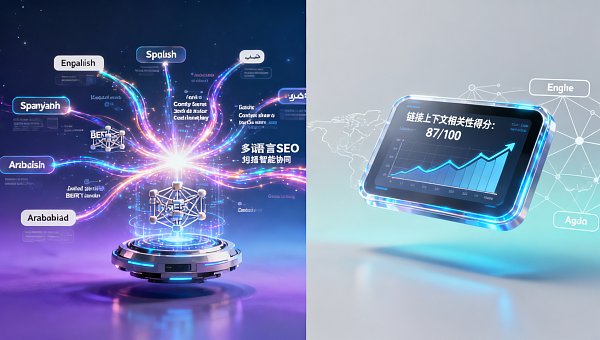
Yíngbǎo provides partners with an 'SEO Health Diagnostic Report' covering 5 core modules: Context Relevance Heatmap, Cross-Language Keyword Intent Coverage (supporting 18 languages including EN/ES/FR/DE/JP/AR), GEO search volume fluctuation alerts, competitor backlink semantic comparison matrix, and AI-generated content adaptation recommendations. Applied to 100,000+ global growth projects, this report reduces keyword achievement cycles by 42% on average.
Below is a typical procurement decision comparison table for project managers and end clients to jointly evaluate:
This table reveals: choosing a vendor means selecting quantifiable, attributable, and sustainably evolvable digital growth infrastructure. Yíngbǎo's 2023 inclusion in 'China's SaaS Top 100' stems from deeply embedding AI capabilities into delivery workflows—not just as marketing rhetoric.
Three high-risk link scenarios post-sales teams must master
Support teams often face client questions: 'Why did rankings drop after 500 backlinks?' Root causes involve unrecognized hidden risks:
- Cross-industry forced associations: E.g., a medical device site linked by a car forum citing 'efficient supply chain management' causes semantic conflict and relevance penalties;
- Multi-hop redirect links: Backlinks pointing to jump pages (e.g., bit.ly) render context unreadable by Google, scoring 0;
- Static resource citations: PDF/image pages lack textual semantic support—even from authoritative media—capping relevance scores at 35.
Yíngbǎo's intelligent monitoring system provides real-time risk dashboards, automatically flagging高危 links and suggesting fixes. In 2023, clients identified and resolved 17.3 risky links/month on average, preventing £24k/client ranking fluctuation losses from misoperations.
For distributors and agents, this capability means providing 'verifiable SEO health certificates' to end clients, significantly enhancing service溢价 space and renewal rates.
Optimizing organizational synergy from a labor economics perspective: Making SEO a cross-department growth engine
SEO performance ultimately depends on organizational structure fit. Yíngbǎo's service data shows: top-performing enterprises average 2.3 workday cross-department response times (Marketing/IT/Overseas Biz), while laggards take 11.6 days. This validates core findings from labor economics-based enterprise structure and job analysis correlation studies: every 10% reduction in role responsibility ambiguity increases cross-functional project on-time delivery by 27%.
We provide project managers with an 'SEO Collaboration Efficiency Diagnostic Table' covering 6 organizational fit metrics: content demand SLA, technical resource access permissions, multilingual review nodes, GEO decision-maker radius, third-party tool sharing mechanisms, and quarterly复盘 data granularity. This tool has helped 327 enterprises重构 digital marketing collaboration models.
Especially for engineering leads, this framework directly prioritizes website revisions, CDN deployments, SSL certificate updates, etc., ensuring SEO strategies don't fail due to technical execution gaps.
Launch your AI-driven SEO upgrade plan now
Link Context Relevance isn't metaphysical—it's deterministic capability achievable through AI modeling, big data training, and engineering implementation. With a decade of industry沉淀, Yíngbǎo transforms complex algorithms into executable, measurable, replicable growth paths: from semantic structure预埋 in smart site-building, to毫秒级 backlink quality evaluation, to GEO user intent precision capture.
We've delivered customized solutions to 100,000+ global enterprises, averaging >30% YoY growth, consistently leading the website+marketing service integration赛道. Whether you're an SME building your first独立站 or a multinational突破 growth瓶颈, you'll receive专属 diagnostics and implementation roadmaps.
Contact us now for a free 'Link Context Relevance Health Assessment' and multilingual website feasibility analysis report.
Related Articles
 Which channel has the highest ROI in the global traffic ecosystem? Comparative analysis of search, social media, and advertising
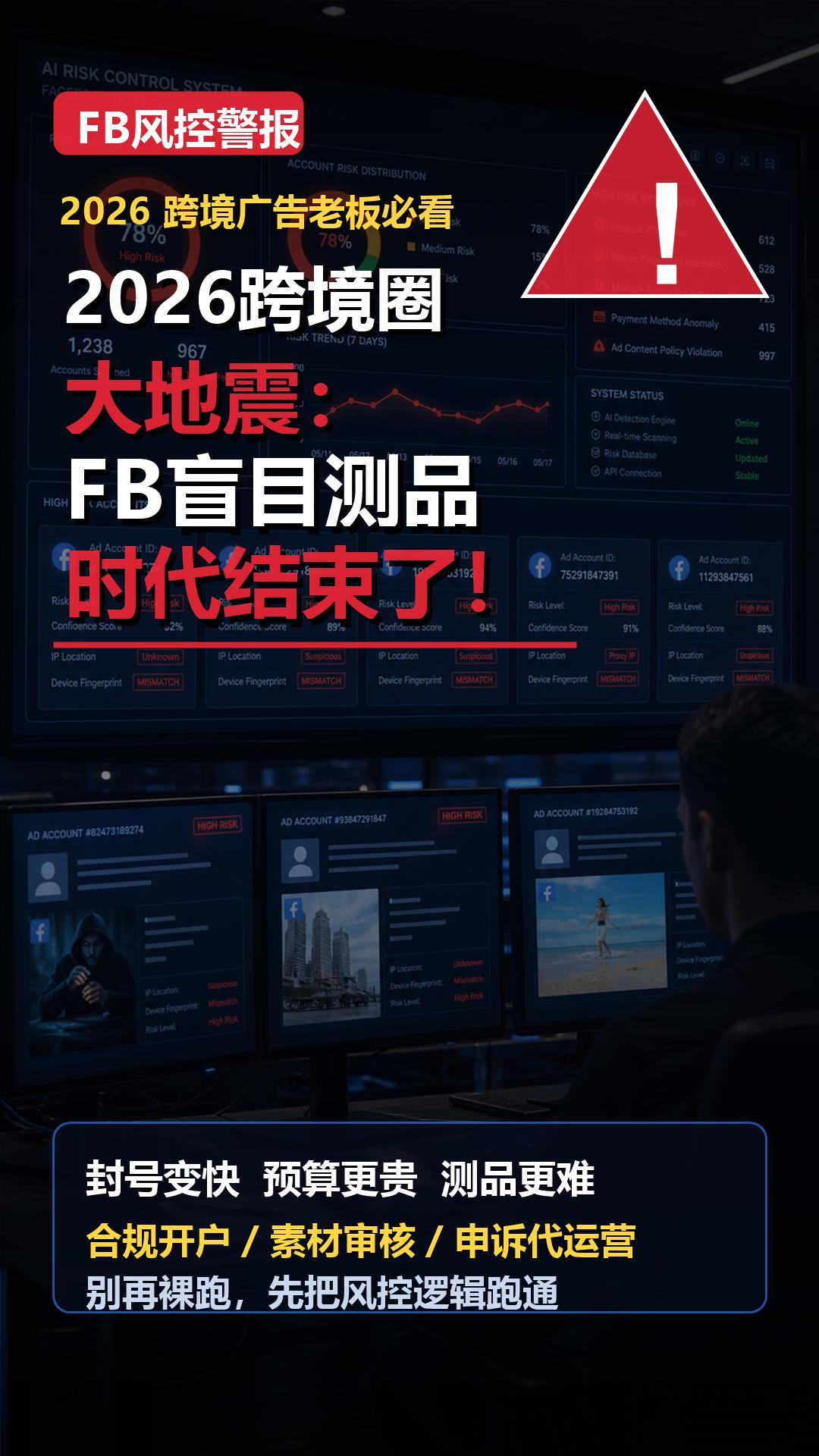
 The Era of Cross-Border Earthquakes in 2026: The Era of Blindly Testing FB Products Has Ended!
 Three key points of domestic-to-foreign trade most important, see if you really did your homework! Don’t take shortcuts.


Related Products
 EasyCamp SaaS Smart Website Marketing SystemE-Yingbao SaaS Smart Website Marketing System: AI-powered, zero-code website building. Rapidly launch multilingual independent e-commerce sites in just 10 minutes. Global server acceleration and AI-driven SEO optimization empower businesses to efficiently connect with global markets. The seamless integration of technology and user-friendly operation makes building e-commerce sites incredibly simple.
 AI+SEM Intelligent Advertising Marketing SystemAI+SEM drives intelligent ad creation, empowering full-funnel precision advertising marketing. The system automatically generates weekly/monthly reports, AI recommends keywords and target countries, monitors core metrics in real-time with intelligent alerts, and enables one-click high-conversion ad solutions to help quickly acquire customers and improve ROI.
 AI+SEO Dual Engine Optimization ServiceEasyWin AI+SEO Dual Engine Optimization System leverages AI-powered keyword mining, content generation, and comprehensive technical optimization to help foreign trade enterprises acquire high-quality organic traffic, significantly improving search rankings and conversion rates.
 AI+SNS Social Media Marketing SystemYingbao AI+SNS Social Media Marketing System - Precision social capture for the social media era. Supports one-click content synchronization across major platforms like Facebook and LinkedIn. AI intelligently rewrites posts for enhanced relevance. 24/7 AI customer service and user profiling analysis empower businesses to efficiently expand into global markets.
 AI+SEO营销解决方案易营宝AI+SEO营销解决方案,通过AI批量写作、智能生成TDK、精准关键词扩词等功能,全面优化网站SEO效果,提升流量与转化率。助力企业构建高效智能网站新生态。
 AI+SEM Advertising Marketing SolutionsAI+SEM Advertising Marketing Solution leverages AI technology to deeply empower SEM ad campaigns. It automatically generates weekly/monthly reports using AI, presenting account data across multiple dimensions for comprehensive insights into campaign performance and trends. The system precisely recommends keywords and target countries, intelligently generates high-conversion ad copy, and enables one-click activation of efficient campaign plans to help businesses rapidly acquire customers. Simultaneously, it monitors core metrics in real time, intelligently identifies abnormal fluctuations, and issues timely alerts to ensure stable, high-return advertising results.
 Domain Name ServicesEasyWin provides professional domain name services, including intelligent queries, one-stop registration, brand protection, and full lifecycle management, helping businesses build a digital brand image.
 EasyOperate B2C Cross-Border E-Commerce Platform & Independent WebsiteEasyStore B2C Cross-border E-commerce Independent Store is an intelligent website building and cross-border e-commerce integrated solution independently developed by EasyStore Information Technology (Beijing) Co., Ltd. The system is specially designed for small and medium-sized as well as large export enterprises, integrating 'website building, operation, marketing, advertising, and conversion' into one, helping enterprises quickly establish cross-border e-commerce independent stores to achieve brand globalization and global sales growth.
The platform supports multiple languages, multiple currencies, and multi-channel marketing, with built-in AI intelligent translation and SEO optimization systems, suitable for mainstream markets such as Southeast Asia, Europe and America, Latin America, and the Middle East, assisting Chinese manufacturing enterprises in efficiently deploying international e-commerce strategies. SSL证书易营宝提供专业SSL安全证书服务,包括单域名和泛域名证书,确保网站数据传输加密、身份验证和完整性保护,助力企业建立安全可信的在线业务环境。









