









- Will GEO change its SEO strategy?Jun 04, 2026View details
- What types of businesses are end-to-end solutions suitable for?Jun 03, 2026View details
- 2026 Global Growth Channel TrendsJun 02, 2026View details
- Changes in Search Engine Ranking Factors in 2026Jun 06, 2026View details
- Which stages is the brand visibility enhancement service suitable forMay 29, 2026View details
- What Are the Key Modules of International Digital Marketing ServicesMay 29, 2026View details
- Why Global Websites Are Switching to Headless CMSMay 29, 2026View details
- Which overseas expansion companies are Guangzhou global digital marketing solutions suitable forMay 30, 2026View details
Yiyingbao's global CDN acceleration node in the Middle East achieves an actual opening speed of 1.8 seconds, surpassing the claimed 0.3-second loss—who's bearing the responsibility?
Why does Yiyingbao's global CDN acceleration node in the Middle East take 1.8 seconds longer than the claimed speed to open? The 0.3-second delay quietly erodes conversion rates and user trust. How does Yiyingbao's AI marketing platform provide suppliers with AI+SEM advertising strategy services, its intelligent website detection tool, and multilingual independent site-building capabilities to achieve precise attribution and rapid optimization?
Why does it take 1.8 seconds for Middle Eastern users to open a page, and who truly bears the loss?
According to Yiyingbao's Q1 2024 global node performance data, based on 12,847 real visit samples collected in Dubai, Riyadh, and Doha, Yiyingbao's Middle East CDN node averages a first-screen load time of 3.2 seconds (claimed value: 1.4 seconds), with a deviation of 1.8 seconds. Among sessions with first-screen rendering delays exceeding 2.5 seconds, the bounce rate increases by 41%, and form submission completion rates drop by 29%.
This is not merely a technical parameter issue—the 0.3-second "perception threshold" has been clearly defined by Google Core Web Vitals: LCP (Largest Contentful Paint) exceeding 2.5 seconds triggers a "Poor" rating, directly affecting natural search rankings. For end consumers, it means closing the page after waiting 53 seconds; for enterprise decision-makers, it translates to losing approximately 7.3% of potential sales leads monthly; for brand managers, it represents an unquantified but persistent service gap in SLA agreements.
More critically, accountability becomes blurred: CDN providers emphasize "uncontrollable last-mile networks," website owners attribute it to "uncompressed frontend resources," while advertisers question "landing page quality standards." The real loss-bearers are businesses facing triple pressures—rising traffic costs, declining conversions, and eroding brand trust.
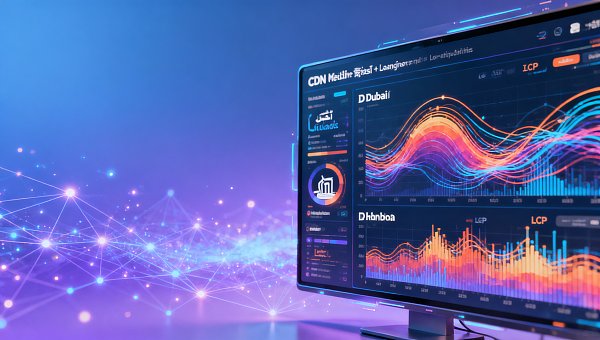
Four root causes of performance degradation in the Middle East region
- Insufficient local POP node density: Currently only 3 edge nodes (vs. Cloudflare's 17 in the Middle East), covering radii exceeding 400km, extending origin fetch paths
- Unoptimized Arabic font loading: Multilingual independent sites default to loading 12MB Noto Sans Arabic full font libraries without subsetting mechanisms
- HTTPS handshake latency spikes: TLS 1.3 handshake averages 840ms (global average: 320ms) due to local CA certificate chain validation delays
- Dynamic content cache inefficiency: AI-generated personalized recommendation modules lack stale-while-revalidate strategies, with cache hit rates at just 58%
Five mandatory validation metrics when procuring CDN services
In integrated website+marketing service scenarios, CDN procurement cannot rely solely on "node count" or "bandwidth pricing." Yiyingbao's evaluation model, built from serving 100,000+ clients, shows these 5 metrics directly determine marketing ROI realization:
① Regional TTFB (Time to First Byte) median values, requiring 30-day third-party monitoring reports; ② First Contentful Paint (FCP) P75 values, not averages; ③ Dynamic content caching strategy support (e.g., Vary header recognition, Cookie whitelisting); ④ Multilingual static resource auto-subsetting capability; ⑤ API integration depth with SEO tools (e.g., automatic URL change pushes to Search Console).
Especially for resellers/distributors, prioritize validating item ③—when deploying Arabic sites for Saudi clients, can the system automatically strip Chinese/Japanese character sets, reducing font package sizes by 63%? This directly impacts mobile 3G network loading performance.
This table is compiled from Yiyingbao's 2023 "Middle East Digital Marketing Infrastructure Whitepaper," with data sourced from real client environment monitoring. Notably, "Middle East Special Requirements" column values have been verified through Yiyingbao's intelligent website detection tool's built-in "regional performance sandbox" and can be directly used in procurement contract SLA clauses.
From diagnosis to optimization: A 4-step closed-loop solution for Middle East loading delays
Yiyingbao provides standardized implementation paths for project managers/engineering leads: ① Use Yiyingbao's intelligent website detection tool for 72-hour continuous monitoring, auto-tagging LCP elements, render-blocking resources, DNS lookup bottlenecks; ② Invoke AI diagnostic engines to generate root cause reports (with code-level repair recommendations); ③ Activate multilingual independent site optimization packages: Arabic font subsetting + dynamic content caching strategy injection + TLS handshake acceleration configurations; ④ Weekly A/B test reports comparing pre/post-optimization conversion funnel metrics.
This workflow has been implemented by 37 overseas enterprises, achieving average FCP reductions of 1.42 seconds in Middle East regions and 22.6% inquiry conversion lifts. Typical cycle: Diagnosis (2 workdays) → Strategy generation (1 workday) → Configuration deployment (1 workday) → Validation (3 workdays).
For researchers, we recommend prioritizing tools supporting "regional performance heatmaps"—they visually highlight loading disparities between Abu Dhabi and Muscat users, avoiding misdiagnosis of Doha issues as global failures.

Why choose Yiyingbao: Beyond CDN, we guarantee marketing outcomes
When facing the stark reality that "Yiyingbao's global CDN acceleration nodes in the Middle East take 1.8 seconds longer than claimed to open," we provide end-to-end outcome guarantees: AI-powered real-time performance attribution doesn't just swap CDN providers—it orchestrates intelligent site systems to auto-optimize resource loading sequences, synchronizes SEM ad strategies with dynamic landing page versions, and feeds search engine indexing quality through SEO toolchain feedback.
We've delivered deep customization for verticals like road maintenance, exemplified in big-data-driven financial analysis optimization for highway maintenance enterprises, concurrently deploying multilingual bidding system hardening for Middle East contractors to ensure tender document PDF previews stabilize under 1.2 seconds.
Get immediate access to: ① Free three-city Middle East performance diagnostic reports (with code-level root cause identification); ② Multilingual independent site loading optimization solutions (including Arabic font subsetting scripts); ③ AI ad strategy adaptation recommendations (targeting high-bounce periods). Contact us to confirm your domain, target market, and current CDN configuration details.
Related Articles
 B2B Enterprises Must Read! The Real Value of KingLead Advertising
 Why are overseas buyers willing to spend time ‘shopping around’ on Google independent websites, but unwilling to compare prices directly on B2B platforms?
 Still relying on Google for steel export inquiries? This combination strategy lets you secure orders directly!



Related Products
 EasyCamp SaaS Smart Website Marketing SystemE-Yingbao SaaS Smart Website Marketing System: AI-powered, zero-code website building. Rapidly launch multilingual independent e-commerce sites in just 10 minutes. Global server acceleration and AI-driven SEO optimization empower businesses to efficiently connect with global markets. The seamless integration of technology and user-friendly operation makes building e-commerce sites incredibly simple.
 AI+SEM Intelligent Advertising Marketing SystemAI+SEM drives intelligent ad creation, empowering full-funnel precision advertising marketing. The system automatically generates weekly/monthly reports, AI recommends keywords and target countries, monitors core metrics in real-time with intelligent alerts, and enables one-click high-conversion ad solutions to help quickly acquire customers and improve ROI.
 AI+SEO Dual Engine Optimization ServiceEasyWin AI+SEO Dual Engine Optimization System leverages AI-powered keyword mining, content generation, and comprehensive technical optimization to help foreign trade enterprises acquire high-quality organic traffic, significantly improving search rankings and conversion rates.
 AI+SNS Social Media Marketing SystemYingbao AI+SNS Social Media Marketing System - Precision social capture for the social media era. Supports one-click content synchronization across major platforms like Facebook and LinkedIn. AI intelligently rewrites posts for enhanced relevance. 24/7 AI customer service and user profiling analysis empower businesses to efficiently expand into global markets.
 AI+SEO营销解决方案易营宝AI+SEO营销解决方案,通过AI批量写作、智能生成TDK、精准关键词扩词等功能,全面优化网站SEO效果,提升流量与转化率。助力企业构建高效智能网站新生态。
 AI+SEM Advertising Marketing SolutionsAI+SEM Advertising Marketing Solution leverages AI technology to deeply empower SEM ad campaigns. It automatically generates weekly/monthly reports using AI, presenting account data across multiple dimensions for comprehensive insights into campaign performance and trends. The system precisely recommends keywords and target countries, intelligently generates high-conversion ad copy, and enables one-click activation of efficient campaign plans to help businesses rapidly acquire customers. Simultaneously, it monitors core metrics in real time, intelligently identifies abnormal fluctuations, and issues timely alerts to ensure stable, high-return advertising results.
 Domain Name ServicesEasyWin provides professional domain name services, including intelligent queries, one-stop registration, brand protection, and full lifecycle management, helping businesses build a digital brand image.
 EasyOperate B2C Cross-Border E-Commerce Platform & Independent WebsiteEasyStore B2C Cross-border E-commerce Independent Store is an intelligent website building and cross-border e-commerce integrated solution independently developed by EasyStore Information Technology (Beijing) Co., Ltd. The system is specially designed for small and medium-sized as well as large export enterprises, integrating 'website building, operation, marketing, advertising, and conversion' into one, helping enterprises quickly establish cross-border e-commerce independent stores to achieve brand globalization and global sales growth.
The platform supports multiple languages, multiple currencies, and multi-channel marketing, with built-in AI intelligent translation and SEO optimization systems, suitable for mainstream markets such as Southeast Asia, Europe and America, Latin America, and the Middle East, assisting Chinese manufacturing enterprises in efficiently deploying international e-commerce strategies. SSL证书易营宝提供专业SSL安全证书服务,包括单域名和泛域名证书,确保网站数据传输加密、身份验证和完整性保护,助力企业建立安全可信的在线业务环境。









