









- What Does a Global Traffic Ecosystem Service Provider Do? What Are the Differences from a Single Advertising AgencyJul 16, 2026View details
- What should you focus on in the latest enterprise SaaS report? From renewal rates and delivery costs to overseas growth opportunitiesJul 12, 2026View details
- What signals are worth paying attention to in a cross-border marketing trend report? B2B companies should look at these 6 signalsJul 11, 2026View details
- How to Read a Cross-Border Marketing Trends Report? Five Key Dimensions for Evaluating Channel OpportunitiesJul 11, 2026View details
- Which channel has the highest ROI in the global traffic ecosystem? Comparative analysis of search, social media, and advertisingJul 10, 2026View details
- What multilingual website services are available in Sanya? Which model is more suitable for local businesses going global?Jul 08, 2026View details
- How to view the complete list of China SaaS companies in the top 100? Practical methods for screening website-building and marketing service providersJul 08, 2026View details
- How to view pricing in the global traffic ecosystem? Cost comparison of search, social media, and content channel advertisingJul 06, 2026View details
Is SEO link building still worth continuing now
SEO link building is still worth doing today, but the premise is a return to quality and relevance. For companies focused on search engine optimization services, SEO content optimization, and search engine ranking optimization, backlinks have shifted from “a competition of quantity” to “a competition of value.”
Why companies should still prioritize SEO link building today

Many information researchers first ask one question: search engine algorithms keep evolving, so have backlinks already become ineffective? The answer is no. Backlinks have not exited the search engine ranking optimization system; rather, they have shifted from an earlier emphasis on quantity to a greater focus on topical relevance, source credibility, and page value.
For the website + marketing integrated services industry, backlinks not only affect organic rankings, but also influence branded keyword coverage, industry keyword association, and the accumulation of site trust. Especially in the first 2–4 weeks after a new site goes live, and in the 1–3 months after new sections are expanded, high-quality backlinks can often shorten the search engine understanding cycle.
Technical evaluators and business decision-makers care more about return on investment. If backlink sources are irrelevant to the business scenario, or anchor text is overly concentrated, risks can indeed arise; but if backlinks are implemented together with SEO content optimization, on-site structure adjustments, and landing page development, they are usually more likely to form stable ranking support.
Easy Marketing Information Technology (Beijing) Co., Ltd. has been deeply engaged in global digital marketing services since 2013. Leveraging artificial intelligence and big data capabilities, it has formed coordinated solutions across intelligent website building, SEO optimization, social media marketing, advertising placement, and other areas. For enterprises, this means link building is no longer an isolated action, but a systematic project carried out in coordination with content, technology, and conversion pages.
Backlinks are still effective today, with 3 core evaluation criteria
- Whether the source is relevant: industry media, vertical platforms, and upstream and downstream supply chain websites are usually more valuable than general directory sites.
- Whether the content is credible: backlink pages need to have real informational density, rather than being empty shell pages stuffed with keywords.
- Whether the building is balanced: the proportion of anchor text for branded keywords, category keywords, and long-tail keywords should be dispersed. A common approach is to advance in batches by month, rather than surging intensively within 7 days.
Which backlinks are still worth doing, and which should be stopped as soon as possible

Project managers, quality control personnel, and roles related to security management often worry when evaluating SEO services that “building backlinks may lead to penalties.” This concern is not unnecessary. What backlink building fears most today is not doing too little, but heading in the wrong direction, such as bulk-buying low-quality links, reciprocal boosting through link farms, or posting spam on irrelevant forums.
Backlink types that are relatively worth sustained investment usually include citations from industry knowledge articles, recommendations on partner websites, feature reports by media outlets, extensions of high-quality Q&A content, profile pages on localized trade platforms, and links from special topic pages centered on solutions. Although this type of link often takes 2–6 weeks to acquire, it is more conducive to long-term accumulation.
If a company targets multiple regional markets, backlink building must also consider localization. For example, domestic business focuses on industry relevance and brand reputation, while overseas business places more emphasis on website language consistency, country-site associations, and contextual content matching. Simply copying one backlink template often makes it difficult to address different markets effectively.
Some companies also use professional white papers or research-oriented content as traffic entry points when producing content related to finance, systems, and process digitalization. For example, Optimization Path for Financial Management Information Systems in State-Owned Enterprises Under the Background of Digital Transformation, which expands on the topic of financial informatization, is suitable for use as a content-based link resource on relevant topic pages, rather than being awkwardly inserted into unrelated pages.
The table below can help technical evaluators quickly determine which backlink building items should be retained and which should be eliminated.
From execution results, high-quality backlinks often come more slowly, but last longer and can mutually reinforce SEO content optimization. In contrast, although low-quality backlinks may deliver considerable volume in the short term, they are difficult to support long-term ranking stability.
What companies should focus on when purchasing and selecting link building services
When choosing SEO service providers, business decision-makers usually consider budget, timeline, delivery boundaries, and risk control at the same time. For website + marketing integrated service projects, backlink services should not be judged only by “how many links can be published,” but by whether they can connect with website architecture, keyword strategy, content matrix, and conversion paths.
Under normal circumstances, backlink building should at least be evaluated against 5 key checkpoints: link source quality, industry relevance, anchor text distribution, landing page carrying capacity, and whether the building pace is natural. If 2 or more of these are missing, subsequent results are usually significantly affected.
After-sales maintenance personnel and project leaders also need to pay attention to whether the service process is traceable. For example, whether a monthly link list is provided, whether indexed and non-indexed statuses are marked, whether on-site page optimization suggestions are given simultaneously, and whether abnormal links are reviewed and handled within 7–15 days.
Easy Marketing’s advantage lies not in a single backlink resource, but in its ability to coordinate website building, SEO optimization, social media communication, and advertising placement based on business goals to form a unified growth chain. This is especially important for distributors, agents, and multi-regional brands, because they often need lead generation and brand endorsement to progress simultaneously.
For procurement decisions, prioritize these 4 dimensions
- Plan completeness: whether it includes keyword planning, content recommendations, landing page optimization, and backlink placement pacing.
- Execution transparency: whether progress can be reported weekly or monthly, instead of only giving results without showing the process.
- Risk control capability: whether it explicitly rejects spam links, link farm links, and highly risky concentrated anchor text placement.
- Collaboration capability: whether it can connect simultaneously with website building, conversion page design, and form lead management.
If a company is conducting content marketing around supply chain digitalization, project management systems, or financial processes, professional topic pages can also be incorporated into the backlink receiving system. Content such as Optimization Path for Financial Management Information Systems in State-Owned Enterprises Under the Background of Digital Transformation is more suitable as part of industry knowledge assets to capture precise search traffic.
The table below is suitable for the preliminary selection and evaluation of backlink service providers, especially for solution comparisons before budget approval.
The “recommended requirements” in the table are essentially used to screen sustainable long-term search engine optimization services. Especially for B2B companies, stable inquiry leads usually come from the combined effect of content, pages, and trust signals, while backlinks are only one key amplifier among them.
How link building works together with website building, content, and conversion in implementation
Whether backlinks are effective often is not a problem with backlinks themselves, but with the receiving pages not being properly prepared. A typical misunderstanding is that companies first build a large number of backlinks and then go back to patch website structure and content. A more reasonable sequence is usually to advance 3 stages in parallel: on-site foundation, content layout, and backlink amplification.
In stage 1, first confirm whether the website has clear sections, crawlable pages, basic TD information, and conversion entry points; in stage 2, build a content matrix around core business keywords, solution keywords, and scenario keywords; by stage 3, use backlinks to push key pages into higher-authority areas. This process generally requires 4 implementation steps, and skipping steps is not recommended.
Recommended implementation process
Step 1: Conduct an on-site diagnosis first
Check whether pages have issues such as duplicate titles, broken links, redirect confusion, or forms that cannot be submitted. If these basic issues are not resolved, even if backlinks bring crawling and visits, it will still be difficult to generate effective conversions in the end.
Step 2: Define the backlink receiving pages clearly
Receiving pages should not be limited to the homepage. Common receiving targets include product pages, service pages, industry solution pages, case pages, and in-depth content pages. It is generally recommended to allocate 60%–70% of backlinks to core category pages and topic pages, rather than pointing all of them to the homepage.
Step 3: Build monthly coordination between content and backlinks
Each month, content can be created around 3–5 key topics, while corresponding content backlinks and branded backlinks are matched simultaneously. The advantage of this approach is that search engines can more easily understand the site’s topical focus, rather than seeing only scattered links.
Step 4: Continue monitoring and review
It is recommended to review once a month and look at at least 4 types of indicators: indexing changes, keyword rankings, receiving page visits, and lead conversion quality. For project leaders, this has more decision-making value than simply looking at “how many backlinks were built.”
Common misunderstandings and FAQ: what pitfalls are most common in link building
When information researchers and end consumers search for “Is SEO link building still effective,” they usually are not simply trying to understand the concept, but are trying to judge whether the budget is worth investing, whether there are pitfalls, and when changes can be seen. The following questions are among the most frequently asked by companies.
Is the more backlinks, the better?
No. If 100 links all come from low-quality pages, their value may not be as good as 5–10 highly relevant links. Current search engines place more emphasis on source quality, page semantics, and link context. Blindly pursuing quantity instead may dilute the site’s trust signals.
How long does it take to see results after building backlinks?
This depends on the site foundation, industry competitiveness, and the degree of content preparation. Generally speaking, websites with a better foundation may see fluctuations in some keywords within 4–8 weeks; in more competitive industries, it often takes 2–3 months or even longer to observe. Plans that promise only “short-term surges” should be evaluated cautiously.
Can link building replace SEO content optimization?
No. Backlinks are more like amplifiers, while content and pages are the receivers. If there are no pages on the site that can answer user questions, the trust and traffic brought by backlinks will be difficult to accumulate into rankings and inquiries. Therefore, search engine optimization services must plan content, technology, and backlinks together.
Are backlink strategies the same for B2B companies and consumer goods companies?
No. B2B places greater emphasis on industry platforms, solution articles, case pages, and professional knowledge content; consumer goods place more emphasis on brand discussions, review content, and scenario-based communication. The former focuses on lead quality, while the latter focuses on search coverage and brand awareness, so their strategic priorities differ.
Why choose us: put link building back into the growth system
If a company only wants to find someone to “publish links,” there are many options; but if the goal is to truly connect search engine ranking optimization, content asset building, and lead conversion, then more complete website + marketing integrated service capabilities are needed. Link building is worth doing continuously, but the premise is using the right method, maintaining a reasonable pace, and ensuring proper coordination.
Easy Marketing Information Technology (Beijing) Co., Ltd. has served more than 100,000 companies and has full-chain integration capabilities in intelligent website building, SEO optimization, social media marketing, and advertising placement. For companies that need multi-market operations, multi-role collaboration, and medium- to long-term growth, this integrated model is more conducive to reducing communication loss and duplicated investment.
If you are evaluating whether to continue investing in SEO link building, you can focus on consulting the following: whether the current website is suitable for receiving backlinks, how keywords and pages should be matched, how the backlink cycle should be planned, how the budget should be allocated between website building and content, whether regionalized or multilingual solutions are needed, and which milestones should be included in delivery reports.
For scenarios involving technical evaluation, project management, procurement approval, or agency cooperation, further communication can also be carried out on customized solutions, delivery timelines, content collaboration methods, risk control standards, and pricing ranges. Clarifying the parameters first and then launching execution is often more reliable than blindly pursuing short-term rankings, and it is also more aligned with long-term growth goals.
Related Articles
 Attention! Builders' must-see: Yibingbao AI components updated, design efficiency directly doubled!
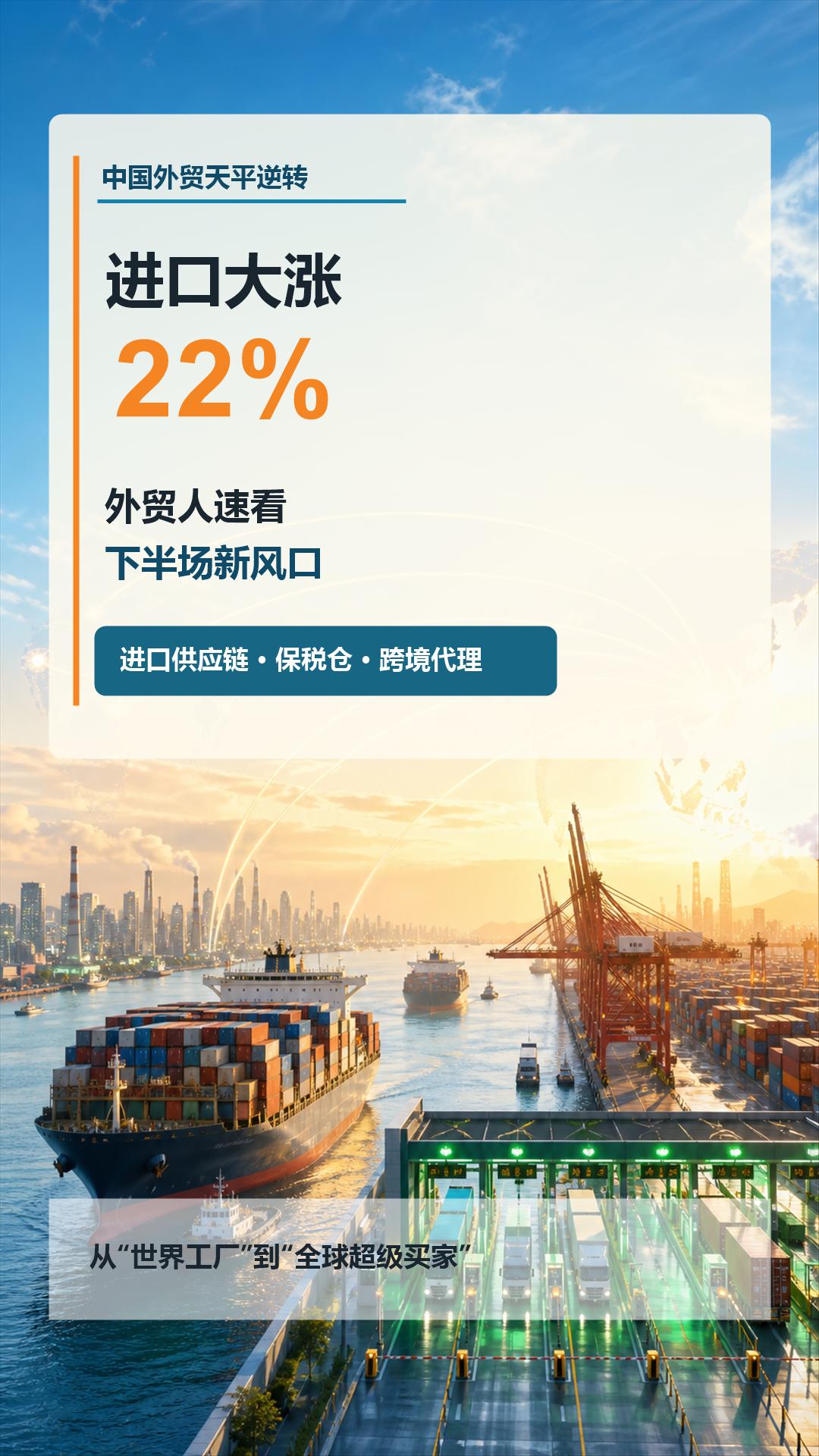
 China's foreign trade sees a turnaround: imports surge by 22%! Foreign trade professionals should quickly take note of the new trends in the second half of the year
 What Does a Global Traffic Ecosystem Service Provider Do? What Are the Differences from a Single Advertising Agency

Related Products
 EasyCamp SaaS Smart Website Marketing SystemE-Yingbao SaaS Smart Website Marketing System: AI-powered, zero-code website building. Rapidly launch multilingual independent e-commerce sites in just 10 minutes. Global server acceleration and AI-driven SEO optimization empower businesses to efficiently connect with global markets. The seamless integration of technology and user-friendly operation makes building e-commerce sites incredibly simple.
 AI+SEM Intelligent Advertising Marketing SystemAI+SEM drives intelligent ad creation, empowering full-funnel precision advertising marketing. The system automatically generates weekly/monthly reports, AI recommends keywords and target countries, monitors core metrics in real-time with intelligent alerts, and enables one-click high-conversion ad solutions to help quickly acquire customers and improve ROI.
 AI+SEO Dual Engine Optimization ServiceEasyWin AI+SEO Dual Engine Optimization System leverages AI-powered keyword mining, content generation, and comprehensive technical optimization to help foreign trade enterprises acquire high-quality organic traffic, significantly improving search rankings and conversion rates.
 AI+SNS Social Media Marketing SystemYingbao AI+SNS Social Media Marketing System - Precision social capture for the social media era. Supports one-click content synchronization across major platforms like Facebook and LinkedIn. AI intelligently rewrites posts for enhanced relevance. 24/7 AI customer service and user profiling analysis empower businesses to efficiently expand into global markets.
 AI+SEO营销解决方案易营宝AI+SEO营销解决方案,通过AI批量写作、智能生成TDK、精准关键词扩词等功能,全面优化网站SEO效果,提升流量与转化率。助力企业构建高效智能网站新生态。
 AI+SEM Advertising Marketing SolutionsAI+SEM Advertising Marketing Solution leverages AI technology to deeply empower SEM ad campaigns. It automatically generates weekly/monthly reports using AI, presenting account data across multiple dimensions for comprehensive insights into campaign performance and trends. The system precisely recommends keywords and target countries, intelligently generates high-conversion ad copy, and enables one-click activation of efficient campaign plans to help businesses rapidly acquire customers. Simultaneously, it monitors core metrics in real time, intelligently identifies abnormal fluctuations, and issues timely alerts to ensure stable, high-return advertising results.
 Domain Name ServicesEasyWin provides professional domain name services, including intelligent queries, one-stop registration, brand protection, and full lifecycle management, helping businesses build a digital brand image.
 EasyOperate B2C Cross-Border E-Commerce Platform & Independent WebsiteEasyStore B2C Cross-border E-commerce Independent Store is an intelligent website building and cross-border e-commerce integrated solution independently developed by EasyStore Information Technology (Beijing) Co., Ltd. The system is specially designed for small and medium-sized as well as large export enterprises, integrating 'website building, operation, marketing, advertising, and conversion' into one, helping enterprises quickly establish cross-border e-commerce independent stores to achieve brand globalization and global sales growth.
The platform supports multiple languages, multiple currencies, and multi-channel marketing, with built-in AI intelligent translation and SEO optimization systems, suitable for mainstream markets such as Southeast Asia, Europe and America, Latin America, and the Middle East, assisting Chinese manufacturing enterprises in efficiently deploying international e-commerce strategies. SSL证书易营宝提供专业SSL安全证书服务,包括单域名和泛域名证书,确保网站数据传输加密、身份验证和完整性保护,助力企业建立安全可信的在线业务环境。









