









- What multilingual website services are available in Sanya? Which model is more suitable for local businesses going global?Jul 08, 2026View details
- How to view the complete list of China SaaS companies in the top 100? Practical methods for screening website-building and marketing service providersJul 08, 2026View details
- How to view pricing in the global traffic ecosystem? Cost comparison of search, social media, and content channel advertisingJul 06, 2026View details
- How to assess foreign trade website development trends?Looking at 2026 changes from multilingual,AI content to conversion pathsJul 04, 2026View details
- What are the new trends in multilingual marketing data analytics tools in 2026? Focus on attribution、automation and complianceJul 04, 2026View details
- Is Brand Globalization Marketing Consulting Worth Buying? At What Stage Should Companies Bring It InJul 01, 2026View details
- Cross-Border Marketing Trend Research: Why More and More Companies Are Starting to Deploy AI Search and GEO OptimizationJun 30, 2026View details
- Cross-Border Marketing Trend Research: How Independent Sites, AI Content, and Short-Video Customer Acquisition Are ChangingJun 30, 2026View details
How to design a B2B international trade marketing website? Page structure suggestions to enhance trust and increase inquiry rates.
Why should the business scenario be considered first when designing a B2B foreign trade marketing website?

The core of B2B foreign trade marketing website design is not whether the page is lively, but whether overseas visitors can make a judgment in a very short time: whether the company is reliable, whether the products are a good match, whether communication is smooth, and whether the risks of subsequent cooperation are controllable.
This explains why, even when running the same e-commerce website, some sites with good indexing receive few inquiries, while others with relatively low traffic consistently generate valuable leads. The problem often lies not in individual pages, but in the overall structure not being designed around real-world business scenarios.
In practical applications, the priorities differ depending on whether the website is designed for customized projects, standardized products, regional promotion, or multilingual expansion. If a B2B foreign trade marketing website design simply adopts a generic corporate website framework, it's usually difficult to simultaneously achieve good trust, search engine performance, and inquiry conversion rates.
A more prudent approach is to plan the website as a marketing infrastructure. The page structure should serve the content expression, the content expression should cooperate with SEO indexing, and the conversion path should take into account advertising, social media traffic, and AI search visibility. This is precisely the value of building a website that integrates marketing.
The focus of B2B foreign trade marketing website design differs depending on the business model.
A common misconception among foreign trade companies is to use the same style for all their overseas websites. In reality, different business models necessitate different page priorities. Understanding this first will prevent subsequent section planning and content depth from going astray.
If a website also needs to consider long-term SEO growth, then section naming, URL logic, content layering, and internal linking cannot be approached solely from a presentation perspective. Services like YiYingBao, which cover website building, SEO, advertising, and social media operations, have the advantage of considering page structure and customer acquisition paths together.
When customers prioritize a company's capabilities, the homepage and about page bear the responsibility of building trust.
In some industries with long transaction cycles, first-time visitors don't immediately inquire about prices; instead, they are more interested in the company's background, production capacity, export experience, and certification information. Therefore, B2B foreign trade marketing website design shouldn't just make the homepage a product entry point; it should also ensure that the company's strengths and capabilities are quickly visible.
A more common approach is to clearly state what the company does and what applications it's suitable for on the homepage's first screen, then use digital information to build trust, such as delivery regions, industry experience, certifications, and factory or team capabilities. The "About" page should not just be a company introduction, but should also include information on its development timeline, service system, delivery process, and internationalization capabilities.
If the website also serves the purpose of brand expansion overseas, the company information page should convey a consistent message with the marketing system. Especially in multi-regional market deployments, information such as technical strength, localization support, and response efficiency are more effective in generating inquiries than vague slogans.
When customers search for products first, category pages and product detail pages determine the efficiency of inquiries.
Another high-frequency scenario is when visitors directly enter the product page through a search. In this case, the homepage is not the first point of contact; what truly affects conversion is whether the categorization logic is clear and whether the product detail page answers key questions in advance.
In B2B foreign trade marketing website design for this type of scenario, simply listing models is not enough. A more effective approach is to break down the product page into several identifiable layers: basic parameters, application scope, optional configurations, certification standards, delivery methods, frequently asked questions, and inquiry entry points.
- Category names should be as close as possible to search habits, rather than internal terminology.
- The product details page should specify the applicable operating conditions, and avoid simply listing the parameter table.
- The form should be placed near information such as certificates, delivery dates, and minimum order quantities.
- Related products and articles should be linked internally to support SEO and browsing depth.
This is easily overlooked. Many website product pages look complete, but the content is only suitable for display, not for search engine indexing or for quick comparison by high-intent visitors. The result is that traffic comes in, but inquiries don't follow.
When dealing with multiple languages and regions, the page structure cannot be simply translated.
When a business simultaneously covers North America, Europe, Southeast Asia, the Middle East, or Latin America, the design of a B2B foreign trade marketing website often enters a second stage: it's not just about having an English website, but about building a multilingual, multi-regional, and sustainably scalable content architecture.
Before implementation, it's important to confirm that search terms, expressions, trust verification methods, and conversion habits are not entirely consistent across different regions. Simply translating Chinese materials into multilingual versions usually only solves the problem of "having a page," not "having conversions."
These scenarios typically focus on three key issues: whether language versions are indexed independently, whether regional pages match local needs, and whether the content balances SEO and reading experience. While AI-powered website building and AI+SEO/GEO optimization systems can more efficiently organize multilingual content, the fundamental prerequisite remains a correctly designed structure.
After traffic comes in from advertising and social media, the landing page structure needs to be shorter and more precise.
If the website also handles traffic from Google Ads, Facebook Ads, or overseas social media, the page structure cannot be completely copied from the official website. This is because this traffic is not coming to "learn slowly," but rather clicking in with a specific question or need.
At this stage, B2B foreign trade marketing website design should focus more on making the landing page more focused. The first screen should directly address the needs, the middle section should showcase solutions and evidence, and the latter part should include forms, downloads, appointments, or quick communication entry points. The clearer the path, the easier it is to control the bounce rate.
Many websites suffer from the problem that their advertising copy describes a scenario, but clicking on the website leads to a general homepage, forcing visitors to search for specific content again. This wastes traffic and makes it difficult to maintain consistent inquiry quality. Integrating website and marketing services essentially aims to reduce this disconnect.
Misjudgments that are prone to occur before implementation are often not at the design level.
Many projects invest heavily in visuals, but the results are mediocre, usually due to flawed initial assessments. The most common problem is mistaking similar scenarios for identical needs. Websites for customized projects and websites for acquiring customers in bulk for standard products may look like corporate websites, but their structure and logic should be different.
- They prioritize design over search engine optimization and page indexing rules.
- It only includes a company introduction, lacking application content and proof of transactions.
- If you only develop for a single language, the structure will be difficult to reuse when expanding the site later.
- They only looked at the cost of building the website, without assessing the costs of content maintenance and promotion.
- There are many forms, but no different conversion paths are set for different sources.
A more reliable approach is to first analyze traffic sources, core markets, key product lines, and inquiry targets before building the website, and then work backward to determine the page hierarchy. This method results in a much smoother process for designing a B2B international trade marketing website, whether it's implementing SEO, advertising, or AI search optimization.
A truly actionable page structure recommendation should be able to support long-term growth.
To build trust and increase inquiry rates on your website, it's recommended to divide the page structure into at least five layers: Brand and Strength Layer, Product and Solution Layer, Content-Based Customer Acquisition Layer, Conversion Layer, and Data Optimization Layer. The first four layers are user-oriented, while the fifth layer provides continuous service iteration.
In practice, three things should be identified first: which pages are responsible for driving search traffic, which pages are responsible for providing explanations, and which pages are responsible for generating inquiries. Once responsibilities are clearly defined, website content will not crowd each other out and will be easier to continuously supplement.
For projects requiring long-term overseas growth, website construction should not be viewed as a one-time delivery. A more realistic approach is to establish a scalable content framework, provide access to multiple languages and channels, and then continuously refine it through AI-powered website building, SEO optimization, advertising, and social media management. Only in this way can a B2B international trade marketing website truly possess the ability to generate long-term inquiries.
The next step is to conduct a structural review of the existing website: check if the homepage clearly conveys its value, if product pages answer key questions, if content pages can handle search queries, and if form paths are smooth. By streamlining these fundamental aspects, the website will transform from a display tool into a genuine overseas marketing asset that drives growth.
Related Articles
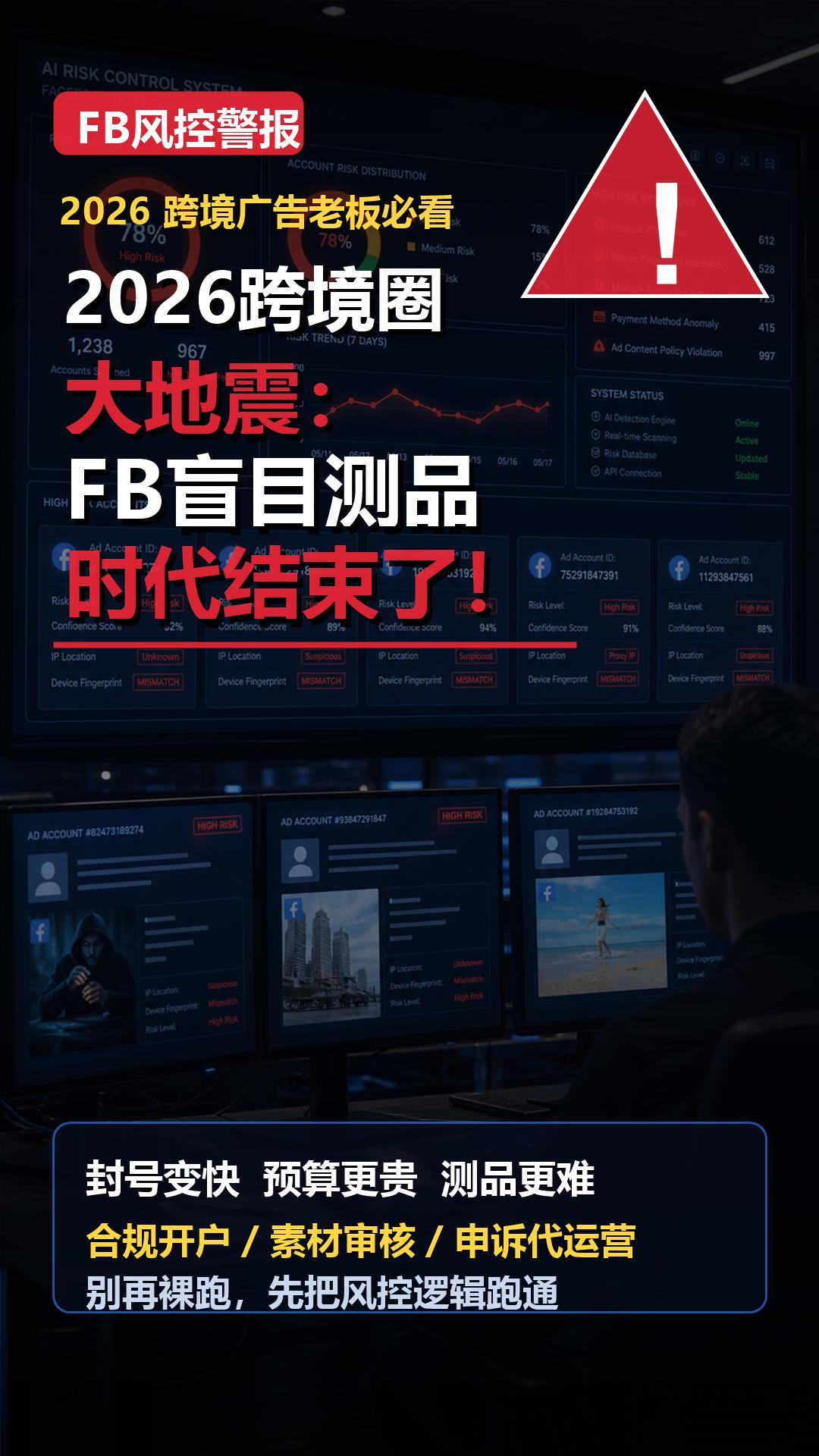
 The Era of Cross-Border Earthquakes in 2026: The Era of Blindly Testing FB Products Has Ended!
 Three key points of domestic-to-foreign trade most important, see if you really did your homework! Don’t take shortcuts.
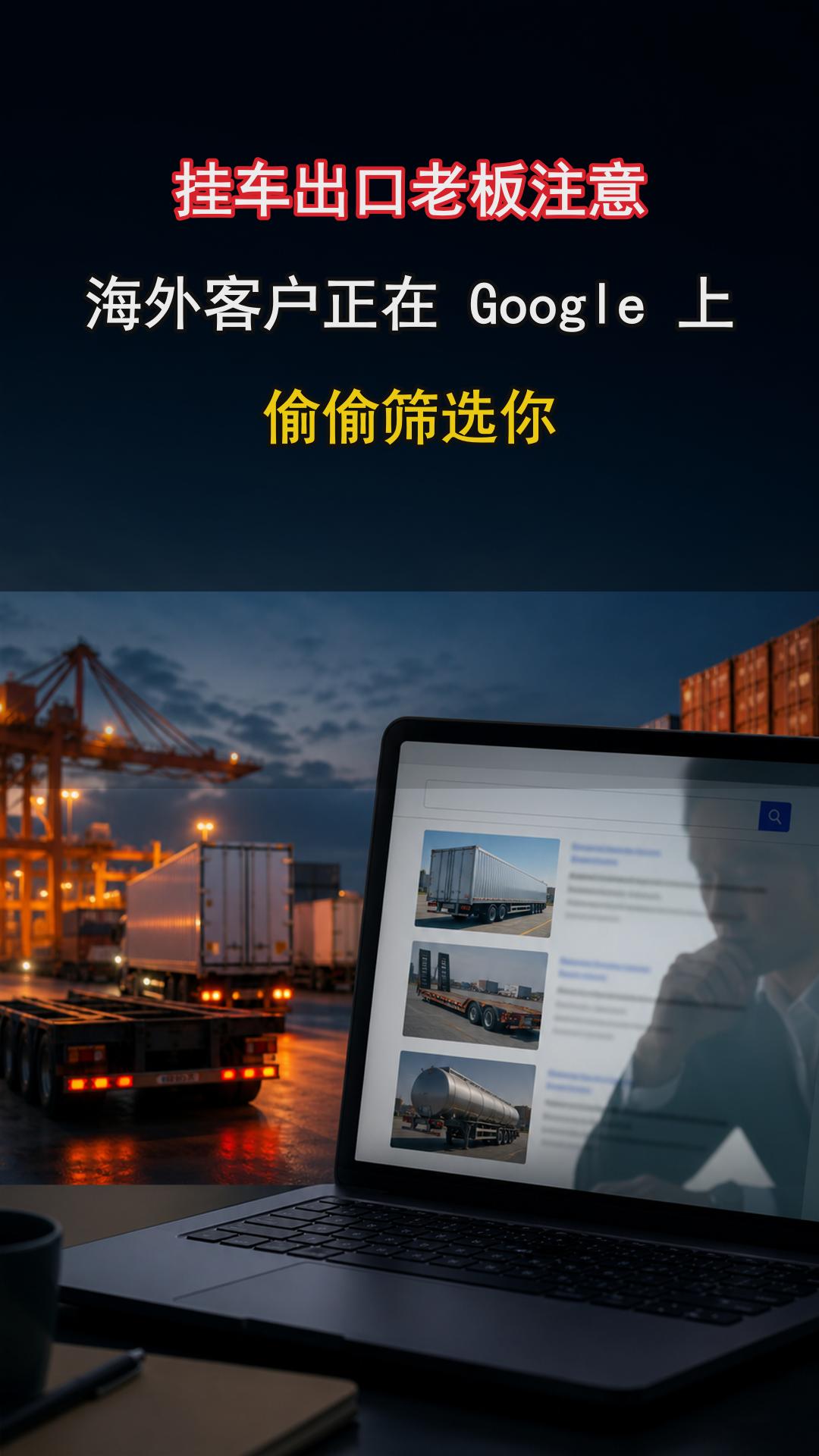
 Note for dealers exporting cars: overseas customers are “quietly screening” you on Google

Related Products
 EasyCamp SaaS Smart Website Marketing SystemE-Yingbao SaaS Smart Website Marketing System: AI-powered, zero-code website building. Rapidly launch multilingual independent e-commerce sites in just 10 minutes. Global server acceleration and AI-driven SEO optimization empower businesses to efficiently connect with global markets. The seamless integration of technology and user-friendly operation makes building e-commerce sites incredibly simple.
 AI+SEM Intelligent Advertising Marketing SystemAI+SEM drives intelligent ad creation, empowering full-funnel precision advertising marketing. The system automatically generates weekly/monthly reports, AI recommends keywords and target countries, monitors core metrics in real-time with intelligent alerts, and enables one-click high-conversion ad solutions to help quickly acquire customers and improve ROI.
 AI+SEO Dual Engine Optimization ServiceEasyWin AI+SEO Dual Engine Optimization System leverages AI-powered keyword mining, content generation, and comprehensive technical optimization to help foreign trade enterprises acquire high-quality organic traffic, significantly improving search rankings and conversion rates.
 AI+SNS Social Media Marketing SystemYingbao AI+SNS Social Media Marketing System - Precision social capture for the social media era. Supports one-click content synchronization across major platforms like Facebook and LinkedIn. AI intelligently rewrites posts for enhanced relevance. 24/7 AI customer service and user profiling analysis empower businesses to efficiently expand into global markets.
 AI+SEO营销解决方案易营宝AI+SEO营销解决方案,通过AI批量写作、智能生成TDK、精准关键词扩词等功能,全面优化网站SEO效果,提升流量与转化率。助力企业构建高效智能网站新生态。
 AI+SEM Advertising Marketing SolutionsAI+SEM Advertising Marketing Solution leverages AI technology to deeply empower SEM ad campaigns. It automatically generates weekly/monthly reports using AI, presenting account data across multiple dimensions for comprehensive insights into campaign performance and trends. The system precisely recommends keywords and target countries, intelligently generates high-conversion ad copy, and enables one-click activation of efficient campaign plans to help businesses rapidly acquire customers. Simultaneously, it monitors core metrics in real time, intelligently identifies abnormal fluctuations, and issues timely alerts to ensure stable, high-return advertising results.
 Domain Name ServicesEasyWin provides professional domain name services, including intelligent queries, one-stop registration, brand protection, and full lifecycle management, helping businesses build a digital brand image.
 EasyOperate B2C Cross-Border E-Commerce Platform & Independent WebsiteEasyStore B2C Cross-border E-commerce Independent Store is an intelligent website building and cross-border e-commerce integrated solution independently developed by EasyStore Information Technology (Beijing) Co., Ltd. The system is specially designed for small and medium-sized as well as large export enterprises, integrating 'website building, operation, marketing, advertising, and conversion' into one, helping enterprises quickly establish cross-border e-commerce independent stores to achieve brand globalization and global sales growth.
The platform supports multiple languages, multiple currencies, and multi-channel marketing, with built-in AI intelligent translation and SEO optimization systems, suitable for mainstream markets such as Southeast Asia, Europe and America, Latin America, and the Middle East, assisting Chinese manufacturing enterprises in efficiently deploying international e-commerce strategies. SSL证书易营宝提供专业SSL安全证书服务,包括单域名和泛域名证书,确保网站数据传输加密、身份验证和完整性保护,助力企业建立安全可信的在线业务环境。









