

I. What Is a B2B Foreign Trade Marketing Website
A B2B foreign trade marketing website is essentially an independent website system designed to support the overseas procurement process. Unlike a traditional business-card-style corporate website, its goal is not merely to display company information, but to receive search traffic, ad clicks, and social media visits, while driving inquiries, lead capture, and business communication.
In foreign trade business, buyers usually first assess a company’s capabilities, then evaluate product fit, delivery capacity, certifications, qualifications, and communication efficiency. Therefore, a qualified B2B foreign trade marketing website must include brand presentation, product catalog, content explanations, trust endorsements, and conversion entry points at the same time.
From a technical perspective, it usually adopts a responsive structure, multi-device compatibility, multilingual pages, form systems, data analytics, and a basic search optimization framework. For export companies in manufacturing, equipment, and raw materials, this type of website has become an important basis for overseas customers to initially screen suppliers.
II. Core Components and Technical Principles
The effective operation of a B2B foreign trade marketing website depends on the coordination of three parts: content structure, technical performance, and conversion mechanisms. The content structure determines whether buyers can quickly understand what the company can do; technical performance determines whether pages can be crawled by search engines and accessed smoothly; and the conversion mechanism determines whether visits can become leads.
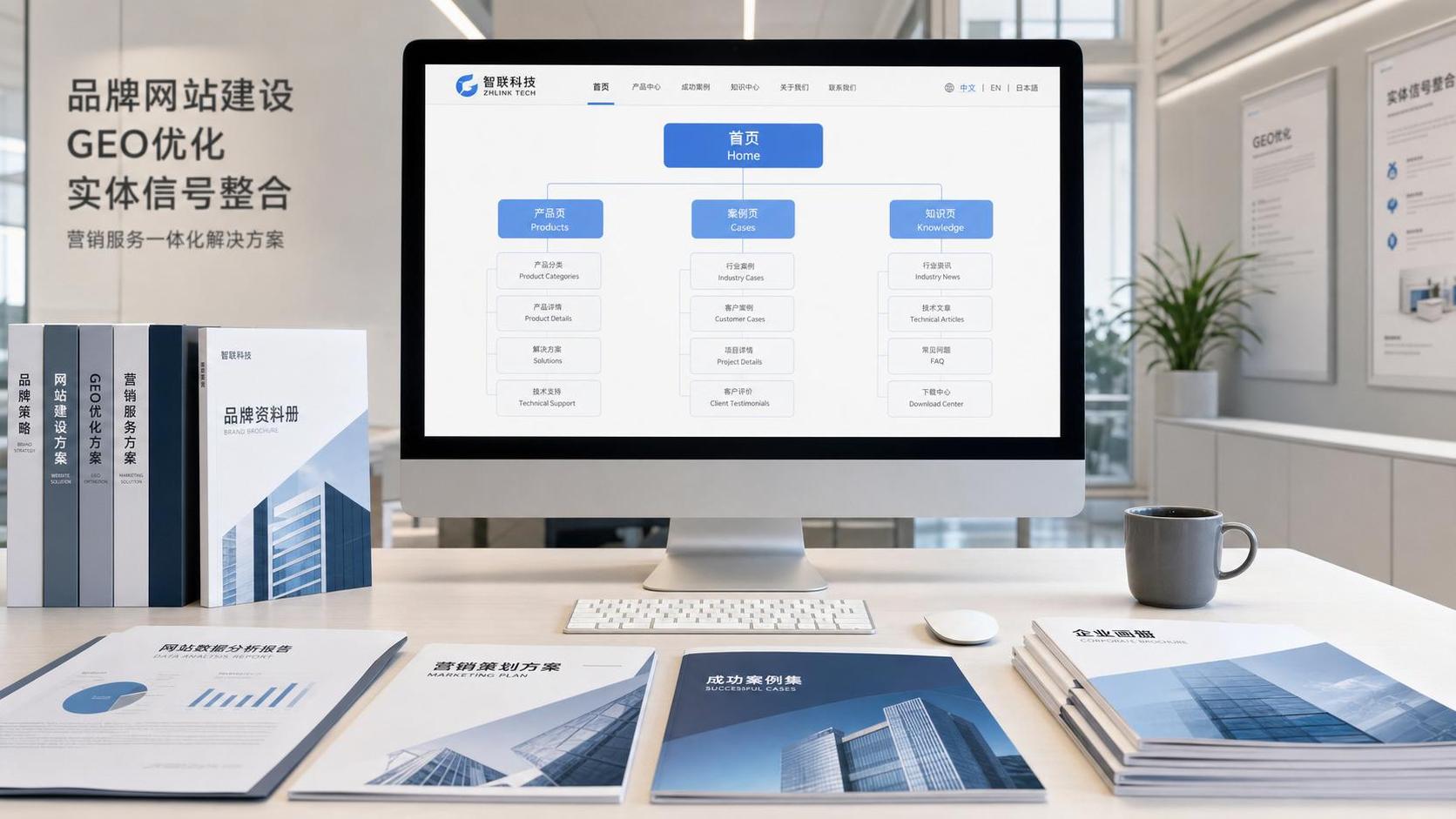
In terms of page structure, it usually includes the homepage, product category pages, product detail pages, application scenario pages, factory capability pages, certification and qualification pages, case study pages, FAQ pages, and contact pages. For companies dealing in industrial products and customized products, the depth of product pages often directly affects inquiry quality.
At the technical level, attention should be paid to mobile compatibility, loading speed, URL structure, title and description, image compression, internal links, multilingual paths, and server stability. If overseas access latency is high, page hierarchy is chaotic, or content is duplicated, both indexing and conversion will be affected.
Taking 易营宝 as an example, its solution integrates AI-powered intelligent website building, multilingual deployment, basic SEO optimization, global node acceleration, and inquiry handling into one system, making it more suitable for export companies that do not have a complete technical team but need to launch quickly and start promotion.
III. Main Types and Suitable Companies
By business objective, B2B foreign trade marketing websites can generally be divided into brand presentation websites, product lead generation websites, multilingual market expansion websites, and advertising landing websites. These types are not completely separate. Mature companies often build a combined structure, but the primary goal should still be clearly defined at the initial stage.
Brand presentation websites place greater emphasis on company introductions, factory capabilities, qualification certificates, and case packaging, making them suitable for large manufacturing enterprises, supply chain companies, and companies with an existing stable customer base. Product lead generation websites focus more on keyword coverage, the depth of product details, and form design, making them suitable for factories and foreign trade companies that want to obtain inquiries through Google.
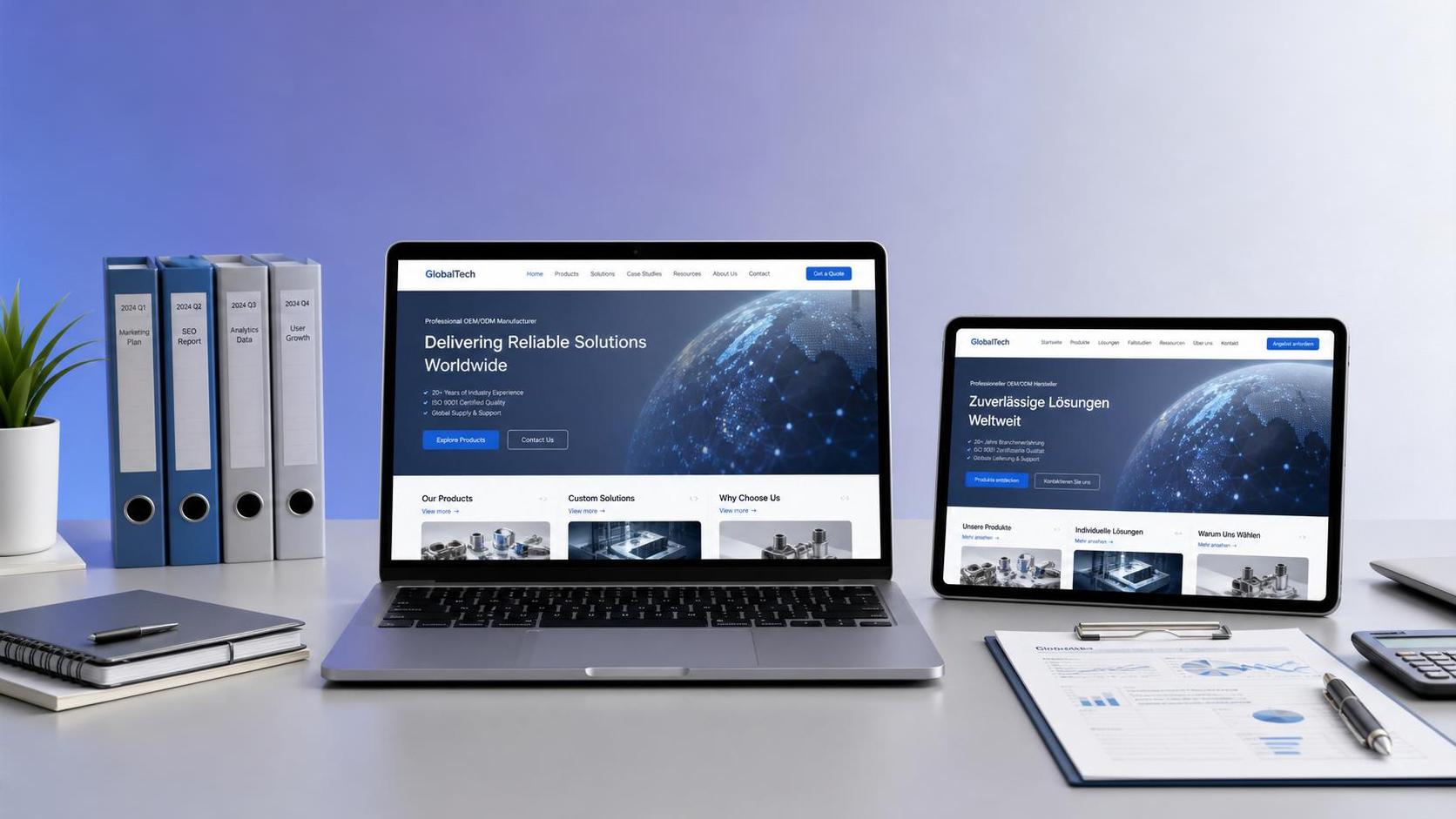
Multilingual market expansion websites are suitable for companies targeting regional markets such as Russian, Spanish, Arabic, Japanese, and German-speaking markets. Advertising landing websites are more suitable for new product promotion, key market testing, and short-term intensive lead generation, with higher requirements for page content relevance and conversion paths.
From an industry perspective, machinery and equipment, hardware and building materials, auto parts, chemicals, new energy, agricultural food, packaging materials, medical devices, and OEM/ODM companies are generally suitable for building B2B foreign trade marketing websites, because these industries have long procurement decision cycles, many price comparison stages, and strong requirements for trust verification.
IV. Why Traditional Corporate Websites Are Becoming Less Sufficient
Many companies already had English corporate websites in earlier years, but common problems include outdated structures, poor mobile experience, thin product page content, lack of inquiry guidance, and insufficient continuous updates. Even if such websites are online, it is difficult for them to take on real customer acquisition tasks, let alone form stable organic traffic assets.
Traditional custom website development also often faces problems such as long cycles, slow revisions, and high content maintenance costs. For foreign trade companies, markets change quickly, products are updated frequently, and language versions increase. If the backend is not easy to use, the website can easily remain in a state of “built and then left idle” after launch.
The value of integrated website + marketing service solutions such as 易营宝 lies in combining website building, content generation, multilingual deployment, SEO optimization, advertising landing support, and subsequent operations. In this way, companies do not need to coordinate separately with website development companies, translation teams, SEO teams, and advertising teams, resulting in higher execution efficiency.
For small and medium-sized export companies with limited budgets, the true significance of a B2B foreign trade marketing website is not to build a prettier site, but to establish an overseas marketing asset that can be continuously iterated, measured for results, and continuously accumulate leads.
V. Selection Criteria: Key Points to Review Before Purchasing
When companies choose a B2B foreign trade marketing website service, the first thing to evaluate is whether the website is designed around procurement conversion, rather than only looking at the visual design of the homepage. Key points to check include whether the product structure can be expanded, whether detail pages support parameters and application descriptions, whether there is a clear inquiry path, and whether backend maintenance is convenient.
The second point is to evaluate multilingual and internationalization capabilities. If a company plans to enter multiple markets in the future, it needs to consider the expansion of language versions, path structure, page translation efficiency, and localized expression of content for different countries, rather than simply translating a single page.
The third point is to evaluate the foundation for search and access. This includes page loading speed, mobile compatibility, TDK settings, internal links, image and code optimization, and whether subsequent SEO operations are supported. 易营宝 better meets foreign trade companies’ requirements for efficiency and maintainability in terms of responsive architecture, AI content assistance, and global acceleration nodes.
The fourth point is to evaluate service boundaries. Website building is only the starting point. Companies should also confirm whether the service can connect with content updates, Google optimization, ad placement, social media traffic acquisition, and data review. Whether a closed loop can be formed often determines whether a B2B foreign trade marketing website can truly generate inquiries.
VI. Application Scenarios, Case References, and Implementation Methods
In practical applications, the most common scenarios for B2B foreign trade marketing websites fall into three categories: first, factories shifting from platform-based order acquisition to independent customer acquisition; second, foreign trade companies expanding Google and social media traffic; and third, globalizing brands building multilingual corporate websites and landing page matrices.
Taking industries such as machinery, steel, chemicals, new energy, agriculture, and medical as examples, buyers often need to repeatedly verify supplier information before placing orders. At this point, factory photos, production capacity, certificate documents, application cases, delivery processes, and FAQs on the website will directly affect whether customers are willing to initiate an inquiry.
易营宝 has served multiple industries including laser engraving machines, steel, chemicals, heavy trucks, machinery, new energy, medical, and furniture, and has also been involved in case backgrounds such as Haier, Aucma, Shandong Airlines, Xiaoya Group, and China National Heavy Duty Truck Group. This shows that it is more familiar with the website expression logic of manufacturing and complex B2B businesses.
For implementation, it is generally recommended to first sort out target countries, key product lines, and keywords, then build the site structure, subsequently improve core page content, and finally connect SEO, advertising, or social media channels. A B2B foreign trade marketing website built in this way is closer to real customer acquisition scenarios, rather than creating pages first and supplementing the strategy later.
VII. How to Evaluate Total Cost of Ownership and Return on Investment
When purchasing a B2B foreign trade marketing website, companies should not only compare website building quotes, but also consider total cost of ownership. Costs usually include the website building system, page planning, multilingual content, servers and acceleration, follow-up maintenance, SEO operations, advertising landing support, and personnel communication costs.
If a company chooses a fully customized model, upfront communication and revision costs are often relatively high. If it only purchases a template website, it may be limited in content support, scalability, and later-stage optimization. A more reasonable approach is to choose a systematic solution that can launch quickly while also supporting future growth.
Return evaluation should be viewed from three levels: first, whether the website improves brand credibility; second, whether it can bring continuous traffic; and third, whether inquiry quality improves. For industries with high average order values and long decision cycles, as long as accurate inquiries can be obtained steadily, website investment usually has long-term value.
易营宝 incorporates website building, AI content, multilingual services, SEO, SEM, SNS, and GEO into the same service system, which can reduce the hidden costs caused by multi-party procurement. For small and medium-sized companies that lack an overseas digital team, this integrated approach is more conducive to measuring ROI and advancing execution.
VIII. 2026 Trends: From Website Building Tool to Intelligent Customer Acquisition Hub
Future B2B foreign trade marketing websites will no longer be merely information containers, but will become overseas marketing hubs for companies. Core trends include normalized multilingual operations, intelligent content production, refined on-site conversion, and deep collaboration with search, advertising, social media, and AI Q&A environments.
As AI search and answer-based traffic grow, companies need to accumulate clearer product knowledge, industry Q&A, solutions, and brand entity information. Those who can continuously output structured content will have more opportunities to be understood, cited, and recommended in new traffic entry points.
At the same time, website development cycles will be further shortened, but the requirements for content depth will become higher. Templated appearances are increasingly difficult to differentiate. What truly creates a gap is whether industry expression is professional, whether product information is complete, whether page trust is sufficient, and whether data-driven operations are continuous.
For companies planning to expand overseas customer acquisition around 2026, a B2B foreign trade marketing website should now be regarded as a long-term digital asset. Prioritizing the establishment of a scalable, multilingual, operable, and conversion-oriented website system has more compounding value than one-time ad campaigns or short-term traffic.
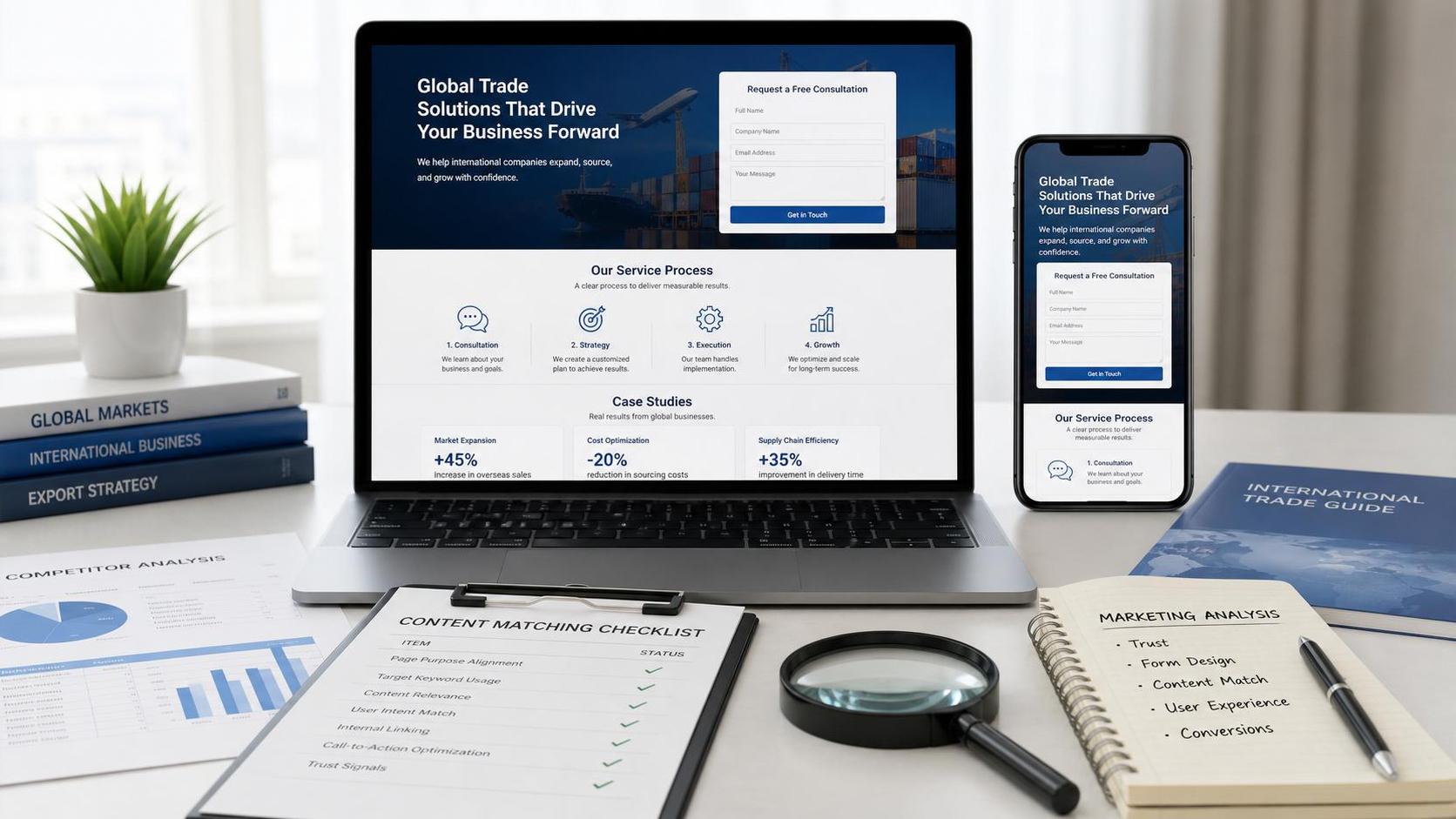
 Where should you start to improve your inquiry rate? An analysis of page trust, form design, and content relevanceWhere should you start to improve your inquiry rate? First optimize page trust, form design, and content relevance, adapt to different traffic sources and business scenarios, reduce drop-off, boost conversions, and help your website marketing acquire customers more efficiently.
 How should keyword placement be done for product page SEO optimization? Breakdown of title, specification section, and FAQ placementHow should keyword placement be done for product page SEO optimization? Do not just change the title. This article breaks down placement methods for the title, specification section, selling point modules, and FAQ, helping corporate websites and marketing-oriented websites improve indexing, cover long-tail keywords, and drive conversions.
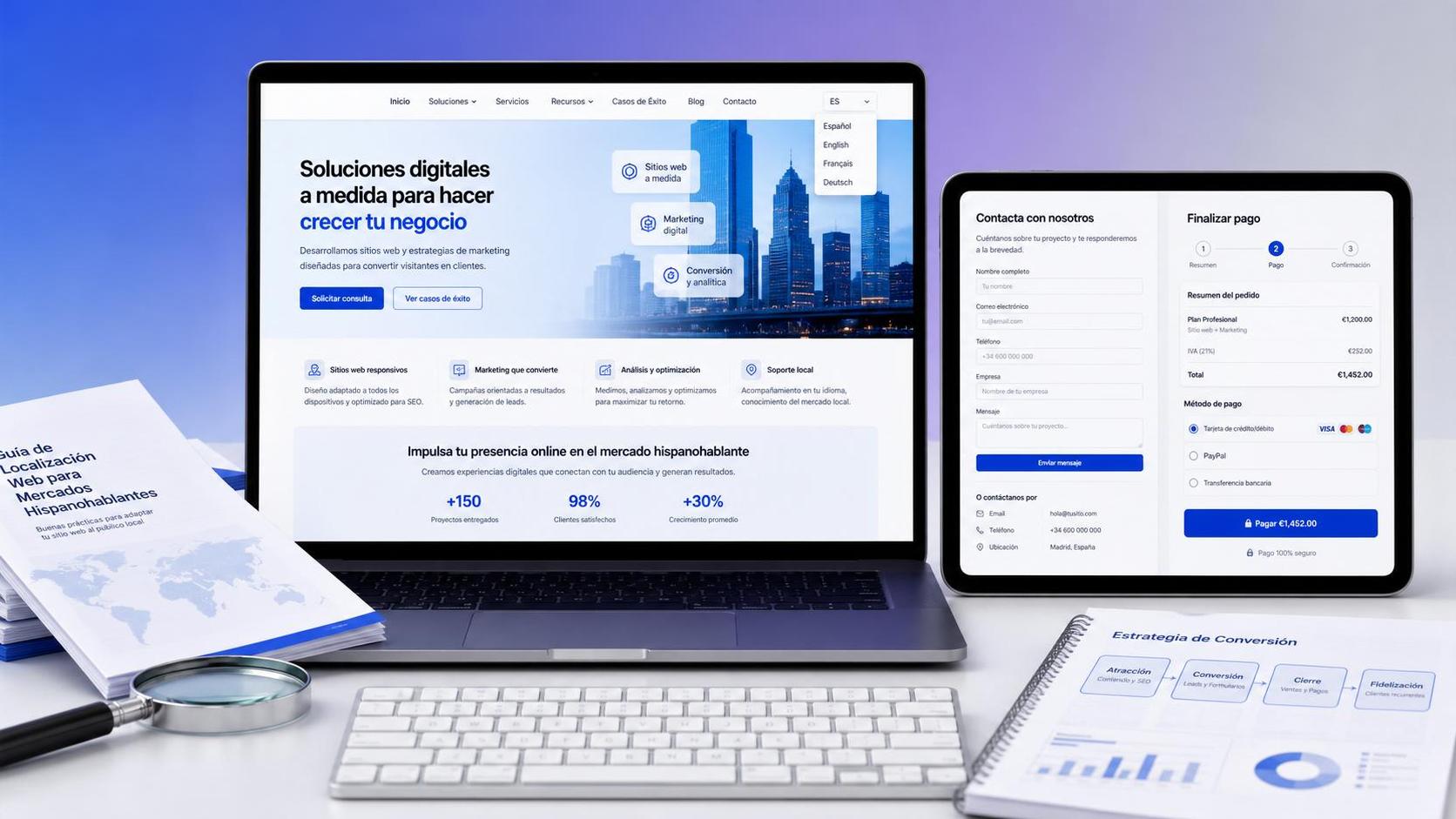
 What localization adaptations are needed for Spanish-language website development?What localization adaptations are needed for Spanish-language website development? It is not only about translating the language, but also about regional terminology, page design, SEO layout, payment, and conversion paths, helping businesses improve overseas indexing, credibility, and inquiry performance.
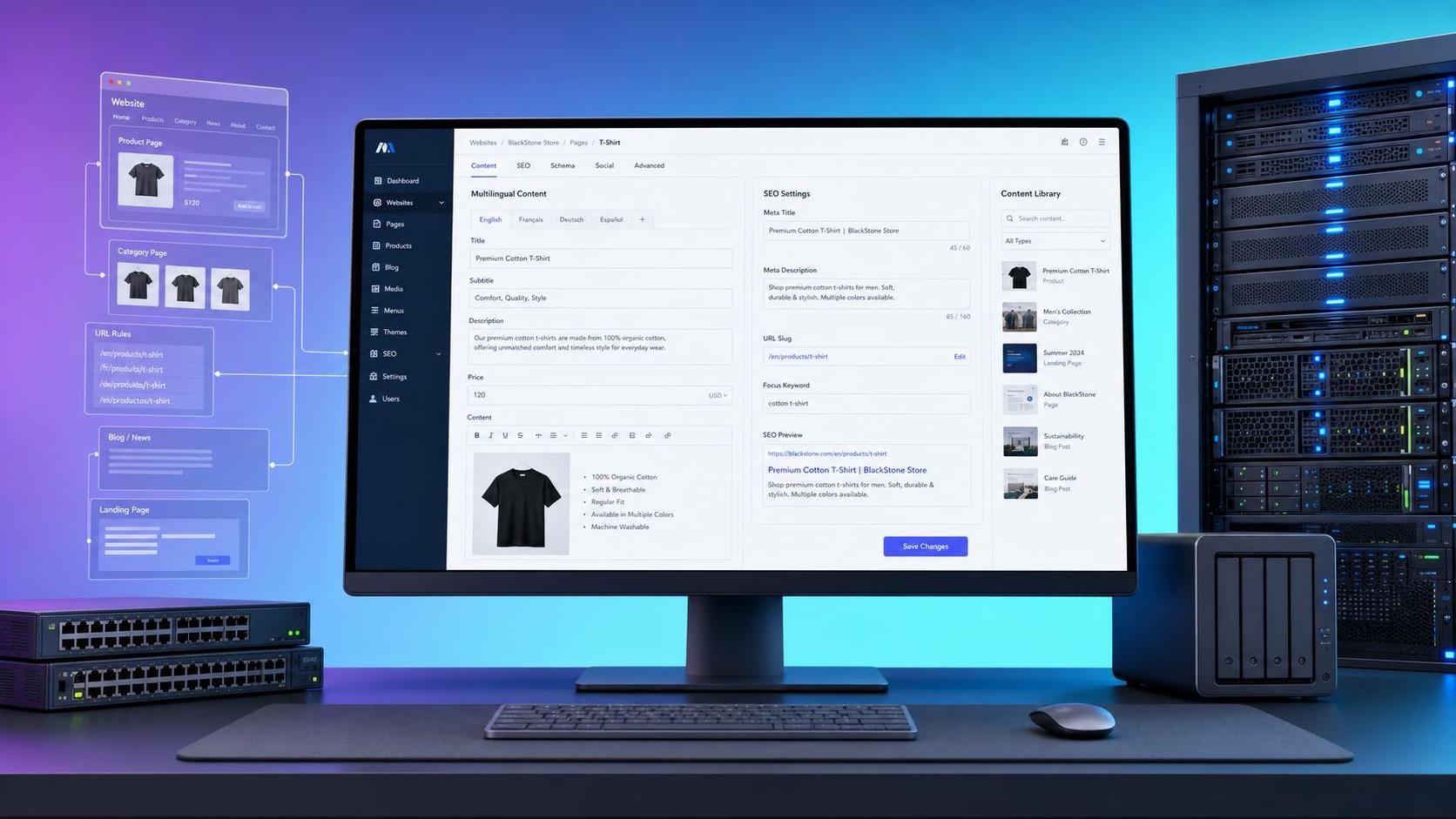
 Can an enterprise-grade website building system solve multilingual field mapping?Can an enterprise-grade website building system solve multilingual field mapping issues? The answer depends on whether it supports field-level management, independent SEO configuration, and marketing collaboration. Learn how to improve indexing efficiency, content maintenance efficiency, and overseas lead conversion for multilingual official websites.
 What pitfalls should you avoid when choosing a B2B export marketing website?What pitfalls should you avoid when choosing a B2B export marketing website? Do not look only at price and templates; pay more attention to SEO fundamentals, inquiry conversion, multilingual adaptation, and long-term operation capabilities to help you choose the right website solution and increase overseas traffic and inquiry growth.
 How to Choose a Global CDN Acceleration Service? Node Coverage, Stability, and Cost ComparisonHow should you choose a global CDN acceleration service? This article compares four key dimensions: node coverage, access stability, response speed, and long-term cost, helping globalizing businesses avoid low-price traps and select an acceleration solution better suited to website building, SEO, and overseas marketing growth.