









- What Does a Global Traffic Ecosystem Service Provider Do? What Are the Differences from a Single Advertising AgencyJul 16, 2026View details
- What should you focus on in the latest enterprise SaaS report? From renewal rates and delivery costs to overseas growth opportunitiesJul 12, 2026View details
- What signals are worth paying attention to in a cross-border marketing trend report? B2B companies should look at these 6 signalsJul 11, 2026View details
- How to Read a Cross-Border Marketing Trends Report? Five Key Dimensions for Evaluating Channel OpportunitiesJul 11, 2026View details
- Which channel has the highest ROI in the global traffic ecosystem? Comparative analysis of search, social media, and advertisingJul 10, 2026View details
- What multilingual website services are available in Sanya? Which model is more suitable for local businesses going global?Jul 08, 2026View details
- How to view the complete list of China SaaS companies in the top 100? Practical methods for screening website-building and marketing service providersJul 08, 2026View details
- How to view pricing in the global traffic ecosystem? Cost comparison of search, social media, and content channel advertisingJul 06, 2026View details
How to Choose an SEO Company in 2026
How to choose an SEO company in 2026? The key is not just to look at the quotation, but also at its ability to improve search engine rankings, its use of website analytics tools, and the service scope of its one-stop marketing platform. This article combines practical cases to help you quickly determine which company is more suitable for business growth.
If you are screening SEO service providers, the core judgment is actually very clear: do not choose whoever promises to “get you onto the first page,” but rather whoever can continuously deliver trackable inquiries, improved traffic quality, and long-term accumulable search assets based on a clear understanding of your business goals. For business decision-makers, what truly matters is ROI, project transparency, technical capabilities, content strategy, and whether follow-up services are complete; for technical evaluators, the focus is on website structure optimization, data monitoring systems, page crawl efficiency, content production mechanisms, and whether cross-channel collaboration capabilities are in place.
By 2026, choosing an SEO company can no longer stay at the level of “how many keywords” and “how much it costs.” The search ecosystem increasingly emphasizes content quality, user experience, technical foundations, and brand signals. If companies still choose SEO providers using the price-comparison mindset of ten years ago, they often fall into service traps characterized by low prices, low quality, and high short-term volatility.
Conclusion first: when choosing an SEO company, businesses should prioritize these 6 capabilities

If you want to make a quick judgment, you can first look at the following 6 dimensions:
- Whether they research the business first and then formulate the SEO plan: excellent companies do not start by quoting packages immediately, but first understand the industry, customer sources, conversion paths, and competitive landscape.
- Whether they have technical SEO capabilities: including website structure, crawl optimization, page speed, mobile experience, index coverage, Schema markup, etc.
- Whether they value content and search intent matching: it is not about piling up article quantity, but about building a content matrix around users’ real questions.
- Whether they have a clear data monitoring mechanism: whether you can see keyword changes, page indexing, traffic quality, conversion leads, and attribution paths.
- Whether they can coordinate with website development, advertising, social media, etc.: integrated marketing capability often determines whether SEO results can be amplified.
- Whether they have continuous service and review mechanisms: SEO is not a one-time project, but an ongoing optimization process.
For companies with strong needs for integrated website + marketing services, a provider that can handle smart website building and SEO optimization while also linking social media marketing and advertising campaigns can usually connect the entire customer acquisition chain more effectively. Because SEO should not only bring organic traffic, but also serve brand exposure, inquiry growth, and sales conversion.
What businesses care about most is not “whether SEO can be done,” but “whether it delivers business results”
When many companies choose an SEO company, the biggest misconception is to treat SEO as a pure ranking service. In reality, what businesses truly care about is:
- After doing SEO, can it bring effective inquiries instead of invalid traffic?
- How long will it take to see phased results?
- Will it affect the stability of the existing website and brand image?
- Is the project process transparent, and can the real work content be seen?
- If the market changes or algorithms are updated, can the provider adjust the strategy in time?
Therefore, when evaluating an SEO company, it is recommended not to only ask “which industries have you worked in,” but also ask:
- How do you understand user search intent in our industry?
- How do you define SEO stage goals—traffic, rankings, or conversions?
- Which website analytics tools do you usually use to identify problems?
- How do you handle coordination among technical SEO, content, backlinks, and branded keywords?
- What data is specifically included in the monthly report, and which metrics are directly tied to business outcomes?
These questions are often more effective than simply comparing quotations in filtering out unprofessional vendors.
When choosing an SEO company in 2026, why you must evaluate its “search intent analysis” capability

SEO has already moved from the stage of “keyword matching” to the stage of “user intent matching.” In other words, what truly determines whether a page can gain rankings and conversions is not how many times a keyword appears, but whether the page genuinely answers the user’s question.
For example, although people may search for the same term “how to choose an SEO company,” different readers actually have different intents:
- Information researchers want to know industry trends, service models, and basic evaluation criteria;
- Technical evaluators care more about SEO technical depth, data systems, and execution standards;
- Business decision-makers care most about ROI, risk, service boundaries, and expected results;
- After-sales maintenance personnel care whether the handover is smooth and whether ongoing maintenance is possible later;
- Agents and distributors value replicable service capabilities and stable customer delivery;
- End consumers pay more attention to brand credibility and content professionalism.
If an SEO company can only create keyword lists but lacks the ability to break down search intent for different roles, then its content strategy, landing page architecture, and conversion paths are usually relatively rough, and the results are naturally difficult to stabilize.
A truly mature provider will divide keywords into branded terms, product terms, scenario terms, question terms, comparison terms, and decision-making terms, and then combine them with on-site content layout, page optimization, and conversion design to help businesses establish more complete traffic entry points.
To judge whether an SEO company is professional, you can directly look at these 5 delivery details
Rather than listening to how well the sales pitch sounds, it is better to see whether the delivery is practical and executable. The following 5 details are the easiest ways to tell whether an SEO company is worth working with:
1. Whether the website audit is specific rather than templated
A professional company will point out specific issues, such as page crawl depth, duplicate titles, indexing anomalies, URL standards, Core Web Vitals, internal linking logic, thin content pages, etc., rather than just giving a one-size-fits-all report saying “the website needs optimization.”
2. Whether the keyword strategy revolves around business goals
If a business mainly closes deals through high-value inquiries, then the strategic focus should be on high-intent keywords, solution pages, case study pages, and industry content pages, rather than simply chasing broad high-traffic terms.
3. Whether content production demonstrates industry understanding
Many low-cost SEO services still remain at the stage of mass-produced pseudo-original content. This type of content may be indexed in the short term, but it is difficult to generate long-term rankings and trust. Good service providers plan content based on industry terminology, procurement processes, user concerns, and competitor content gaps.
4. Whether the data report is understandable and actionable
A valuable SEO report does not just list impressions and clicks, but tells you: which pages are growing, which pages need to be redone, which keywords are close to page one, which entry keywords have brought conversions, and what next month’s priorities are.
5. Whether there is a long-term operations mindset
SEO results do not happen overnight. If a provider only talks about “ranking in a few days” but does not talk about content assets, website quality, brand accumulation, and algorithm response, then it is most likely not suitable for medium- to long-term operations.
Why low-cost SEO often “looks cheap but is actually more expensive”
When many companies purchase SEO services for the first time, they are easily attracted by extremely low quotes. But based on practical experience, the hidden costs of low-price solutions are often higher, mainly reflected in the following aspects:
- Shallow early-stage diagnosis, inaccurate problem identification, and wasted months of optimization cycles;
- Poor content quality, resulting in pages not being indexed or converting weakly;
- The use of non-compliant backlinks or gray-hat methods, bringing algorithm risks;
- Focusing only on rankings and not inquiries, leading in the end to “traffic without business”;
- Non-transparent delivery, making it difficult for internal teams to assess project value.
For business managers, when choosing an SEO company, the focus should be on calculating the “true total cost”: including project fees, internal coordination costs, trial-and-error costs, brand risk costs, and time costs. A provider that may look somewhat more expensive but has a complete strategy, technical team, content team, and data system is actually more likely to win in overall ROI.
Why a one-stop marketing platform is becoming increasingly suitable for business SEO needs in 2026
As customer acquisition paths become more and more complex, the limitations of single-point SEO services are also becoming increasingly obvious. For example, if a website’s technical foundation is weak, even strong SEO is hard to fully leverage; if content has traffic but no conversion design, inquiry conversion rates will not improve; if SEO brings traffic but there is no follow-up through advertising remarketing and social media engagement, user value may also be wasted.
Therefore, more and more businesses are beginning to prefer one-stop marketing platform providers. The advantages of such providers include:
- Website development and SEO are planned simultaneously, reducing rework later;
- SEO works in coordination with advertising and social media, improving overall customer acquisition efficiency;
- Data is unified and centrally managed, making it easier for management to see the full picture;
- Better suited for multi-region, multilingual, or global growth scenarios;
- Smoother later-stage maintenance, upgrades, and expansion.
From the perspective of long-term service capability, teams that combine technological innovation with localized services have a greater advantage, especially companies that can integrate artificial intelligence, big data analysis, and marketing execution. They are better suited to coping with the complex and ever-changing search environment of 2026.
For example, when businesses formulate annual growth plans, in addition to focusing on customer acquisition channels, they often simultaneously research topics such as policy, industry trends, and the innovation environment. This kind of extended reading also influences the direction of content planning. If a company has needs in industrial upgrading or research-oriented content layout, it may also refer to materials such as Research on Green Taxation Supporting Corporate Innovation and Industrial Upgrading to help improve a high-quality content system and reserve industry insights.
An SEO company that is suitable for collaboration usually advances projects like this
If an SEO company has a mature process, it will usually advance the project according to the following rhythm:
- Business interviews and goal confirmation: clarify brand positioning, product structure, conversion goals, regional markets, and core customer groups.
- Comprehensive website audit: investigate problems across dimensions such as technology, content, structure, experience, indexing, and competitors.
- Keyword and search intent layering: build a content map and page priority system.
- On-site optimization and content development: including page titles, descriptions, internal links, topic pages, case pages, industry pages, etc.
- Data monitoring and ongoing review: track rankings, indexing, traffic, conversions, and page performance monthly.
- Multi-channel coordination to amplify results: connect SEO outcomes with advertising, social media, email, CRM, etc.
If the other party cannot clearly explain the project process, or applies the same template to every client, then extra caution is needed before cooperation.
Finally, here is a practical evaluation method for businesses: 3 things to look at, 3 questions to ask, and 3 things to avoid
3 things to look at:
- See whether the cases can clearly explain the growth logic, rather than just showing screenshots;
- See whether the team covers technology, content, data, and operations;
- See whether the reports are tied to business goals.
3 questions to ask:
- Ask how they define success: rankings, traffic, or conversions?
- Ask how they handle algorithm fluctuations when they occur.
- Ask whether they can coordinate with the company’s existing website, CRM, and advertising systems.
3 things to avoid:
- Do not decide to cooperate just because the price is low;
- Do not easily believe promises such as “guaranteed rankings” or “rapid domination of search results”;
- Do not ignore follow-up maintenance and cross-department collaboration costs.
At the root of it, when asking how to choose an SEO company in 2026, the answer is not to choose the one that “talks best,” nor the one that is “cheapest,” but the team that truly understands business growth goals and possesses technical capability, content capability, data capability, and one-stop coordination capability. For companies that hope to build long-term search assets, enhance brand exposure, and obtain stable business opportunities, this is the more reliable choice.
In summary, a high-quality SEO company should help businesses achieve three things: first, accurately identify user search intent; second, turn the website and content into sustainable growth assets; third, make organic traffic truly convert into business value. As long as you screen candidates around these three standards, you will not be easily misled by surface-level promises when choosing a partner, and you will be more likely to find a service provider that truly fits your company’s development needs.
Related Articles
 Attention! Builders' must-see: Yibingbao AI components updated, design efficiency directly doubled!
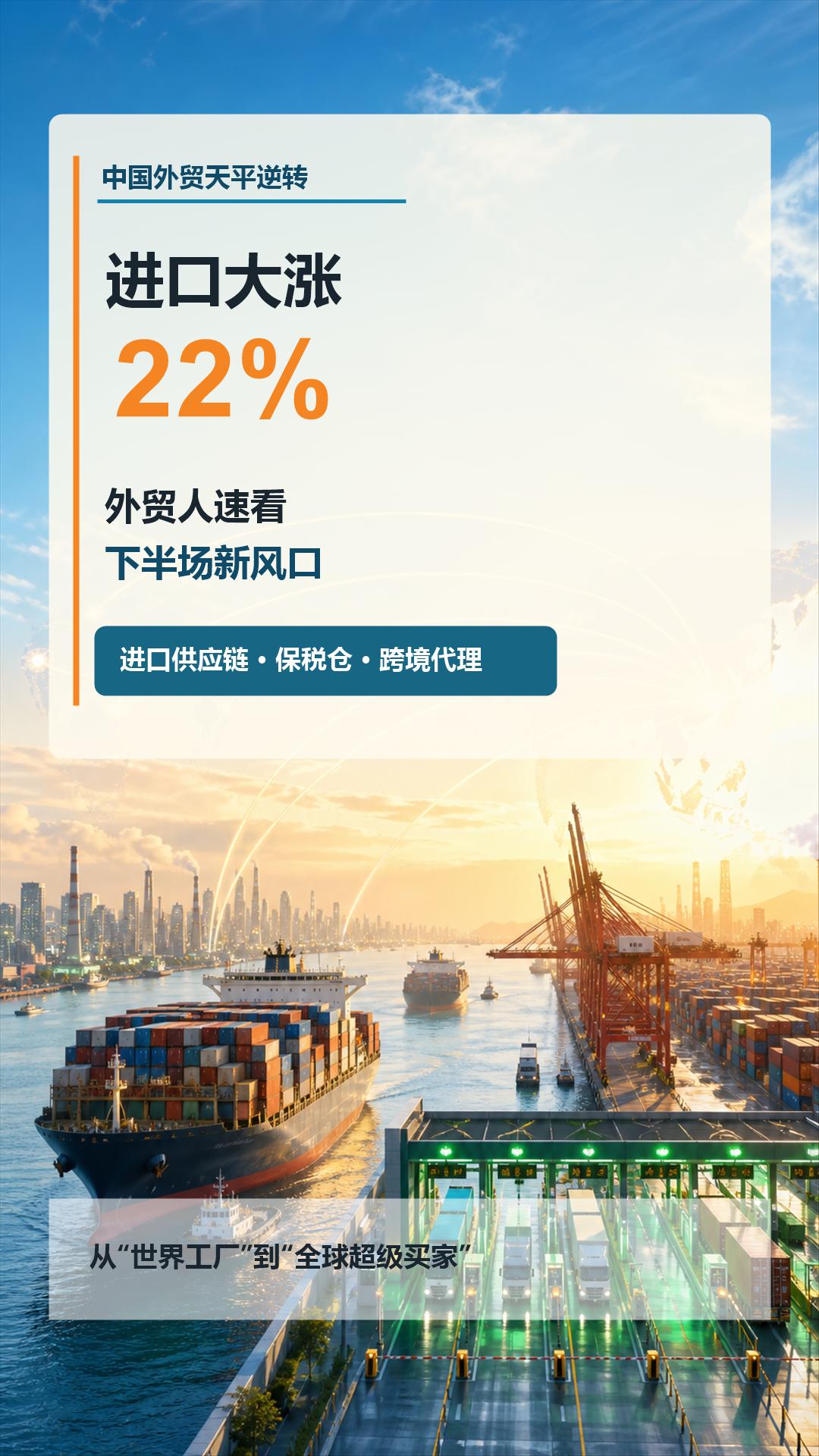
 China's foreign trade sees a turnaround: imports surge by 22%! Foreign trade professionals should quickly take note of the new trends in the second half of the year
 What Does a Global Traffic Ecosystem Service Provider Do? What Are the Differences from a Single Advertising Agency

Related Products
 EasyCamp SaaS Smart Website Marketing SystemE-Yingbao SaaS Smart Website Marketing System: AI-powered, zero-code website building. Rapidly launch multilingual independent e-commerce sites in just 10 minutes. Global server acceleration and AI-driven SEO optimization empower businesses to efficiently connect with global markets. The seamless integration of technology and user-friendly operation makes building e-commerce sites incredibly simple.
 AI+SEM Intelligent Advertising Marketing SystemAI+SEM drives intelligent ad creation, empowering full-funnel precision advertising marketing. The system automatically generates weekly/monthly reports, AI recommends keywords and target countries, monitors core metrics in real-time with intelligent alerts, and enables one-click high-conversion ad solutions to help quickly acquire customers and improve ROI.
 AI+SEO Dual Engine Optimization ServiceEasyWin AI+SEO Dual Engine Optimization System leverages AI-powered keyword mining, content generation, and comprehensive technical optimization to help foreign trade enterprises acquire high-quality organic traffic, significantly improving search rankings and conversion rates.
 AI+SNS Social Media Marketing SystemYingbao AI+SNS Social Media Marketing System - Precision social capture for the social media era. Supports one-click content synchronization across major platforms like Facebook and LinkedIn. AI intelligently rewrites posts for enhanced relevance. 24/7 AI customer service and user profiling analysis empower businesses to efficiently expand into global markets.
 AI+SEO营销解决方案易营宝AI+SEO营销解决方案,通过AI批量写作、智能生成TDK、精准关键词扩词等功能,全面优化网站SEO效果,提升流量与转化率。助力企业构建高效智能网站新生态。
 AI+SEM Advertising Marketing SolutionsAI+SEM Advertising Marketing Solution leverages AI technology to deeply empower SEM ad campaigns. It automatically generates weekly/monthly reports using AI, presenting account data across multiple dimensions for comprehensive insights into campaign performance and trends. The system precisely recommends keywords and target countries, intelligently generates high-conversion ad copy, and enables one-click activation of efficient campaign plans to help businesses rapidly acquire customers. Simultaneously, it monitors core metrics in real time, intelligently identifies abnormal fluctuations, and issues timely alerts to ensure stable, high-return advertising results.
 Domain Name ServicesEasyWin provides professional domain name services, including intelligent queries, one-stop registration, brand protection, and full lifecycle management, helping businesses build a digital brand image.
 EasyOperate B2C Cross-Border E-Commerce Platform & Independent WebsiteEasyStore B2C Cross-border E-commerce Independent Store is an intelligent website building and cross-border e-commerce integrated solution independently developed by EasyStore Information Technology (Beijing) Co., Ltd. The system is specially designed for small and medium-sized as well as large export enterprises, integrating 'website building, operation, marketing, advertising, and conversion' into one, helping enterprises quickly establish cross-border e-commerce independent stores to achieve brand globalization and global sales growth.
The platform supports multiple languages, multiple currencies, and multi-channel marketing, with built-in AI intelligent translation and SEO optimization systems, suitable for mainstream markets such as Southeast Asia, Europe and America, Latin America, and the Middle East, assisting Chinese manufacturing enterprises in efficiently deploying international e-commerce strategies. SSL证书易营宝提供专业SSL安全证书服务,包括单域名和泛域名证书,确保网站数据传输加密、身份验证和完整性保护,助力企业建立安全可信的在线业务环境。









