









- Cross-Border Marketing Trend Research: Why More and More Companies Are Starting to Deploy AI Search and GEO OptimizationJun 30, 2026View details
- Cross-Border Marketing Trend Research: How Independent Sites, AI Content, and Short-Video Customer Acquisition Are ChangingJun 30, 2026View details
- How Can a Brand Updates Page Be Made More SEO-Friendly? Analysis of Update Frequency, Content Structure, and Internal Linking StrategyJun 28, 2026View details
- What stages does the cross-border services ecosystem include? How do website building, promotion, payment, and compliance work togetherJun 22, 2026View details
- How will email marketing costs change in 2026Jun 22, 2026View details
- The China-US tariff arrangement has reached a preliminary consensus, and the trade association will be establishedJun 15, 2026View details
What foreign trade website agency channels are available? How to choose between direct sales, distribution, and regional partnership models
Why Shouldn’t Foreign Trade Website Agency Channels Be Judged Only by Rebate Rates?
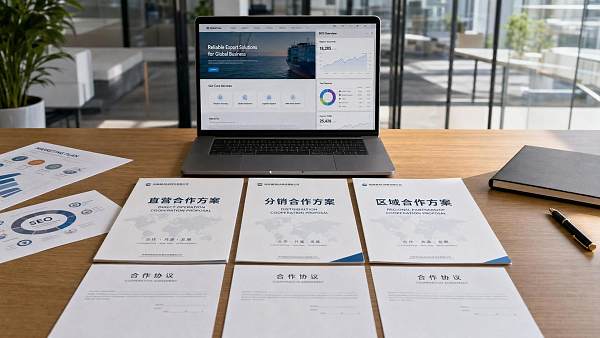
What types of foreign trade website agency channels are available? This question may seem to be about cooperation models, but in practice it is more about whether the business can scale later. When many people compare direct collaboration, distribution, and regional partnership models, they first look at profit sharing. However, what truly creates differentiation is often delivery capability, lead sources, training support, and the long-term renewal structure.
This is especially true in the integrated website + marketing services industry, where selling only a website can no longer create a stable advantage. Customers care more about whether multilingual website development, Google SEO, advertising, social media traffic acquisition, and subsequent data growth can be solved at the same time. If the wrong channel model is chosen, closing deals at the front end may be easy, but implementation at the back end can become very difficult.
Therefore, when evaluating foreign trade website agency channels, the focus should not remain on “which model has the lowest entry threshold”. A more common evaluation approach is to assess whether the brand owner can provide a complete product system, standardized delivery processes, and sustainable customer acquisition methods, as these determine how far the partnership can go.
What Are the Main Types of Common Foreign Trade Website Agency Channels?
Based on market practice, foreign trade website agency channels mainly fall into three categories: direct collaboration, distribution, and regional partnership. Although the names differ, the underlying differences in authority, responsibilities, and revenue structure are significant.
Direct Collaboration: Suitable for Initial Market Validation
In this model, the brand owner is usually directly responsible for the product, delivery, and operations, while the partner focuses more on customer development, relationship maintenance, and local communication. Its advantages are fast launch, relatively controllable risks, and no need to build a complete technical team from the very beginning.
The limitations are also obvious. Pricing flexibility, service control, and regional exclusivity are usually relatively weak. If the goal is to build one’s own service barriers later, this model is often more suitable as a transitional option rather than the only long-term solution.
Distribution Model: Focused on Deal Conversion Efficiency
Distribution emphasizes standardized sales and is suitable for platform-based services with clear product rules and stable pricing systems. For foreign trade website agency channels, the distribution model is commonly seen in standard website packages, basic SEO services, and advertising account management products.
Its advantages lie in fast replication and a short training cycle, making it suitable for rapid volume growth. However, if customer needs are complex, such as requiring an independent website, multilingual content, SEO, and advertising integration at the same time, a single distribution model can easily lead to unclear delivery boundaries.
Regional Partnership: A Greater Test of Comprehensive Business Capabilities
Regional partnerships are usually accompanied by stronger authorization and may include regional protection, team co-building, joint marketing activities, and deeper data collaboration. The potential returns are often higher, but so are the requirements. Partners need to continuously develop customers and take responsibility for local service quality.
If the cooperation is with a platform that has a complete SaaS product matrix and marketing delivery capabilities, regional partnership is more likely to generate long-term repeat purchase revenue. Conversely, if the brand owner has a weak product portfolio and relies only on sales-driven customer acquisition, regional partnership may instead become a high-cost investment.
How Should You Choose Among Direct Collaboration, Distribution, and Regional Partnership Models, and What Are the More Practical Evaluation Criteria?
Instead of first asking which model is more profitable, it is better to ask yourself three questions: Do you have a stable source of customers? Can you handle both pre-sales and after-sales services? Do you have the ability to continuously educate the market? Choosing a foreign trade website agency channel is essentially about capability matching.
The following evaluation table can serve as a preliminary screening reference.
If you are still in the trial stage, direct collaboration is more stable. If you already have a stable source of customers, the distribution model makes it easier to streamline the process. Only when local resources, teams, and service capabilities are relatively mature is regional partnership truly worth investing in.
Why Is Integrated Website + Marketing Service More Suitable for Long-Term Channel Development?
Many people still understand foreign trade website agency channels only at the website-building level. In actual transactions, fewer and fewer customers are buying “just a website”. Instead, they are more concerned about whether the website can be indexed after launch, whether it can generate inquiries, and whether advertising campaigns can connect effectively with conversions.
This is also why an integrated platform is more suitable for long-term cooperation. If websites, SEO, social media, advertising, and AI optimization are coordinated through the same system, sales teams can explain the value more clearly, delivery can be standardized more easily, and the potential for renewals and upsells naturally becomes greater.
Take a platform like 易营宝, which has been deeply engaged in the industry for ten years, as an example. Its core advantage is not only website building, but also the ability to connect intelligent website development, multilingual official websites, cross-border e-commerce stores, Google SEO, advertising, and GEO optimization. In this way, foreign trade website agency channels are no longer just selling web pages, but selling a more complete overseas customer acquisition capability.
For channel cooperation, this model also has a practical value: a longer customer lifecycle. In the early stage, the cooperation can start with website development; in the mid-stage, it can extend to SEO and advertising; and in the later stage, it can further expand into multi-region language coverage and content optimization, making the cooperation structure more stable.
What Risks Are Most Easily Overlooked When Choosing Foreign Trade Website Agency Channels?
A common misconception is not “not understanding the model”, but understanding it too superficially. It may look like a channel agreement has been signed, but in reality, there is no back-end methodology, and eventually the business can only compete for orders through low pricing.
- Only comparing the first-order rebate, while ignoring renewal revenue sharing and upgrade income.
- Only looking at the scope of authorization, while ignoring whether training, materials, and lead support are provided.
- Ignoring delivery complexity, resulting in excessive pre-sales commitments that are difficult to fulfill after the sale.
- Treating website building as a one-time business without establishing an integrated SEO and advertising plan.
- Failing to confirm whether the system supports multilingual, multi-region, and future expansion needs.
What needs to be confirmed in advance is whether the brand owner has continuous iteration capabilities. If a foreign trade website agency channel depends on a single-point product, once the market changes, the cooperation space will shrink rapidly. Conversely, if the other party has self-developed systems, AI capabilities, and multi-region marketing experience, the channel’s risk resistance will be significantly stronger.
How Should You Evaluate Before Implementation to Avoid Choosing the Wrong Cooperation Model?
During actual evaluation, it is recommended to ask detailed questions instead of only looking at promotional materials. Whether a foreign trade website agency channel is suitable for you can often be seen from several details.
First, Check Whether the Product Can Be Sold Long Term
If only a single website-building service can be sold, competition will increasingly depend on price. A more stable approach is to choose a platform that can layer SEO, advertising, social media, and content growth services, so that when customer needs change, there is still room for secondary transactions.
Next, Check Whether Delivery Is Standardized
Standardization does not mean low-end. It means that pricing, processes, materials, training, and acceptance milestones are all clear. Platforms like 易营宝 that cover the full chain of website building and marketing can more easily break complex services into executable modules, reducing uncertainty in cooperation.
Finally, Check Whether the Market Can Be Co-Built
A foreign trade website agency channel that is truly worth developing should provide more than authorization. It should also include joint training, case support, content materials, sales enablement, and regional operation strategies. Only in this way can the cooperation gradually transition from “reselling products” to “operating a market”.
How Can You Make a More Stable Choice? Clarify These Three Steps First
Returning to the original question, what types of foreign trade website agency channels are available? The answer is not complicated. The difficult part is how to choose correctly. Direct collaboration, distribution, and regional partnership each apply to different stages. There is no absolute good or bad, only whether the model matches your current capabilities.
A more reliable approach is to first sort out your existing customer structure and service capabilities, then compare the brand owner’s product depth, delivery support, and renewal mechanism, and finally use a small-scale cooperation cycle to verify actual conversion and fulfillment performance.
If the goal is long-term operation, priority should be given to platform-based cooperation that can connect website building, SEO, advertising, and AI growth capabilities. In this way, when choosing a foreign trade website agency channel, what you see is not only the current deal, but also the market potential, repeat purchase value, and regional growth opportunities over the next few years.
Related Articles
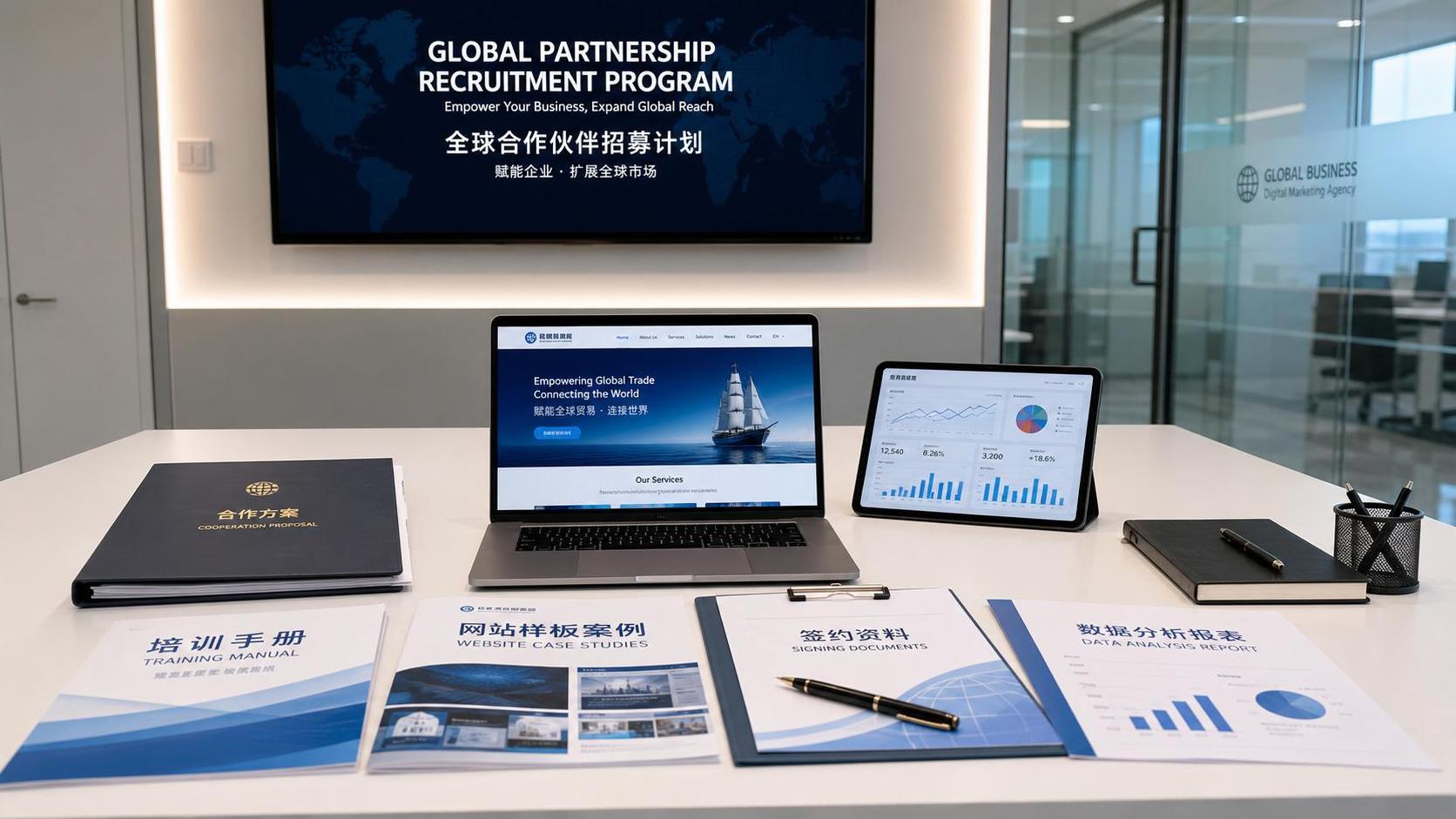
 How to Make Agent Recruitment for Foreign Trade Websites More Effective? Policy Design, Sample Cases, and Training System Analysis
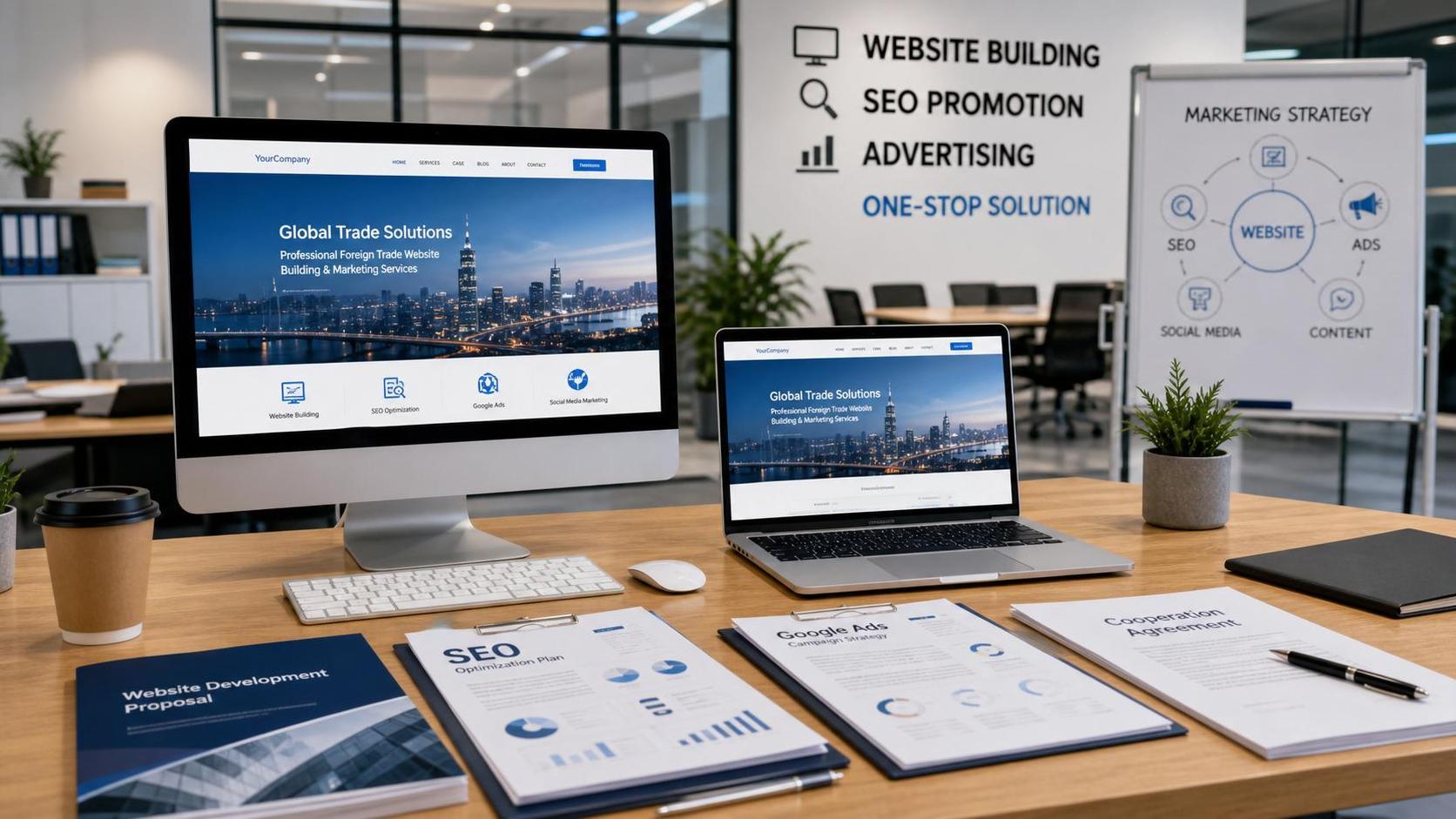
 Which companies are a good fit for a foreign trade website agency partnership? Analysis of entry requirements, revenue models, and risk points
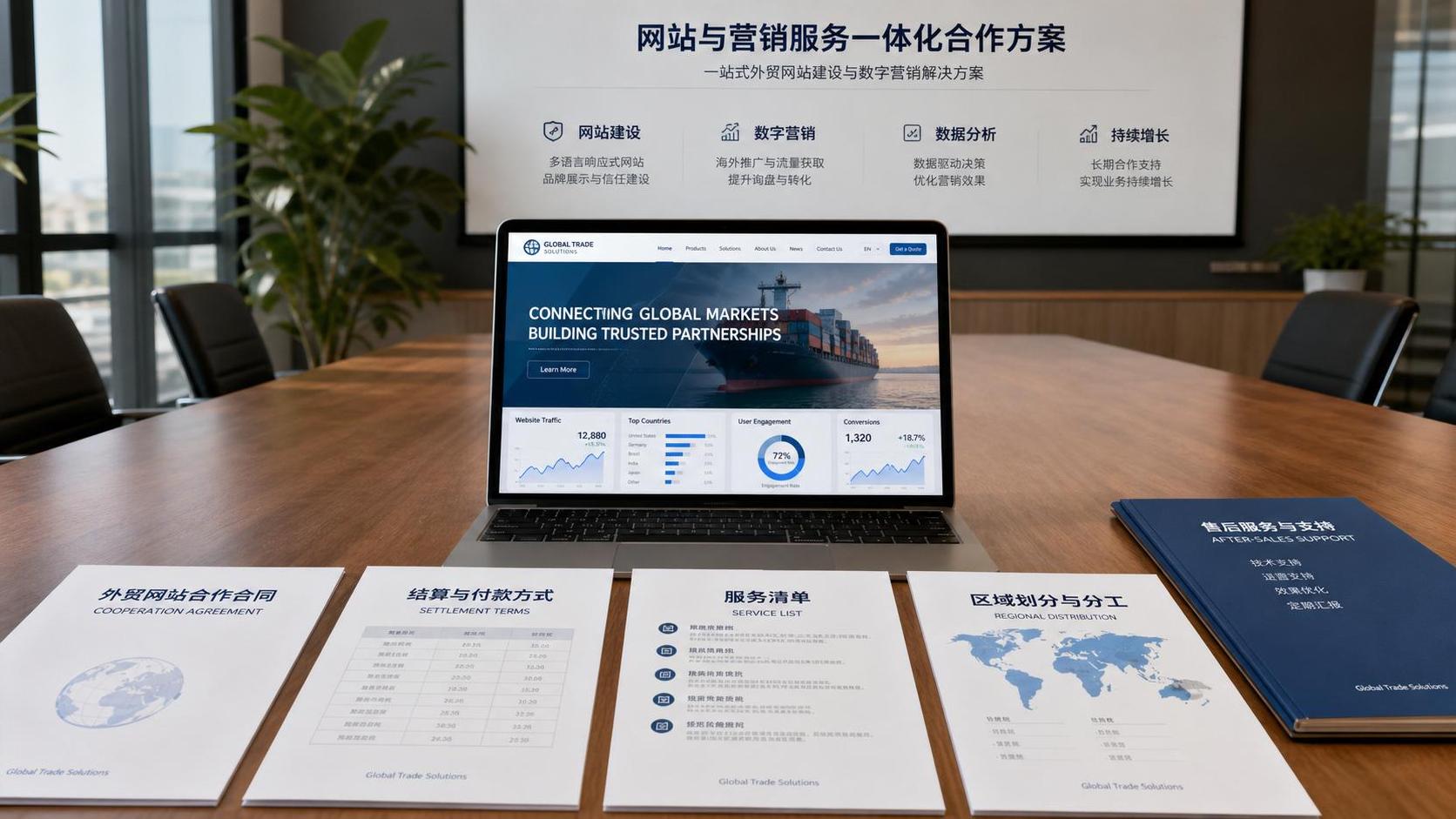
 How to Negotiate an Export Website Agency Partnership? Key Points on Settlement Methods, After-Sales Division of Responsibilities, and Regional Protection
Related Products
 EasyCamp SaaS Smart Website Marketing SystemE-Yingbao SaaS Smart Website Marketing System: AI-powered, zero-code website building. Rapidly launch multilingual independent e-commerce sites in just 10 minutes. Global server acceleration and AI-driven SEO optimization empower businesses to efficiently connect with global markets. The seamless integration of technology and user-friendly operation makes building e-commerce sites incredibly simple.
 AI+SEM Intelligent Advertising Marketing SystemAI+SEM drives intelligent ad creation, empowering full-funnel precision advertising marketing. The system automatically generates weekly/monthly reports, AI recommends keywords and target countries, monitors core metrics in real-time with intelligent alerts, and enables one-click high-conversion ad solutions to help quickly acquire customers and improve ROI.
 AI+SEO Dual Engine Optimization ServiceEasyWin AI+SEO Dual Engine Optimization System leverages AI-powered keyword mining, content generation, and comprehensive technical optimization to help foreign trade enterprises acquire high-quality organic traffic, significantly improving search rankings and conversion rates.
 AI+SNS Social Media Marketing SystemYingbao AI+SNS Social Media Marketing System - Precision social capture for the social media era. Supports one-click content synchronization across major platforms like Facebook and LinkedIn. AI intelligently rewrites posts for enhanced relevance. 24/7 AI customer service and user profiling analysis empower businesses to efficiently expand into global markets.
 AI+SEO营销解决方案易营宝AI+SEO营销解决方案,通过AI批量写作、智能生成TDK、精准关键词扩词等功能,全面优化网站SEO效果,提升流量与转化率。助力企业构建高效智能网站新生态。
 AI+SEM Advertising Marketing SolutionsAI+SEM Advertising Marketing Solution leverages AI technology to deeply empower SEM ad campaigns. It automatically generates weekly/monthly reports using AI, presenting account data across multiple dimensions for comprehensive insights into campaign performance and trends. The system precisely recommends keywords and target countries, intelligently generates high-conversion ad copy, and enables one-click activation of efficient campaign plans to help businesses rapidly acquire customers. Simultaneously, it monitors core metrics in real time, intelligently identifies abnormal fluctuations, and issues timely alerts to ensure stable, high-return advertising results.
 Domain Name ServicesEasyWin provides professional domain name services, including intelligent queries, one-stop registration, brand protection, and full lifecycle management, helping businesses build a digital brand image.
 EasyOperate B2C Cross-Border E-Commerce Platform & Independent WebsiteEasyStore B2C Cross-border E-commerce Independent Store is an intelligent website building and cross-border e-commerce integrated solution independently developed by EasyStore Information Technology (Beijing) Co., Ltd. The system is specially designed for small and medium-sized as well as large export enterprises, integrating 'website building, operation, marketing, advertising, and conversion' into one, helping enterprises quickly establish cross-border e-commerce independent stores to achieve brand globalization and global sales growth.
The platform supports multiple languages, multiple currencies, and multi-channel marketing, with built-in AI intelligent translation and SEO optimization systems, suitable for mainstream markets such as Southeast Asia, Europe and America, Latin America, and the Middle East, assisting Chinese manufacturing enterprises in efficiently deploying international e-commerce strategies. SSL证书易营宝提供专业SSL安全证书服务,包括单域名和泛域名证书,确保网站数据传输加密、身份验证和完整性保护,助力企业建立安全可信的在线业务环境。









