









- How Can a Brand Updates Page Be Made More SEO-Friendly? Analysis of Update Frequency, Content Structure, and Internal Linking StrategyJun 28, 2026View details
- What stages does the cross-border services ecosystem include? How do website building, promotion, payment, and compliance work togetherJun 22, 2026View details
- How will email marketing costs change in 2026Jun 22, 2026View details
- The China-US tariff arrangement has reached a preliminary consensus, and the trade association will be establishedJun 15, 2026View details
- Should overseas brand marketing start with ads or contentJun 21, 2026View details
- What determines B2C cross-border e-commerce website development costs? A breakdown of features, interfaces, and deployment methodsJun 17, 2026View details
How to Find Suppliers for a No-Code Project Partner Program? Evaluation Models, Delivery, and Risk Points
How to Find Suppliers for a No-Code Project Franchise? Look at the Model First, Then Delivery, and Finally Risk
When developing a no-code project franchise business, how should suppliers be found and evaluated? The key is not only price, but also model fit, delivery capability, and potential risks. This article focuses on supplier selection for no-code project franchises, helping agents avoid pitfalls and launch faster.
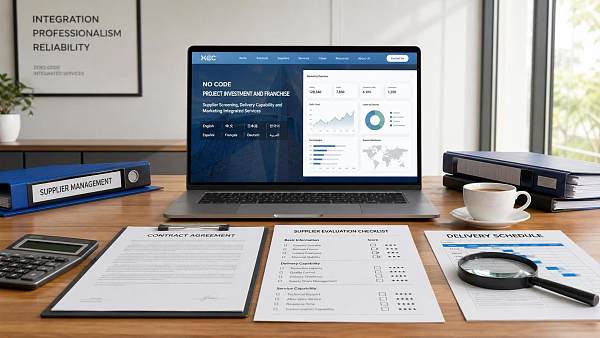
Over the past two years, no-code project franchises have become increasingly popular. The reason is straightforward: enterprise digitalization demand is still expanding, but many clients do not want to bear high development costs and long delivery cycles.
For channel partners, the appeal of a no-code project franchise lies in fast startup, a broad product line, and strong reusability. It can be used to sell websites and can also extend into SEO, advertising, online stores, and overseas marketing services.
But the problems are also very real. Many suppliers in the market seem capable at first glance, but after actual cooperation begins, common pain points often concentrate on template homogenization, unstable delivery, difficult-to-use backends, slow after-sales support, and limited room for secondary sales.
Therefore, when looking for a supplier for a no-code project franchise, the first step is not to discuss the franchise fee, but to determine whether this model truly fits your client structure, sales capabilities, and regional market.
First Determine: Which No-Code Project Franchise Model Better Fits the Current Business
There are generally three common cooperation models for no-code project franchises. Different models place completely different requirements on suppliers. If the wrong model is chosen, it is very difficult to make up for it later.
1. Platform Reseller Model
This model is more suitable for teams that are just getting started. The supplier provides a standardized platform, demo materials, sales support, and basic delivery, while the channel partner is mainly responsible for customer acquisition and deal closing.
Its advantages are quick onboarding and low upfront investment. The challenges lie in profit margins and brand differentiation, which often depend heavily on the supplier’s product capabilities and service responsiveness.
2. Regional Agency Model
This no-code project franchise model usually involves regional authorization, annual targets, training support, and a more complete sales system.
If there are stable local customer resources, the regional agency model makes it easier to build long-term revenue. However, the prerequisite is that the supplier must have mature products, standardized processes, and continuous iteration capabilities.
3. Customized Co-Creation Model
This is suitable for teams that already have an industry-specific customer base. For example, service providers specializing in foreign trade, manufacturing, cross-border e-commerce, or global brand expansion need stronger industry fit and solution packaging capabilities.
This type of cooperation places more emphasis on whether the supplier can provide integrated capabilities such as multilingual website building, SEO optimization, advertising, and social media operations, rather than just a website-building backend.
If customer needs have already evolved from “building a website” to “acquiring customers after the website is built,” then a no-code project franchise supplier should not be evaluated only by page templates, but also by the subsequent marketing closed loop.
How to Find Suppliers: Quickly Narrow Down the Scope from Four Dimensions
There are many suppliers in the market offering no-code project franchise cooperation, but those truly worth entering into in-depth discussions with usually need to pass four rounds of screening.
First, Look at the Company’s Core Capabilities
Prioritize factors such as years in business, technical team, level of in-house development, number of customers, and industry reputation. Whether the platform is a white-label assembly or a self-developed system makes a major difference in later-stage stability.
For service providers like 易营宝 that have long focused on integrating websites and marketing, the advantage lies not only in providing website building, but also in connecting SEO, advertising, social media, and AI optimization.
Second, See Whether the Product Can Actually Be Sold
Many no-code project franchise suppliers appear to offer complete products, but their demo performance is ordinary, and customers lose interest as soon as they try them. If the product cannot sell during the sales stage, even the best franchise policy later will be meaningless.
It is recommended to focus on three key points: frontend presentation, backend operation logic, and whether the product supports real business scenarios. This is especially important for high-frequency functions such as multilingual sites, inquiries, online stores, and landing pages.
Third, Assess Whether It Has Sustainable Monetization Capability
A good no-code project franchise supplier will not only bring one-time website-building revenue, but can also generate long-term service income from renewals, maintenance, SEO, advertising management, content operations, and more.
This is also one of the most easily overlooked points in purchasing decisions. A low franchise fee may look attractive on the surface, but if repeat purchases are weak and renewal rates are low, the overall return may be lower than that of a solution with a higher unit price but sustainable operations.
Fourth, Check Whether Cooperation Support Is Actually Implemented
When looking for a no-code project franchise supplier, do not just listen to sales pitches. Break down the support content and review it item by item, such as pre-sales meeting support, training frequency, solution templates, delivery collaboration, after-sales response, and upgrade mechanisms.
Truly reliable suppliers will put these items into processes, or even into contracts, rather than leaving them as verbal promises.
Key Evaluation: Delivery Capability Determines Whether the Business Can Run Long Term
For a no-code project franchise, signing the contract is only the beginning. Whether the project can go live smoothly, pass acceptance on time, and support secondary transactions all depends on delivery.
During actual screening, you can ask suppliers directly based on the table below.
If a supplier gives vague answers regarding delivery milestones, training processes, and after-sales responsibilities, it is generally safe to conclude that the probability of disputes in subsequent cooperation will not be low.
Common Risk Points: Low Price Does Not Necessarily Save Money, and More Policies Do Not Necessarily Mean More Value
When purchasing a no-code project franchise, the most common misconception is focusing only on cost. In reality, what truly affects revenue is often several hidden risks.
- Low-price acquisition, high-price renewals. The first year is cheap, but hosting, plugins, licensing, and maintenance are later marked up layer by layer.
- The demo looks great, but delivery is downgraded. The showcase site is attractive, while actual client sites can only use basic templates.
- Too many support promises, but insufficient implementation. Everything is promised during the franchise recruitment stage, but response speed clearly slows after formal cooperation begins.
- Only website building, no marketing. After the client site goes live, there is no traffic solution, affecting both repeat purchases and reputation.
- Difficult data migration. If you want to change suppliers later, the website and content are hard to migrate, and the business becomes locked into the platform.
Therefore, when evaluating a no-code project franchise supplier, you should not only ask “how much does it cost,” but also “what is included in this cost,” “how will fees be charged later,” and “who bears the risk.”
A More Stable Selection Approach: Prioritize Suppliers That Integrate Website and Marketing Services
Judging from recent changes, customers purchasing websites are increasingly less likely to buy only a page system. A clearer signal is that customers care more about customer acquisition, conversion, and subsequent growth.
This also means that if a no-code project franchise supplier only provides website-building tools, competition will become increasingly intense. What truly has long-term value is an integrated solution combining websites and marketing services.
Platforms like 易营宝 are essentially not single-point tools, but complete chains built around AI intelligent website building, multilingual official websites, cross-border online stores, Google SEO, advertising, overseas social media, and GEO optimization.
For no-code project franchise partners, the value of this type of supplier is more practical: it is easier to package and sell, easier to generate renewals, and easier to enter high-ticket industries such as foreign trade, manufacturing, and global brand expansion.
Implementation Advice: Take These Five Steps First When Screening Suppliers
- First review your own customer structure and clarify your key industries and customer spending range.
- Shortlist 3 to 5 no-code project franchise suppliers for comparison.
- Request a demonstration of the real backend and review actual delivery cases.
- Write the fee structure, after-sales boundaries, and upgrade rules into the cooperation documents.
- Start with a small order as a trial run before deciding whether to expand the cooperation.
Overall, the answer to how to find a no-code project franchise supplier is not found in a single quotation sheet, but in four areas: model fit, delivery stability, marketing extension, and risk transparency.
Clarify these core questions first, and then discuss franchise policies and purchasing costs. This will greatly increase the certainty of cooperation and make it easier to turn the project into a truly long-term business.
Related Articles
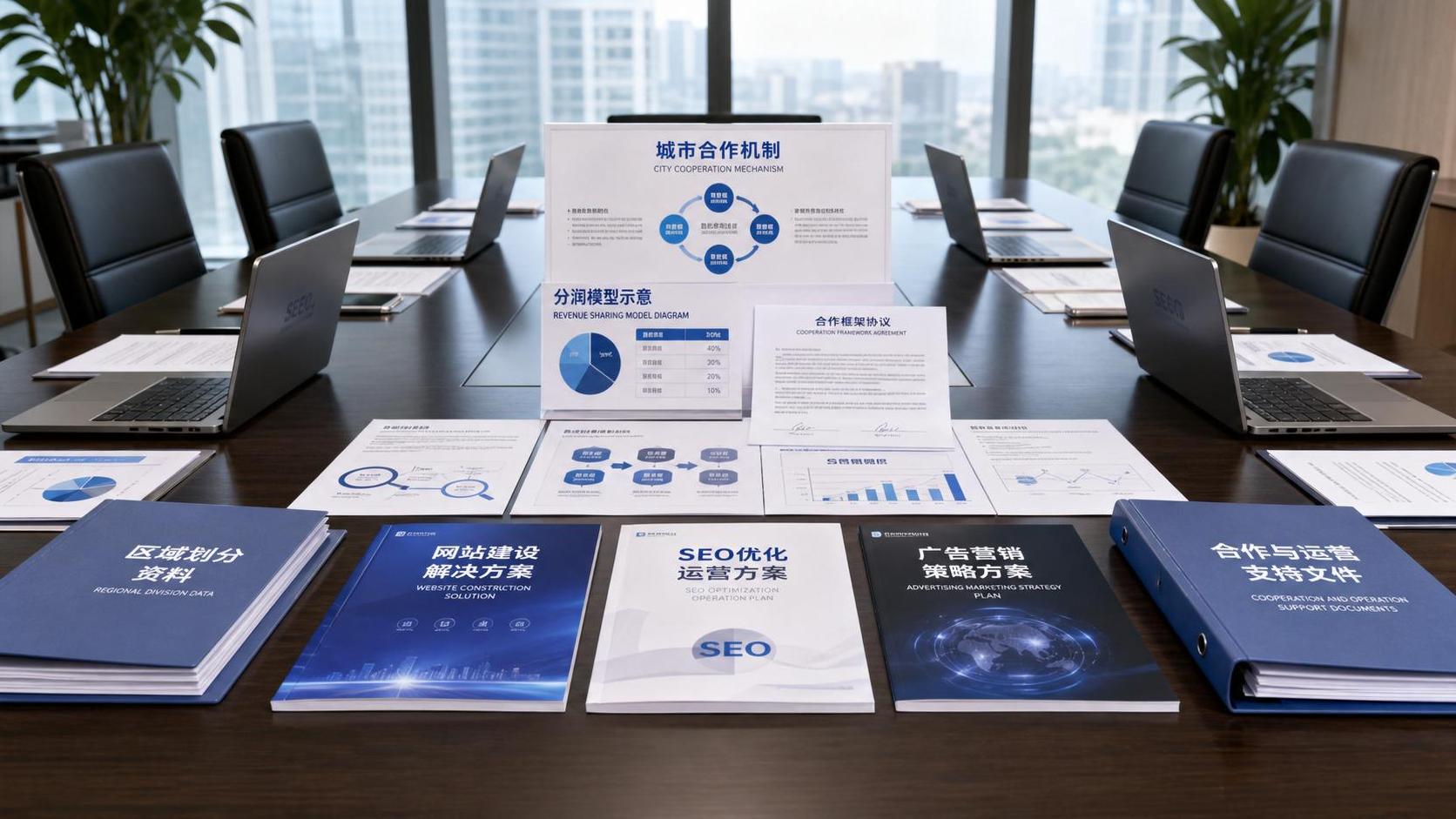
 How to design a cooperation mechanism for recruiting city partners? Profit sharing, support, and regional protection plan
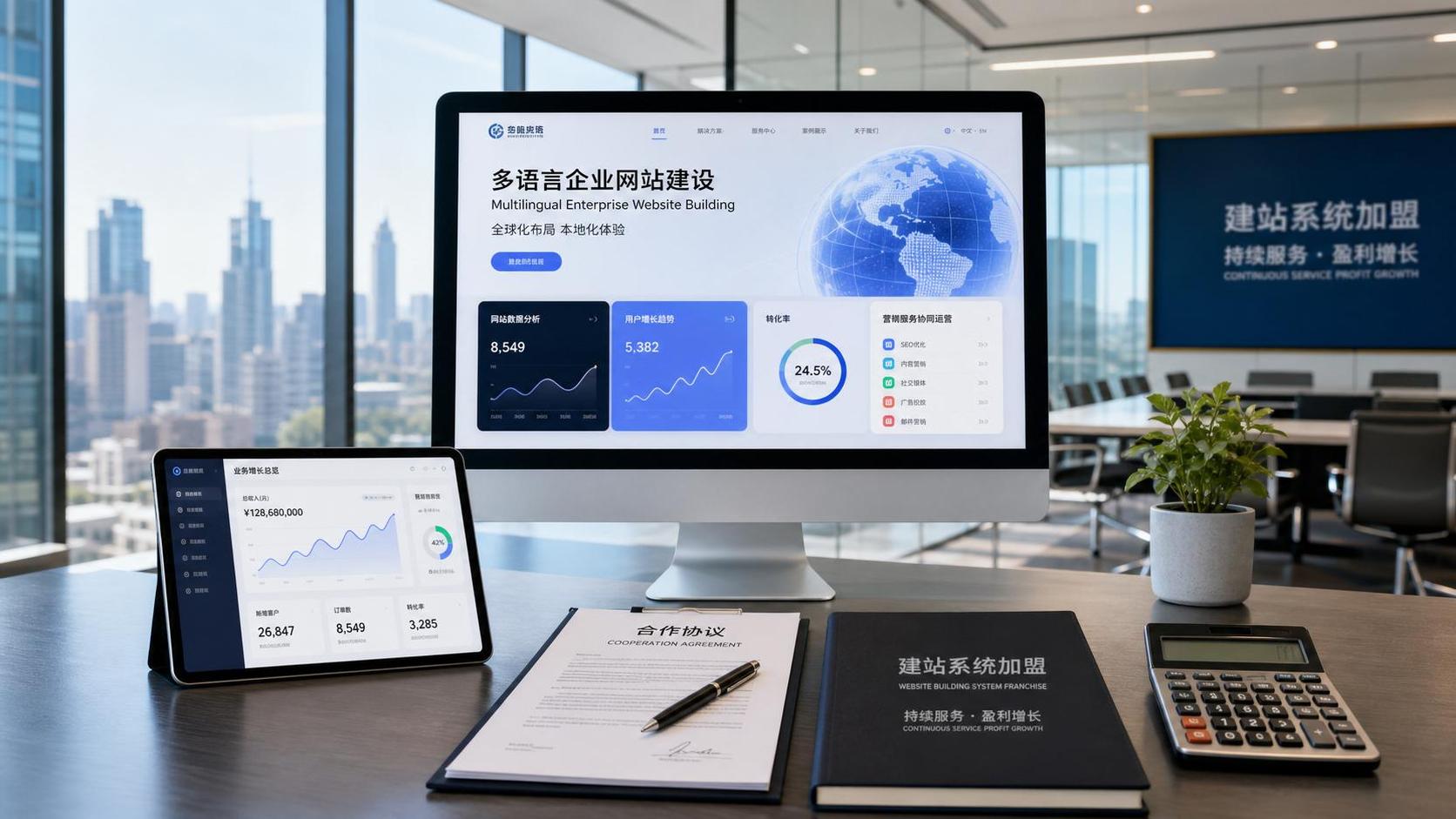
 Is a website-building system franchise worth it? Analysis of profit models, support policies, and payback period
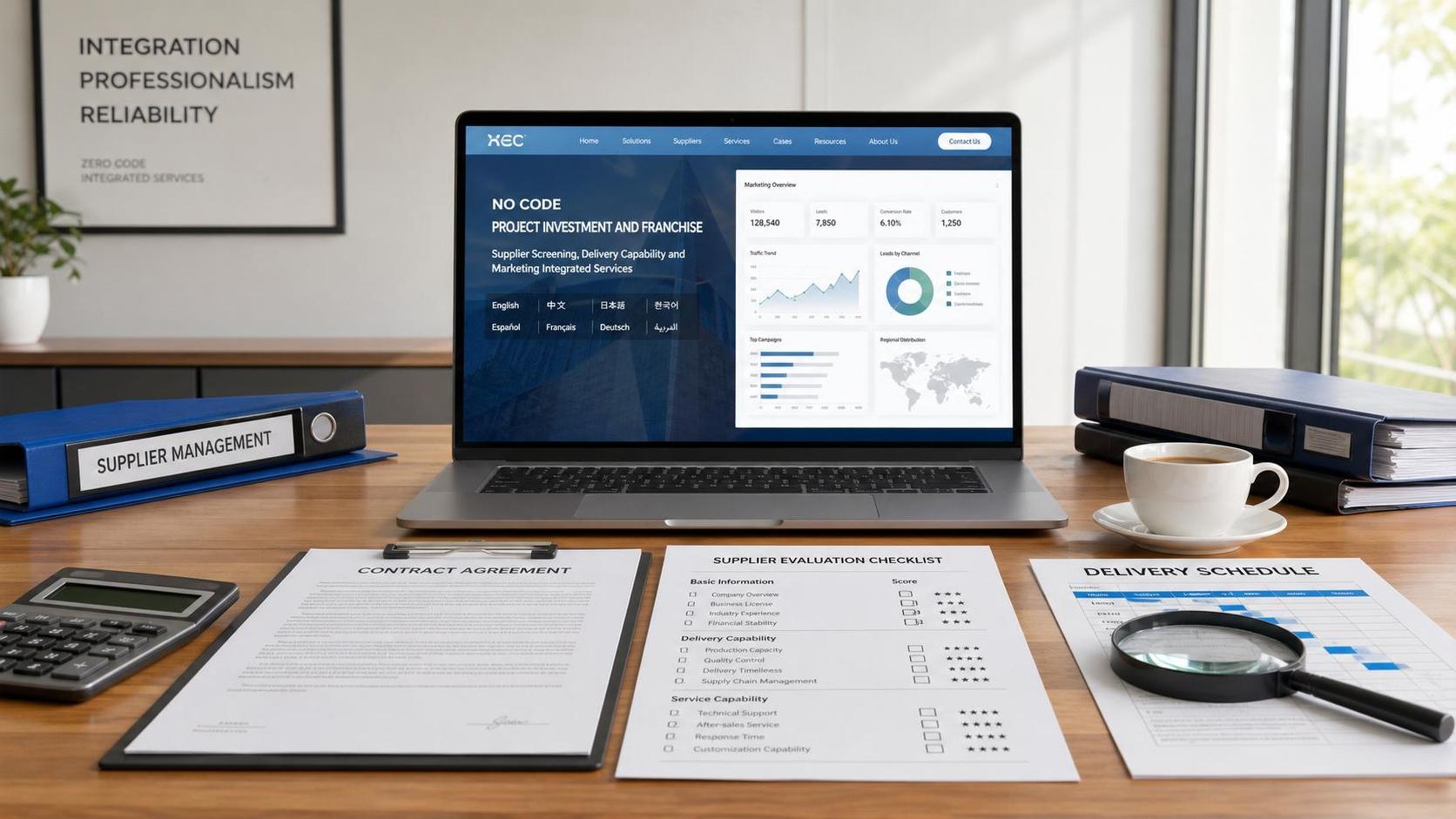
 How to Find Suppliers for a No-Code Project Partner Program? Evaluation Models, Delivery, and Risk Points
Related Products
 EasyCamp SaaS Smart Website Marketing SystemE-Yingbao SaaS Smart Website Marketing System: AI-powered, zero-code website building. Rapidly launch multilingual independent e-commerce sites in just 10 minutes. Global server acceleration and AI-driven SEO optimization empower businesses to efficiently connect with global markets. The seamless integration of technology and user-friendly operation makes building e-commerce sites incredibly simple.
 AI+SEM Intelligent Advertising Marketing SystemAI+SEM drives intelligent ad creation, empowering full-funnel precision advertising marketing. The system automatically generates weekly/monthly reports, AI recommends keywords and target countries, monitors core metrics in real-time with intelligent alerts, and enables one-click high-conversion ad solutions to help quickly acquire customers and improve ROI.
 AI+SEO Dual Engine Optimization ServiceEasyWin AI+SEO Dual Engine Optimization System leverages AI-powered keyword mining, content generation, and comprehensive technical optimization to help foreign trade enterprises acquire high-quality organic traffic, significantly improving search rankings and conversion rates.
 AI+SNS Social Media Marketing SystemYingbao AI+SNS Social Media Marketing System - Precision social capture for the social media era. Supports one-click content synchronization across major platforms like Facebook and LinkedIn. AI intelligently rewrites posts for enhanced relevance. 24/7 AI customer service and user profiling analysis empower businesses to efficiently expand into global markets.
 AI+SEO营销解决方案易营宝AI+SEO营销解决方案,通过AI批量写作、智能生成TDK、精准关键词扩词等功能,全面优化网站SEO效果,提升流量与转化率。助力企业构建高效智能网站新生态。
 AI+SEM Advertising Marketing SolutionsAI+SEM Advertising Marketing Solution leverages AI technology to deeply empower SEM ad campaigns. It automatically generates weekly/monthly reports using AI, presenting account data across multiple dimensions for comprehensive insights into campaign performance and trends. The system precisely recommends keywords and target countries, intelligently generates high-conversion ad copy, and enables one-click activation of efficient campaign plans to help businesses rapidly acquire customers. Simultaneously, it monitors core metrics in real time, intelligently identifies abnormal fluctuations, and issues timely alerts to ensure stable, high-return advertising results.
 Domain Name ServicesEasyWin provides professional domain name services, including intelligent queries, one-stop registration, brand protection, and full lifecycle management, helping businesses build a digital brand image.
 EasyOperate B2C Cross-Border E-Commerce Platform & Independent WebsiteEasyStore B2C Cross-border E-commerce Independent Store is an intelligent website building and cross-border e-commerce integrated solution independently developed by EasyStore Information Technology (Beijing) Co., Ltd. The system is specially designed for small and medium-sized as well as large export enterprises, integrating 'website building, operation, marketing, advertising, and conversion' into one, helping enterprises quickly establish cross-border e-commerce independent stores to achieve brand globalization and global sales growth.
The platform supports multiple languages, multiple currencies, and multi-channel marketing, with built-in AI intelligent translation and SEO optimization systems, suitable for mainstream markets such as Southeast Asia, Europe and America, Latin America, and the Middle East, assisting Chinese manufacturing enterprises in efficiently deploying international e-commerce strategies. SSL证书易营宝提供专业SSL安全证书服务,包括单域名和泛域名证书,确保网站数据传输加密、身份验证和完整性保护,助力企业建立安全可信的在线业务环境。









