









- How Can a Brand Updates Page Be Made More SEO-Friendly? Analysis of Update Frequency, Content Structure, and Internal Linking StrategyJun 28, 2026View details
- What stages does the cross-border services ecosystem include? How do website building, promotion, payment, and compliance work togetherJun 22, 2026View details
- How will email marketing costs change in 2026Jun 22, 2026View details
- The China-US tariff arrangement has reached a preliminary consensus, and the trade association will be establishedJun 15, 2026View details
- Should overseas brand marketing start with ads or contentJun 21, 2026View details
- What determines B2C cross-border e-commerce website development costs? A breakdown of features, interfaces, and deployment methodsJun 17, 2026View details
Is a website-building system franchise worth it? Analysis of profit models, support policies, and payback period
Website Building System Franchise: Are You Selling Websites, or Sustainable Growth Capability?

Website building system franchising has indeed become very popular in recent years, but whether it is worth doing cannot be judged only by surface-level demand. What truly determines success or failure is often whether what you obtain is not just a website building tool, but a complete set of replicable customer acquisition and delivery capabilities.
In the real market, customers are no longer satisfied with simply “building an official website”. They care more about whether the website can be found in search, whether it can receive advertising traffic, and whether it can generate inquiries or orders. For this reason, the room for simply selling webpage production is becoming increasingly narrow, while integrated website + marketing services have become a more stable direction.
If the headquarters has a mature SaaS system, SEO capabilities, advertising capabilities, and a localized service mechanism, then the value of a website building system franchise will be much higher. Simply put, you are not selling a one-time delivery, but participating in the customer’s long-term digital operations.
What Kind of Website Building System Franchise Has More Realistic Profit Potential?
Many people initially ask whether a website building system franchise makes money by selling templates. In fact, the more common situation is that profit comes from a combination of “system subscription + website building services + marketing managed operations + value-added modules”, rather than from a single standalone product.
Take overseas expansion business as an example. Customer needs usually appear in a connected sequence: first building a multilingual website, then doing Google SEO, followed by possible advertising campaigns, social media operations, and even extending to AI search visibility optimization. As long as the system is comprehensive enough, the lifecycle value of a single customer will be significantly extended.
The thinking behind platforms such as 易营宝 is not merely to provide a website building backend, but to integrate cloud-based intelligent website building, cross-border e-commerce stores, AI advertising marketing, and AI+SEO/GEO optimization into a closed loop. This type of website building system franchise is more likely to generate repeat purchases and is more suitable for continuous services, rather than only competing for low-price deals.
When evaluating profit potential, it is recommended to first look at three questions: whether customers have continuous budgets, whether services can be delivered in a standardized way, and whether renewals have a natural reason to occur. These three questions are more critical than the franchise fee itself.
Where Are the Common Profit Sources Usually Concentrated?
- Website building fees: suitable for quick payment collection in the early stage, but single-transaction revenue is limited.
- Annual system fees or licensing fees: helpful for forming stable cash flow.
- SEO and advertising managed operations: higher average order value and longer renewal cycles.
- Value-added modules such as multilingual features, e-commerce stores, and inquiry tools: suitable for increasing profit per customer.
- Training, coaching, and industry solutions: suitable for building differentiated services.
How Should the Payback Period Usually Be Viewed, and How Long Is Reasonable?
There is no unified answer for the payback period, but a relatively accurate judgment can be made through several key variables: initial investment, customer acquisition speed, average order value, renewal rate, and whether the headquarters helps with closing deals and delivery.
If a website building system franchise only provides a backend account, and all early-stage leads, training, and pre-sales solutions must be explored independently, then the payback period will usually be extended. Conversely, if the headquarters can provide standardized sales materials, case support, technical training, delivery collaboration, and marketing product combinations, the first deal is often closed much faster.
From the perspective of actual business logic, 6 to 12 months is a relatively common observation range. This does not mean that the investment must be fully recovered within this period, but that three signals should be seen: the ability to continuously win orders, the emergence of renewals, and the establishment of referrals.
If at least three of the above four items hold true, then the payback logic of a website building system franchise is usually valid. Otherwise, the model itself needs to be re-examined, rather than focusing only on price negotiation.
Headquarters Support Policies: Which Ones “Look Abundant”, and Which Ones Are Truly Useful?
Many franchise projects emphasize training, support, materials, and system openness in their promotion, but when it comes to actual implementation, the results vary greatly. Whether a website building system franchise can succeed does not depend on how many support items are listed, but on whether these supports can directly shorten the path to signing contracts and completing delivery.
More practical support is usually concentrated in four categories: sales support, technical support, case support, and operations support. Especially for integrated website + marketing service businesses, customers often ask about SEO rules, multilingual site structure, advertising landing page logic, and inquiry conversion paths. These issues cannot be solved by sales scripts alone.
This is why the background of 易营宝 is worth referencing. Founded in 2013 and headquartered in Beijing, the company has long focused on intelligent website building, SEO optimization, social media marketing, and advertising campaigns. It has served more than 100,000 enterprises, indicating that it is closer to having mature platform-based capabilities rather than being a single-tool provider.
For a website building system franchise, the value of this type of platform lies in being able to sell solutions at the front end while having support at the back end. Especially in scenarios such as multilingual official websites, foreign trade marketing websites, cross-border e-commerce stores, and overseas promotion, delivery experience itself is a competitive barrier.
Before Signing, It Is Recommended to Focus on Confirming These Support Details
- Whether reusable industry cases are provided, rather than generic demo sites.
- Whether there is a joint pre-sales or accompanied-visit mechanism to help secure the first batch of orders.
- Whether technical ticket response is clearly defined and whether there is a commitment on response time.
- Whether services such as SEO, advertising, and social media can be jointly delivered.
- Whether newly added features, system upgrades, and training remain continuously available.
Which Business Scenarios Are Suitable for a Website Building System Franchise, and Which Situations Are Not?
This question is very important. Not every team is suitable for operating a website building system franchise. The teams that are truly more likely to make it work are often those that have already been involved in enterprise services, marketing services, foreign trade services, or digital transformation businesses, because their existing customer base can be directly converted.
More suitable scenarios include: local customers needing official website upgrades, enterprises beginning overseas promotion, existing advertising clients wanting to build independent websites, or teams that already have content, design, and sales capabilities and want to complete their system and delivery backend.
The unsuitable situations are also very clear. For example, only wanting to make quick money and being unwilling to provide continuous services; having no enterprise customer resources at all; lacking a basic understanding of delivery logic for websites, SEO, advertising, and related services; or being able to close deals only through low pricing. In these situations, a website building system franchise can easily fall into a state of “being busy with each order signed, but unable to retain profits”.
It should be noted that customers now place increasing importance on results. A beautiful website is only the starting point. Whether it can bring exposure, inquiries, and conversions is the real foundation for renewals. In other words, a website building system franchise is more like a long-term operational project than a one-time project transaction.
If You Are Preparing to Enter the Market, How Can You Judge Whether You Have Chosen the Right Option?
A more prudent way to judge is not to first ask “whether the franchise fee is expensive”, but to first see whether this model can be replicated. If it can be replicated, a slightly higher price may still be worthwhile; if it cannot be replicated, even a low price will become a cost.
The judgment process can be set into four steps. First look at product completeness, then support depth, then market fit, and finally the payment collection model. Especially in the integrated website + marketing services track, a single website building capability is no longer enough; system, traffic, and conversion must be evaluated together.
If a platform can provide AI intelligent website building while also supporting Google SEO, advertising campaigns, social media operations, and GEO optimization, then it has a better chance of helping you deepen customer needs. The advantage of platforms such as 易营宝, which have long focused on overseas digital marketing, lies in their complete product chain, covering the main stages from website building to customer acquisition.
Returning to the original question: is a website building system franchise worth doing? The answer is neither absolutely yes nor universally no. The key lies in whether what you obtain is a sustainably profitable business model, whether the headquarters provides real support, and whether customers are willing to keep paying for “website + marketing results”.
If you are currently in the selection stage, a more practical approach is to first clearly list local customer needs, existing sales capabilities, and the investable cycle, and then compare the system capabilities, accumulated cases, support policies, and payback logic of different platforms. Once these dimensions are clearly understood, it will be much easier to judge whether a website building system franchise is worth doing.
Related Articles
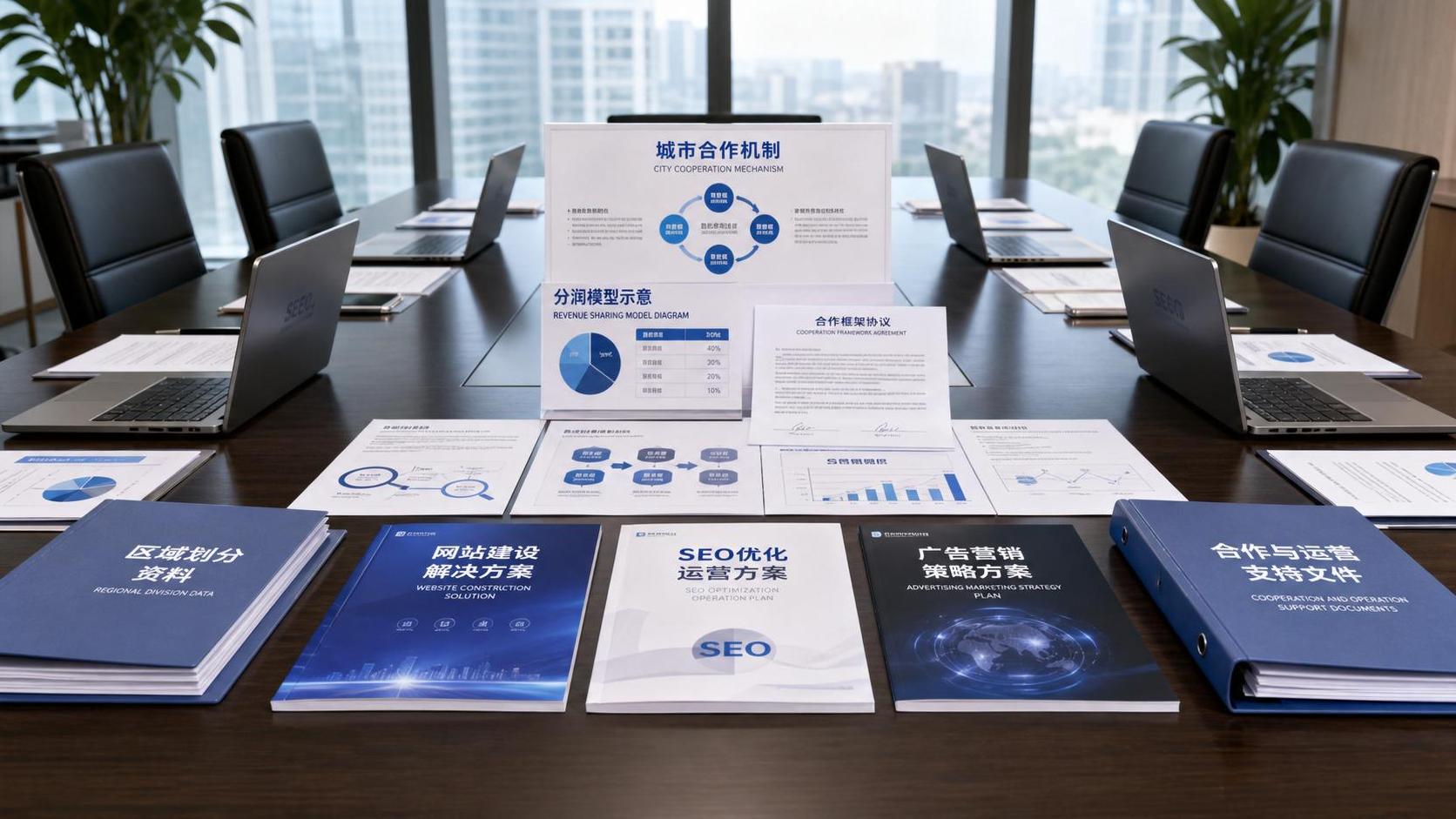
 How to design a cooperation mechanism for recruiting city partners? Profit sharing, support, and regional protection plan
 Is a website-building system franchise worth it? Analysis of profit models, support policies, and payback period
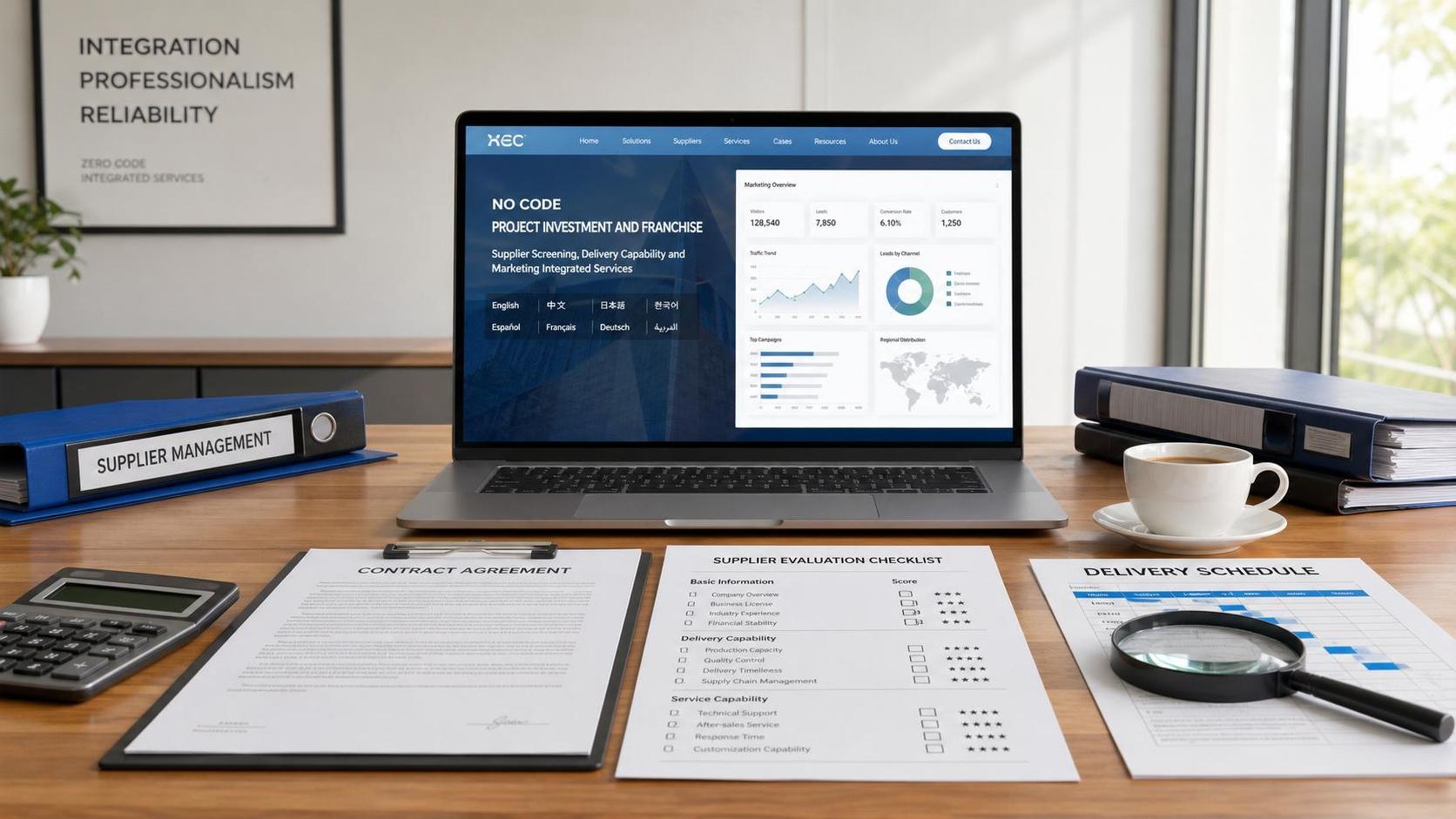
 How to Find Suppliers for a No-Code Project Partner Program? Evaluation Models, Delivery, and Risk Points

Related Products
 EasyCamp SaaS Smart Website Marketing SystemE-Yingbao SaaS Smart Website Marketing System: AI-powered, zero-code website building. Rapidly launch multilingual independent e-commerce sites in just 10 minutes. Global server acceleration and AI-driven SEO optimization empower businesses to efficiently connect with global markets. The seamless integration of technology and user-friendly operation makes building e-commerce sites incredibly simple.
 AI+SEM Intelligent Advertising Marketing SystemAI+SEM drives intelligent ad creation, empowering full-funnel precision advertising marketing. The system automatically generates weekly/monthly reports, AI recommends keywords and target countries, monitors core metrics in real-time with intelligent alerts, and enables one-click high-conversion ad solutions to help quickly acquire customers and improve ROI.
 AI+SEO Dual Engine Optimization ServiceEasyWin AI+SEO Dual Engine Optimization System leverages AI-powered keyword mining, content generation, and comprehensive technical optimization to help foreign trade enterprises acquire high-quality organic traffic, significantly improving search rankings and conversion rates.
 AI+SNS Social Media Marketing SystemYingbao AI+SNS Social Media Marketing System - Precision social capture for the social media era. Supports one-click content synchronization across major platforms like Facebook and LinkedIn. AI intelligently rewrites posts for enhanced relevance. 24/7 AI customer service and user profiling analysis empower businesses to efficiently expand into global markets.
 AI+SEO营销解决方案易营宝AI+SEO营销解决方案,通过AI批量写作、智能生成TDK、精准关键词扩词等功能,全面优化网站SEO效果,提升流量与转化率。助力企业构建高效智能网站新生态。
 AI+SEM Advertising Marketing SolutionsAI+SEM Advertising Marketing Solution leverages AI technology to deeply empower SEM ad campaigns. It automatically generates weekly/monthly reports using AI, presenting account data across multiple dimensions for comprehensive insights into campaign performance and trends. The system precisely recommends keywords and target countries, intelligently generates high-conversion ad copy, and enables one-click activation of efficient campaign plans to help businesses rapidly acquire customers. Simultaneously, it monitors core metrics in real time, intelligently identifies abnormal fluctuations, and issues timely alerts to ensure stable, high-return advertising results.
 Domain Name ServicesEasyWin provides professional domain name services, including intelligent queries, one-stop registration, brand protection, and full lifecycle management, helping businesses build a digital brand image.
 EasyOperate B2C Cross-Border E-Commerce Platform & Independent WebsiteEasyStore B2C Cross-border E-commerce Independent Store is an intelligent website building and cross-border e-commerce integrated solution independently developed by EasyStore Information Technology (Beijing) Co., Ltd. The system is specially designed for small and medium-sized as well as large export enterprises, integrating 'website building, operation, marketing, advertising, and conversion' into one, helping enterprises quickly establish cross-border e-commerce independent stores to achieve brand globalization and global sales growth.
The platform supports multiple languages, multiple currencies, and multi-channel marketing, with built-in AI intelligent translation and SEO optimization systems, suitable for mainstream markets such as Southeast Asia, Europe and America, Latin America, and the Middle East, assisting Chinese manufacturing enterprises in efficiently deploying international e-commerce strategies. SSL证书易营宝提供专业SSL安全证书服务,包括单域名和泛域名证书,确保网站数据传输加密、身份验证和完整性保护,助力企业建立安全可信的在线业务环境。









