









- What stages does the cross-border services ecosystem include? How do website building, promotion, payment, and compliance work togetherJun 22, 2026View details
- How will email marketing costs change in 2026Jun 22, 2026View details
- The China-US tariff arrangement has reached a preliminary consensus, and the trade association will be establishedJun 15, 2026View details
- Should overseas brand marketing start with ads or contentJun 21, 2026View details
- What determines B2C cross-border e-commerce website development costs? A breakdown of features, interfaces, and deployment methodsJun 17, 2026View details
- China-Morocco zero-tariff access, a breakthrough in the cost of Moroccan goods exports to ChinaJun 11, 2026View details
Is manufacturing going global still useful for websites? Brand display, lead generation channels, and customer trust analysis
The official website is not outdated; instead, it has become the hub of outbound trade information
For manufacturing companies going global, there is still a lot of debate over whether an official website is necessary. In the past two years, this has indeed become a common issue. As channels multiply and platform traffic becomes more expensive, many companies worry whether official websites have already been replaced by platform stores, social media accounts, and instant messaging tools.
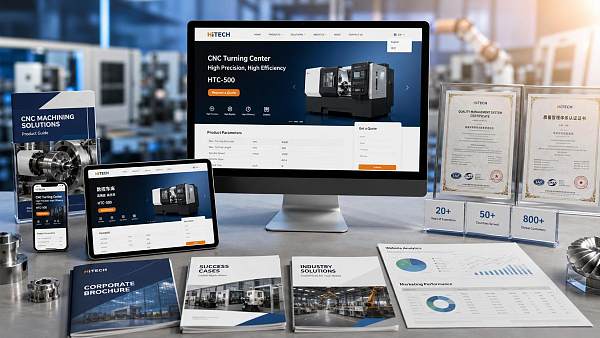
However, from the perspective of the real business chain, the official website has not lost its value. On the contrary, in a context where customer decision-making is more cautious, procurement cycles are longer, and comparison dimensions are more detailed, the official website remains the core position for manufacturing companies to carry out brand presentation, information relay, inquiry conversion, and trust building.
Simply put, platforms are more like traffic entry points, social media is more like a touchpoint tool, and the official website is the place where product capabilities, delivery standards, certification qualifications, factory strength, and service systems can be explained completely and clearly. Especially for overseas customers, a website with complete content, clear structure, and fast loading often determines whether they are willing to continue communicating.
Why manufacturing companies going global need an official website even more
Unlike consumer goods, procurement in manufacturing is usually not an instant transaction; it goes through multiple stages such as searching, comparing, verifying, requesting quotes, sampling, negotiation, and repeat purchase. The role of an official website is not merely to “have a website,” but to help potential customers reduce uncertainty at every stage.
If a company mainly produces industrial parts, equipment, raw materials, OEM or ODM, the content customers care about is often not simple. They want to see production capacity, customization capability, quality standards, export experience, case coverage, delivery assurance, and whether long-term cooperation can be maintained. Such information is often incomplete on third-party platforms, and social media is also difficult to express systematically.
In other words, the essence of an official website for manufacturing companies going global is not an online business card, but a business asset that can be searched, verified, and accumulated over time.
Three core values that an official website carries
- Brand presentation: clearly communicate factory background, technical accumulation, product system, and certification capabilities.
- Continuous customer acquisition: support Google SEO, advertising, social media traffic, and AI search traffic.
- Trust conversion: drive inquiries through case studies, FAQ, delivery processes, and contact methods.
For overseas customers, an official website is often the first round of screening
Whether many inquiries can move forward does not depend on what the salesperson said, but on what the customer found online. For overseas buyers, the official website is often the first step in verifying a supplier’s authenticity and professionalism.
A website that lacks English content, loads slowly, has vague product parameters, or incomplete contact information can easily cause customers to stop judging. In contrast, a website with standardized content, clear navigation, and mobile-friendly pages is more likely to create the first impression that “this company is worth further communication.”
From this perspective, manufacturing companies going global are not facing the question of “whether to build a website,” but the question of “whether the website can carry trust screening.”
An official website is not just a display page; it is also a landing point for multi-channel marketing
Today, overseas customer acquisition is already highly fragmented. Customers may come in through Google search, ad clicks, LinkedIn content, Facebook promotions, industry media recommendations, or even AI search result summaries. Users from different entry points ultimately need a unified and reliable landing page.
This is also why website + marketing service integration is becoming increasingly important. If website building only considers visual appeal but ignores SEO structure, ad landing logic, multilingual adaptation, and conversion paths, the official website will be difficult to truly play its role.
Yi Ying Bao Information Technology (Beijing) Co., Ltd. has long served foreign trade and brand going-global scenarios. Its core idea is not simply to build websites, but to place intelligent website building, SEO optimization, advertising, social media marketing, and AI search visibility within the same growth chain. Such websites are closer to business tools rather than static promotional brochures.
Which channels especially rely on official website relay
- Google SEO: requires stable indexing, clear structure, and continuous content accumulation.
- Google Ads: requires high-relevance landing pages to carry click costs.
- Overseas social media: requires turning content interaction into real inquiries.
- AI search entry: requires the website to have information organization capabilities that are readable, crawlable, and quotable.
Mobile experience is directly affecting inquiry quality
In the past, many manufacturing companies’ official websites were mainly designed for desktop, but now a considerable number of first visits happen on mobile devices. Customers may open the website directly on-site at exhibitions, on social media, in emails, or from search result pages. If the mobile version loads slowly, has messy layout, or has difficult-to-submit forms, traffic will be lost quickly.
Therefore, mobile optimization is not as simple as “making it responsive”; it is also related to search performance, dwell time, and conversion efficiency. Solutions like Yi Ying Bao AMP/MIP mobile intelligent website building focus on optimizing mobile access speed, search friendliness, and conversion experience together.
For example, pages based on AMP and MIP technical specifications can load faster; in some scenarios, page speed can reach 0.5 seconds, average loading efficiency can improve by 85%, while reducing bounce rate and increasing dwell time. For manufacturing companies going global, this means customers have a higher chance of seeing product content and are more willing to submit inquiries.
If a company is also involved in cross-border e-commerce, online sample payments, or multilingual product catalogs, such mobile capabilities become even more obvious. One-time editing with multi-terminal synchronization, automatic multilingual expansion, built-in CDN, and image compression essentially reduce technical burden and shift the focus back to customer acquisition and conversion.
What kind of official website is more suitable for manufacturing companies going global
Not every official website is suitable for going global. A truly valuable website usually needs to satisfy four dimensions at the same time: brand expression, search friendliness, content scalability, and sales conversion.
When judging, pay attention to the following aspects
- Whether it supports multiple languages and can organize content for different markets.
- Whether it is convenient for continuous SEO work, rather than only being able to display basic pages.
- Whether it can carry traffic from ads, social media, and search.
- Whether it has a clear inquiry path, including buttons, forms, chat, and material downloads.
- Whether it is convenient for later maintenance and avoids relying on the technical team for every content update.
If viewed from the perspective of long-term investment returns, website construction should no longer be understood as a one-time project, but as a digital asset for continuous operations. The value of an AI-driven website building and overseas marketing platform like Yi Ying Bao lies in putting website building, promotion, optimization, and data tracking into the same system logic to improve subsequent operational efficiency.
Before building a website, first make these judgments clear
Whether an official website for manufacturing companies going global is useful is usually not a simple answer of “yes” or “no”; it depends on whether the website aligns with business objectives. Before building, clarifying the judgment criteria often matters more than rushing to launch.
- First confirm the target market, whether it is North America, Europe, or Southeast Asia, because content priorities differ by market.
- First distinguish the customer acquisition model: B2B inquiries, brand presentation, or a standalone site with payment capabilities.
- First sort out the issues customers care about most, then determine the page structure and content order.
- First think through the subsequent promotion methods, then decide on the website technology and data layout.
If you also need to consider domestic and overseas mobile search ecosystems, you can also evaluate Yi Ying Bao AMP/MIP mobile intelligent website building as a dual-end solution. It is not just about speed itself, but about balancing search performance, user experience, and subsequent operational efficiency in the mobile entry points of both Google and Baidu.
From “whether to do it” to “how to do it more effectively”
For manufacturing companies going global, official websites are still useful, and their value is not only reflected on the display level. They connect brand, channels, content, search, and sales, and are one of the most stable parts of the entire overseas marketing system.
What really deserves attention is not whether a website exists, but whether it can be found, understood, trusted, and continuously operated. Once these issues are clarified, and the right solution is chosen based on your products, market, and budget, the official website can shift from a cost item to a growth driver.
The next step is to first organize the completeness of the existing official website, mobile experience, inquiry path, and search foundation, and then conduct a systematic evaluation based on actual export goals. This kind of judgment is often closer to business results than simply comparing website prices.
Related Articles
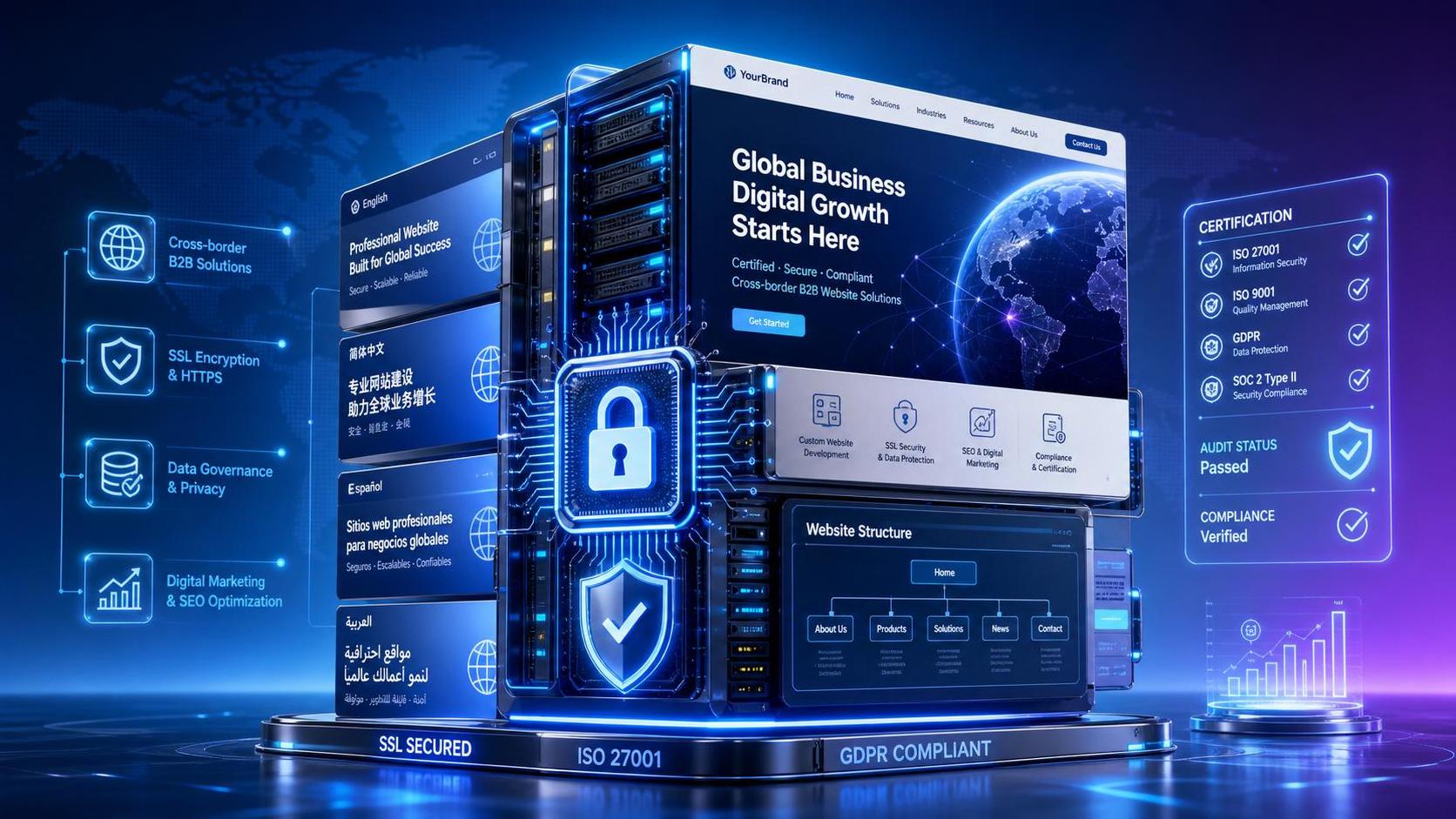
 Southeast Asia's five countries launch DTSC certification, Chinese enterprise website service providers enter the first batch of evaluation partners
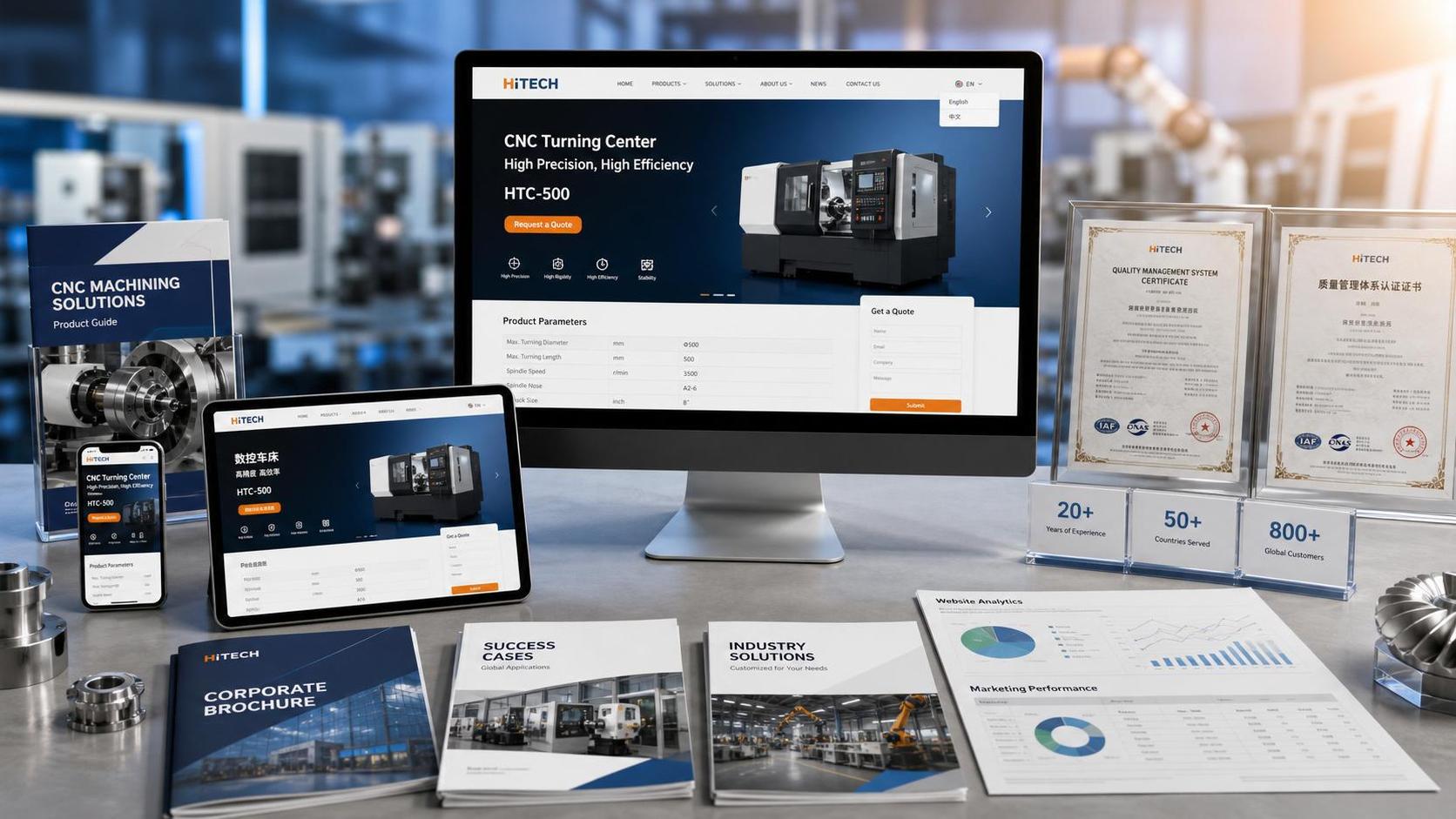
 Is manufacturing going global still useful for websites? Brand display, lead generation channels, and customer trust analysis
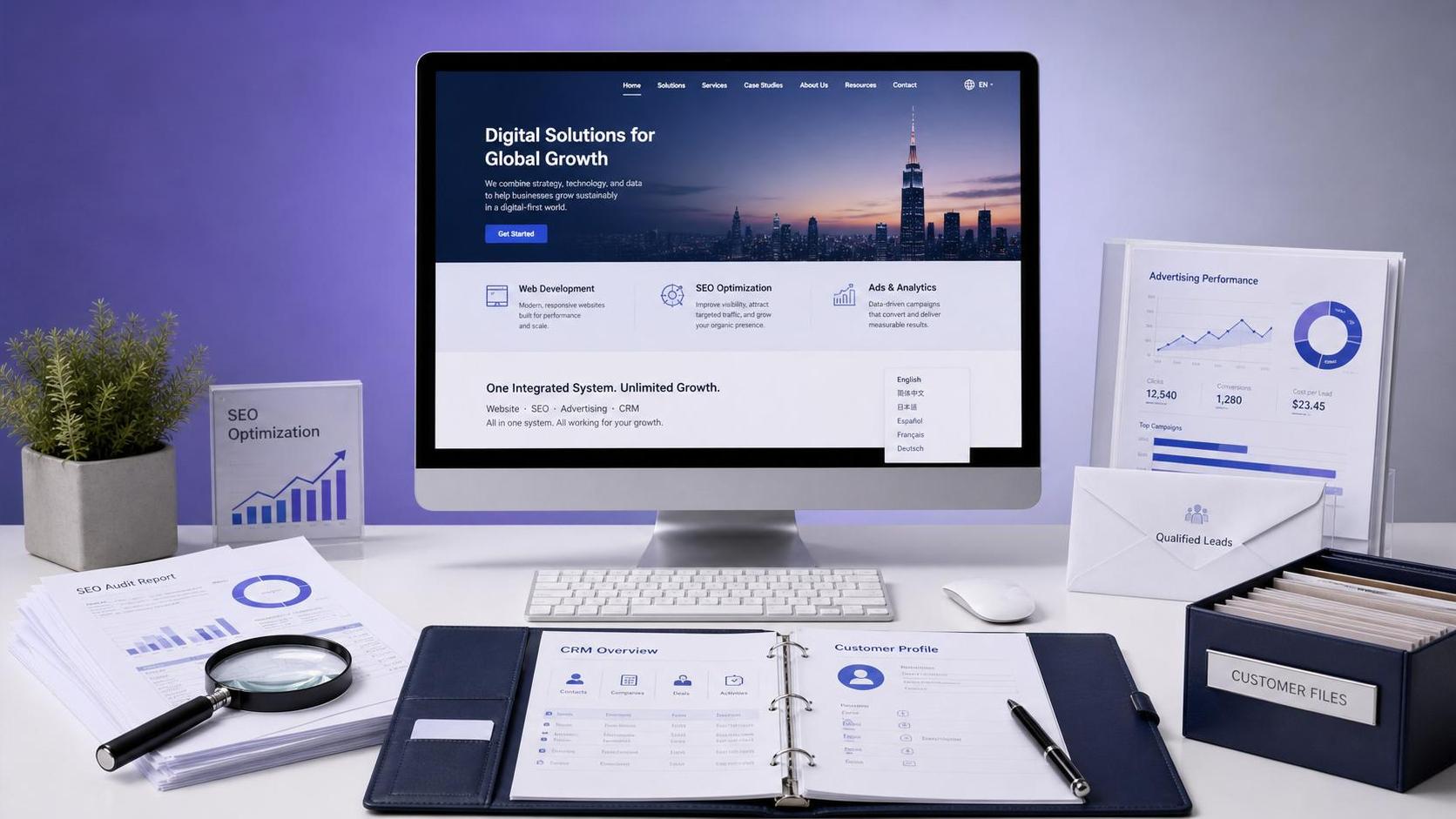
 What modules are included in a foreign trade website solution? How do website building, SEO, advertising, and CRM connect?
Related Products
 EasyCamp SaaS Smart Website Marketing SystemE-Yingbao SaaS Smart Website Marketing System: AI-powered, zero-code website building. Rapidly launch multilingual independent e-commerce sites in just 10 minutes. Global server acceleration and AI-driven SEO optimization empower businesses to efficiently connect with global markets. The seamless integration of technology and user-friendly operation makes building e-commerce sites incredibly simple.
 AI+SEM Intelligent Advertising Marketing SystemAI+SEM drives intelligent ad creation, empowering full-funnel precision advertising marketing. The system automatically generates weekly/monthly reports, AI recommends keywords and target countries, monitors core metrics in real-time with intelligent alerts, and enables one-click high-conversion ad solutions to help quickly acquire customers and improve ROI.
 AI+SEO Dual Engine Optimization ServiceEasyWin AI+SEO Dual Engine Optimization System leverages AI-powered keyword mining, content generation, and comprehensive technical optimization to help foreign trade enterprises acquire high-quality organic traffic, significantly improving search rankings and conversion rates.
 AI+SNS Social Media Marketing SystemYingbao AI+SNS Social Media Marketing System - Precision social capture for the social media era. Supports one-click content synchronization across major platforms like Facebook and LinkedIn. AI intelligently rewrites posts for enhanced relevance. 24/7 AI customer service and user profiling analysis empower businesses to efficiently expand into global markets.
 AI+SEO营销解决方案易营宝AI+SEO营销解决方案,通过AI批量写作、智能生成TDK、精准关键词扩词等功能,全面优化网站SEO效果,提升流量与转化率。助力企业构建高效智能网站新生态。
 AI+SEM Advertising Marketing SolutionsAI+SEM Advertising Marketing Solution leverages AI technology to deeply empower SEM ad campaigns. It automatically generates weekly/monthly reports using AI, presenting account data across multiple dimensions for comprehensive insights into campaign performance and trends. The system precisely recommends keywords and target countries, intelligently generates high-conversion ad copy, and enables one-click activation of efficient campaign plans to help businesses rapidly acquire customers. Simultaneously, it monitors core metrics in real time, intelligently identifies abnormal fluctuations, and issues timely alerts to ensure stable, high-return advertising results.
 Domain Name ServicesEasyWin provides professional domain name services, including intelligent queries, one-stop registration, brand protection, and full lifecycle management, helping businesses build a digital brand image.
 EasyOperate B2C Cross-Border E-Commerce Platform & Independent WebsiteEasyStore B2C Cross-border E-commerce Independent Store is an intelligent website building and cross-border e-commerce integrated solution independently developed by EasyStore Information Technology (Beijing) Co., Ltd. The system is specially designed for small and medium-sized as well as large export enterprises, integrating 'website building, operation, marketing, advertising, and conversion' into one, helping enterprises quickly establish cross-border e-commerce independent stores to achieve brand globalization and global sales growth.
The platform supports multiple languages, multiple currencies, and multi-channel marketing, with built-in AI intelligent translation and SEO optimization systems, suitable for mainstream markets such as Southeast Asia, Europe and America, Latin America, and the Middle East, assisting Chinese manufacturing enterprises in efficiently deploying international e-commerce strategies. SSL证书易营宝提供专业SSL安全证书服务,包括单域名和泛域名证书,确保网站数据传输加密、身份验证和完整性保护,助力企业建立安全可信的在线业务环境。









