









- What Does a Global Traffic Ecosystem Service Provider Do? What Are the Differences from a Single Advertising AgencyJul 16, 2026View details
- What should you focus on in the latest enterprise SaaS report? From renewal rates and delivery costs to overseas growth opportunitiesJul 12, 2026View details
- What signals are worth paying attention to in a cross-border marketing trend report? B2B companies should look at these 6 signalsJul 11, 2026View details
- How to Read a Cross-Border Marketing Trends Report? Five Key Dimensions for Evaluating Channel OpportunitiesJul 11, 2026View details
- Which channel has the highest ROI in the global traffic ecosystem? Comparative analysis of search, social media, and advertisingJul 10, 2026View details
- What multilingual website services are available in Sanya? Which model is more suitable for local businesses going global?Jul 08, 2026View details
- How to view the complete list of China SaaS companies in the top 100? Practical methods for screening website-building and marketing service providersJul 08, 2026View details
- How to view pricing in the global traffic ecosystem? Cost comparison of search, social media, and content channel advertisingJul 06, 2026View details
Search engine ranking optimization is not about publishing more content
Search engine ranking optimization is not about publishing more content; what truly works is developing a clear website SEO optimization plan around search engine ranking factors, and continuously improving content quality and conversion performance through search engine optimization services.
Why do many companies publish a lot of content, yet see no significant improvement in rankings?

In the integrated website + marketing services industry, a common misconception among companies is to directly equate “update frequency” with “ranking capability.” In fact, search engines pay more attention to topic relevance, page quality, site structure, loading experience, and user behavior signals, rather than simply counting the number of published articles.
For information researchers, a large number of low-quality pages increases filtering costs; for technical evaluators, duplicate pages, indexing anomalies, and chaotic link structures weaken the overall authority of the site; for business decision-makers, increased content investment without growth in inquiries often means the strategic direction has deviated.
Usually, an effective SEO project should first complete keyword layering, page diagnostics, and content asset inventory within the first 2–4 weeks, and only then move into the content expansion stage. If the information architecture has not been sorted out in the early stage, adding 20, 50, or even more articles later may only increase management burden.
Since its establishment in 2013, EasyYaBao Information Technology (Beijing) Co., Ltd. has long served global growth scenarios. Relying on artificial intelligence and big data capabilities, the company integrates smart website building, SEO optimization, social media marketing, and advertising placement into a full-chain solution, placing more emphasis on “page value improvement” rather than “content volume stacking.”
5 core evaluation dimensions that search engines value more
- Topic match: whether the page accurately responds to search intent, rather than just covering a single keyword.
- Content completeness: whether it solves users’ continuous questions in procurement, selection, comparison, budgeting, and implementation.
- Technical crawlability: whether basic items such as URL standards, internal linking logic, mobile adaptation, and loading speed meet requirements.
- Conversion support capability: whether the page includes clear forms, consultation entry points, case explanations, and service process descriptions.
- Continuous optimization capability: whether content updates, data reviews, and page iterations are carried out within 30-day, 60-day, and 90-day cycles.
If a company only pursues quantity while ignoring the above 5 types of factors, it often ends up with “plenty of indexed pages, unstable rankings, and few inquiries.” This is also why more and more companies are shifting from content publishing operations to an SEO optimization approach that places equal emphasis on site structure and conversion models.
How should a website SEO optimization plan be defined to better fit B2B procurement decision-making scenarios?

The B2B customer decision-making chain is longer and usually involves 5 stages: information research, technical evaluation, budget approval, compliance confirmation, and delivery discussion. Therefore, a website SEO optimization plan cannot focus only on informational articles, but should simultaneously build product pages, solution pages, application scenario pages, FAQ pages, and conversion landing pages.
For project managers, quality control personnel, and after-sales maintenance staff, they care not only about brand exposure, but also about delivery cycles, service boundaries, risk control, and convenience of subsequent maintenance. An executable SEO plan should at least cover 3 types of pages, 4 types of keywords, and 6 technical foundational configurations.
Taking overseas expansion for consumer goods and lifestyle brands as an example, if a company is building a website for fragrance and lifestyle enterprises, it cannot simply display a few product images. A more suitable approach is to build a professional portal with brand aesthetics, product matrix, OEM process descriptions, and responsive experience through fragrance, personal care, cosmetics solutions.
The value of such pages lies in this: they not only serve search engine indexing, but also support the judgment of distributors, agents, and end consumers. For example, a clear vertical hierarchical structure, the transition from large-scale banners to grid-based product matrices, and data dashboards displaying production scale and quality standards can all reduce communication costs and improve business conversion efficiency.
Mapping table of common page types and optimization goals
If a company hopes to improve search engine ranking optimization and sales conversion at the same time, it can first break down content by page responsibilities instead of squeezing all content into the news section.
From this table, it can be seen that SEO is not a single content publishing action, but a page division-of-labor mechanism. For a digital marketing service provider with an annual growth rate of over 30% and serving more than 100,000 enterprises, a more mature approach is to let different pages undertake customer education tasks at different stages.
Between publishing volume and page quality, which should companies prioritize?
If the budget is limited, the priority is usually not “publish more first,” but “get the key pages right first.” For most corporate websites, completing quality optimization for 10–20 core landing pages first is often more likely to bring effective traffic and inquiries than continuously publishing 30 broad informational articles.
Technical evaluators focus on whether the website has a stable crawling environment; decision-makers care more about the rhythm of input-output efficiency; distributors and agents are more concerned about whether the page can quickly explain product value, service capabilities, and cooperation methods. Page quality directly determines whether every subsequent portion of the promotion budget is worth investing.
Especially in integrated website + marketing service scenarios, SEO often shares site assets with advertising placement, social media content, and remarketing landing pages. If the page experience is poor and the information is incomplete, even if traffic is brought in, it is still difficult to form effective conversions, which will amplify the overall customer acquisition cost.
Therefore, a more practical approach is to divide content building into 3 levels: the foundational indexing layer, the core conversion layer, and the brand trust layer. Ensuring that the core conversion layer goes live first and then gradually expanding content coverage is usually more suitable for the procurement and sales rhythm of B2B enterprises.
Comparison of the effectiveness differences between “publishing more” and “optimizing pages”
The table below is suitable for companies to use as a reference during budget evaluation and stage planning, helping determine where current resources should be allocated.
For the vast majority of companies, the third path is more stable. EasyYaBao’s advantage lies in its ability to execute website building, content, advertising placement, and data analysis within the same growth framework, avoiding departments working in isolation and causing a disconnect between page quality and marketing actions.
6 page quality items to check first
- Whether the title and page topic correspond one-to-one, avoiding one page carrying too many keywords.
- Whether the first screen can explain the service target, core value, and consultation entry point within 5 seconds.
- Whether the paragraph hierarchy is clear and whether it has an H2, H3, and H4 structure.
- Whether high-conversion content modules such as application scenarios, service processes, and FAQ are set up.
- Whether mobile browsing is smooth and whether images, forms, and buttons are easy to use.
- Whether internal links can direct article traffic to product pages, solution pages, and inquiry pages.
If more than 3 of these 6 items are still incomplete, it is not recommended to blindly expand the amount of content. Fixing the basics first is often more beneficial for the stable improvement of search engine ranking optimization.
When procuring website SEO optimization services, which capabilities should be evaluated重点?
When choosing a service provider, companies most easily focus only on price and publishing volume, but what truly affects results is solution design capability, implementation coordination capability, and continuous review capability. Especially for technology enterprises, manufacturing enterprises, and overseas brands, SEO services must be able to work in coordination with official website construction, content translation, and advertising placement.
A mature service process can usually be divided into 4 stages: diagnostic planning, on-site optimization, content building, and data review. Each stage should have clear deliverables, such as keyword libraries, page redesign suggestions, content maps, monthly reports, and iteration lists, rather than only giving vague feedback like “continuous updating in progress.”
For quality control, safety management, and project leaders, attention should also be paid to whether the service process is transparent, whether it can clearly explain page launch rhythm, content review mechanisms, data definitions, and risk boundaries. Usually, one strategic review per month and one structural optimization per quarter are relatively common execution frequencies.
If a company is also involved in multilingual markets or segmented product category displays, it can also refer to the brand-site approach for fragrance, personal care, cosmetics, combining aesthetic expression, product craftsmanship details, OEM process descriptions, and data dashboards, so that the website can not only acquire customers, but also serve as a sales brochure.
Service provider evaluation dimensions and procurement assessment table
The following dimensions are more suitable for joint review by procurement, marketing, and technical teams, avoiding judging service value from only a single perspective.
If a service provider can only promise “more articles published” but cannot explain keyword layering, page structure, conversion paths, and review mechanisms, the company needs to evaluate carefully. On the contrary, a team that can close the loop among diagnosis, construction, promotion, and review is more suitable for long-term cooperation.
Common misconceptions, implementation suggestions, and content more suitable for consultation
When promoting search engine ranking optimization, the most common misconceptions among companies fall into 4 categories: only looking at publishing volume, ignoring site structure, content disconnected from business, and lacking conversion support. As long as 2 of these categories exist over the long term, SEO results usually face problems such as inflated rankings, high bounce rates, or unstable inquiries.
A more稳妥 implementation sequence is: first conduct site diagnosis, then prioritize pages, then complete the content map, and finally establish a monthly review mechanism. For new websites, the first 30 days are more suitable for foundational construction; for existing websites, the first 60 days are more suitable for cleaning up old content, repairing structure, and rebuilding high-value pages.
If a company plans to expand into overseas markets, industry agents, or distributor systems, then the role of the website should not remain at the display level, but should become a combined platform of “customer acquisition entry + sales materials database + brand trust node.” This is exactly the core value of an integrated website + marketing service solution.
Based on ten years of digital marketing practice, EasyYaBao can connect smart website building, SEO optimization, social media marketing, and advertising placement to a unified growth goal. For companies hoping to improve search performance, control customer acquisition costs, and take global expansion into account, this integrated execution model is more practical and meaningful.
FAQ: 4 questions companies ask most often
How should publishing frequency generally be arranged more reasonably?
There is no unified article-count standard. It is more recommended to set the rhythm according to the website stage: for a new site, the first 1–2 months should focus on building foundational pages, supplemented by 1–2 thematic articles per week; for a mature site, 4–8 in-depth articles per month can be combined with page updates. The key is not in publishing more, but in whether it continuously expands around the core business.
How long does it take to see changes from SEO optimization?
Usually, technical fixes and page restructuring can show changes in crawling, indexing, and impressions within 2–6 weeks; improvements in core keyword rankings and inquiries often require 2–4 months of observation. If industry competition is high and the historical site has many issues, the cycle may be longer, so effectiveness should be evaluated by staged indicators rather than single-day rankings.
Which pages should B2B companies optimize first?
The usual priority order is: homepage, core service pages, key product pages, application scenario pages, and FAQ pages. This is because these 5 types of pages are most likely to simultaneously capture traffic from brand keywords, category keywords, scenario keywords, and question keywords, and also have the greatest opportunity to directly convert into consultations, quotations, or sample discussions.
Why choose integrated services instead of separately hiring website building, content, and advertising teams?
Separate execution easily leads to inconsistent goals: the website building team focuses on display, the content team focuses on updates, and the advertising team focuses on clicks, so in the end the pages may not necessarily support conversions. Integrated services are better suited to unify keyword strategy, page structure, form design, and data review, reducing repeated communication and rework cycles.
Why choose us: from ranking optimization to sustainable growth
If you are evaluating a search engine ranking optimization project, you may first confirm 3 things: whether the current website has a clear structure, whether the core pages have conversion capability, and whether the content truly covers customer questions. Only when these 3 points are advanced simultaneously can SEO investment more easily generate sustainable returns.
EasyYaBao Information Technology (Beijing) Co., Ltd. can provide enterprises with complete support from parameter confirmation, page diagnosis, and keyword planning to delivery cycle evaluation, customized solution design, and content architecture organization. For multilingual websites, overseas promotion, and brand official website upgrades, more detailed implementation plans can also be formulated according to the business stage.
If you are more concerned about budget allocation, we can help determine whether to prioritize website redesign and core keyword optimization, or to first build landing pages and a content system; if you are more concerned about the project timeline, we can also break down execution tasks according to 30-day, 60-day, and 90-day stage goals for easier internal reporting and acceptance.
It is recommended to prioritize consultation on the following content: existing website diagnostic results, the matching relationship between keywords and pages, the implementation process of search engine optimization services, delivery schedule arrangements, industry solution adaptation methods, quotation communication scope, and whether advertising landing pages and an FAQ content system need to be built simultaneously. Doing so is closer to real growth goals than simply pursuing “publishing a few more articles.”
Related Articles
 Attention! Builders' must-see: Yibingbao AI components updated, design efficiency directly doubled!
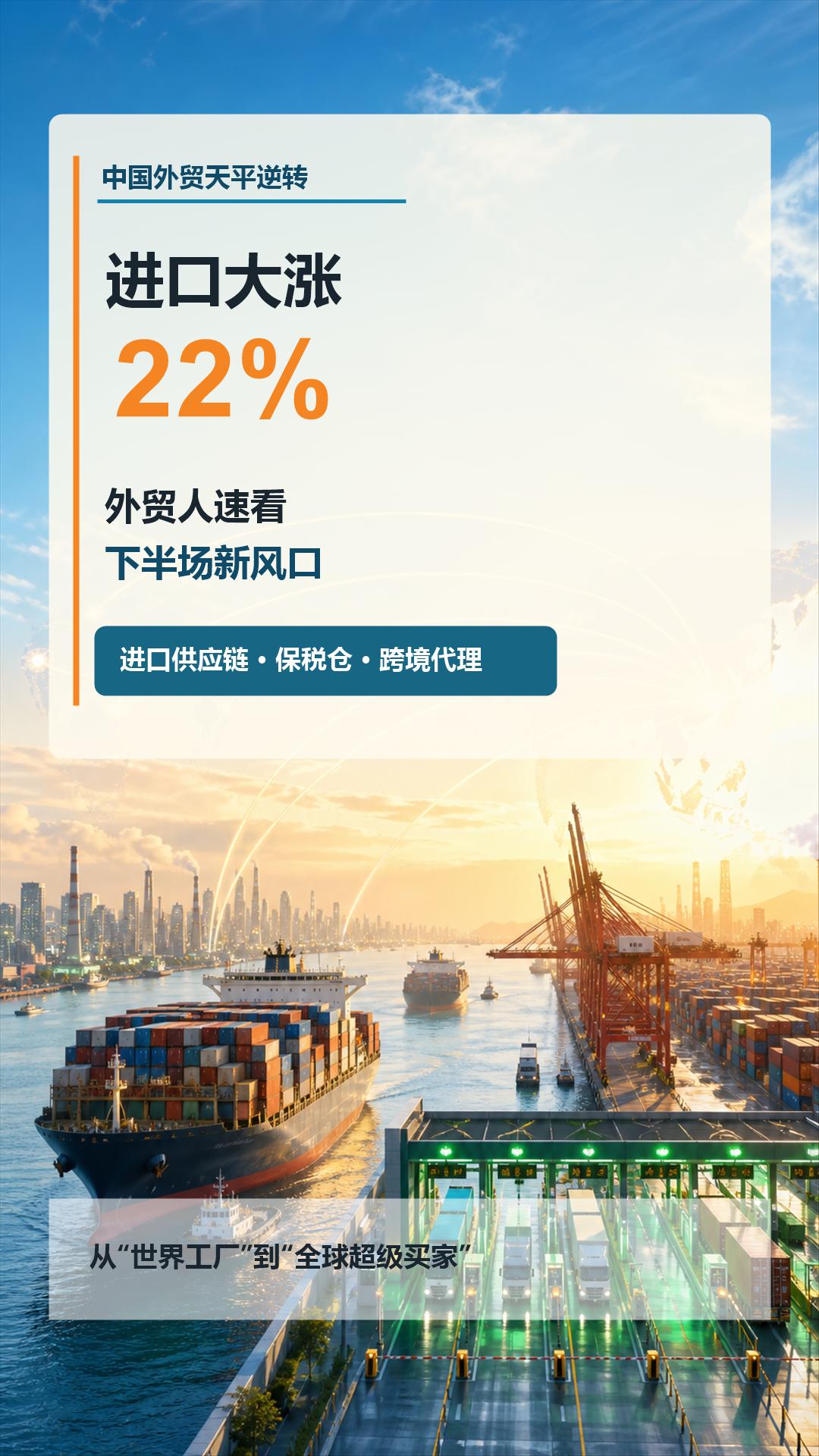
 China's foreign trade sees a turnaround: imports surge by 22%! Foreign trade professionals should quickly take note of the new trends in the second half of the year
 What Does a Global Traffic Ecosystem Service Provider Do? What Are the Differences from a Single Advertising Agency

Related Products
 EasyCamp SaaS Smart Website Marketing SystemE-Yingbao SaaS Smart Website Marketing System: AI-powered, zero-code website building. Rapidly launch multilingual independent e-commerce sites in just 10 minutes. Global server acceleration and AI-driven SEO optimization empower businesses to efficiently connect with global markets. The seamless integration of technology and user-friendly operation makes building e-commerce sites incredibly simple.
 AI+SEM Intelligent Advertising Marketing SystemAI+SEM drives intelligent ad creation, empowering full-funnel precision advertising marketing. The system automatically generates weekly/monthly reports, AI recommends keywords and target countries, monitors core metrics in real-time with intelligent alerts, and enables one-click high-conversion ad solutions to help quickly acquire customers and improve ROI.
 AI+SEO Dual Engine Optimization ServiceEasyWin AI+SEO Dual Engine Optimization System leverages AI-powered keyword mining, content generation, and comprehensive technical optimization to help foreign trade enterprises acquire high-quality organic traffic, significantly improving search rankings and conversion rates.
 AI+SNS Social Media Marketing SystemYingbao AI+SNS Social Media Marketing System - Precision social capture for the social media era. Supports one-click content synchronization across major platforms like Facebook and LinkedIn. AI intelligently rewrites posts for enhanced relevance. 24/7 AI customer service and user profiling analysis empower businesses to efficiently expand into global markets.
 AI+SEO营销解决方案易营宝AI+SEO营销解决方案,通过AI批量写作、智能生成TDK、精准关键词扩词等功能,全面优化网站SEO效果,提升流量与转化率。助力企业构建高效智能网站新生态。
 AI+SEM Advertising Marketing SolutionsAI+SEM Advertising Marketing Solution leverages AI technology to deeply empower SEM ad campaigns. It automatically generates weekly/monthly reports using AI, presenting account data across multiple dimensions for comprehensive insights into campaign performance and trends. The system precisely recommends keywords and target countries, intelligently generates high-conversion ad copy, and enables one-click activation of efficient campaign plans to help businesses rapidly acquire customers. Simultaneously, it monitors core metrics in real time, intelligently identifies abnormal fluctuations, and issues timely alerts to ensure stable, high-return advertising results.
 Domain Name ServicesEasyWin provides professional domain name services, including intelligent queries, one-stop registration, brand protection, and full lifecycle management, helping businesses build a digital brand image.
 EasyOperate B2C Cross-Border E-Commerce Platform & Independent WebsiteEasyStore B2C Cross-border E-commerce Independent Store is an intelligent website building and cross-border e-commerce integrated solution independently developed by EasyStore Information Technology (Beijing) Co., Ltd. The system is specially designed for small and medium-sized as well as large export enterprises, integrating 'website building, operation, marketing, advertising, and conversion' into one, helping enterprises quickly establish cross-border e-commerce independent stores to achieve brand globalization and global sales growth.
The platform supports multiple languages, multiple currencies, and multi-channel marketing, with built-in AI intelligent translation and SEO optimization systems, suitable for mainstream markets such as Southeast Asia, Europe and America, Latin America, and the Middle East, assisting Chinese manufacturing enterprises in efficiently deploying international e-commerce strategies. SSL证书易营宝提供专业SSL安全证书服务,包括单域名和泛域名证书,确保网站数据传输加密、身份验证和完整性保护,助力企业建立安全可信的在线业务环境。









