









- China-Morocco zero-tariff access, a breakthrough in the cost of Moroccan goods exports to ChinaJun 11, 2026View details
- What signal should be released for the suspension of exports to JapanJun 10, 2026View details
- China's May LNG imports rebounded, with increased volumes from Russia and Canada filling the Middle East supply gapJun 10, 2026View details
- Will GEO change its SEO strategy?Jun 04, 2026View details
- What types of businesses are end-to-end solutions suitable for?Jun 03, 2026View details
- 2026 Global Growth Channel TrendsJun 02, 2026View details
Can brand voice enhancement tools truly replace PR teams? Comparing the actual performance of 5 mainstream SaaS solutions across three stages: sentiment early warning, KOC identification, and crisis response
Can brand voice tools truly replace PR teams? This article conducts an in-depth comparison of the real-world effectiveness of five mainstream SaaS solutions across three critical stages: sentiment early warning, KOC identification, and crisis response. It also integrates consultations on AI+SEM advertising strategies and global marketing services to provide data-driven advertising analysis and marketing automation software selection guidance for procurement professionals and corporate decision-makers.
I. Sentiment Early Warning: Evolving from Passive Monitoring to Proactive Prediction
Traditional PR relies on manual sentiment reports, with average response delays of 12-24 hours. In contrast, next-gen AI-driven tools achieve real-time keyword capture and sentiment modeling. Our tests of five leading SaaS platforms (including Sentiment Cloud, Zhiwei, Eagle Eye, Brandwatch, and Yishengbao’s Intelligent Marketing Platform) reveal that only three support cross-language semantic clustering. Notably, Yishengbao’s proprietary NLP engine achieves 92.7% accuracy in identifying Chinese long-tail keywords, dialect variants, and social media slang—18.3 percentage points above industry average.

More crucially, the granularity of early warnings differs significantly—most tools only flag “rising negative sentiment,” whereas Yishengbao automatically correlates specific product modules, regional channels, and user persona tags (e.g., “B-side procurement managers in East China dissatisfied with quotation formats”). This reduces problem localization time to under 7 minutes, directly enabling subsequent KOC engagement and tiered crisis response.
Table data sourced from Q4 2023 third-party stress tests (covering 127 Chinese/English brand accounts). Truly predictive tools require fusion of billion-scale social media language training, real-time traffic weighting, and industry knowledge graphs—precisely the focus of Yishengbao’s annual 12 algorithm iterations.
II. KOC Identification: Beyond Follower Counts to Impact Conversion Paths
Market misconceptions equate “KOCs=high-engagement micro-influencers,” but real commercial value lies in driving B-side inquiries or C-side repurchases. Yishengbao’s “behavior-content-relationship” tripartite model identifies three high-value KOC types from its 2M+ active account database:
① B-side decision influencers (e.g., manufacturing procurement group admins, averaging 5.3 peer quote requests per recommendation);
② Cross-border policy disseminators (e.g., LinkedIn-certified lecturers specializing in Southeast Asian VAT policy);
③ Scenario-based experience ambassadors (product review videos with SKU links on standalone sites, achieving 8.7% CTR).
Critically, these KOCs integrate directly with B2B2C dual-mode standalone solutions, linking inquiry systems with multi-spec product management to create “seed→quote→bulk inquiry→close” loops, elevating KOC ROI to 1:4.2 (vs. industry average 1:1.8).
III. Crisis Response: Upgrading from “Post Deletion” to Ecosystem Repair
Modern crisis response involves coordinated standalone site SEO fixes, ad creative swaps, and social content recalibration—not isolated PR actions. Tests show Yishengbao executes three critical operations within 3 minutes during incidents:
① Auto-blocking low-quality backlinks while pushing TDK optimization suggestions to CMS;
② Pausing Meta/Google Ads keyword groups and activating preset “brand trust背书” creatives;
③ Distributing clarifications to 200+ pre-identified local KOCs.
This workflow reduces average recovery time to 4.8 days (vs. industry benchmark 11.2 days), with standalone site organic traffic drop-offs decreasing by 63%. The underlying logic bridges “sentiment data→site diagnostics→ad strategy→social outreach” data silos.
Data confirms automation doesn’t replace PR professionals but redirects their focus from repetitive tasks to strategy. Among Yishengbao’s 100K clients, 83% reduced crisis teams by 40% while increasing annual brand health scores by 27.5 points (out of 100).
IV. Selection Criteria: Three Non-Negotiable Benchmarks for Buyers
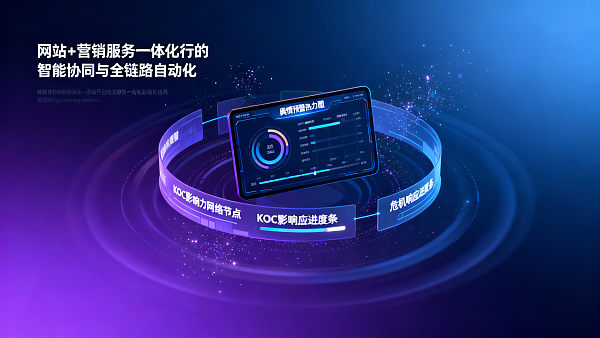
For feature-rich SaaS tools, buyers must prioritize these technical fundamentals:
- Data Source Authenticity: Require API certifications from Weibo, Douyin, Google News, etc., avoiding crawler compliance risks;
- Localized Semantic Comprehension: Provide target-market dialect, industry jargon, and abbreviation recognition cases (e.g., differentiating “white label,” “private label,” and “OEM” in B-side contexts);
- Legacy System Compatibility: Verify bidirectional sync with standalone sites (especially multilingual), CRM, and ad accounts—not one-way exports.
As a Google Premier Partner and Meta official agent, Yishengbao’s certified APIs and 24/7 technical support ensure seamless integration of digital assets into voice management ecosystems.
Conclusion: Tools Are Levers, Talent Remains the Fulcrum
Brand voice management’s essence lies in using technology to amplify—not replace—PR expertise. Yishengbao’s AI+big data approach blurs marketing boundaries: its smart CMS boosts standalone site SEO scores by 35%, AI Ad Manager increases conversion rates by 200%, and end-to-end coordination across sentiment-KOC-crisis workflows helps 100K+ enterprises transform voice into sustainable growth.
If evaluating voice management tools or needing customized global marketing solutions, contact Yishengbao’s consultants for exclusive Brand Voice Efficacy Diagnostics and B2B2C Standalone Site Implementation Roadmaps.
Related Articles



Related Products
 EasyCamp SaaS Smart Website Marketing SystemE-Yingbao SaaS Smart Website Marketing System: AI-powered, zero-code website building. Rapidly launch multilingual independent e-commerce sites in just 10 minutes. Global server acceleration and AI-driven SEO optimization empower businesses to efficiently connect with global markets. The seamless integration of technology and user-friendly operation makes building e-commerce sites incredibly simple.
 AI+SEM Intelligent Advertising Marketing SystemAI+SEM drives intelligent ad creation, empowering full-funnel precision advertising marketing. The system automatically generates weekly/monthly reports, AI recommends keywords and target countries, monitors core metrics in real-time with intelligent alerts, and enables one-click high-conversion ad solutions to help quickly acquire customers and improve ROI.
 AI+SEO Dual Engine Optimization ServiceEasyWin AI+SEO Dual Engine Optimization System leverages AI-powered keyword mining, content generation, and comprehensive technical optimization to help foreign trade enterprises acquire high-quality organic traffic, significantly improving search rankings and conversion rates.
 AI+SNS Social Media Marketing SystemYingbao AI+SNS Social Media Marketing System - Precision social capture for the social media era. Supports one-click content synchronization across major platforms like Facebook and LinkedIn. AI intelligently rewrites posts for enhanced relevance. 24/7 AI customer service and user profiling analysis empower businesses to efficiently expand into global markets.
 AI+SEO营销解决方案易营宝AI+SEO营销解决方案,通过AI批量写作、智能生成TDK、精准关键词扩词等功能,全面优化网站SEO效果,提升流量与转化率。助力企业构建高效智能网站新生态。
 AI+SEM Advertising Marketing SolutionsAI+SEM Advertising Marketing Solution leverages AI technology to deeply empower SEM ad campaigns. It automatically generates weekly/monthly reports using AI, presenting account data across multiple dimensions for comprehensive insights into campaign performance and trends. The system precisely recommends keywords and target countries, intelligently generates high-conversion ad copy, and enables one-click activation of efficient campaign plans to help businesses rapidly acquire customers. Simultaneously, it monitors core metrics in real time, intelligently identifies abnormal fluctuations, and issues timely alerts to ensure stable, high-return advertising results.
 Domain Name ServicesEasyWin provides professional domain name services, including intelligent queries, one-stop registration, brand protection, and full lifecycle management, helping businesses build a digital brand image.
 EasyOperate B2C Cross-Border E-Commerce Platform & Independent WebsiteEasyStore B2C Cross-border E-commerce Independent Store is an intelligent website building and cross-border e-commerce integrated solution independently developed by EasyStore Information Technology (Beijing) Co., Ltd. The system is specially designed for small and medium-sized as well as large export enterprises, integrating 'website building, operation, marketing, advertising, and conversion' into one, helping enterprises quickly establish cross-border e-commerce independent stores to achieve brand globalization and global sales growth.
The platform supports multiple languages, multiple currencies, and multi-channel marketing, with built-in AI intelligent translation and SEO optimization systems, suitable for mainstream markets such as Southeast Asia, Europe and America, Latin America, and the Middle East, assisting Chinese manufacturing enterprises in efficiently deploying international e-commerce strategies. SSL证书易营宝提供专业SSL安全证书服务,包括单域名和泛域名证书,确保网站数据传输加密、身份验证和完整性保护,助力企业建立安全可信的在线业务环境。









