









- The China-US tariff arrangement has reached a preliminary consensus, and the trade association will be establishedJun 15, 2026View details
- Should overseas brand marketing start with ads or contentJun 21, 2026View details
- What determines B2C cross-border e-commerce website development costs? A breakdown of features, interfaces, and deployment methodsJun 17, 2026View details
- China-Morocco zero-tariff access, a breakthrough in the cost of Moroccan goods exports to ChinaJun 11, 2026View details
- What signal should be released for the suspension of exports to JapanJun 10, 2026View details
- China's May LNG imports rebounded, with increased volumes from Russia and Canada filling the Middle East supply gapJun 10, 2026View details
B2B Website Comparison: Facebook Marketing vs Google Advertising Which Improves Inquiry Quality and ROI
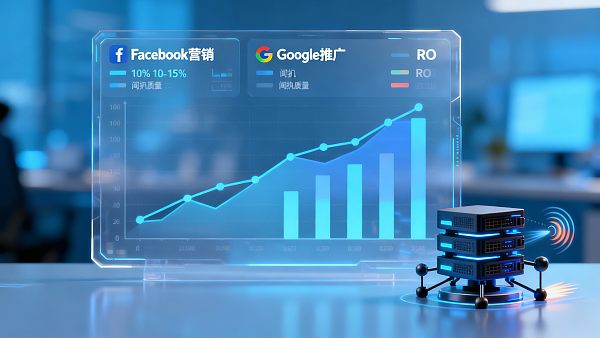
Facebook marketing, Google SEO, Yandex promotion, and Google Ads each play distinct roles in B2B standalone website operations, handling customer acquisition, organic traffic, localized search, and paid conversion functions. This definition outlines the division of labor among different traffic channels in lead generation and ROI optimization.
The "lead quality" discussed here refers to a comprehensive metric evaluating potential clients from online channels based on purchase intent, industry relevance, and follow-up potential. This lead quality measurement assesses the effectiveness of marketing investments and subsequent sales conversion potential.
Working Principles or Core Mechanisms
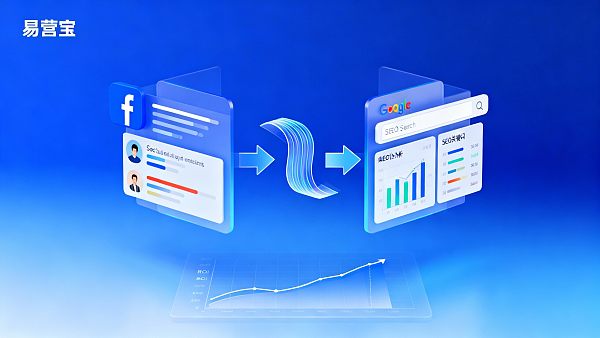
- Search Engine Optimization (SEO) relies on long-term accumulation of keyword matching, page structure, and backlink authority. Improved keyword relevance directly impacts search rankings and organic traffic.
- Paid Search (Google Ads, Yandex) allocates ad placements through bidding and quality score mechanisms. Quality scores are determined by keyword relevance, landing page experience, and historical click-through rates.
- Social Media Advertising (Facebook/Meta) achieves precise traffic delivery through audience targeting and creative iteration. Audience segmentation and content alignment are key factors in enhancing lead relevance.
- Multilingual standalone websites improve conversion rates through content localization and technical acceleration to reduce access barriers. Server deployment and transmission protocols directly impact global access speeds.
- AI and data-driven integration mechanisms optimize processes through automated keyword libraries, TDK generation, and content creation cycles. Diagnostic tools can quickly identify account structures and page weaknesses.
Key Features and Highlights
Effective messaging and page matching significantly improve lead industry relevance and follow-up potential.
Multilingual pages with localized expressions enhance form completion rates and lead retention in non-native language markets.
Page loading performance directly affects ad quality scores, bounce rates, and conversion costs.
Keyword strategies should cover navigational terms, long-tail phrases, and brand keywords to reduce acquisition costs while increasing coverage depth.
Frequent creative iteration and A/B testing are essential for maintaining long-term CTR and stable conversion rates.
Integrating SEO and SEM creates complementary effects between short-term paid traffic and long-term organic leads.
Server availability and security measures (e.g., TLS, DDoS protection) are fundamental for stable lead inflow.
Data governance and privacy compliance (GDPR/CCPA) impact data usage and client trust in cross-border B2B communication.
Application Scenarios
Export enterprises use multilingual standalone websites with localized Google Ads to obtain corporate inquiries from target markets.
Manufacturing clients adopt SEO+content marketing to secure long-term organic inquiries and technical consultation opportunities in niche keyword segments.
SaaS companies combine Facebook/LinkedIn targeting with landing page optimization to improve trial registration quality.
Cross-border e-commerce or directory businesses use regional servers and HTTP/3 optimization to improve overseas download and page rendering speeds.
Comparison with Other Solutions
- Compared to SEM, SEO delivers long-term benefits in sustainable organic traffic, while SEM enables faster traffic conversion during campaign launches and seasonal promotions.
- Social advertising relies more on audience precision and creative adaptation compared to search channels' focus on immediate demand fulfillment.
- Localized standalone websites with global server deployment differ from single-CDN solutions in concurrent processing and regional stability resource allocation.
- AI-driven keyword and content automation shortens optimization cycles but still requires industry expert supervision for semantic accuracy and compliance.
Relationship with Native Products/Services
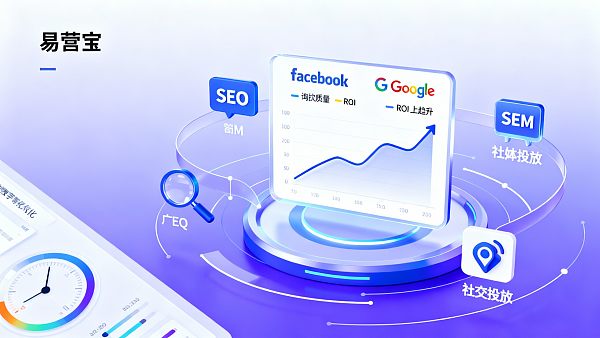
EasyWinTech's technical capabilities support the foundational infrastructure and data analysis workflows for Facebook marketing, Google SEO, Yandex promotion, and Google Ads optimization. These capabilities include multilingual website construction, AI marketing engines, and social media automation, providing tool-level support for channel deployment and SEO strategies.
Server deployment directly impacts lead quality, where stable low-latency transmission improves form completion rates and ad quality scores. To meet this requirement, solutions with global node coverage and high-availability guarantees can be adopted, such as EasyWinTech Global Server Deployment, featuring 7 global server nodes, multilingual website deployment, intelligent load balancing, and edge computing acceleration, delivering ≤300ms average TTFB and 99.99% SLA availability.
For channel optimization, AI ad diagnostic tools and automated keyword generation modules can combine server logs with accessibility data to collaboratively improve Google Ads quality scores and social media advertising efficiency. This collaborative approach enhances lead matching while reducing CPC.
Frequently Asked Questions (FAQ)
Q: How to measure Facebook advertising's impact on B2B lead quality? A: Measurement should include form completion rates, opportunity conversion rates, and subsequent sales touchpoint rates.
Q: How can Google SEO and paid advertising collaborate to reduce customer acquisition costs? A: Collaboration methods include shared keyword pools, using paid testing to validate high-intent keywords, and transitioning high-value terms to SEO priority optimization.
Q: How do multilingual standalone websites differently impact Yandex and Google? A: Through localized content and proper Hreflang settings, they improve visibility in corresponding languages/regions, but Yandex relies more on regional servers and local domain strategies.
Q: How does server performance affect Google Ads quality scores? A: Page load speed and availability directly impact landing page experience ratings, thereby influencing quality scores and actual CPC costs.
Q: How do privacy regulations affect data usage in cross-border marketing? A: Compliance rules restrict user data collection/processing methods, requiring compliant design in data tracking and remarketing strategies.
- Independent Website Operations
- Multilingual Independent Website
- Inquiry quality
- Google SEO
- Google Ads
- Search Engine Optimization
- Google Ads Optimization
- Facebook Marketing
- Yandex Promotion
- Cross-border Marketing
- Yiyingbao
- SEO
- Independent Website
- AI Marketing Engine
- Social Media Automation
- cross-border e-commerce
- Multilingual Website Building
Related Articles
 The China-US tariff arrangement has reached a preliminary consensus, and the trade association will be established
 Should overseas brand marketing start with ads or content
 What determines B2C cross-border e-commerce website development costs? A breakdown of features, interfaces, and deployment methods


Related Products
 EasyCamp SaaS Smart Website Marketing SystemE-Yingbao SaaS Smart Website Marketing System: AI-powered, zero-code website building. Rapidly launch multilingual independent e-commerce sites in just 10 minutes. Global server acceleration and AI-driven SEO optimization empower businesses to efficiently connect with global markets. The seamless integration of technology and user-friendly operation makes building e-commerce sites incredibly simple.
 AI+SEM Intelligent Advertising Marketing SystemAI+SEM drives intelligent ad creation, empowering full-funnel precision advertising marketing. The system automatically generates weekly/monthly reports, AI recommends keywords and target countries, monitors core metrics in real-time with intelligent alerts, and enables one-click high-conversion ad solutions to help quickly acquire customers and improve ROI.
 AI+SEO Dual Engine Optimization ServiceEasyWin AI+SEO Dual Engine Optimization System leverages AI-powered keyword mining, content generation, and comprehensive technical optimization to help foreign trade enterprises acquire high-quality organic traffic, significantly improving search rankings and conversion rates.
 AI+SNS Social Media Marketing SystemYingbao AI+SNS Social Media Marketing System - Precision social capture for the social media era. Supports one-click content synchronization across major platforms like Facebook and LinkedIn. AI intelligently rewrites posts for enhanced relevance. 24/7 AI customer service and user profiling analysis empower businesses to efficiently expand into global markets.
 AI+SEO营销解决方案易营宝AI+SEO营销解决方案,通过AI批量写作、智能生成TDK、精准关键词扩词等功能,全面优化网站SEO效果,提升流量与转化率。助力企业构建高效智能网站新生态。
 AI+SEM Advertising Marketing SolutionsAI+SEM Advertising Marketing Solution leverages AI technology to deeply empower SEM ad campaigns. It automatically generates weekly/monthly reports using AI, presenting account data across multiple dimensions for comprehensive insights into campaign performance and trends. The system precisely recommends keywords and target countries, intelligently generates high-conversion ad copy, and enables one-click activation of efficient campaign plans to help businesses rapidly acquire customers. Simultaneously, it monitors core metrics in real time, intelligently identifies abnormal fluctuations, and issues timely alerts to ensure stable, high-return advertising results.
 Domain Name ServicesEasyWin provides professional domain name services, including intelligent queries, one-stop registration, brand protection, and full lifecycle management, helping businesses build a digital brand image.
 EasyOperate B2C Cross-Border E-Commerce Platform & Independent WebsiteEasyStore B2C Cross-border E-commerce Independent Store is an intelligent website building and cross-border e-commerce integrated solution independently developed by EasyStore Information Technology (Beijing) Co., Ltd. The system is specially designed for small and medium-sized as well as large export enterprises, integrating 'website building, operation, marketing, advertising, and conversion' into one, helping enterprises quickly establish cross-border e-commerce independent stores to achieve brand globalization and global sales growth.
The platform supports multiple languages, multiple currencies, and multi-channel marketing, with built-in AI intelligent translation and SEO optimization systems, suitable for mainstream markets such as Southeast Asia, Europe and America, Latin America, and the Middle East, assisting Chinese manufacturing enterprises in efficiently deploying international e-commerce strategies. SSL证书易营宝提供专业SSL安全证书服务,包括单域名和泛域名证书,确保网站数据传输加密、身份验证和完整性保护,助力企业建立安全可信的在线业务环境。









