









- Can Zhejiang foreign trade independent websites still be developed today? Look at changes in traffic and lead generationJul 28, 2026View details
- What New Signals Are Emerging in Enterprise Services SaaS Marketing ReportsJul 27, 2026View details
- What Does a Global Traffic Ecosystem Service Provider Do? What Are the Differences from a Single Advertising AgencyJul 16, 2026View details
- What should you focus on in the latest enterprise SaaS report? From renewal rates and delivery costs to overseas growth opportunitiesJul 12, 2026View details
- What signals are worth paying attention to in a cross-border marketing trend report? B2B companies should look at these 6 signalsJul 11, 2026View details
- How to Read a Cross-Border Marketing Trends Report? Five Key Dimensions for Evaluating Channel OpportunitiesJul 11, 2026View details
- Which channel has the highest ROI in the global traffic ecosystem? Comparative analysis of search, social media, and advertisingJul 10, 2026View details
- What multilingual website services are available in Sanya? Which model is more suitable for local businesses going global?Jul 08, 2026View details
Why Does Eyingbao Ad Optimization Place Greater Emphasis on Data Feedback
In Eyingbao's advertising campaign optimization, data-driven ad optimization is not optional, but the core factor that determines conversion efficiency. For enterprises, only by relying on real-time feedback, precise analysis, and continuous iteration can international digital marketing services truly achieve cost reduction, efficiency improvement, and breakthrough growth.
For information researchers, the biggest concern is whether the campaign logic is clear and whether the results are measurable; for business decision-makers, the greater focus is whether the budget can generate stable returns; while after-sales maintenance personnel, distributors, and agents care more about whether the execution process is traceable and whether problems can be quickly identified. Once advertising is disconnected from data feedback, creatives, channels, landing pages, and conversion paths become “experience-based guesswork.”
As a global digital marketing service provider established in 2013 and headquartered in Beijing, Eyingbao Information Technology (Beijing) Co., Ltd. takes artificial intelligence and big data as its core driving forces, building a full-chain service system around intelligent website building, search optimization, social media marketing, and advertising placement. In the process of serving more than 100,000 enterprises, one conclusion has been repeatedly proven: only by embedding data feedback into the entire delivery process can advertising optimization truly gain the ability for sustainable growth.
Why data feedback has become the primary basis for advertising campaign optimization

In integrated website and marketing service scenarios, advertising placement is not an isolated action, but a complete chain from traffic acquisition, page engagement, lead conversion, to subsequent nurturing. If a business only looks at clicks and ignores bounce rate, time on page, form completion rate, and sales follow-up results, it can easily keep spending budget for 30 to 90 days without finding a truly effective growth path.
The value of data feedback is first reflected in the “speed of correction.” For example, in the first 7 days after a new account goes live, this is often the critical window for observing audience match quality, creative click-through rate, and landing page engagement capacity. If the click-through rate is higher than 2% but the conversion rate is lower than 1%, the issue is usually not at the traffic entry point, but in page content, form design, or the inquiry response mechanism.
Secondly, data feedback helps enterprises distinguish between “looks effective” and “actually converts.” Many advertising campaigns show superficial prosperity in the early stage, with increased impressions and clicks, but if the proportion of valid leads is less than 20%, or even more than 50% of inquiries cannot enter the sales process, the larger the campaign scale, the more obvious the waste.
For B2B corporate websites and cross-border e-commerce independent sites, advertising optimization cannot remain only at the creative level. Deeper optimization includes keyword intent, page structure, visitor device distribution, country and regional differences, and conversion touchpoint setup. For this reason, more and more enterprises are planning advertising placement together with on-site content operations, search layout, and conversion components.
The 3 most common problems when there is no data closed loop
- Distorted budget allocation: Channel A brings 1000 clicks, but only 10 valid leads; Channel B brings 400 clicks, yet can generate 25 follow-up-worthy inquiries.
- One-sided creative judgment: Eliminating creatives based only on click-through rate while ignoring that high-intent users often care more about professional information, delivery capabilities, and service details.
- Broken cross-department collaboration: Marketing, sales, and after-sales record data separately, making it impossible to analyze lead quality, deal cycle, and repurchase reasons in a unified way.
Core metrics enterprises should prioritize tracking
Truly valuable advertising feedback should cover at least 4 layers of metrics: traffic metrics, behavior metrics, conversion metrics, and business metrics. Common combinations include CTR, CPC, page dwell time, bounce rate, form submission rate, valid lead rate, sales follow-up rate, and final deal cycle. For enterprises with a monthly budget above 30,000 yuan, it is recommended to complete at least 1 data review per week and make 1 channel structure adjustment per month.
From click to deal: what feedback data must be reviewed in advertising optimization
Enterprises at different development stages focus on different aspects of data feedback. In the initial delivery stage, the focus is on “whether it works”; in the stable stage, the focus is on “whether it can be scaled”; in the expansion stage, the focus is on “whether it can be replicated.” Therefore, advertising optimization cannot focus on just one number, but should establish a layered metric system. The table below can help enterprises quickly identify key observation dimensions.
From a practical perspective, the problem for many enterprises is not “no data,” but “data has not formed decision-making.” For example, if the average landing page dwell time is only 18 seconds, it usually indicates that the content has failed to capture high-intent users; if the mobile bounce rate is more than 15% higher than the PC bounce rate, it often means that page loading, form interaction, or layout presentation should be prioritized for optimization.
Data feedback should also be interpreted in combination with region, time period, and audience segmentation. For international digital marketing services, markets such as Southeast Asia, Europe, and the Middle East show clear differences in click costs, inquiry habits, and content preferences. Copying the same set of creatives to 3 regions often results in performance deviations of 20% to 50%, so localized analysis is more important than simply increasing budget.
If an enterprise has its own independent website, then the upper limit of advertising performance usually depends on the quality of website content and search foundation. Many high-conversion landing pages are not temporary patchworks, but are built on a stable content architecture and keyword layout. One-stop AI-driven solutions such as SEO optimization can improve on-site engagement capabilities in areas such as article generation, keyword recommendations, keyword expansion, TDK generation, and multilingual localization, making it easier for ad traffic entering the site to accumulate into convertible assets.
The recommended 5-step feedback mechanism to establish first
- Step 1: Standardize the data definitions of ad platforms, website analytics tools, and CRM to avoid duplicate lead counting.
- Step 2: Set observation windows of 7 days, 14 days, and 30 days to distinguish short-term fluctuations from real trends.
- Step 3: Separately count “inquiry volume” and “valid lead volume” to avoid being misled by surface-level conversions.
- Step 4: Break down by 4 dimensions—country, device, time period, and audience tags—to identify the optimal combination.
- Step 5: Feed sales feedback back into the advertising side to form a closed-loop optimization of advertising—website—deal.
Why integrated website and marketing services can amplify the value of data feedback
If advertising optimization stays only in the media backend, the room for improvement is usually limited. The reason is simple: after users click an ad, what really determines whether they leave an inquiry is website speed, content structure, industry trust, form design, and follow-up response mechanisms. In other words, the advertising platform is only responsible for “driving traffic,” while integrated website and marketing services are what complete “conversion.”
With ten years of deep industry experience, Eyingbao has built a full-chain solution linking intelligent website building, search optimization, social media marketing, and advertising placement around its dual-wheel strategy of technological innovation and localized service. The advantage of this model is that data is no longer fragmented across multiple systems, but can be used synchronously across the advertising side, page side, and content side, making every adjustment closer to business results.
Taking a B2B corporate website as an example, if users search for high-intent long-tail keywords but land on a page with shallow information, slow loading, and incomplete product parameters, conversion efficiency will still remain low no matter how well ad click costs are controlled. In contrast, when on-site content can automatically match industry terminology and user search intent, and the page simultaneously presents product introductions, case logic, delivery explanations, and inquiry entry points, the utilization rate of advertising feedback will increase significantly.
This is why more and more enterprises are synchronizing content and search capabilities alongside advertising placement. For example, systems that support multilingual localization, long-tail keyword mining, semantic expansion, and ranking tracking not only help reduce dependence on a single advertising traffic source, but also provide a more accurate user segmentation foundation for subsequent remarketing.
Differences between integrated solutions and single-point advertising placement
The comparison table below is suitable for enterprises to refer to when purchasing website and marketing services, especially for teams hoping to see a stable optimization trend within 6 months.
From a procurement decision perspective, integrated solutions are more suitable for enterprises that want to solve customer acquisition, conversion, and operational efficiency at the same time. Especially for cross-border e-commerce independent sites and B2B corporate websites, if there are plans to cover more than 2 overseas markets, it is recommended to prioritize service systems that can provide multilingual content, real-time monitoring, and actionable optimization recommendations, rather than purchasing fragmented tools separately.
How enterprises can establish an executable advertising data optimization process
If enterprises want data feedback to truly deliver results, the key is not the number of tools, but whether the process is clear. It is generally recommended to divide advertising optimization into 3 stages: cold start, stable scaling, and refined operation. The goals, metrics, and actions of each stage are different, and mixing strategies will lead to distorted judgment.
The cold start period is generally the first 2 weeks, and the core task is to verify whether targeting, audience, and page match. In this stage, frequent and major changes are not recommended; reviewing data once every 48 to 72 hours is more reasonable. The stable scaling period usually occurs from week 3 to week 8, when it is necessary to gradually increase high-quality traffic combinations while continuously eliminating low-intent sources. After entering the refined operation period, the focus should shift to lead quality, repurchase potential, and multi-channel collaboration.
For after-sales maintenance personnel, advertising optimization is not a one-man show for the front-end marketing department. The after-sales team understands users’ common issues, delivery bottlenecks, and product feedback, and this information is highly suitable for reverse input into advertising copy and landing pages. In many cases, low inquiry conversion rates are not caused by poor traffic, but because the page has not answered in advance the 3 to 5 questions users care about most.
For dealer, agent, and distributor systems, it is recommended to establish a unified data collaboration mechanism. For example, require the first round of lead follow-up to be completed within 24 hours, intention grading within 7 days, and deal attribution review within 30 days. Only when the sales side feeds back results in a timely manner can the advertising side judge whether a certain country, certain type of keyword, or certain audience group is worth continued investment.
The 4 areas that should be prioritized during execution
- Consistent data collection standards: Ad platforms, website analytics, and CRM fields must be unified, otherwise duplicate or missing lead records will occur.
- Moderate optimization frequency: Daily budget fluctuations should not exceed 20% to 30%, to avoid repeatedly resetting the system learning phase.
- Evidence-based page iteration: Change only 1 to 2 core variables each time, such as the headline, form fields, or above-the-fold structure, so the cause can be judged more easily.
- Review focused on business results: Do not just look at cost per click, but also whether valid inquiry cost and deal cycle have improved.
Reminder of common misconceptions
First, over-relying on “viral creatives” while ignoring page engagement; second, pursuing only low CPC, resulting in a large amount of invalid traffic; third, placing all markets into the same account structure while overlooking localization differences; fourth, conducting reviews only at the end of the month and missing the critical adjustment window in the first 7 to 14 days. For enterprises that need continuous overseas expansion, these misconceptions often hurt efficiency more than insufficient budget.
Selection advice and common questions for decision-makers
When choosing advertising optimization services, enterprises should not only look at quotations or one-time agency operation content, but should evaluate whether the service provider has data interpretation capabilities, website engagement capabilities, and a long-term growth perspective. Especially for enterprises targeting overseas markets, campaign performance is clearly affected by multilingual content, industry terminology, regional cultural preferences, and technical response speed, and it is difficult to continuously scale results based only on superficial campaign experience.
Service systems equipped with big-data-driven decision-making systems, 7×24-hour intelligent monitoring, and rapid algorithm update synchronization capabilities are more suitable for enterprises with higher requirements for growth stability. If website content construction and search operation support are also needed, enterprises may also consider whether the provider has capabilities in original article creation, keyword competitiveness analysis, 200+ indicator monitoring, and optimization recommendation report output, as these capabilities directly affect whether advertising feedback can accumulate into long-term assets.
FAQ: the 4 questions most frequently asked in advertising campaign optimization
1. How long after an ad goes live can we see referenceable data feedback?
Usually, preliminary click and page behavior data can be seen within the first 3 to 7 days, around 14 days is more suitable for judging conversion trends, and 30 days is more suitable for phased channel evaluation. If it is a high-ticket B2B business, the deal cycle may range from 30 to 90 days, so short-term deals alone cannot be used to judge whether the campaign is good or bad.
2. Which enterprises are most suitable for data-driven advertising optimization?
These include cross-border e-commerce independent sites, B2B corporate websites, brands that need customer acquisition across multiple regions, and enterprises with dealer or agent systems. These enterprises often face problems such as many channels, complex leads, and long conversion chains. Without data feedback, it is difficult to judge which market is worth investing in and which page should be prioritized for adjustment.
3. If the budget is limited, should we prioritize optimizing ads or the website?
If the website foundation is weak, it is recommended to first complete optimization of the core pages, then expand the advertising budget. This is because landing page quality directly determines whether each click is worthwhile. Enterprises with monthly budgets in the range of 10,000 to 30,000 yuan should especially avoid putting all resources into traffic buying while neglecting page and content engagement.
4. How can we judge whether a service provider truly understands data feedback?
You can focus on 4 points: whether they can define clear stage-based metrics; whether they can explain the business reasons behind the data; whether they can provide cross-channel and cross-page coordinated recommendations; and whether they have a long-term review mechanism. If a service provider only reports impressions, clicks, and spend, but cannot explain lead quality and page issues, it usually indicates insufficient optimization depth.
The reason advertising optimization places greater emphasis on data feedback is essentially that what enterprises truly need is not “spent budget,” but “verifiable growth.” From cost per click to valid leads, and from page behavior to deal cycle, data can help enterprises make more stable judgments at every stage. For enterprises that need to balance website development, content engagement, and overseas customer acquisition, an integrated operational approach has more long-term value than single-point advertising placement.
If you are evaluating an international digital marketing service solution that better suits your business, and hope to simultaneously improve advertising efficiency, website engagement, and long-term search performance, you are welcome to further learn about Eyingbao’s solutions, obtain customized strategies, inquire about product details, or explore more growth paths suitable for independent sites and corporate websites.
Related Articles
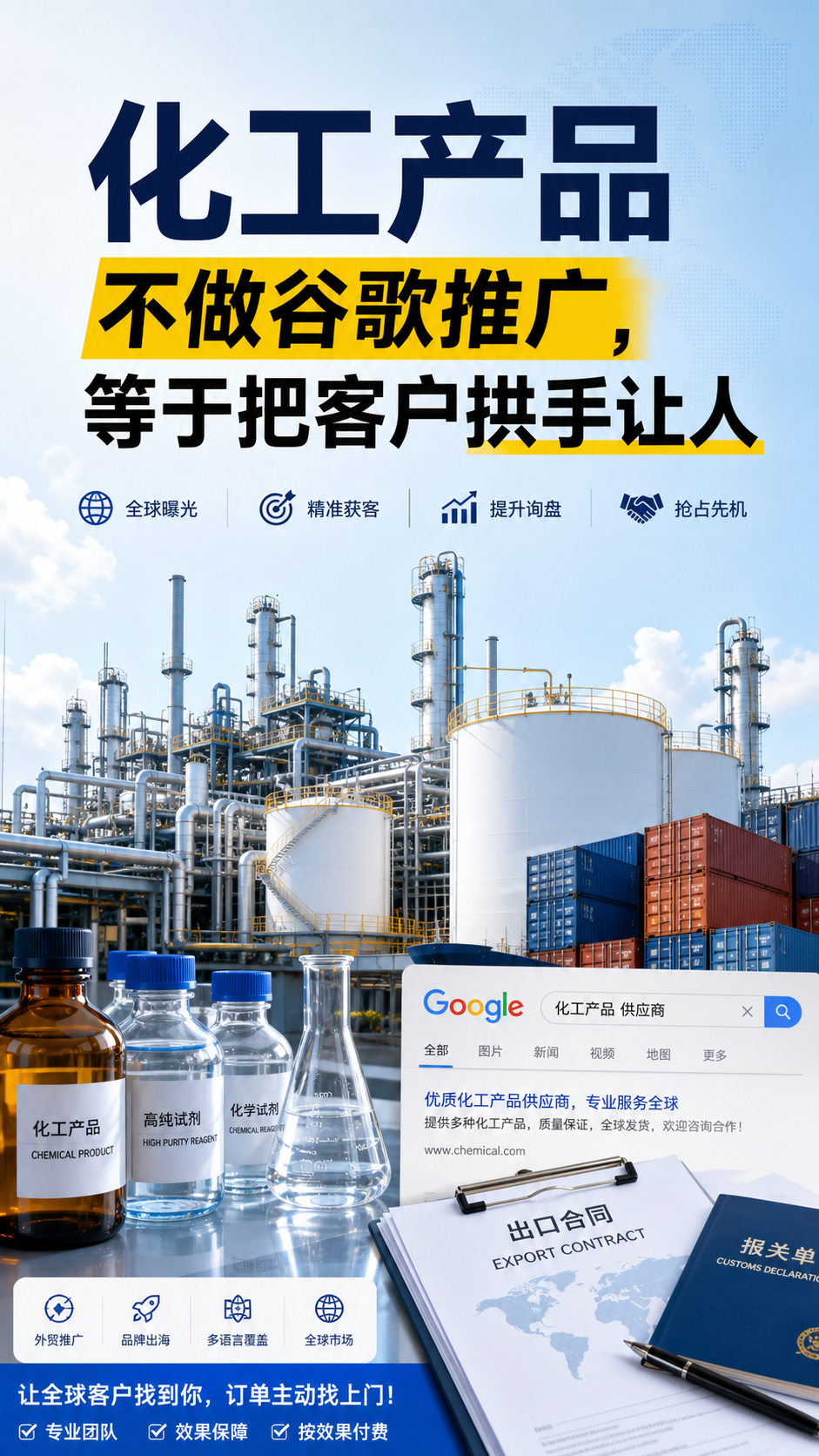
 Promoting chemical products on Google is essential—otherwise, you are effectively handing your customers over to competitors
 Can Zhejiang foreign trade independent websites still be developed today? Look at changes in traffic and lead generation
 What New Signals Are Emerging in Enterprise Services SaaS Marketing Reports


Related Products
 EasyCamp SaaS Smart Website Marketing SystemE-Yingbao SaaS Smart Website Marketing System: AI-powered, zero-code website building. Rapidly launch multilingual independent e-commerce sites in just 10 minutes. Global server acceleration and AI-driven SEO optimization empower businesses to efficiently connect with global markets. The seamless integration of technology and user-friendly operation makes building e-commerce sites incredibly simple.
 AI+SEM Intelligent Advertising Marketing SystemAI+SEM drives intelligent ad creation, empowering full-funnel precision advertising marketing. The system automatically generates weekly/monthly reports, AI recommends keywords and target countries, monitors core metrics in real-time with intelligent alerts, and enables one-click high-conversion ad solutions to help quickly acquire customers and improve ROI.
 AI+SEO Dual Engine Optimization ServiceEasyWin AI+SEO Dual Engine Optimization System leverages AI-powered keyword mining, content generation, and comprehensive technical optimization to help foreign trade enterprises acquire high-quality organic traffic, significantly improving search rankings and conversion rates.
 AI+SNS Social Media Marketing SystemYingbao AI+SNS Social Media Marketing System - Precision social capture for the social media era. Supports one-click content synchronization across major platforms like Facebook and LinkedIn. AI intelligently rewrites posts for enhanced relevance. 24/7 AI customer service and user profiling analysis empower businesses to efficiently expand into global markets.
 AI+SEO营销解决方案易营宝AI+SEO营销解决方案,通过AI批量写作、智能生成TDK、精准关键词扩词等功能,全面优化网站SEO效果,提升流量与转化率。助力企业构建高效智能网站新生态。
 AI+SEM Advertising Marketing SolutionsAI+SEM Advertising Marketing Solution leverages AI technology to deeply empower SEM ad campaigns. It automatically generates weekly/monthly reports using AI, presenting account data across multiple dimensions for comprehensive insights into campaign performance and trends. The system precisely recommends keywords and target countries, intelligently generates high-conversion ad copy, and enables one-click activation of efficient campaign plans to help businesses rapidly acquire customers. Simultaneously, it monitors core metrics in real time, intelligently identifies abnormal fluctuations, and issues timely alerts to ensure stable, high-return advertising results.
 Domain Name ServicesEasyWin provides professional domain name services, including intelligent queries, one-stop registration, brand protection, and full lifecycle management, helping businesses build a digital brand image.
 EasyOperate B2C Cross-Border E-Commerce Platform & Independent WebsiteEasyStore B2C Cross-border E-commerce Independent Store is an intelligent website building and cross-border e-commerce integrated solution independently developed by EasyStore Information Technology (Beijing) Co., Ltd. The system is specially designed for small and medium-sized as well as large export enterprises, integrating 'website building, operation, marketing, advertising, and conversion' into one, helping enterprises quickly establish cross-border e-commerce independent stores to achieve brand globalization and global sales growth.
The platform supports multiple languages, multiple currencies, and multi-channel marketing, with built-in AI intelligent translation and SEO optimization systems, suitable for mainstream markets such as Southeast Asia, Europe and America, Latin America, and the Middle East, assisting Chinese manufacturing enterprises in efficiently deploying international e-commerce strategies. SSL证书易营宝提供专业SSL安全证书服务,包括单域名和泛域名证书,确保网站数据传输加密、身份验证和完整性保护,助力企业建立安全可信的在线业务环境。









