I. The authoritative definition, core strategy, and development history of AI translation engines for independent foreign trade websites
1. The authoritative definition and elements of an AI translation engine
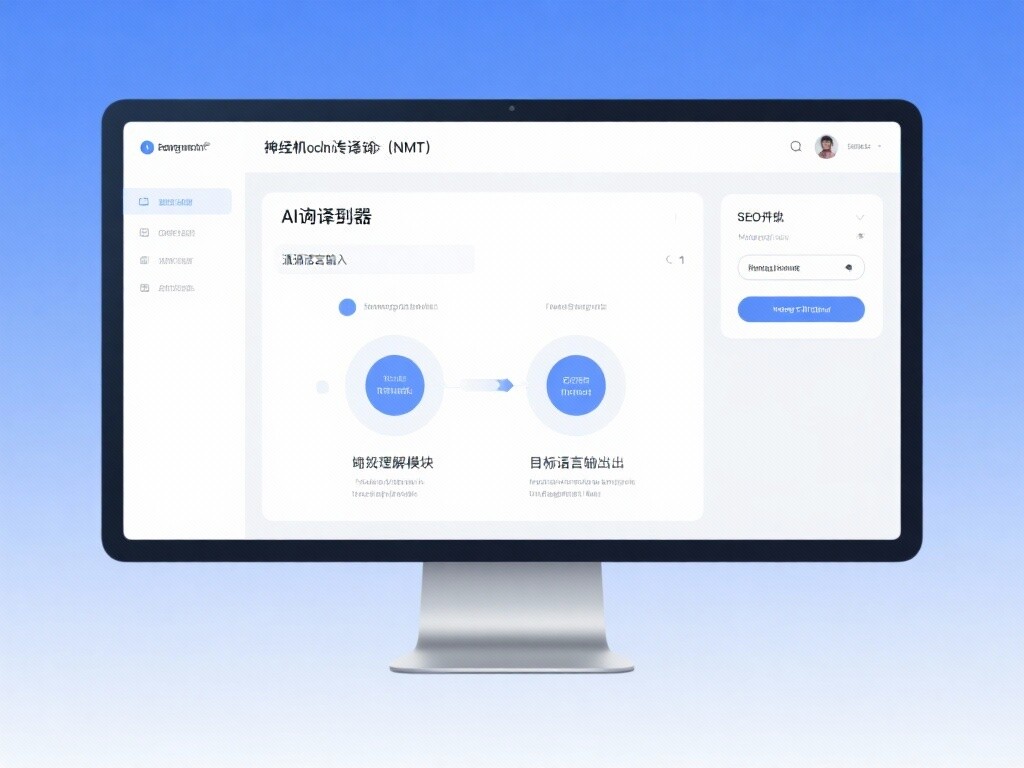
The **AI Translation Engine for Independent Websites in Foreign Trade** refers to a software system specifically designed for independent websites of foreign trade enterprises. It utilizes **Artificial Intelligence (AI) and Neural Machine Translation (NMT) technologies** to achieve **high-precision, high-efficiency, and customizable** translation of website content (including product descriptions, blogs, page elements, metadata, etc.). It is deeply integrated with the website's **CMS/ERP system**, and its core elements are: **Neural Machine Translation accuracy, SEO friendliness, industry terminology customization, and Hreflang automation**.
2. The 3 Irreplaceable Strategic Values of AI Translation Engines
Empowering independent foreign trade websites to achieve scaled growth:
- **Scalability and Efficiency Breakthrough:** Traditional human translation struggles to handle the multilingual demands of thousands or even tens of thousands of SKUs. AI engines can achieve **second-level translation with efficiency several times that of human translation**, helping foreign trade companies quickly capture the long-tail multilingual market.
- **SEO-Friendly Translation:** The professional AI engine automatically integrates **SEO keywords for the target language** during the translation process and handles technical elements such as **Hreflang tags and canonical tags**, avoiding duplicate content issues on multilingual sites.
- **Significantly Reduced Globalization Costs:** While maintaining a certain level of quality, AI translation costs far less than human translation, enabling foreign trade companies to cover more niche language markets at an **affordable cost**.
3. The Development History and Evolution of AI Translation Technology
Early stage (2000s): Translations based on **rule-based and statistical models (SMT)** were of poor quality and contained many errors in foreign trade terminology. Mid-stage (2010s): Preliminary **neural network models** emerged, but lacked contextual understanding. Modern stage (2020s to present): **Neural machine translation (NMT)** has become mainstream. AI engines, through **attention mechanisms and Transformer models**, have significantly improved semantic accuracy and developed **industry terminology databases and translation memory**, enabling the output of **native-speaker-level, SEO-friendly** content, becoming a key technology for globalized foreign trade.
II. The 5 Core Technologies of AI Translation Engines: NMT, SEO Integration and Consistency Management
A professional AI translation engine must possess the following technical depth:
1. Principles of Neural Machine Translation (NMT) and Contextual Understanding
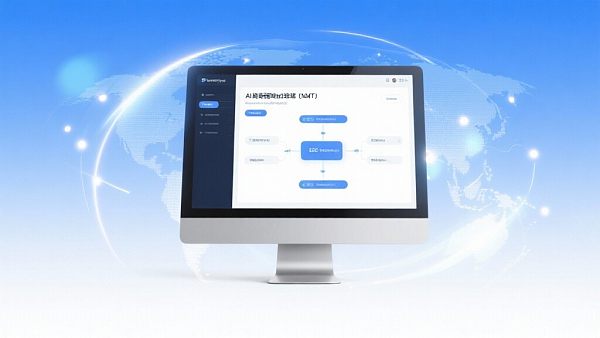
Principle: The NMT model simulates the human brain's neural network, performing **deep encoding** on the source language text as a whole to understand its **context and intent**, and then decoding to generate the target language. Application: NMT overcomes the **word-to-word** shortcomings of traditional translation, producing more natural and fluent translations, especially suitable for **foreign trade blogs and detailed product application scenario descriptions**.
2. Principles of Adaptive Integration and Replacement of SEO Keywords
Principle: To ensure the translated content achieves SEO ranking in the target market. Technical Application: The engine allows users to import a list of **high-value SEO keywords in the target language**. During the translation process, AI intelligently identifies **relevant words in the original text** and replaces them with **the corresponding SEO keywords in the target language**, while maintaining sentence fluency.
3. Principles of Translation Memory (TM) and Terminology Database (TB) Customization
Principle: To ensure absolute consistency between foreign trade terminology and brand names. Technology Application: The **TM translation memory** stores approved sentences, ensuring **consistent translation of repetitive content**. The **TB terminology database** forces the AI engine to use pre-defined translations for **company names, product models, and technical terms**, which is crucial for establishing the **professionalism and EEAT authority** of B2B brands.
4. Hreflang Tags and URL Slug Automation Principles
Principle: This is a technical compliance requirement for multilingual SEO. Technical Application: When generating multilingual pages, the AI engine automatically generates and correctly deploys **Hreflang tags**, guiding Google to identify different language versions. Simultaneously, it translates the page title into an **SEO-friendly URL (slug)** in the target language, further improving search ranking.
5. The Principle of Human Post-Editing and AI Learning Feedback
Principle: To achieve continuous optimization of "human-machine collaboration". Technical Application: A superior AI engine provides **post-editing** functionality. When human editors correct foreign trade terminology, the AI automatically learns these corrections and stores them in a **translation memory** for future translations of similar content, achieving **continuous self-improvement in translation quality**.
III. Four Core Technological Features and Applications of AI Translation Engines
1. Technical Features: Precise translation and optimization of metadata.
Features: **Title and Description** are key factors influencing SEO ranking and click-through rate (CTR). Application: The AI engine can accurately translate and optimize a page's **Title and Meta Description** based on the **character limit of the target language**, incorporating target keywords to enhance its attractiveness in international trade search results.
2. Application Practice: Rapid Multilingual Deployment of Large-Scale Product Catalogs
Applications: For cross-border e-commerce platforms or B2B manufacturing independent websites with thousands of SKUs, the AI engine can perform batch translation of product names, specifications, and brief descriptions, and complete the deployment of multilingual versions across the entire site within minutes, greatly shortening the product launch cycle.
3. Practical Application: Enhancing EEAT through Foreign Trade Blogs and Technical Documents
Applications: The AI engine can quickly translate complex technical white papers, industry reports, and blog posts. By combining human proofreading with a terminology database, it ensures the professionalism and fluency of the translations, thereby rapidly establishing **Expertise and Authority (EEAT)** in the foreign trade vertical and attracting high-value B2B inquiries.
4. Application Practice: Localization of User-Generated Content (UGC)
Applications: The AI engine can be used to quickly translate customer reviews, FAQs, and user forum content on websites. This not only improves user experience but also generates a large amount of UGC content containing long-tail keywords, further enhancing the website's SEO value.
IV. Comparative Analysis of AI Translation Engines and Traditional Translation Methods, and Industry Scenarios
1. Comparative Analysis of AI Translation Engines vs. Traditional Translation Methods
2. Typical foreign trade industry scenarios for AI translation engines
Applications of AI translation engines in foreign trade:
- **Large-scale B2C cross-border e-commerce:** Enables rapid updates and deployment of product reviews, promotions, and multilingual versions for hundreds of destinations.
- **B2B Industrial Products/Machinery Manufacturing:** Used for multilingual translation of product parameters, technical specifications, and operation manuals, ensuring the accuracy and consistency of technical terminology.
- **Foreign Trade SaaS/Service Platform:** Used for multilingual translation of **software interfaces, help documents, and user guides**, enhancing the global user experience.
3. Standard Certification and Professional Specifications for AI Translation Engines
The professional standards that should be followed when selecting and evaluating AI translation engines:
- **Translation Accuracy Certification:** Requires providing a **BLEU or TER score in the industry vertical** to demonstrate that the translation quality meets a high standard (at least Post-editing level).
- **CMS/ERP Integration Standards:** Must have **API interfaces or plugins** for mainstream foreign trade website building platforms (such as Shopify, WordPress, Magento) to achieve seamless deployment and synchronized updates.
- **Data Security and Privacy Standards:** Ensuring that client data and content are not leaked during the translation process, complying with international data privacy regulations such as **GDPR and CCPA**.
V. Upgrade your AI translation engine now and usher in a new era of global content marketing!
Are you troubled by the **high costs of human translation and inefficient multilingual SEO**? A professional **AI translation engine for independent e-commerce websites** is your only choice to solve the challenges of scaling content and improve your global EEAT (External E-commerce Attraction, External E-commerce, and External SEO). Our NMT engine combines an **industry terminology database and SEO optimization technology** to ensure your multilingual content is both **efficient and accurate**. Sign up now for a **free "AI Translation Engine Integration Demo"** to experience how to deploy your independent website content to 50 markets worldwide and achieve explosive growth in traffic and conversion rates!
Click to get a free AI translation demoFAQ
1. Can AI-translated content be directly used on independent foreign trade websites without human proofreading?
Answer: For **high-value, highly authoritative** content (such as technical white papers and key product pages), we recommend adopting an **"AI initial translation + human post-editing" model** to ensure 100% accuracy of **professional terminology and industry semantics**, which maximizes the efficiency of AI and the precision of human editing.
2. How do AI translation engines solve the problem of matching SEO keywords in different languages?
Answer: Professional translation engines allow the import of **keyword lists for the target language**. During translation, AI intelligently identifies the intent of the original text and replaces the keywords with **the most searched and best-matching keywords in the target language**, while maintaining the naturalness of the sentences. This is the core technology for achieving SEO-friendly translation.
3. Can the AI translation engine automatically handle Hreflang tag deployment?
Answer: **Yes.** Advanced AI translation engines for independent e-commerce websites automatically handle the deployment of Hreflang tags and the reference of canonical tags when generating multilingual versions, ensuring that multilingual sites comply with Google's technical requirements and avoiding ranking penalties due to duplicate content.
4. What is the significance of translation memory and terminology database for independent foreign trade websites?
Answer: These are key to ensuring **Expertise and Trustworthiness (EEAT)**. A **terminology database** ensures that the translation of **technical terms** such as product models and technical specifications is always consistent; a **translation memory** ensures that **repeated sentences** are translated identically every time, which is crucial for maintaining a brand's professional image in the minds of international buyers.
Customer Reviews
Mr. Zhang, European B2B Mechanical Components Supplier
"We have over 10,000 SKUs and 5 language versions. Previously, manual translation was costly and time-consuming. After implementing this AI translation engine, our **multilingual content deployment time was reduced from 2 months to just 3 days**, while **custom terminology databases** ensured all German and Spanish technical descriptions remain **highly professional and consistent**."
Manager Lin, Latin American Cross-border E-commerce Platform
"What impressed us most about this AI engine is its **SEO friendliness**. It automatically translates our Chinese titles into **high-search-volume keywords in Latin American Spanish** while handling Hreflang tags. Our **Spanish-language section achieved 120% traffic growth within 3 months**, truly enabling low-cost, high-efficiency global customer acquisition."
 From Zero to WhatsApp Customer Service Integration for Foreign Trade Standalone Websites: An Operational Guide to Boost ConversionThis guide systematically explains how to integrate WhatsApp into responsive foreign trade standalone websites, combining AI translation engines, AI content generation, and intelligent website-building systems to enhance responsive website SEO optimization and Google rankings. It covers practical operations like number integration, Webhooks, structured data, UTM tracking, and provides methods to improve website SEO performance along with optimization suggestions to accelerate page loading speeds. Ideal for foreign trade teams to quickly implement customer service and marketing closed loops. Click to read and get an implementation checklist with one-on-one evaluation.
 New Trends in Social Media Marketing: How Can Independent Overseas E-commerce Sites Master Overseas Social Media?Discover how independent e-commerce sites can achieve global growth through overseas social media! This article details effective operational strategies for platforms like Facebook and LinkedIn, covering key techniques such as Google Ads optimization and Yandex promotion, while showcasing success stories from Shenzhen city partners. Learn how to boost conversions using AI translation engines, global servers, and Meta advertising agencies, and gain insights into the latest 2024 social media marketing trends. Get professional website building services and SSL certificate solutions now to multiply your independent site's performance!
 AI Translation Engine for Independent E-commerce Sites: The Powerful Tool to Break Down Language BarriersYingbao AI Translation Engine helps foreign trade enterprises break through language barriers, supporting real-time translation between 83 languages with 98.7% accuracy for specialized terminology. Integrated SEO optimization boosts search rankings for multilingual independent websites by 35%. Combined with global servers and social media marketing, it achieved 300% traffic growth for German-language sites and a 220% increase in Dutch-language inquiries. Exclusive service for Shenzhen city partners: Get your free globalization diagnostic report now.
 Zhejiang Independent Website Construction: How to Choose Reliable Service Providers for Foreign Trade Enterprises?This article provides a guide for Zhejiang foreign trade enterprises on selecting independent website construction service providers, covering core elements such as multilingual support, SEO optimization, Google/Yandex promotion, and introduces cutting-edge AI website building solutions.
 Jiangsu Independent Website Construction: SEO Optimization Techniques Are Key!This article provides a detailed analysis of the essential techniques for Jiangsu enterprises to establish foreign trade independent websites, focusing on SEO optimization and multilingual website design strategies. It combines practical cases using AI-powered EasyTreasure website building systems to deliver actionable global digital marketing solutions.
 Still worried about your foreign trade website's slow loading? Learn more about global CDN accelerationStruggling with slow loading and vulnerability to attacks on your independent foreign trade website? YiYingBao offers global CDN acceleration, intelligent DDoS protection, and automated SSL certificate deployment, comprehensively enhancing access speed and security. Combined with AI translation engines, Yandex advertising, Meta ad agency services, and intelligent website-building systems, we empower businesses to efficiently expand into overseas markets. Supporting multilingual localization and high-conversion design, we cover everything from website construction to lead generation. Get a customized solution now and open a high-speed channel for your brand's global expansion.
 Is your responsive website loading slowly? These black tech tips on how to speed up website loadingIs your responsive website loading slowly? This article uses black tech to teach you how to speed up website loading while balancing responsive website SEO optimization and the multilingual experience of foreign trade independent sites. We provide actionable methods to enhance website SEO performance: Critical CSS, WebP/AVIF image automation, CDN + edge rendering, HTTP/2/3 and lazy loading, and explain how to handle additional requests from embedded WhatsApp scripts and foreign trade site AI translation engines. For enterprises using foreign trade independent site smart building systems, the priority strategy is template simplification, image automation, and server-side caching. AI writing can boost output but requires manual validation of keywords and TDK. Want to quickly master how to speed up website loading and improve Google rankings? Click to get a free performance diagnosis and priority optimization plan.
 Methods to Improve Website SEO Optimization Effectiveness: A Must-Read for Foreign Trade Independent Site OperatorsWant to know how to improve website SEO optimization effectiveness? For foreign trade independent sites, we enhance Google rankings through responsive websites and SEO optimization, combined with intelligent site-building systems, AI translation engines, and AI writing. This not only boosts rankings but also addresses how to speed up website loading and turns WhatsApp into a high-conversion channel. Apply now for free diagnostics and trials to quickly implement global traffic and conversion strategies.