- ما الإشارات الجديدة التي تظهر في تقارير تسويق SaaS لخدمات المؤسسات؟27-07-2026عرض التفاصيل
- ما هو مزوّد خدمات تدفق الزيارات العالمي؟ وما الفروق بينه وبين الوكالة الإعلانية الواحدة؟16-07-2026عرض التفاصيل
- ما الذي ينبغي أن تركز عليه أحدث تقارير SaaS لخدمات المؤسسات؟ من معدل التجديد وتكلفة التسليم إلى فرص النمو في الخارج12-07-2026عرض التفاصيل
- ما هي أهم الإشارات التي تستحق الانتباه في تقرير اتجاهات التسويق عبر الحدود؟ ست إشارات ينبغي لشركات B2B مراقبتها11-07-2026عرض التفاصيل
- تقرير اتجاهات التسويق عبر الحدود: كيف تُقرأ؟ 5 أبعاد رئيسية للحكم على فرص القنوات11-07-2026عرض التفاصيل
- ما القناة ذات أعلى عائد استثمار في منظومة حركة المرور العالمية؟ تحليل مقارن بين البحث ووسائل التواصل الاجتماعي والإعلانات المدفوعة10-07-2026عرض التفاصيل
- ما هي خدمات المواقع متعددة اللغات في سانيا؟ أي نموذج أنسب لبناء مواقع الشركات المحلية عند التوسع إلى الخارج08-07-2026عرض التفاصيل
- كيف يمكن الاطلاع على القائمة الكاملة لأفضل 100 شركة SaaS في الصين؟ طريقة عملية لاختيار شركات بناء المواقع والخدمات التسويقية08-07-2026عرض التفاصيل
إعلانات Google تحصد نقرات كثيرة لكن دون استفسارات، تحقق أولًا من هذه 6 مشكلات في مسار التحويل
Google Ads Display Has High Clicks but No Inquiries, Don’t Rush to Blame the Traffic
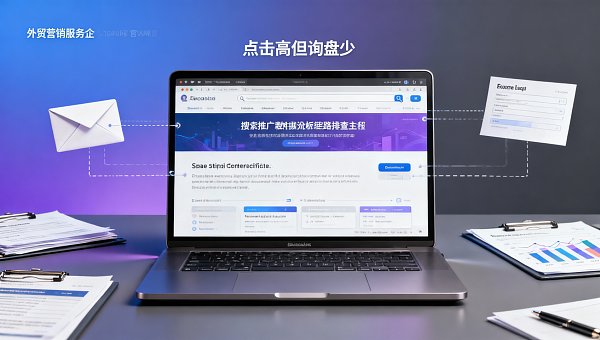
When many websites run Google Ads, the most common problem is not no clicks, but plenty of clicks, steadily rising spend, and almost no valid inquiries in the backend. On the surface it looks like an advertising problem, but in reality the more common issue is that the conversion path breaks in the middle.
Especially in foreign trade customer acquisition scenarios, ads, websites, forms, customer service, and data tracking are originally one interconnected system. Any weak link in the chain can lead to the result of “hot traffic, cold conversions” in Google Ads. What really needs to be checked is not only whether the account bids properly, but also whether the visit intent matches, whether the page can build trust, and whether the inquiry process is smooth enough.
This is also why more and more companies, when doing overseas promotion, integrate website building, SEO, ads, and data analysis into one system for unified optimization. The longer the chain, the less you can rely on clicks alone.
The Key Focus of Google Ads Varies by Business Scenario
For the same Google Ads campaign, some pages sell standard products, some handle customized inquiries, some target the English-speaking market, and some cover Spanish, French, and Arabic regions at the same time. Once the scenario changes, the conversion criteria also change accordingly.
For example, standard products place more emphasis on whether inquiry actions are direct, while custom businesses rely more on case studies, qualifications, and communication thresholds; single-language websites can more easily test ad efficiency first, while multilingual websites need to consider translation accuracy, page loading speed, and regional trust at the same time. When Yiyingbao serves overseas marketing scenarios for the long term, it usually does not treat Google Ads as a standalone traffic-buying action, but places it within the evaluation of the complete customer acquisition path.
First Look at 6 High-Frequency Breakpoints
- Whether clicks brought by keywords truly have purchase or inquiry intent
- Whether the ad copy matches the landing page promise
- Whether page opening speed, structure, and trust information are sufficient
- Whether the form is too long, too complex, or asks for information too early
- Whether customer service responds in time and supports cross-time-zone handling
- Whether conversion tracking is inaccurate and counts invalid leads as valid results
Many Clicks but Few Inquiries, Often Due to Keyword and Intent Mismatch
The easiest thing to overlook in Google Ads is that “having search volume” does not equal “having inquiry intent”. Many accounts also include broad terms, informational terms, and tutorial terms in their campaigns. Clicks may come in, but visitors are not prepared to submit a request.
A more common situation is that the ad group covers too many countries and languages, and the meaning of the keyword is not fully consistent across different markets. The words may look fine, but the people entering the page are not the target customers, so they naturally do not convert later.
When judging performance, do not look only at CTR. At minimum, check the search term report, bounce behavior, dwell time, and first-screen interaction together. If a large number of clicks leave within a few seconds, the problem is usually not the page design, but that the traffic source is already off.
A Landing Page Is Not a Display Page, and Google Ads Cares More About Whether It Can Carry Conversions
Many websites directly use the official homepage as the ad landing page. This may not be a problem in brand-related scenarios, but in product or solution scenarios, it often makes it hard for users to find the key point. After clicking in, if the first screen does not show the corresponding product, delivery capability, and communication entry, the inquiry intention will drop quickly.
If the business covers multiple countries, the problem becomes even more obvious. Unnatural page language, mixed price units, and non-localized contact methods all weaken trust. At this point, whether the website system supports localization becomes very important. Capabilities like theforeign trade multilingual website solution are better suited to handle Google Ads across multiple regions, because it not only supports 300+ language conversions, but also optimizes product descriptions according to local market habits and has built-in GA4, GTM, and other tracking tools, making it easier to calibrate the conversion path later.
Whether a landing page is good or not, the key is not whether it looks nice, but three questions: whether it quickly answers what the user is looking for, whether it proves you can deliver, and whether it makes the submission action easy enough.
Form Design and Customer Service Response Determine Whether Leads Truly Land
Some Google Ads accounts are not without opportunities; rather, the opportunity gets stuck at the very last step. A typical pattern is that page engagement is decent and buttons are being clicked, but form submissions are very low.
The reasons are often very practical: too many fields, complicated verification code, poor mobile experience, mandatory file uploads, and no clear feedback after submission. For first-time overseas visitors, they are more willing to leave an email, describe their needs, and provide country information upfront than to complete a full set of purchase details in one go.
Another situation that is easily underestimated is response speed. If a reply only comes 24 hours after form submission, in a cross-time-zone scenario that is basically equivalent to losing the lead. What Google Ads buys is not permanent interest, but a very short communication window.
When Data Tracking Fails, Google Ads Optimization Becomes More and More Off Target
There is another more hidden type of problem: it looks like the account is converting, but in fact what is recorded are button clicks, page dwell time, or even repeated submissions. In this way, the Google Ads system keeps pushing budget toward “fake conversions”, and the result is more and more clicks, while real inquiries do not increase in sync.
In actual troubleshooting, it is recommended to handle conversion actions in layers: page visit, form start, form successfully submitted, email successfully delivered, and customer service effective follow-up. The clearer the chain is divided, the easier it is to know exactly which step the problem breaks at, instead of broadly attributing it to “ads not working”.
If the website itself supports multilingual conversion tracking, automatic tag insertion, and integrated marketing tools, troubleshooting efficiency will be much higher. Especially in multi-region operations, page speed also directly affects tracking completeness. A stable global node and loading capability under 2 seconds often improve the overall performance of Google Ads more than simply changing the copy.
Several Commonly Misjudged Situations Often Waste Budget for Nothing
The first misjudgment is treating “having clicks” as “having demand”. If the search terms are more informational and exploratory, even high clicks will hardly generate inquiries.
The second misjudgment is only adjusting bids without optimizing the page. Google Ads can amplify advantages, and it can also magnify the weakness of the landing page.
The third misjudgment is ignoring multilingual and compliance details. Some regional visitors are very sensitive to privacy statements, Cookie notices, and form authorization. Missing these pieces will directly affect submission rates.
The fourth misjudgment is putting all countries onto one page. Different markets have different expression habits, price perceptions, and trust points, and one unified page often cannot take care of everyone.
A More Stable Approach Is to Build a Step-by-Step Troubleshooting Standard Based on the Chain
If Google Ads already has a click foundation, the most effective next step is not to immediately increase budget, but to first conduct a small-scope diagnosis. You can proceed in the order below:
- Verify search terms and remove low-intent traffic
- Check whether the ad language matches the first screen of the landing page
- Compress form fields and add an immediate communication entry
- Test mobile opening speed and submission flow
- Confirm whether GA4, GTM, and form return data are truly valid
- Compare conversion differences by country, language, and device
If the website simultaneously bears brand display, SEO indexing, and ad conversion tasks, it is recommended to carry out long-term optimization from the site structure instead of relying only on temporary landing pages to plug loopholes. For example, during a second website iteration, putting multilingual SEO, localized meta tags, synchronized content updates, ad tracking, and compliance templates together is usually more suitable for a sustained overseas advertising environment.
In the end, when Google Ads has many clicks but few inquiries, the real problem to solve is not “buying more traffic”, but finding out where each stage of the flow is leaking. First clarify keyword quality, then check page carryover, submission thresholds, response efficiency, and data authenticity. Many seemingly complex problems can often be pinpointed to a specific stage. Once this troubleshooting standard is fixed, subsequent scaling will be more stable.
مقالات ذات صلة


المنتجات ذات الصلة
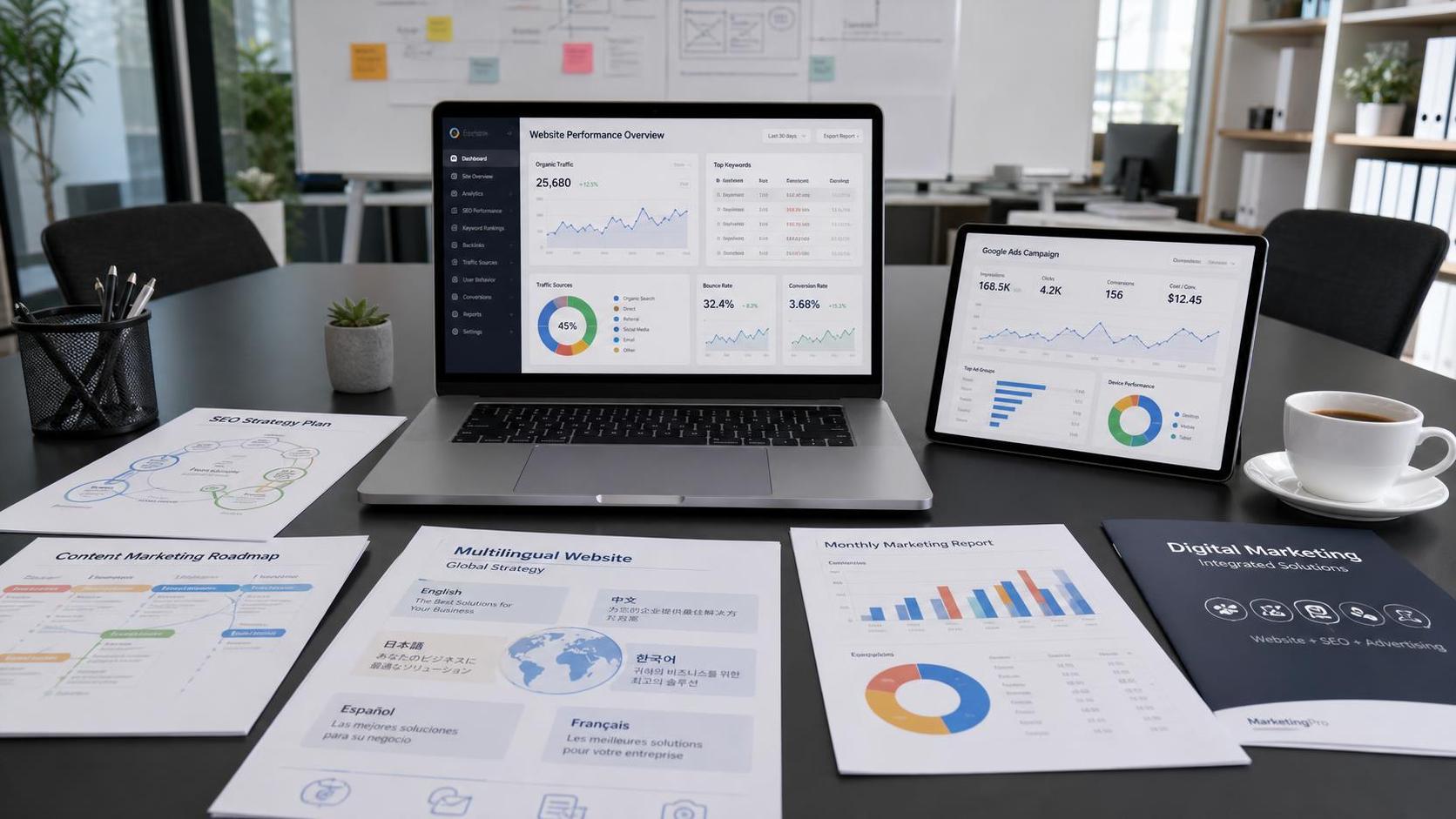
 EasyCamp SaaS نظام ذكي لبناء المواقع الإلكترونية والتسويقنظام التسويق الذكي للمواقع الإلكترونية E-Yingbao SaaS: إنشاء مواقع إلكترونية بدون كتابة أكواد برمجية وبواسطة الذكاء الاصطناعي. أنشئ مواقع تجارة إلكترونية مستقلة متعددة اللغات في غضون 10 دقائق فقط. تسريع الخادم العالمي وتحسين محركات البحث بواسطة الذكاء الاصطناعي يمكّن الشركات من التواصل بفعالية مع الأسواق العالمية. الاندماج السلس بين التكنولوجيا والتشغيل السهل يجعل تطوير مواقع التجارة الإلكترونية أمرًا في غاية البساطة.
 خدمة تحسين نظام AI + SEO المزدوجنظام تحسين Yi Ying Bao AI + SEO المزدوج، من خلال استخراج الكلمات الرئيسية الذكية بواسطة الذكاء الاصطناعي، وإنشاء المحتوى والتحسين التقني الشامل، لمساعدة شركات التجارة الخارجية في الحصول على حركة مرور طبيعية عالية الجودة، وتحسين ترتيب البحث ومعدل التحويل بشكل ملحوظ.
 نظام ذكاء الإعلانات AI+SEM للتسويقيقود AI+SEM الإعلانات الذكية، ويمكّن التسويق الدقيق للإعلانات عبر سلسلة كاملة. يولد النظام تلقائيًا تقارير أسبوعية/شهرية، ويوصي AI بالكلمات الرئيسية والبلدان المستهدفة، ويراقب المؤشرات الأساسية في الوقت الفعلي مع تنبيهات ذكية، ويطلق خطة إعلانية عالية التحويل بنقرة واحدة، مما يساعد على اكتساب عملاء سريعًا وتحسين عائد الاستثمار.
 نظام التسويق عبر وسائل التواصل الاجتماعي AI+SNSنظام التسويق الذكي Yingyingbao AI+SNS Social Media - التقاط دقيق للوسائط الاجتماعية في عصر وسائل التواصل الاجتماعي. يدعم مزامنة المحتوى بنقرة واحدة عبر المنصات الرئيسية بما في ذلك Facebook و LinkedIn. تعزز إعادة كتابة المنشورات المدعومة بالذكاء الاصطناعي التوطين. تتيح خدمة العملاء الذكية على مدار الساعة وطوال أيام الأسبوع وتحليل ملفات تعريف المستخدمين للشركات التوسع بكفاءة في الأسواق العالمية.
 حلول التسويق الإعلاني AI+SEMتستفيد حلول الإعلانات SEM المدعومة بالذكاء الاصطناعي من الذكاء الاصطناعي لتحسين إدارة حملات SEM بشكل كبير. باستخدام الذكاء الاصطناعي لإنشاء تقارير أسبوعية وشهرية، تقدم هذه الحلول بيانات الحساب عبر أبعاد متعددة، مما يتيح الإشراف الشامل على أداء الإعلانات واتجاهاتها. يقدم الذكاء الاصطناعي توصيات دقيقة بشأن الكلمات الرئيسية والبلدان المستهدفة، ويصمم نصوص إعلانية عالية التحويل بذكاء، ويبدأ نشر الحملات بكفاءة بنقرة واحدة، مما يسرع من اكتساب العملاء للشركات. في الوقت نفسه، يراقب النظام المقاييس الأساسية في الوقت الفعلي، ويحدد التقلبات غير الطبيعية بذكاء، ويصدر تنبيهات في الوقت المناسب، مما يضمن أداء إعلانيًا مستقرًا وعوائد عالية.
 AI+SEO营销解决方案易营宝AI+SEO营销解决方案,通过AI批量写作、智能生成TDK、精准关键词扩词等功能,全面优化网站SEO效果,提升流量与转化率。助力企业构建高效智能网站新生态。
 خدمات أسماء النطاقاتيقدم يي يينغ باو خدمات احترافية لأسماء النطاقات، تشمل الاستعلام الذكي، التسجيل الشامل، حماية العلامة التجارية، والإدارة الشاملة، لمساعدة الشركات في بناء صورة العلامة التجارية الرقمية.
 متجر EasyOperate B2C عبر الحدود وموقع مستقلمنصة متجر B2C عبر الحدود المستقلة من EasyStore هي حل متكامل للبناء الذكي للمواقع والتجارة الإلكترونية عبر الحدود، تم تطويره بشكل مستقل من قبل شركة EasyStore لتكنولوجيا المعلومات (بكين) المحدودة. تم تصميم النظام خصيصًا للشركات الصغيرة والمتوسطة وكذلك الكبيرة المصدرة، حيث يجمع بين "البناء، التشغيل، التسويق، الإعلان، التحويل" في نظام واحد، لمساعدة الشركات على إنشاء موقع تجارة إلكترونية مستقل عبر الحدود بسرعة، وتحقيق النمو في المبيعات العالمية وانتشار العلامة التجارية في الخارج. تدعم المنصة تعدد اللغات والعملات وقنوات التسويق، وتضم نظام ترجمة ذكي يعمل بالذكاء الاصطناعي ونظام تحسين محركات البحث (SEO)، وهي مناسبة للأسواق الرئيسية مثل جنوب شرق آسيا، أوروبا وأمريكا، أمريكا اللاتينية، الشرق الأوسط، مما يساعد الشركات المصنعة الصينية على التخطيط الفعال للتجارة الإلكترونية الدولية.
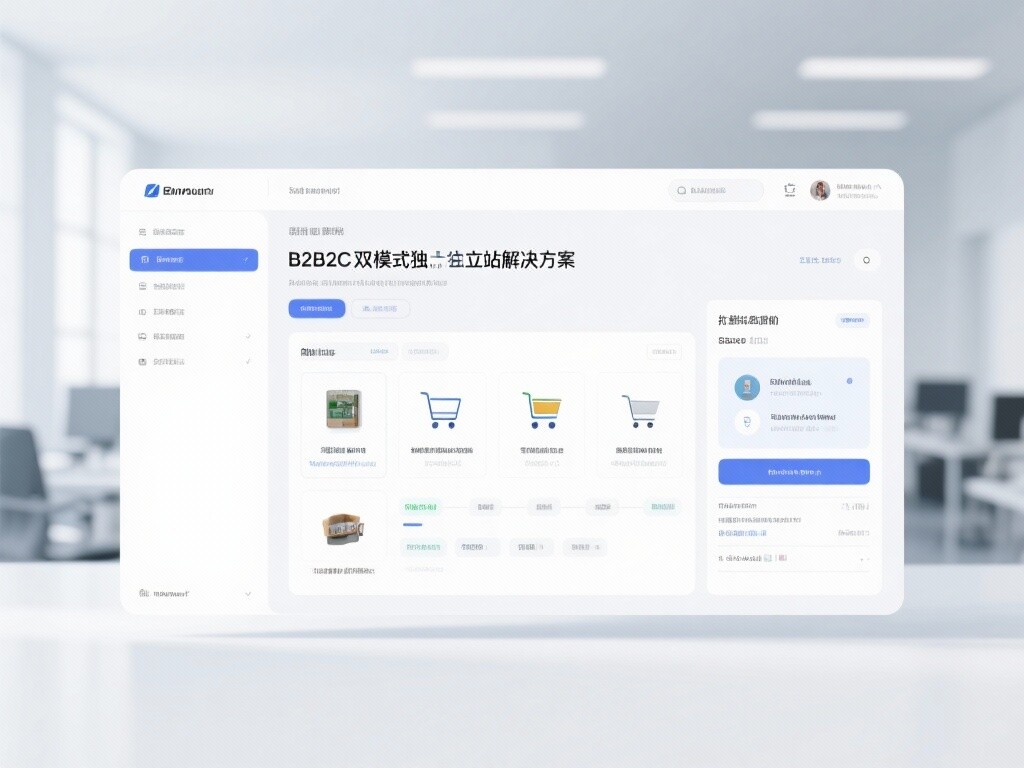
 B2B2C双模式独立站解决方案易营宝推出的B2B2C双模式独立站解决方案,专为同时开展批发与零售业务的企业打造。平台支持商品价格展示、商品多规格管理、购物车与购物车弹窗、购物车总价计算,以及统一批量询价等功能,帮助企业以更高效、更直观的方式触达B端与C端客户。通过云建站、大数据分析与广告智能投放体系,助力企业打破渠道壁垒,实现国内外市场拓展与品牌价值提升。