When evaluating an AI + SEO project in the U.S. market, don’t focus on traffic alone. Verify the authenticity of inquiries, purchase intent, and customer fit to determine whether the investment can generate business opportunities. A qualified inquiry should be verifiable by the sales team and enter a traceable business process.
Business evaluators should first ask whether the contacts generated by the service provider belong to the target customer group, have specific needs, and can be moved toward a quotation. Rankings, traffic, and form submissions can help explain the process, but cannot prove customer acquisition value on their own.
Before purchasing, therefore, agree with the service provider on the definition of a qualified inquiry, channel attribution rules, and cost calculation. For export businesses with long purchasing cycles, also assess results in light of opportunity progress, rather than using short-term revenue to discount customers who are still being nurtured.
Which inquiries from U.S. customers should count toward results?

A qualified inquiry should meet at least three conditions: the contact can be verified, the need relates to products or services the company can provide, and the customer is a reasonable fit for the target market. Spam, partnership pitches, job applications, and duplicate submissions should be excluded from the statistics.
Verification can draw on the company website, email domain, company information, and sales communication records. A free email address does not automatically make an inquiry invalid, and a corporate email address does not necessarily indicate purchase intent. What matters is whether the contact’s identity and needs can be corroborated.
Market fit cannot be determined solely by whether the visitor’s IP address is in the United States. U.S. buyers may contact suppliers through overseas offices, while visitors from the U.S. may lack purchasing authority. Consider the company’s location, delivery destination, and the contact’s purchasing responsibilities together.
Purchase intent should be assessed using specific details, such as product specifications, application, estimated quantity, delivery timeline, and certification requirements. Contacts who only ask about price can be placed in a pending-verification pool; count as qualified inquiries only those with clear needs, a good fit, and a willingness to continue discussions.
How should qualified inquiries and sales opportunities be classified?
Consider classifying leads into four levels: raw inquiries, qualified inquiries, sales-accepted leads, and opportunities. A raw inquiry indicates that contact has been made; a qualified inquiry has passed basic verification; a sales-accepted lead is worth pursuing; and an opportunity requires clearer evidence of purchasing progress.
When accepting a lead, sales should record the reason, such as product fit, a reasonable purchase quantity, or alignment with the target industry. If a lead is rejected, the reason should also be recorded. Otherwise, the service provider cannot tell whether the keywords attracted the wrong people or the company’s supply capabilities were not a match.
At the opportunity stage, require a clearly defined need and an agreed next step, such as sending samples, discussing technical details, or confirming a quotation. For custom manufacturing, a customer willing to provide drawings is usually more valuable than someone who simply downloads materials, but the project’s authenticity still needs to be verified.
Both parties should include the qualification criteria in a project appendix and agree on the deduplication window, how to handle existing customers, and a process for reviewing disputed cases. Multiple form submissions from the same customer should not count as multiple new customers; a new project from an existing customer can be recorded separately.
Which metrics show whether the investment is worth continuing?
At a minimum, business evaluations should track the qualified inquiry rate, sales acceptance rate, opportunity conversion rate, and cost per qualified inquiry. State the denominator for each metric—for example, calculate the sales acceptance rate based on qualified inquiries—to avoid inconsistent comparisons across months or service providers.
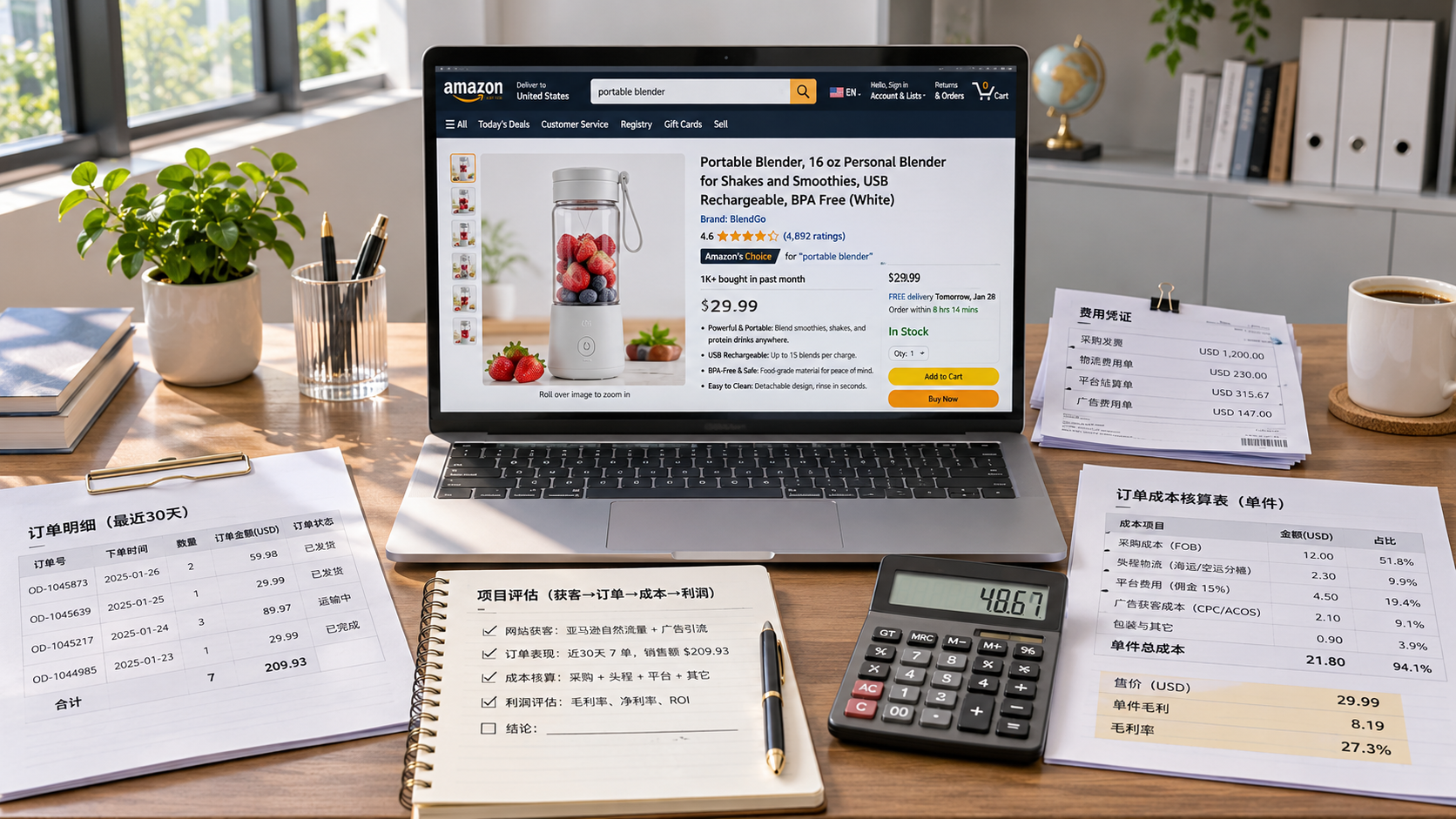
Cost per qualified inquiry can be calculated by dividing the project investment over the agreed period by the number of qualified inquiries. Specify whether the investment includes service fees, content production, technical improvements, and website development amortization. If advertising spend is included, show it separately to make each channel’s contribution easier to assess.
For example, if a project costs RMB 30,000 over a given period and generates 60 raw inquiries, of which 20 are verified as qualified, the qualified inquiry rate is approximately 33%, and the cost per qualified inquiry is RMB 1,500. This is a calculation example, not an industry benchmark.
Whether the cost is reasonable depends on the average order value, gross margin, and probability of a future sale. Inquiries for high-value equipment should not be compared directly with inquiries for low-cost standard parts. Historical sales data can help set a cost ceiling, which should then be refined as actual sales results come in.
How can you show that inquiries came from SEO rather than other channels?
Website forms should capture the source channel, first-visit page, submission page, and submission time, and be linked to the customer relationship management system. Record the source of calls, emails, and appointment requests wherever possible; otherwise, tracking forms alone will miss some genuine purchasing inquiries.
For attribution, retain both the first-touch source and the source before submission. A customer may first learn about the company through organic search and then return through a branded search to make an inquiry. Looking only at the last visit can undervalue the role earlier content played in the customer’s decision.
Report organic search, paid advertising, social media, and other referral sources separately. Traffic from identifiable AI platforms can be reported as a separate category. If the source cannot be confirmed, label it as unknown; do not attribute all new inquiries to AI optimization.
For verification, sample and compare website analytics, form records, and sales feedback. Evaluators should have access to evidence that can be reviewed, but customer personal information should not be included in public reports. Use IDs and only the necessary fields in routine reporting.
What should a service provider deliver to support a business evaluation?
When evaluating AI + SEO services for the U.S. market, require reports that connect keywords, landing pages, inquiries, and sales results. Whether pages aimed at buyers generate well-matched customers is more persuasive than ranking improvements alone, and makes it easier to identify problems.
AI can help identify search needs, organize content, and analyze leads, but technology labels cannot substitute for business results. The service provider should also explain how English content is reviewed, product specifications are checked, and page promises are kept within the company’s actual delivery capabilities.
For a service provider such as 易营宝 that covers website development, search optimization, and overseas marketing, the evaluation should focus on whether all stages work together: whether the website makes it easy to submit inquiries, the content answers purchasing questions, and channel data feeds into sales feedback and review processes.
When comparing proposals, ask service providers to show anonymized inquiry samples, qualification criteria, and report formats, and to explain data access permissions. Case studies should state the industry, investment, and observation period. Cumulative customer numbers or growth claims alone cannot demonstrate the return from the current project.
Use consistent definitions and the full sales cycle to reach a final decision
At the start of a project, establish a baseline and check that tracking is complete, then monitor changes in indexing, visits to target pages, and inquiry quality. The time needed for search optimization to produce results depends on the website’s starting point and the level of competition. Agree on evaluation milestones based on actual circumstances rather than relying on fixed promises.
For subsequent reviews, group inquiries by the month they were generated and continue tracking sales acceptance, quotations, and sales progress. This helps assess both the quality of new inquiries and the maturity of older leads, rather than mechanically attributing sales closed this month to optimization spending this month.
The final decision should address three questions: Are there more qualified customers? Is the acquisition cost acceptable? Has sales progress improved? If traffic rises while the qualification rate falls, first adjust keywords and pages. If inquiries are a good fit but progress is slow, review response and quotation processes.
To measure the value of a project in the U.S. market, connect verifiable customer needs with business results. By first defining qualified inquiries and then linking attribution with sales feedback, business evaluators can decide whether to renew, what to optimize, and how much to invest in the next phase.