









- APEC Shenzhen Spotlight: Cross-Border E-Commerce Orders Promote Asia-Pacific Trade and Economic CooperationNov 08, 2026View details
- China-Europe Railway Express and CIIE Hold Business Matchmaking Event, Focusing on Cross-Border E-commerce B2B ExportsNov 07, 2026View details
- China’s Ministry of Commerce Responds to Additional Charges on Low-Value Imports Imposed by the EUNov 06, 2026View details
- Two Internet Development Reports Released at the 2026 World Internet ConferenceNov 05, 2026View details
- Internet Business Revenue of Enterprises Above the Designated Size Reached RMB 1.716 Trillion in the First Three Quarters, with Profits Up 17.6%Nov 05, 2026View details
- Shopify's Third-Quarter Revenue and GMV Fall Short of Expectations, Sending Shares Tumbling Before the Market OpensNov 04, 2026View details
Independent website or third-party platform for customer acquisition in cross-border marketing? How to choose based on cost and accumulated assets
For cross-border marketing,should you acquire customers through an independent website or a third-party platform?First look at the underlying decision logic
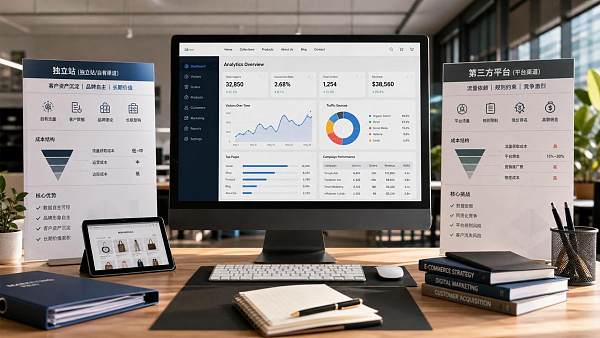
For cross-border marketing,should you acquire customers through an independent website or a third-party platform?In recent years,this question has increasingly become a business question,not just a traffic question。
Many companies initially pay more attention to quick results,low investment,and simple operation,so they often start with platforms first。
But after truly operating for a period of time,problems will gradually emerge:whether the traffic belongs to them,whether customers can be reached repeatedly,and whether the brand has been retained。
This also means that,for cross-border marketing,whether to acquire customers through an independent website or a third-party platform cannot be judged only by front-end customer acquisition cost;it also depends on back-end repurchase efficiency,customer asset accumulation,and risk resistance。
Simply put,a third-party platform is more like a “rented storefront”,while an independent website is more like a “store operated by yourself”。The former is suitable for quickly getting orders,while the latter determines long-term growth。
The advantages of third-party platforms are very direct,but their boundaries are also very clear
Let’s first talk about the platform model。Whether it is a cross-border e-commerce platform or an industry matchmaking platform,its greatest advantage is that it comes with built-in traffic and a transaction environment。
For companies that are just going overseas,have not fully validated their products,and have limited team capabilities,platforms can shorten the cold-start period。
Several practical values of platforms are very clear:
- Ready-made traffic entrances,enabling faster initial launch。
- Mature transaction rules,with a shorter conversion path。
- A stronger foundation of user trust,especially suitable for products with a low decision-making threshold。
- Standardized operational actions,making rapid replication easier。
But the problems of platforms are also not hard to see。Traffic belongs to the platform,rules belong to the platform,and customer information often does not truly belong to the company itself。
Once platform policies change,bidding costs rise,or category competition intensifies,companies will immediately feel their profits being squeezed。
More importantly,platforms are often more suitable for “selling products”,but not necessarily suitable for “building a brand” or “developing long-term customer relationships”。
Therefore,for cross-border marketing,if the choice between acquiring customers through an independent website or a third-party platform is judged only by short-term transactions,platforms usually have more advantages;if long-term operation is considered,the answer is not that simple。
The cost of an independent website is not only in website building,but more in the operating system
When many people mention independent websites,their first reaction is high cost。In fact,the real cost of an independent website is not just the website construction fee,but the subsequent customer acquisition and content operation capabilities。
Because an independent website has no natural traffic,turning the site into a stable customer acquisition channel requires coordinated advancement of SEO,advertising,social media traffic generation,content updates,and conversion optimization。
For many companies,this threshold is indeed higher。
But from another perspective,this is exactly where the core value of an independent website lies。It is not a simple official website,but the company’s own overseas marketing base。
Once an independent website starts running effectively,it will gradually form three types of key assets:
- Content assets。Pages,case studies,product keywords,and industry keywords will continuously bring organic traffic。
- Customer assets。Inquiries,forms,visit behavior,and remarketing data can be used repeatedly。
- Brand assets。Site presentation,trust endorsements,and professional expression will continuously accumulate awareness。
This is why more and more companies are rethinking whether cross-border marketing should use an independent website or a third-party platform to acquire customers,and whether what ultimately matters is “cost” or “assets”。
From the perspective of cost structure,platforms are lighter in the short term,while independent websites are more stable in the long term
If the calculation is made more carefully,the cost logic of the two models is completely different。
Judging from recent changes,advertising costs,platform commissions,and competitive barriers are generally rising,which has led many companies to reassess the long-term return of the platform model。
By contrast,although an independent website requires a heavier start,as long as the site structure,content strategy,and advertising system are built correctly,subsequent customer acquisition costs are often more controllable。
Therefore,for cross-border marketing,whether to acquire customers through an independent website or a third-party platform is essentially a trade-off between short-term efficiency and long-term returns。
From the perspective of asset accumulation,independent websites are more suitable for long-term growth
When companies go further in overseas expansion,what is truly scarce is not one-time traffic,but reusable customer assets。
Transactions on platforms often stay at the order level。Transactions and inquiries on independent websites are more likely to accumulate into customer relationships。
For example,in common B2B scenarios with high order value and long decision-making chains,customers often search multiple times,compare repeatedly,and review case studies before deciding whether to make contact。
At this time,an independent website with multilingual content,SEO structure,conversion paths,and trust endorsements will be much more valuable than a platform page。
A more obvious signal is that overseas marketing has shifted from “competing for traffic” to “building accumulation”。Whoever can control data will have a greater opportunity to continuously reduce customer acquisition costs。
This is also why,when considering whether cross-border marketing should use an independent website or a third-party platform to acquire customers,more and more mature companies choose to center on an independent website and then add platform channels。
What types of companies are more suitable for platforms,and what types should build independent websites
If you are still judging whether cross-border marketing should use an independent website or a third-party platform to acquire customers,you can first divide it by business stage。
- Suitable for prioritizing platforms:projects with highly standardized products,a need for quick orders,a lean team,and a need to validate the market first。
- Suitable for focusing on independent websites:companies with high customer unit prices,long decision-making chains,a focus on brand,a focus on inquiries,and a focus on long-term repurchases。
- Suitable for dual-track operation:companies that need both transaction efficiency and brand accumulation,and hope to reduce the risk of relying on a single channel。
In actual business,manufacturing companies,foreign trade factories,and brands going overseas are often more suitable for using independent websites as their core base。
Because these industries do not only sell products;they also need to demonstrate strength,case studies,qualifications,delivery capability,and localized service capability。
And this content is usually difficult to fully present within platforms。
A more stable approach is not choosing one of the two,but building your own growth portfolio
In many cases,for cross-border marketing,the best answer to whether to acquire customers through an independent website or a third-party platform is not either-or。
A more stable path is:use platforms to support short-term transactions,use independent websites to accumulate long-term assets,and then combine search,advertising,and social media to form a closed loop。
If you want to make this model truly run smoothly,the key lies in three things:
- First clarify the goal,whether it is quick transactions or long-term customer acquisition。
- Then build the website and channels,rather than having only a website without a promotion system。
- Finally review the data,connecting inquiry quality,conversion cycle,and customer sources。
For an integrated website and marketing service platform like Yiyingbao,its value lies in placing website building,SEO,advertising,social media operations,and AI optimization capabilities into the same growth framework。
The benefit of doing this is very practical:it is not about separately delivering a website,but helping companies build an overseas marketing system that can be promoted,indexed,and converted。
Ultimately,for cross-border marketing,whether to acquire customers through an independent website or a third-party platform depends on whether the company wants to buy “current traffic” or “future growth capability”。
If the goal is only to get orders as soon as possible,platforms can run first;if the goal is to go deeper into overseas markets,retain customers,and establish the brand,an independent website must be planned as early as possible,and the earlier it starts,the more compounding benefits it can generate。
Related Articles
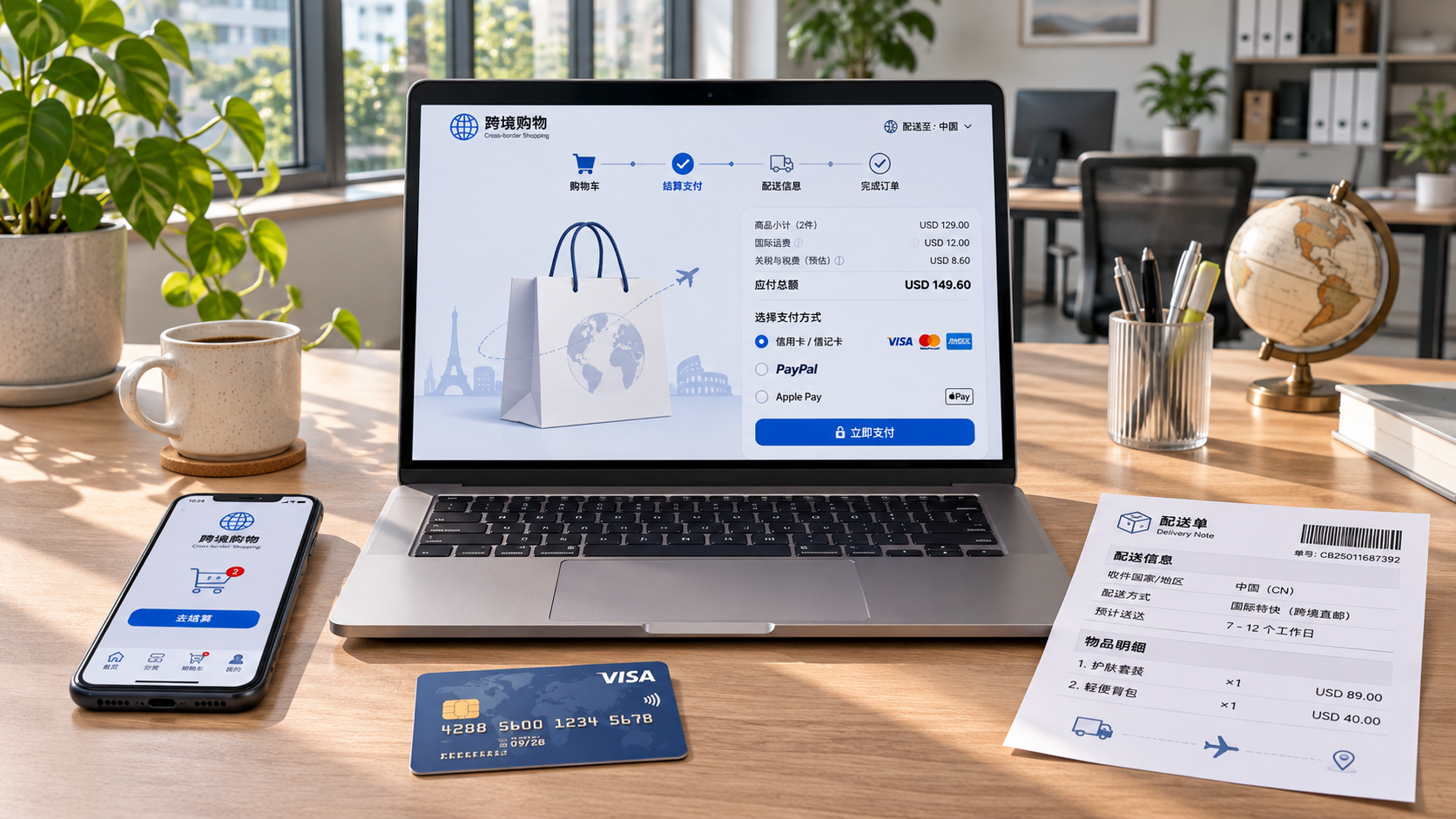
 How to Reduce High Checkout Abandonment on a Cross-Border E-commerce Website
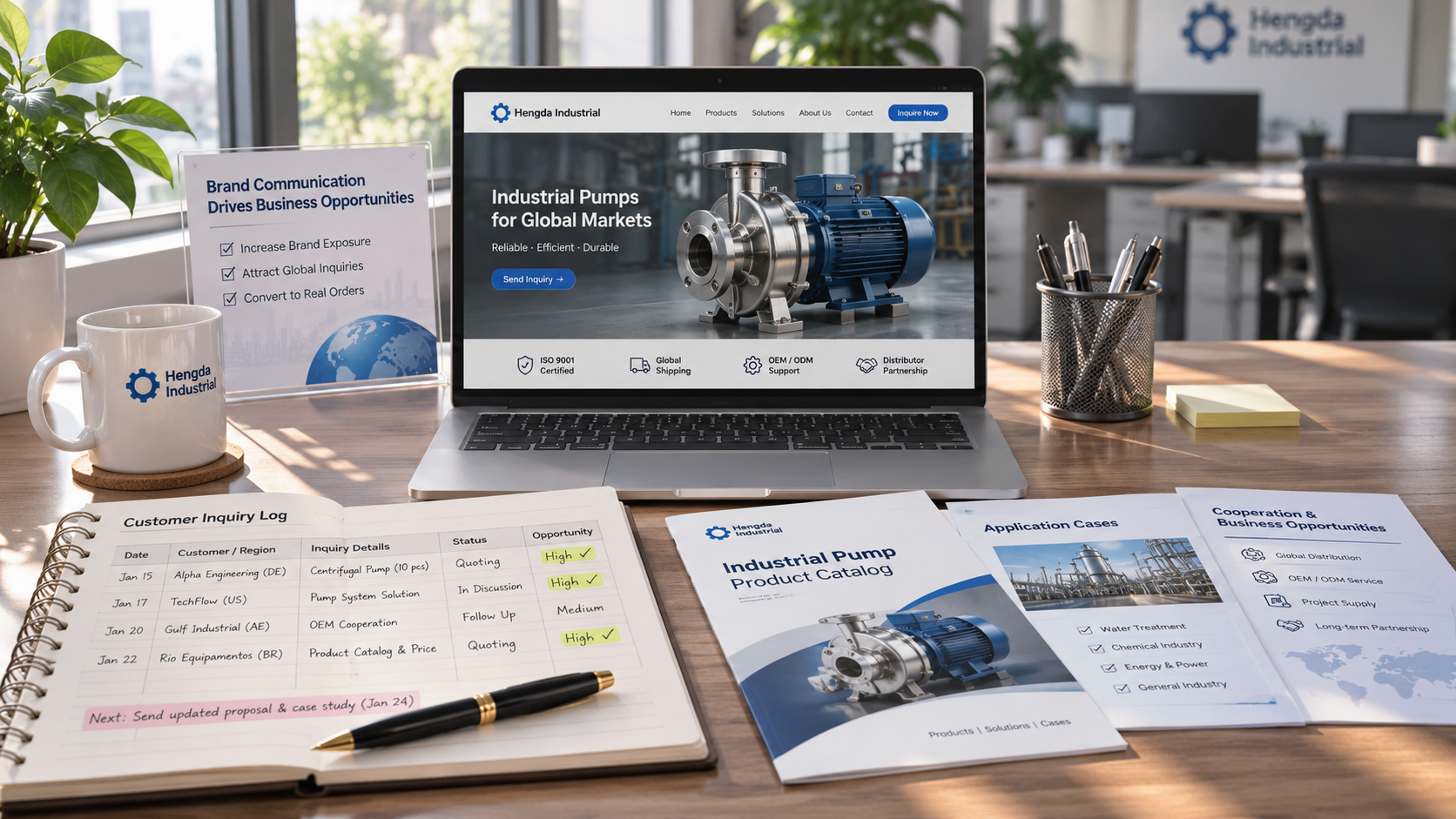
 How long does it take to see results from increasing brand awareness? How can you tell if it’s working?
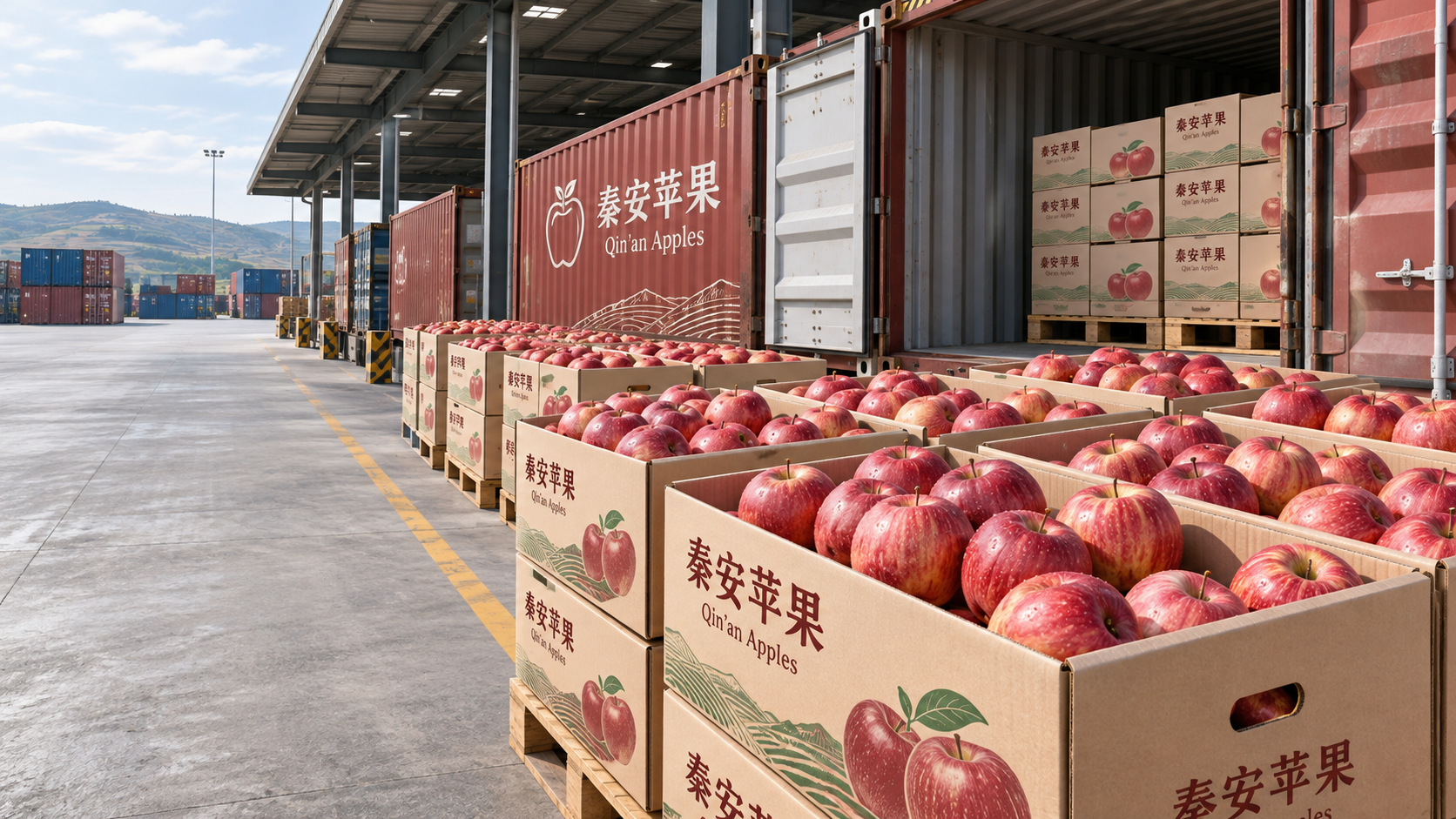
 Gansu’s First: 96 Tonnes of Qin’an Apples Exported to Gabon via Cross-Border E-Commerce
Related Products
 Yiyingbao SaaS Intelligent Website Building and Marketing SystemYiyingbao SaaS Intelligent Website Building and Marketing System, AI-powered no-code website building, rapid creation of multilingual B2B international websites in 10 minutes, global server acceleration, AI-powered SEO optimization, helping businesses connect efficiently with global markets. The perfect integration of technology and operation makes building an international trade website remarkably simple
 AI+SEM Intelligent Advertising Marketing SystemAI+SEM drives intelligent ad creation, empowering full-funnel precision advertising marketing. The system automatically generates weekly/monthly reports, AI recommends keywords and target countries, monitors core metrics in real-time with intelligent alerts, and enables one-click high-conversion ad solutions to help quickly acquire customers and improve ROI.
 AI+SEO Dual-Engine System Optimization ServicesYiyingbao’s AI+SEO dual-engine optimization system helps foreign trade enterprises acquire high-quality organic traffic through AI-powered keyword research, content generation, and comprehensive technical optimization, significantly improving search rankings and conversion rates.
 AI+SNS Social Media Marketing SystemYingbao AI+SNS Social Media Marketing System - Precision social capture for the social media era. Supports one-click content synchronization across major platforms like Facebook and LinkedIn. AI intelligently rewrites posts for enhanced relevance. 24/7 AI customer service and user profiling analysis empower businesses to efficiently expand into global markets.
 AI+SEO营销解决方案易营宝AI+SEO营销解决方案,通过AI批量写作、智能生成TDK、精准关键词扩词等功能,全面优化网站SEO效果,提升流量与转化率。助力企业构建高效智能网站新生态。
 AI+SEM Advertising Marketing SolutionsAI+SEM Advertising Marketing Solution leverages AI technology to deeply empower SEM ad campaigns. It automatically generates weekly/monthly reports using AI, presenting account data across multiple dimensions for comprehensive insights into campaign performance and trends. The system precisely recommends keywords and target countries, intelligently generates high-conversion ad copy, and enables one-click activation of efficient campaign plans to help businesses rapidly acquire customers. Simultaneously, it monitors core metrics in real time, intelligently identifies abnormal fluctuations, and issues timely alerts to ensure stable, high-return advertising results.
 Domain Name ServicesEasyWin provides professional domain name services, including intelligent queries, one-stop registration, brand protection, and full lifecycle management, helping businesses build a digital brand image.
 EasyOperate B2C Cross-Border E-Commerce Platform & Independent WebsiteEasyStore B2C Cross-border E-commerce Independent Store is an intelligent website building and cross-border e-commerce integrated solution independently developed by EasyStore Information Technology (Beijing) Co., Ltd. The system is specially designed for small and medium-sized as well as large export enterprises, integrating 'website building, operation, marketing, advertising, and conversion' into one, helping enterprises quickly establish cross-border e-commerce independent stores to achieve brand globalization and global sales growth.
The platform supports multiple languages, multiple currencies, and multi-channel marketing, with built-in AI intelligent translation and SEO optimization systems, suitable for mainstream markets such as Southeast Asia, Europe and America, Latin America, and the Middle East, assisting Chinese manufacturing enterprises in efficiently deploying international e-commerce strategies. SSL证书易营宝提供专业SSL安全证书服务,包括单域名和泛域名证书,确保网站数据传输加密、身份验证和完整性保护,助力企业建立安全可信的在线业务环境。









