









- Which customer acquisition channels will be affected by cross-border marketing trends in 2026?Sep 06, 2026View details
- Which homogenization risks should be considered in an analysis of the AI-powered website building industry?Aug 30, 2026View details
- How Will AI Marketing Trends 2026 Change Advertising Budget AllocationAug 28, 2026View details
- Is the EV SSL certificate market shrinking or upgrading? How should companies assess certificate procurement?Aug 11, 2026View details
- Why the old AMP SEO 2020 practices no longer work and what has changed in current optimization prioritiesAug 02, 2026View details
- How to Choose Topics for an Industry News Section to Attract More Organic Search TrafficJul 29, 2026View details
- Digital Marketing Shenzhen Market Insights: Why Are Companies Expanding Overseas Looking for Growth Teams in Shenzhen?Jul 31, 2026View details
- Can Zhejiang foreign trade independent websites still be developed today? Look at changes in traffic and lead generationJul 28, 2026View details
How should overseas marketing budgets be allocated? Reference for the proportion of investment in SEO, advertising, and social media operations.
When budgeting for an overseas marketing plan, should you look at the total amount first or the structure first?
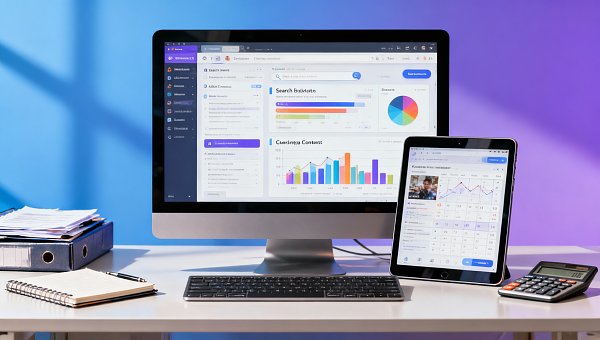
When developing an overseas marketing plan, what truly determines the outcome is often not the budget figure itself, but whether the allocation structure is reasonable. With the same investment, some projects can see an increase in inquiries within three months, while others remain in a state of "spending money but not generating any results" for a long time. The difference usually lies in the channel combination.
A more common approach is to break down the budget into four parts: website infrastructure, SEO, advertising, and social media operations, and then examine whether the target market, customer acquisition cycle, and conversion path align. The advantage of integrated website and marketing services lies in its ability to evaluate website building, traffic generation, and lead generation within the same logical framework.
Integrated service platforms like YiYingBao have long managed intelligent website building, SEO optimization, social media marketing, and advertising within the same growth trajectory. For budget approval, this model makes it easier to see whether each investment is for traffic generation, conversion, or long-term asset accumulation.
How should the investment ratio be determined for SEO, advertising, and social media operations?
For new projects, it's generally not advisable to divide the budget evenly in overseas marketing strategies. While evenly dividing may seem safe, it can easily lead to insufficient depth in each channel, resulting in neither short-term results nor long-term accumulation.
A more practical reference ratio can start with the framework below, and then be fine-tuned according to the industry's average order value and market maturity.
In short, advertising is responsible for speed, SEO for stability, and social media operations for continuous reach and trust building. If overseas marketing strategies rely solely on advertising, costs will continue to rise; if they only focus on SEO, there may not be sufficient business feedback in the early stages. A layer of social media is needed between the two to amplify content distribution and brand recall.
When should you invest more in advertising, and when should you allocate your budget to SEO?
There are no fixed answers to these kinds of questions, but several indicators are very clear. If the market is newly entered, website content is insufficient, and keyword ranking is weak, advertising usually has to shoulder more responsibility. This is because at this stage, the most important thing is to first verify the target region, landing page, and inquiry conversion path.
Once a website has relatively complete product pages, case study pages, industry pages, and multilingual content, and some keywords begin to generate organic exposure, the budget should gradually shift towards SEO. The reason is straightforward: once organic traffic is established, the marginal cost per subsequent inquiry is usually lower than that of acquiring customers through pure advertising.
- Increased advertising share occurs during: new product launches, before and after trade shows, peak season sales surges, and testing in key countries.
- Increased SEO share is seen in situations where: there are already stable websites, content can be produced sustainably, and there is clear industry search demand.
- Social media enhancements are characterized by: long decision-making cycles, the need for repeated outreach, and insufficient brand awareness.
For integrated website and marketing service projects, this transition will be smoother. This is because the website structure, content planning, keyword layout, ad landing pages, and remarketing paths are already within a single system, so budget adjustments do not require a complete overhaul.
Is social media operation worth the continued investment, or is it just a supporting role?
Many budget approvals get stuck here. The reason is that social media marketing doesn't show immediate clicks like advertising, nor does it provide a visible ranking curve like SEO, so it's easily seen as a "dispensable" component. In reality, in overseas marketing strategies, social media acts more like a trust amplifier before conversion.
Especially in B2B, manufacturing, and high-priced equipment projects, clients rarely submit inquiries based on a single search. They repeatedly review the official website, social media pages, case studies, and update frequency. A stable social media presence often improves conversion rates after ad clicks and encourages organic traffic from SEO to stay.
This is even more evident if the target market is the Middle East. Besides adapting the website language and page layout to local reading habits, the content distribution pace must also align with how local platforms are used. Services like Arabic-language industry website building and marketing solutions offer more than just creating an Arabic site; they involve unifying right-to-left layout, localized content, social media strategies, and Arabic keyword placement.
What hidden costs are most easily overlooked during budget approval?
Many overseas marketing plans appear to have a reasonable allocation of channels, but their actual results are unstable. The problem is often not that the budget is too small, but rather that basic costs have been overlooked. The most typical example is insufficient website capacity, which means that the more money is spent on front-end traffic generation, the faster the website loses users on the back-end.
The following items typically need to be confirmed in advance:
- Do multilingual websites support localization, rather than just literal translation?
- Is the page suitable for search engine indexing? Can it serve as a landing page for advertisements?
- Is the data tracking complete? Can it distinguish between organic traffic, advertising traffic, and social media traffic?
- Are content maintenance, site security, SSL certificates, and domain policies included in the total budget?
This is why more and more companies are choosing service providers that offer integrated website building, SEO, advertising, and social media capabilities. Service systems like YiYingBao, driven by AI and big data, focus not only on channel execution but also on minimizing gaps between front-end campaigns and back-end site support, making budgets easier to quantify and track.
If we can only do part of it first, how should the overseas marketing plan be implemented in stages?
A phased approach is more stable than deploying across all channels at once. Especially when budgets require phased approval, establishing a verifiable small loop first, and then expanding investment, usually makes it easier to build internal consensus.
In practical applications, this pace not only controls early-stage risks but also establishes a basis for subsequent expansion. When dealing with the Middle Eastern market, Arabic-language websites, local social media content, and keyword advertising can be planned simultaneously. For example, by combining Arabic-language industry website development and marketing solutions , localized websites and maintenance capabilities can be completed first, and then the advertising intensity can be gradually increased.
Finally, how do we determine whether this budget allocation is approved, feasible, and reviewable?
To determine whether an overseas marketing plan is worth investing in, don't just focus on the total budget. A more effective approach is to check three things: whether the website has the capacity to handle the workload, whether the channel ratio is appropriate for the current stage, and whether the data can be collected and analyzed using the same set of standards.
If the answers are basically clear, the solution usually has a foundation for implementation. Conversely, if the website is just a display page, there's no content plan for SEO, no landing page strategy for advertising, and social media is consistently inactive, then even a high budget will struggle to create a closed-loop growth cycle.
A more prudent next step is to first clearly list the target market, budget cycle, channel goals, and conversion path, and then evaluate them in the order of "website foundation first, advertising verification and scaling, continuous SEO improvement, and social media synergy for amplification." An overseas marketing plan developed in this way is easier to approve and also easier to review and optimize after implementation.
Related Articles


Related Products
 Yiyingbao SaaS Intelligent Website Building and Marketing SystemYiyingbao SaaS Intelligent Website Building and Marketing System, AI-powered no-code website building, rapid creation of multilingual B2B international websites in 10 minutes, global server acceleration, AI-powered SEO optimization, helping businesses connect efficiently with global markets. The perfect integration of technology and operation makes building an international trade website remarkably simple
 AI+SEM Intelligent Advertising Marketing SystemAI+SEM drives intelligent ad creation, empowering full-funnel precision advertising marketing. The system automatically generates weekly/monthly reports, AI recommends keywords and target countries, monitors core metrics in real-time with intelligent alerts, and enables one-click high-conversion ad solutions to help quickly acquire customers and improve ROI.
 AI+SEO Dual-Engine System Optimization ServicesYiyingbao’s AI+SEO dual-engine optimization system helps foreign trade enterprises acquire high-quality organic traffic through AI-powered keyword research, content generation, and comprehensive technical optimization, significantly improving search rankings and conversion rates.
 AI+SNS Social Media Marketing SystemYingbao AI+SNS Social Media Marketing System - Precision social capture for the social media era. Supports one-click content synchronization across major platforms like Facebook and LinkedIn. AI intelligently rewrites posts for enhanced relevance. 24/7 AI customer service and user profiling analysis empower businesses to efficiently expand into global markets.
 AI+SEO营销解决方案易营宝AI+SEO营销解决方案,通过AI批量写作、智能生成TDK、精准关键词扩词等功能,全面优化网站SEO效果,提升流量与转化率。助力企业构建高效智能网站新生态。
 AI+SEM Advertising Marketing SolutionsAI+SEM Advertising Marketing Solution leverages AI technology to deeply empower SEM ad campaigns. It automatically generates weekly/monthly reports using AI, presenting account data across multiple dimensions for comprehensive insights into campaign performance and trends. The system precisely recommends keywords and target countries, intelligently generates high-conversion ad copy, and enables one-click activation of efficient campaign plans to help businesses rapidly acquire customers. Simultaneously, it monitors core metrics in real time, intelligently identifies abnormal fluctuations, and issues timely alerts to ensure stable, high-return advertising results.
 Domain Name ServicesEasyWin provides professional domain name services, including intelligent queries, one-stop registration, brand protection, and full lifecycle management, helping businesses build a digital brand image.
 EasyOperate B2C Cross-Border E-Commerce Platform & Independent WebsiteEasyStore B2C Cross-border E-commerce Independent Store is an intelligent website building and cross-border e-commerce integrated solution independently developed by EasyStore Information Technology (Beijing) Co., Ltd. The system is specially designed for small and medium-sized as well as large export enterprises, integrating 'website building, operation, marketing, advertising, and conversion' into one, helping enterprises quickly establish cross-border e-commerce independent stores to achieve brand globalization and global sales growth.
The platform supports multiple languages, multiple currencies, and multi-channel marketing, with built-in AI intelligent translation and SEO optimization systems, suitable for mainstream markets such as Southeast Asia, Europe and America, Latin America, and the Middle East, assisting Chinese manufacturing enterprises in efficiently deploying international e-commerce strategies. SSL证书易营宝提供专业SSL安全证书服务,包括单域名和泛域名证书,确保网站数据传输加密、身份验证和完整性保护,助力企业建立安全可信的在线业务环境。









