









- Lazada 11.11 Mega Sale: LazMall Contributes Nearly Two-Thirds of GMVNov 23, 2026View details
- Shein’s European Revenue Falls 16% as Tighter Rules on Low-Value Direct Shipments Take EffectNov 23, 2026View details
- EU Low-Value Parcel Rules Impact Cargo Flows: Air Freight Volume from China to Europe Down 17% in OctoberNov 23, 2026View details
- Indonesia and the EU Sign Comprehensive Economic Partnership Agreement, 90.4% of Tariff Lines to Become Duty-Free ImmediatelyNov 23, 2026View details
- Qingdao Port's Imports and Exports Exceed RMB 23.699 Trillion in the First 10 Months, Drawing Attention to Port IntelligenceNov 22, 2026View details
- Ningbo Cross-Border E-Commerce Export Value Surges 94.87% Year on Year, Opening Up a New Billion-Yuan Growth TrackNov 22, 2026View details
What Costs Should SMEs Consider When Choosing AI Website Building for Their Official Website?
The low entry price of AI website building often conceals the ongoing expenses incurred in operating an official website. For small and medium-sized enterprises, the real approval question is not “how much does it cost to build a website,” but whether the website can continuously support brand presentation, overseas customer acquisition, content updates, and market expansion at predictable costs over the next two to three years.
This is especially true for foreign trade websites. If a website serves only as a company introduction, the budgeting logic is relatively simple; if it must also support organic search traffic, Google Ads landing pages, multilingual inquiries, and social media traffic acquisition, the initial website-building fee is usually only part of the total investment. AI can reduce labor costs for page production and basic content generation, but it cannot automatically eliminate budgets for content review, search optimization, technical maintenance, and traffic acquisition.
First, distinguish between one-time construction costs and ongoing operating expenses
AI website-building solutions are often priced in monthly, annual, or package-based plans. While the entry threshold may appear low, their cost structures differ from those of traditional custom development. When seeking approval, quotations should be divided into two categories: construction investment required before launch, and operating expenses incurred continuously throughout the website’s lifecycle. Comparing the two together can easily lead to a misjudgment of a solution’s actual cost.
Pre-launch expenses typically include the domain name, website templates or visual customization, basic page setup, product information organization, initial multilingual configuration, form and inquiry process setup, and migration from an old website. Some platforms include these items in implementation services, while others provide only tool accounts, with page production, data entry, and translation requiring separate service purchases. “Website building included” in a quotation does not necessarily mean a complete official website ready for promotion is included.
Ongoing costs deserve even greater attention. These include SaaS subscriptions, server or bandwidth upgrades, plugins and third-party services, content maintenance, translation updates, technical support, SEO work, and promotion budgets. When choosing an annual subscription platform, companies should confirm renewal rates, plan upgrade rules, and charges for exceeding resource limits, rather than using first-year promotional pricing as the basis for long-term budgeting.
AI-generated content saves production time, but does not mean content costs fall to zero
AI tools can quickly generate product descriptions, initial page drafts, blog outlines, and multilingual text, making them particularly valuable for small manufacturing companies with numerous product models and scattered materials. However, website content directly affects customer understanding, search indexing, and inquiry quality, so generated results should not be published without review.
Product specifications, delivery time statements, certification information, applicable industries, and after-sales commitments all require internal company confirmation. For overseas markets, direct translation may also lead to inaccuracies in specification units, technical terminology, trade language, or compliance statements. These costs may not necessarily appear on a supplier invoice; they may also be reflected in the working hours that sales, technical, and marketing personnel spend on material verification and version management.
Therefore, when evaluating AI website-building solutions for SME official websites, the “responsibility for content preparation” should be defined within the project scope: who provides the source materials, who reviews English or other language versions, and who is responsible for synchronizing pages after product updates. If these responsibilities are not clearly defined, even low website-building costs can reduce the website’s practical value after launch due to outdated content.

SEO and customer acquisition budgets cannot be summarized simply as “optimization support”
Many website-building systems offer basic capabilities such as titles, descriptions, sitemaps, redirects, image alt text, and page loading optimization. These are necessary conditions for a website to be accessible to search engines, but they are not equivalent to continuously gaining organic traffic. From a financial perspective, “SEO capabilities” and “SEO services” should be accounted for separately.
The former mainly refers to system features that determine whether a website is easy for search engines to crawl and whether page structures and basic technical settings can be maintained. The latter involves marketing and content work, such as target market keyword research, category planning, product page optimization, industry content production, historical page organization, and performance reviews. The former is usually included in platform subscriptions or initial website construction, while the latter is more likely to be a monthly, project-based, or internally borne cost.
Likewise, connecting a website to Google Ads, social media pixels, or data analytics tools does not include advertising spend or campaign management fees. A common misconception is to regard the completion of an advertising landing page as the establishment of a customer acquisition system. In reality, advertising account structure, creative iteration, conversion event setup, invalid traffic control, and lead follow-up all affect the actual cost behind each inquiry. Official website budgets and customer acquisition budgets should be managed in connection with each other, but should not be treated as the same website-building expense.
The cost of a multilingual website depends on whether it is “copying pages” or “operating markets”
Multilingual expansion is one of the areas most likely to exceed budget later in the operation of a foreign trade website. Simply adding a language switcher involves relatively limited costs; however, if different countries require independent product portfolios, pricing strategies, delivery instructions, case studies, and search optimization, each language is closer to a market version that requires maintenance.
When seeking approval, there is no need to build complete websites for all potential markets from the outset. A more prudent approach is to determine the first batch of languages based on existing export regions and clear promotion plans, and confirm whether the system supports adding languages later, independent URL structures, manual revisions, and bulk content updates. If a platform can only mechanically replicate the same content across pages in different languages, future regionalized marketing may require migration or secondary development again.
Technical ownership and exit costs determine whether a low-priced solution is truly controllable
The advantage of subscription-based AI website building is that it eliminates the need to build proprietary servers and maintain complex code, but this convenience also creates platform dependency. What needs to be verified is not only whether the website can be exported, but also whether its page structure, product data, media files, form leads, article content, and SEO-related settings can be retained after export. If complete migration is not possible, rebuilding costs when changing service providers in the future may far exceed the expenses saved initially.
It is also necessary to clarify the domain registration entity, administrator permissions, data backup mechanisms, data retention period after service termination, and the ownership and export method of form leads. For platforms connected to CRM, email, payment, or customer data, permission management should also avoid complete reliance on a single service provider account. This is not merely an IT issue, but an issue of asset control in ongoing operations.
Use total cost of ownership rather than quotations to decide whether to approve
A more actionable assessment method is to calculate the total cost of ownership over the expected usage period: initial implementation fees, plus annual fixed subscription and basic service fees, as well as content maintenance, multilingual updates, necessary SEO or advertising operations, third-party tools, and internal collaboration hours. This investment should then be tied to verifiable business objectives, such as the number of qualified inquiries, sales follow-up efficiency, page coverage in key markets, or the update cycle for brand materials, rather than using only “whether the website has gone live” as the acceptance criterion.
If a company currently only needs to quickly establish a standardized English showcase website, with clear functional boundaries and infrequent content updates, a lightweight AI website-building solution is generally easier to control in terms of spending. If the official website will support long-term promotion across multiple markets, complex product management, and continuous content growth, priority should be given to solutions with transparent expansion rules, transferable data, and controllable SEO fundamentals, while setting aside a separate budget for operational activities.
AI website building lowers the threshold for launching and producing content for an official website, but it does not replace a company’s ongoing management of content, traffic, and customer leads. Only a solution that clearly defines subscription fees, service scope, internal investment, and exit costs is closer to a digital asset with predictable costs and long-term usability.
Related Articles
 When Should Chinese Companies Use a Headless CMS for Global Websites?
 How Does Permission Management Differ Between Enterprise Multilingual CMS Platforms and Standard Systems?
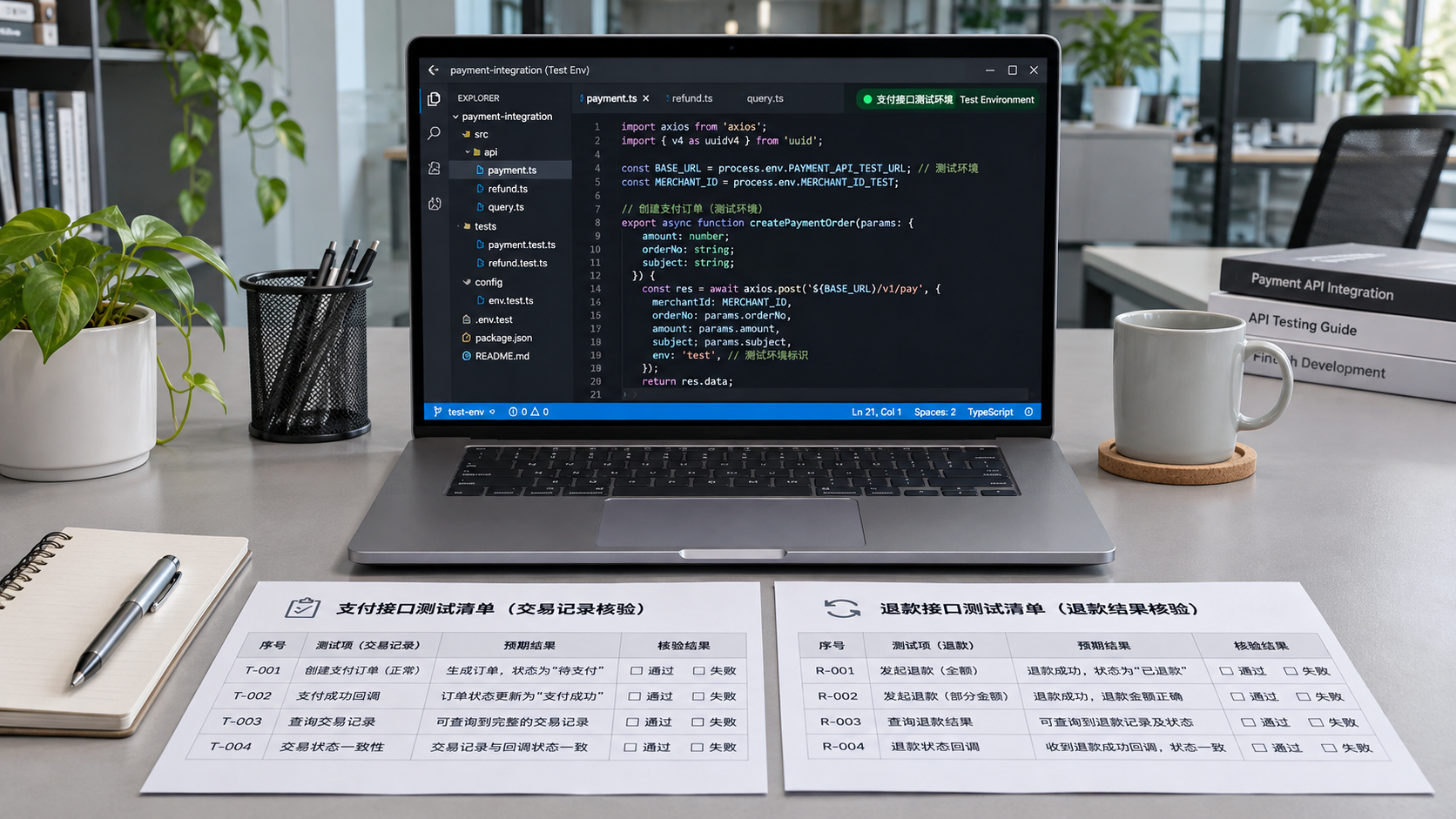
 How to Evaluate Payment Gateway Compatibility for Cross-Border E-commerce Platforms

Related Products
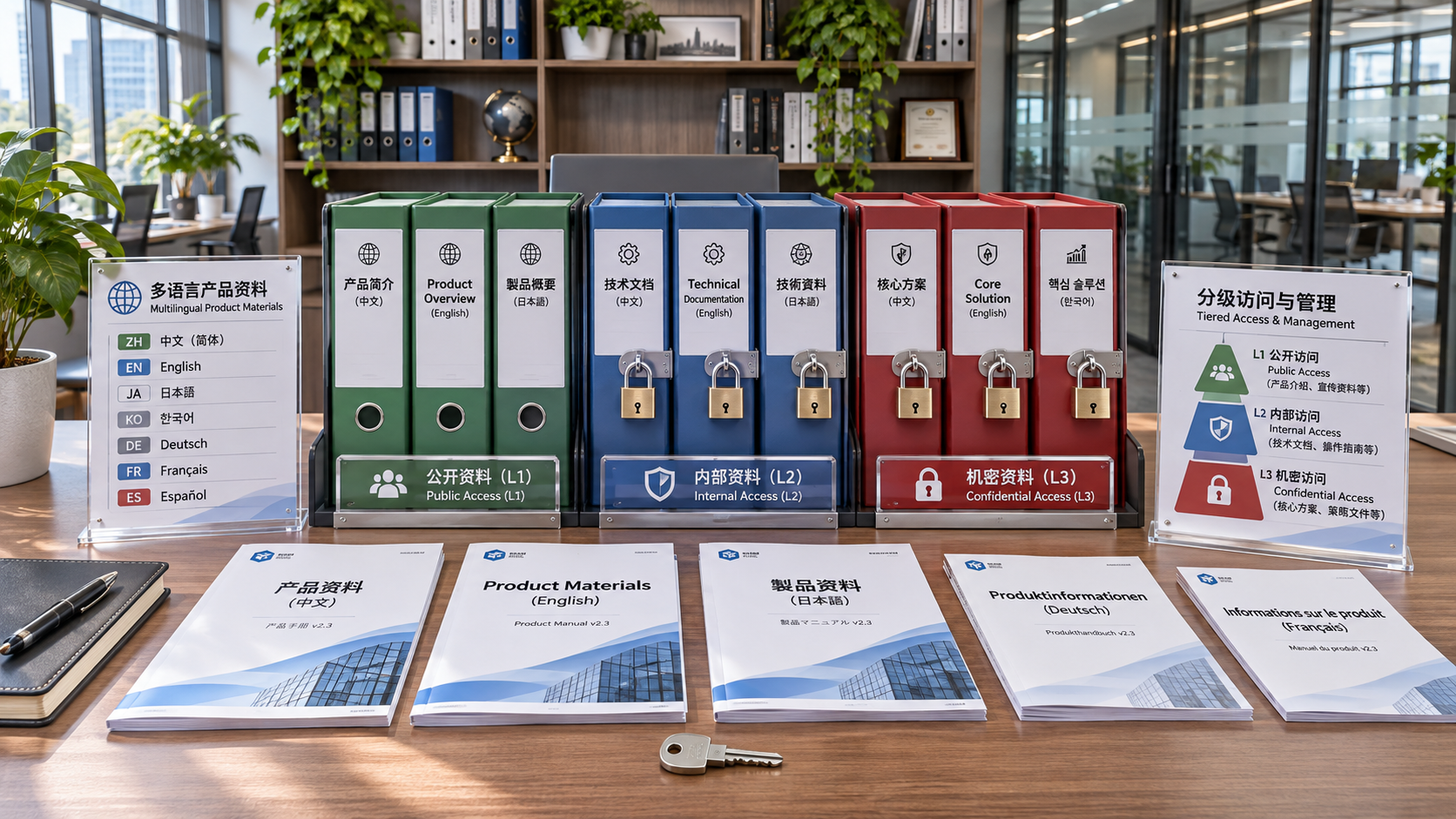
 Yiyingbao SaaS Intelligent Website Building and Marketing SystemYiyingbao SaaS Intelligent Website Building and Marketing System, AI-powered no-code website building, rapid creation of multilingual B2B international websites in 10 minutes, global server acceleration, AI-powered SEO optimization, helping businesses connect efficiently with global markets. The perfect integration of technology and operation makes building an international trade website remarkably simple
 AI+SEM Intelligent Advertising Marketing SystemAI+SEM drives intelligent ad creation, empowering full-funnel precision advertising marketing. The system automatically generates weekly/monthly reports, AI recommends keywords and target countries, monitors core metrics in real-time with intelligent alerts, and enables one-click high-conversion ad solutions to help quickly acquire customers and improve ROI.
 AI+SEO Dual-Engine System Optimization ServicesYiyingbao’s AI+SEO dual-engine optimization system helps foreign trade enterprises acquire high-quality organic traffic through AI-powered keyword research, content generation, and comprehensive technical optimization, significantly improving search rankings and conversion rates.
 AI+SNS Social Media Marketing SystemYingbao AI+SNS Social Media Marketing System - Precision social capture for the social media era. Supports one-click content synchronization across major platforms like Facebook and LinkedIn. AI intelligently rewrites posts for enhanced relevance. 24/7 AI customer service and user profiling analysis empower businesses to efficiently expand into global markets.
 AI+SEO营销解决方案易营宝AI+SEO营销解决方案,通过AI批量写作、智能生成TDK、精准关键词扩词等功能,全面优化网站SEO效果,提升流量与转化率。助力企业构建高效智能网站新生态。
 AI+SEM Advertising Marketing SolutionsAI+SEM Advertising Marketing Solution leverages AI technology to deeply empower SEM ad campaigns. It automatically generates weekly/monthly reports using AI, presenting account data across multiple dimensions for comprehensive insights into campaign performance and trends. The system precisely recommends keywords and target countries, intelligently generates high-conversion ad copy, and enables one-click activation of efficient campaign plans to help businesses rapidly acquire customers. Simultaneously, it monitors core metrics in real time, intelligently identifies abnormal fluctuations, and issues timely alerts to ensure stable, high-return advertising results.
 Domain Name ServicesEasyWin provides professional domain name services, including intelligent queries, one-stop registration, brand protection, and full lifecycle management, helping businesses build a digital brand image.
 EasyOperate B2C Cross-Border E-Commerce Platform & Independent WebsiteEasyStore B2C Cross-border E-commerce Independent Store is an intelligent website building and cross-border e-commerce integrated solution independently developed by EasyStore Information Technology (Beijing) Co., Ltd. The system is specially designed for small and medium-sized as well as large export enterprises, integrating 'website building, operation, marketing, advertising, and conversion' into one, helping enterprises quickly establish cross-border e-commerce independent stores to achieve brand globalization and global sales growth.
The platform supports multiple languages, multiple currencies, and multi-channel marketing, with built-in AI intelligent translation and SEO optimization systems, suitable for mainstream markets such as Southeast Asia, Europe and America, Latin America, and the Middle East, assisting Chinese manufacturing enterprises in efficiently deploying international e-commerce strategies. SSL证书易营宝提供专业SSL安全证书服务,包括单域名和泛域名证书,确保网站数据传输加密、身份验证和完整性保护,助力企业建立安全可信的在线业务环境。









