









- Hengqin Cooperation Zone Shares Cross-Border E-Commerce Developments, Focusing on Macao-Hengqin Collaboration and International MarketsOct 24, 2026View details
- A Shenyang study highlights the development of the “cross-border e-commerce + industrial cluster” modelOct 24, 2026View details
- Three China Advertising Association GEO group standards take effect on October 23Oct 24, 2026View details
- Amazon Raises Fulfillment Fees Twice, Yet the Median Platform Fee Remains Around 40%Oct 22, 2026View details
- AliExpress and YouTube Partner to Expand Marketing Opportunities for Chinese Brands Going GlobalOct 22, 2026View details
- Publicis says AI marketing is developing at two speeds, with agentic AI helping win clientsOct 21, 2026View details
Should an Agricultural Product Export Website Use SaaS Website Building or Custom Development?
For agricultural product export websites, the core question in choosing SaaS website building or custom development is not whether the pages look “premium,” but whether the website can continuously capture overseas search traffic, promptly update product and harvest-season information, and effectively route inquiries to the sales team.
For most agricultural product export companies focused on B2B inquiries, a SaaS solution with multilingual capabilities, basic SEO features, form management, and self-service content updating permissions is generally more suitable for first establishing an overseas customer acquisition presence. Only when a company has complex pricing structures, customer tiering, supply chain data integration, online transactions, or special compliance processes does the value of custom development clearly outweigh its timeline and maintenance costs.
The challenge of agricultural product websites is not simply “displaying products”
Agricultural product export websites differ from ordinary corporate websites because information changes frequently and purchasing decisions involve many factors. Buyers typically look beyond product images and also consider origin, grade, specifications, packaging, seasonality, minimum order quantity, processing methods, storage conditions, certification documents, testing requirements, and shipping capacity.
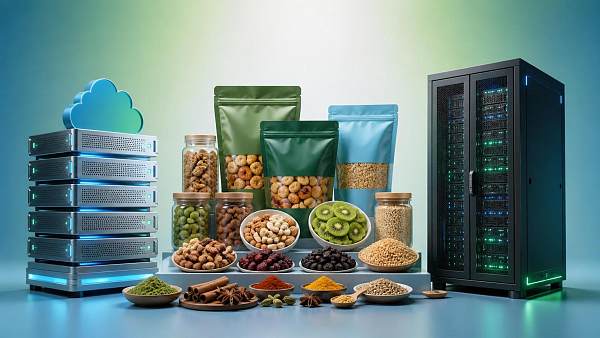
For example, for dried fruits, frozen fruits, spices, grains, or fruit and vegetable products, requirements for specification descriptions, packaging units, and certificates may vary across markets. If a website can only maintain a generic “product introduction” page over the long term, it is neither helpful for search engines to understand the page topic nor capable of helping buyers quickly determine whether it matches their purchasing requirements.
Therefore, what truly needs to be compared is whether the two website-building models can support the following business activities: quickly adding product and application pages; maintaining separate content by country or language; updating harvest season, inventory, or packaging information; receiving and tracking inquiries; and enabling sales staff to distinguish among retail inquiries, wholesale purchases, sample requests, and long-term supply partnerships.
When SaaS website building is suitable
The advantage of SaaS website building is not simply “more templates,” but the integration of servers, basic security maintenance, backend updates, page components, and commonly used marketing functions into one platform. For export companies without dedicated technical teams and whose product materials are still being organized, this means the website can go live relatively quickly and be maintained independently by marketing or sales staff.
If a company’s website is mainly intended to showcase product lines, generate overseas inquiries, build Google SEO content, create advertising landing pages, and operate multilingual pages, SaaS generally offers a sound return-on-investment rationale. The prerequisite is that the platform must provide more than visual templates; it should also enable management of key search and conversion elements.
When selecting SaaS, the following capabilities should be confirmed rather than focusing only on homepage design:
- Whether page titles, descriptions, URL structures, image alt text, and sitemaps can be customized;
- Whether multilingual pages support independent editing rather than relying solely on machine translation;
- Whether scalable content structures can be created for different products, specifications, and application scenarios;
- Whether form fields can be configured by product category, such as target market, required quantity, packaging format, and purchasing cycle;
- Whether website analytics, ad conversion tracking, CRM, or email systems can be integrated;
- Whether website data, domain names, page content, and inquiry records can be exported.
The last point is often overlooked. SaaS does not mean migration is impossible, but the scope of exportable data varies significantly among platforms. If a service provider needs to be changed in the future, having only image files without page structures, article content, product fields, and inquiry data will significantly increase migration costs.
The value of custom development comes from complex business needs, not being “one of a kind”
Custom development is suitable when a website must serve as a business system. For example, a company may need different distributors to log in and view different catalogs or prices; it may need to synchronize inventory, batches, test reports, ERP, or CRM data to the front end; it may need to display different packaging, certificates, and trade terms based on the customer’s country; or it may need to support multi-warehouse shipping, online quotations, sample approval, or complex permission management.
When such requirements are forced into standard SaaS templates, they often create extensive manual workarounds: sales staff manually adjust prices, technical staff repeatedly modify fields, and operations personnel cannot independently publish pages. In this case, custom development is not intended to make the website “more attractive,” but to establish stable data models and business processes.
However, the risks of custom projects are also relatively concentrated. If requirements are not clearly broken down in advance, development providers may quote based on page functions, while actual project costs often continue to rise when product data, language versions, user roles, interface exception handling, and subsequent iterations are involved. After the website goes live, responsibility for vulnerability fixes, server monitoring, backup recovery, plugin compatibility, and feature updates must also be clearly defined.
SEO and multilingual capabilities determine whether a website can continuously generate effective traffic
A common misconception about agricultural product export websites is that launching an English website and adding several automatically translated pages means the company has global promotion capabilities. If content across different language pages is highly repetitive, terminology is inaccurate, or units and market expressions do not align with local purchasing habits, the pages may not generate effective inquiries even if they are indexed.
The focus of multilingual operations is content localization, not the number of languages. For different markets, product names, specification units, certification descriptions, packaging practices, and application scenarios need to be adjusted according to how local buyers search. English pages should not be expected to explain everything for all markets; for Spanish-, French-, Arabic-, or Japanese-speaking markets, at minimum, core product pages, company capability pages, and inquiry pages should be accurately expressed.
Regardless of the technical approach adopted, basic SEO capabilities should include accessible text content, clear page hierarchy, stable links, mobile usability, and appropriate management of duplicate pages. Product pages should not contain only enlarged images and a “Contact Us” button; they should provide the basic parameters buyers need and retain room for continuously adding content.
For categories heavily affected by seasonality, old pages should not be frequently deleted for every short-term supply change. A more reliable approach is to retain product topic pages with search value and clearly state the current supply status, available specifications, or consultation conditions on the page, preventing large numbers of historical links from becoming invalid.
First determine whether the website is a “customer acquisition tool” or a “business system”
Whether an agricultural product export website should use SaaS website building or custom development can be determined by a simple standard: if the website’s primary role is to help overseas buyers find the company, understand its products, submit requirements, and enter subsequent manual follow-up, prioritize a sufficiently open SaaS solution; if the website must replace part of the sales, quotation, inventory, customer management, or supply chain collaboration processes, then evaluate custom development.
There is also a more reliable path: first use SaaS to complete the product content structure, multilingual pages, inquiry process, and promotional validation, then customize the business functions that have been proven necessary. This can prevent budgets from being committed prematurely to complex development before clarifying how overseas customers search, how inquiry fields should be configured, and which products are most worth prioritizing for promotion.
Several commonly confused questions
Are SaaS websites unfavorable for SEO?
Not necessarily. SEO performance is related to content quality, page crawlability, technical configuration, external references, and ongoing operations. The issue is not the “SaaS” format itself, but whether the platform restricts URLs, titles, structured content, redirects, speed optimization, and multilingual management. If control over these fundamentals is absent, even visually appealing pages in the early stage will limit subsequent operations.
Is custom development necessarily safer and faster?
Not necessarily. Security depends on code quality, permission design, server configuration, update mechanisms, and operational responsibilities; performance depends on architecture, image processing, caching strategies, and third-party script control. Custom development can provide greater control, but that control is valuable only with ongoing maintenance.
Should agricultural product websites create online stores?
If transactions mainly involve bulk procurement, price inquiries, sample confirmation, contracts, and credit reviews, a store-style shopping cart may not be necessary. Rather than simulating a retail ordering process, it is more important to enable buyers to submit complete requirements and allow the company to quickly confirm specifications, quantities, ports of destination, and compliance requirements. Only businesses with standardized SKUs, retail packaging, and directly settled transactions are better suited to using an online store as a core module.
The choice of website solution is essentially a match between business complexity and operational capacity. A website that can be continuously updated by the team, clearly communicate supply capabilities, and track inquiry sources usually has greater practical value than a platform with stacked features that remains unmanaged over the long term.
Related Articles
 No Development Team? Should You Use a SaaS Platform to Build an International Website?
 How to Evaluate CRM Integration Capabilities When Choosing a Global Marketing Platform
 Choosing an AI-powered multilingual website service for export businesses: How can you verify translation quality?


Related Products
 Yiyingbao SaaS Intelligent Website Building and Marketing SystemYiyingbao SaaS Intelligent Website Building and Marketing System, AI-powered no-code website building, rapid creation of multilingual B2B international websites in 10 minutes, global server acceleration, AI-powered SEO optimization, helping businesses connect efficiently with global markets. The perfect integration of technology and operation makes building an international trade website remarkably simple
 AI+SEM Intelligent Advertising Marketing SystemAI+SEM drives intelligent ad creation, empowering full-funnel precision advertising marketing. The system automatically generates weekly/monthly reports, AI recommends keywords and target countries, monitors core metrics in real-time with intelligent alerts, and enables one-click high-conversion ad solutions to help quickly acquire customers and improve ROI.
 AI+SEO Dual-Engine System Optimization ServicesYiyingbao’s AI+SEO dual-engine optimization system helps foreign trade enterprises acquire high-quality organic traffic through AI-powered keyword research, content generation, and comprehensive technical optimization, significantly improving search rankings and conversion rates.
 AI+SNS Social Media Marketing SystemYingbao AI+SNS Social Media Marketing System - Precision social capture for the social media era. Supports one-click content synchronization across major platforms like Facebook and LinkedIn. AI intelligently rewrites posts for enhanced relevance. 24/7 AI customer service and user profiling analysis empower businesses to efficiently expand into global markets.
 AI+SEO营销解决方案易营宝AI+SEO营销解决方案,通过AI批量写作、智能生成TDK、精准关键词扩词等功能,全面优化网站SEO效果,提升流量与转化率。助力企业构建高效智能网站新生态。
 AI+SEM Advertising Marketing SolutionsAI+SEM Advertising Marketing Solution leverages AI technology to deeply empower SEM ad campaigns. It automatically generates weekly/monthly reports using AI, presenting account data across multiple dimensions for comprehensive insights into campaign performance and trends. The system precisely recommends keywords and target countries, intelligently generates high-conversion ad copy, and enables one-click activation of efficient campaign plans to help businesses rapidly acquire customers. Simultaneously, it monitors core metrics in real time, intelligently identifies abnormal fluctuations, and issues timely alerts to ensure stable, high-return advertising results.
 Domain Name ServicesEasyWin provides professional domain name services, including intelligent queries, one-stop registration, brand protection, and full lifecycle management, helping businesses build a digital brand image.
 EasyOperate B2C Cross-Border E-Commerce Platform & Independent WebsiteEasyStore B2C Cross-border E-commerce Independent Store is an intelligent website building and cross-border e-commerce integrated solution independently developed by EasyStore Information Technology (Beijing) Co., Ltd. The system is specially designed for small and medium-sized as well as large export enterprises, integrating 'website building, operation, marketing, advertising, and conversion' into one, helping enterprises quickly establish cross-border e-commerce independent stores to achieve brand globalization and global sales growth.
The platform supports multiple languages, multiple currencies, and multi-channel marketing, with built-in AI intelligent translation and SEO optimization systems, suitable for mainstream markets such as Southeast Asia, Europe and America, Latin America, and the Middle East, assisting Chinese manufacturing enterprises in efficiently deploying international e-commerce strategies. SSL证书易营宝提供专业SSL安全证书服务,包括单域名和泛域名证书,确保网站数据传输加密、身份验证和完整性保护,助力企业建立安全可信的在线业务环境。









