









- CBP Finalizes Electronic Rail Export Manifest Rule, Effective October 26, 2026Oct 26, 2026View details
- Amazon’s 2026 peak season surcharge takes effect on October 25Oct 26, 2026View details
- AI Is Eating SaaS: Three Real-World Cases in One AfternoonOct 25, 2026View details
- Exiger CEO: The SaaS Apocalypse Is Real, but It Means Something DifferentOct 25, 2026View details
- Hengqin Cooperation Zone Shares Cross-Border E-Commerce Developments, Focusing on Macao-Hengqin Collaboration and International MarketsOct 24, 2026View details
- A Shenyang study highlights the development of the “cross-border e-commerce + industrial cluster” modelOct 24, 2026View details
Should a logistics equipment export website be built in English or multiple languages?
Should a logistics equipment export website be in English or multilingual? Don't rush to “translate the entire site”
There is no one-size-fits-all answer as to whether a logistics equipment export website needs an English version or multiple languages. For products such as conveyor lines, sorting equipment, warehouse racking, forklift attachments, automated storage and retrieval systems, and packaging equipment, buyers often include equipment managers, engineering consultants, integrators, end-user factories, and procurement departments. Different roles use different search languages, require different depths of information, and make inquiries in different ways.
If a company is just beginning to develop overseas markets, an English version is usually a more prudent starting point. However, if it has already identified non-English-speaking markets such as Germany, France, Spain, Japan, Russia, the Middle East, or Latin America, relying solely on an English website to capture traffic can often put it at a disadvantage in terms of search coverage, ad click-through rates, and customer trust. The core of a language strategy is not “the more languages a website has, the better,” but rather ensuring that the investment matches the target market, sales capabilities, and maturity of product materials.
Which logistics equipment exporters are suited to an English website?
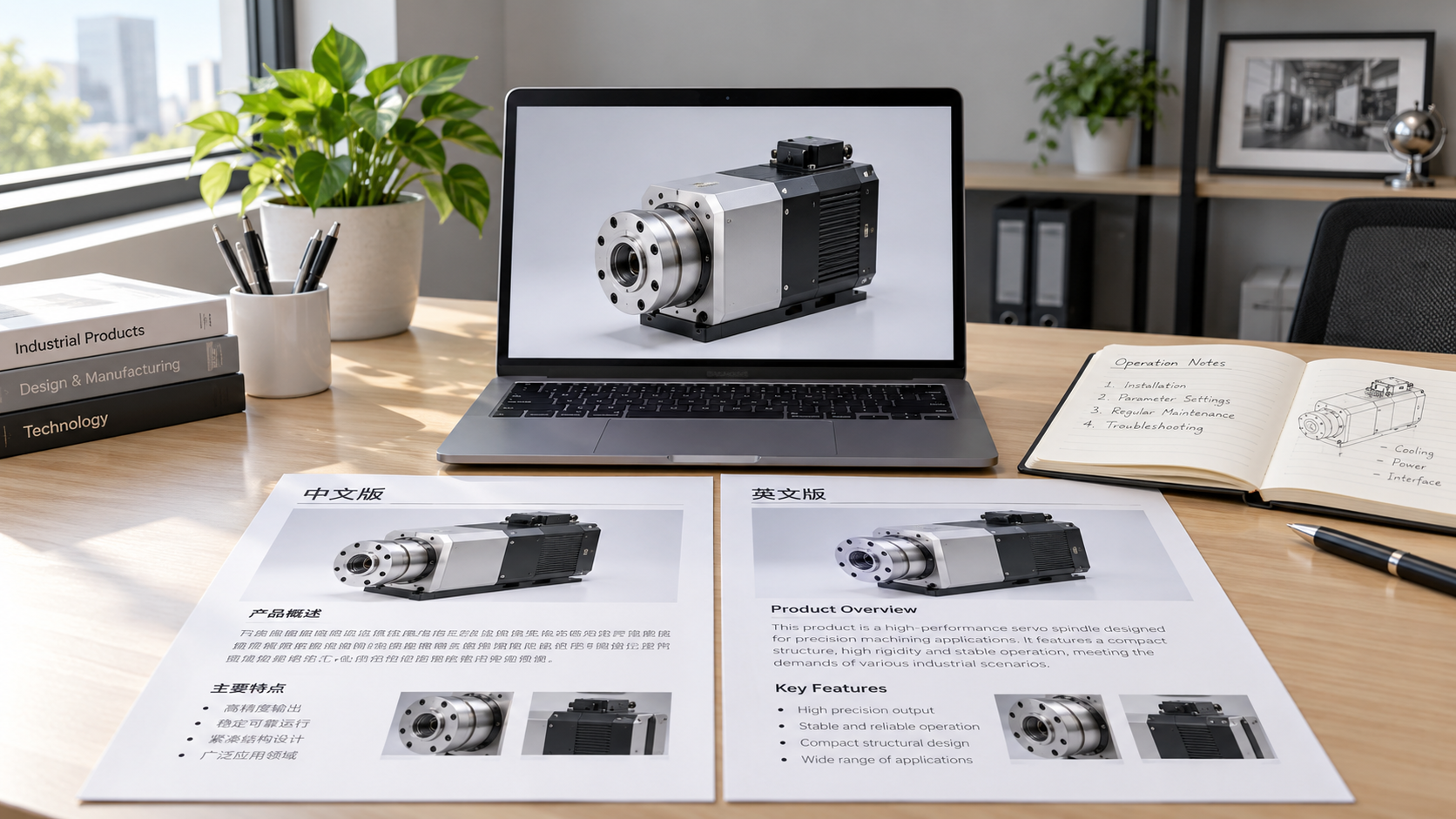
For most Chinese logistics equipment manufacturers, an English corporate website remains the basic configuration for an independent overseas website. Buyers in North America, Australia, India, parts of Southeast Asia, and many multinational purchasers can generally conduct initial communication in English. Especially for companies with complex product lines and long project-based sales cycles, developing high-quality English content first is more valuable than hastily launching multiple languages with poor translation quality.
Here, “doing it well” means more than simply translating a Chinese brochure into English. Logistics equipment buyers typically focus on conveying capacity, applicable goods, line layout, operating environment, control methods, optional configurations, installation and maintenance, and project delivery scope. For example, for a roller conveyor line, customers will care about load capacity, roller material, speed range, incline conditions, and whether accumulation is supported. For an automated sorting solution, the package size range, processing logic, interface capabilities, and on-site conditions need to be explained. Parameters do not necessarily have to be detailed to the level of project drawings on public pages, but they should at least enable customers to determine whether “this supplier understands my application.”
An English version is also particularly suitable as a unified landing page for Google Ads and overseas social media promotion on LinkedIn, Facebook, and other platforms. Before a company has validated inquiry quality in a particular country, using English pages to test different product directions, keywords, and regions is usually more controllable in cost than building a complete multilingual website all at once.
When is it worth prioritizing a multilingual website?
When target customers are accustomed to searching and reading technical materials in their local language, a multilingual website is no longer merely “a nice addition.” In continental Europe, Japan and South Korea, Russian-speaking regions, Latin America, and parts of the Middle East, procurement personnel often prefer to click on search results in their native language even if they can read English. This is particularly true for small and medium-sized distributors, regional system integrators, and local factories. Their search terms may not use English product names, but rather expressions commonly used in local industries.
There is another very practical situation: a company already has local agents, trade show channels, or steady sales leads, but its website cannot provide product pages, installation instructions, and inquiry entry points in the relevant language. Sales personnel have to send translated materials separately each time, while customers find it difficult to quickly forward them to technical colleagues. In this case, building pages in priority languages is often more direct than continuing to add English articles.
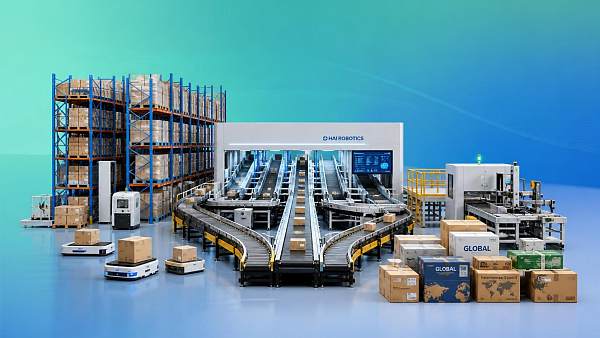
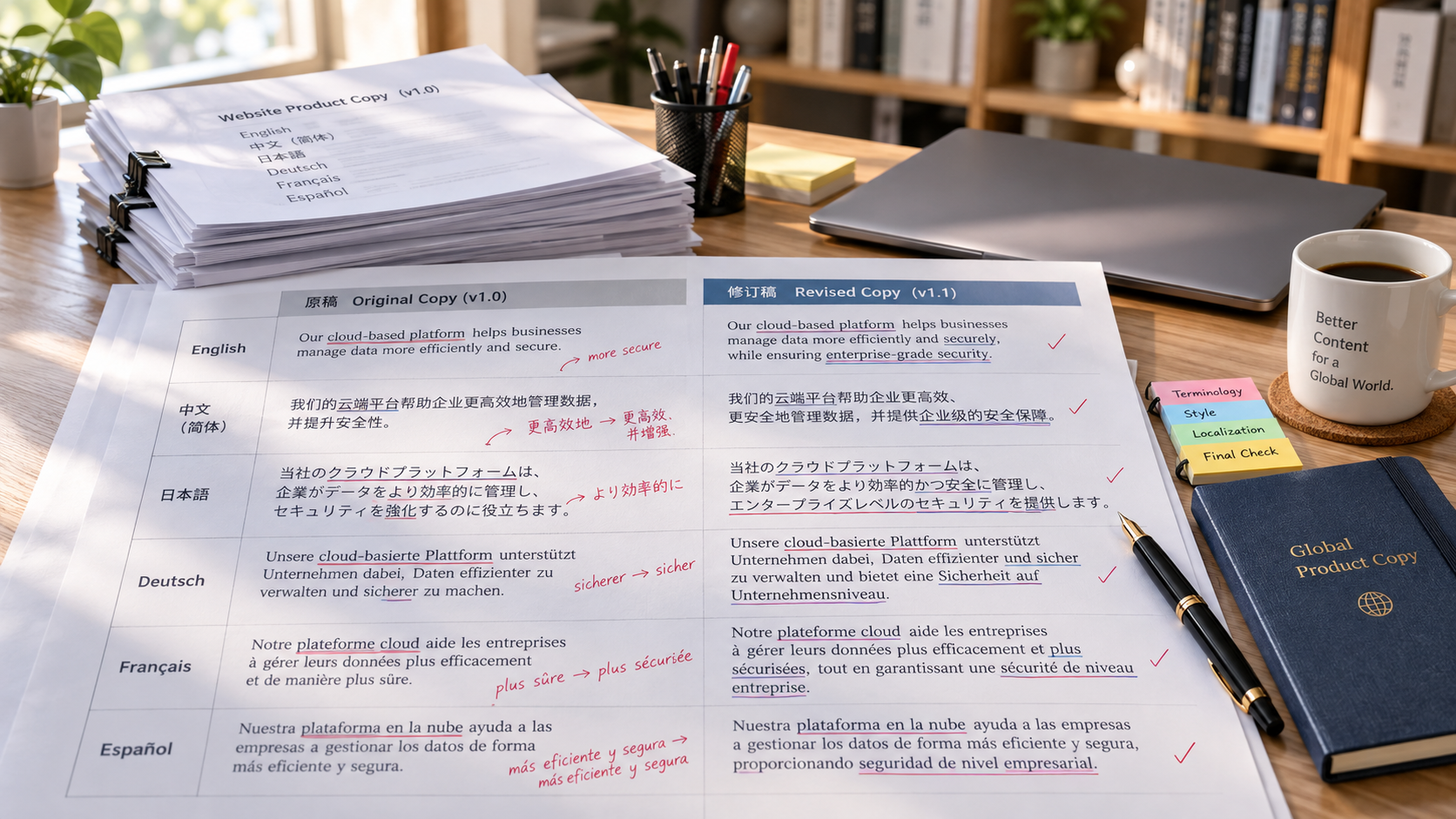
Multilingual is not as simple as “launching after machine translation”
Translation risks in the logistics equipment industry often arise in technical terminology and business scope. Terms commonly used in Chinese, such as “conveyor,” “lift,” and “stacker crane,” may have different common names in different countries and application segments. If product names are translated word for word, the page may be understandable but may not match the search habits of local procurement personnel. More troublingly, if descriptions of safety protection, applicable operating conditions, and delivery scope are inaccurately translated, customers may form incorrect expectations.
Therefore, multilingual pages should at least accomplish three things first: identify commonly used local product and application terms; standardize key technical terminology; and verify whether contact details, units, delivery instructions, and after-sales commitments apply to that market. For languages that are not yet supported by sufficient materials, it may be better to launch a limited number of high-quality core pages first rather than rolling out hundreds of pages at once. The number of pages does not equal the amount of effective traffic obtained, much less the quality of inquiries.
SEO, advertising, and inquiry conversion should be assessed using the same language strategy
Many companies separate website languages from promotional channels: the website is only in English, while ads target local-language keywords; or multilingual pages have already been launched, but the sales team cannot follow up in the corresponding languages. As a result, ads may generate clicks and the website may receive visits, but prospects are lost at the form submission, email response, or solution communication stage.
A more reasonable approach is to first map out the customer's actual journey. Does the customer discover the company through broad terms such as “warehouse automation solutions,” or do they arrive with a specific model and project requirement? After entering the page, do they need to review case-study logic and technical materials, or simply want to quickly confirm the price range and delivery lead time? If the business mainly relies on Google organic search, local-language product and application pages should be gradually developed. If advertising is the primary lead-generation focus, dedicated landing pages for key equipment can first be created for the relevant markets, with content expanded based on inquiry results.
This is also why websites and marketing need integrated planning. Easy Marketing has long served foreign trade companies and manufacturing factories, providing services such as intelligent website building, multilingual website development, Google SEO, advertising, and overseas social media operations. For non-standard or semi-standard products such as logistics equipment, clarifying market languages, product structure, customer acquisition channels, and sales follow-up methods before building a website is usually closer to the real issue than simply discussing “how many languages are needed.”
Frequently asked questions: How should a second language be selected beyond English?
Q: Should we create five or six languages from the start?
This is generally not recommended. Unless a company already has sales networks, content teams, and localization support capabilities in multiple regional markets, the more languages it has, the greater the pressure of subsequent updates, translation verification, and lead management. A more common path is “an English main site plus one priority market language,” followed by adding languages after the content and customer acquisition model has been validated.
Q: Once there is an English version, won't customers translate the web pages themselves?
Browser translation can help users understand the general meaning, but it cannot replace formal localized pages. For logistics equipment procurement involving high project values and complex technical communication, local-language pages convey not only information but also the extent of a company's investment in that market. Especially at the initial contact stage, this difference can affect whether customers are willing to leave their contact details.
Q: Must multilingual pages be exactly the same as English pages?
They do not need to be mechanically identical. Core product parameters, brand messaging, and delivery scope should remain accurate and consistent, but application scenarios, frequently asked questions, and the way cases are presented can be adjusted according to local markets. For example, some markets pay more attention to cycle time and labor replacement, while others repeatedly ask about installation support, spare parts supply, or system compatibility. These considerations should be reflected in the page focus.
Determine languages based on market priorities, not intuition
Whether a logistics equipment export website should be in English or multiple languages ultimately comes down to three questions: which countries the company plans to prioritize over the next 12 months; what languages customers in these markets use to search and communicate; and whether the company can continuously maintain content and sales responses in the corresponding languages. English is the foundation for most companies expanding overseas, while multilingual content is a tool for entering priority regions, increasing local trust, and expanding search opportunities.
First, build the English website into a business website that can explain products, capture inquiries, and support promotion. Then select a second language based on actual traffic sources, advertising search terms, trade show leads, and sales feedback. This is usually more practical than pursuing a “globalized page count” from the outset. For project-based equipment, the value of language has never been limited to translation; it lies in helping the right customers understand more quickly what problems you can solve.
Related Articles
 Can I learn to use a multilingual content management system without a technical background?
 How can you evaluate a provider’s translation editing capabilities for AI-powered multilingual website services?
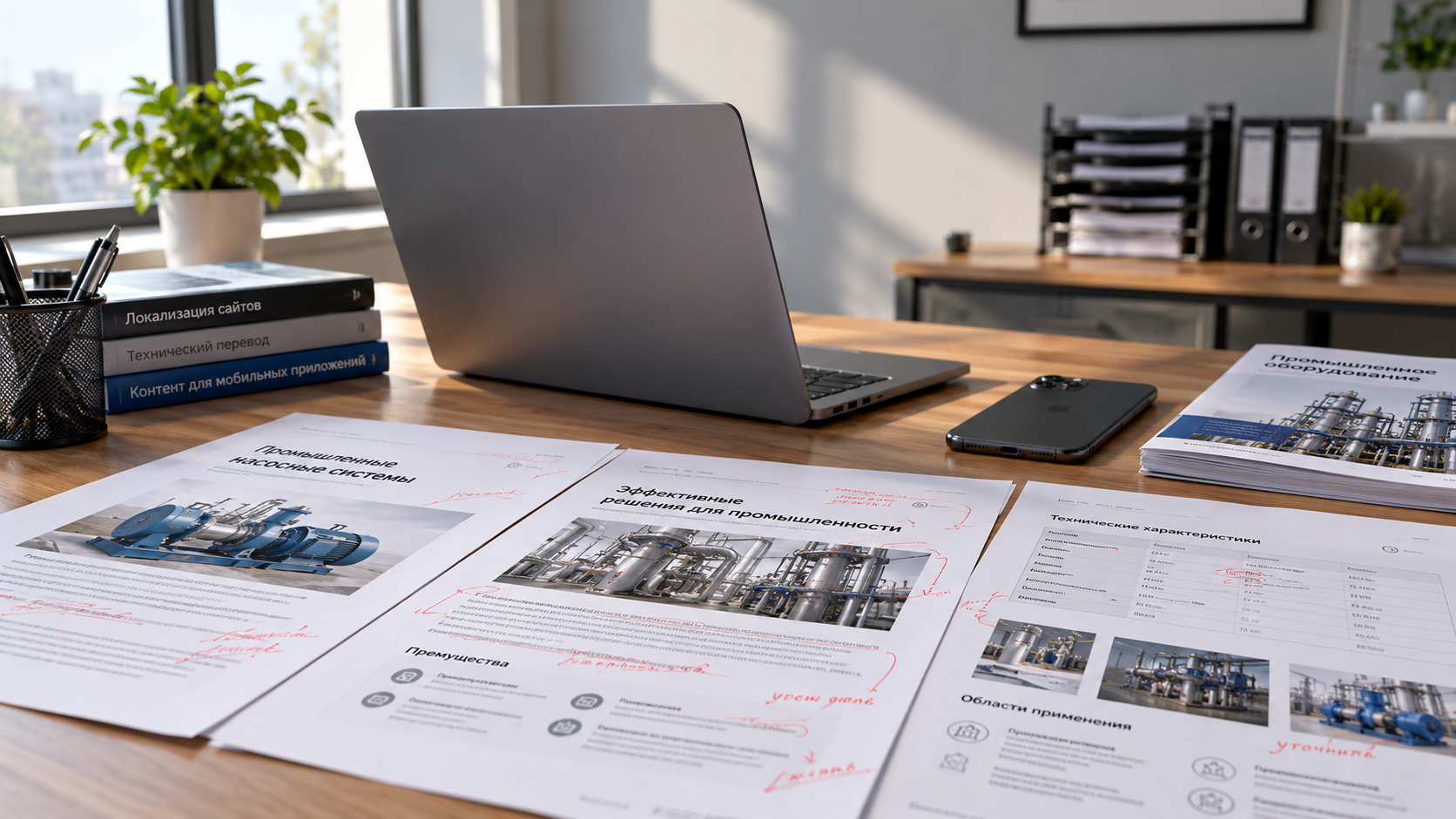
 Building a Website for the Russian-Speaking Market: Is Translating the Website Enough?
Related Products
 Yiyingbao SaaS Intelligent Website Building and Marketing SystemYiyingbao SaaS Intelligent Website Building and Marketing System, AI-powered no-code website building, rapid creation of multilingual B2B international websites in 10 minutes, global server acceleration, AI-powered SEO optimization, helping businesses connect efficiently with global markets. The perfect integration of technology and operation makes building an international trade website remarkably simple
 AI+SEM Intelligent Advertising Marketing SystemAI+SEM drives intelligent ad creation, empowering full-funnel precision advertising marketing. The system automatically generates weekly/monthly reports, AI recommends keywords and target countries, monitors core metrics in real-time with intelligent alerts, and enables one-click high-conversion ad solutions to help quickly acquire customers and improve ROI.
 AI+SEO Dual-Engine System Optimization ServicesYiyingbao’s AI+SEO dual-engine optimization system helps foreign trade enterprises acquire high-quality organic traffic through AI-powered keyword research, content generation, and comprehensive technical optimization, significantly improving search rankings and conversion rates.
 AI+SNS Social Media Marketing SystemYingbao AI+SNS Social Media Marketing System - Precision social capture for the social media era. Supports one-click content synchronization across major platforms like Facebook and LinkedIn. AI intelligently rewrites posts for enhanced relevance. 24/7 AI customer service and user profiling analysis empower businesses to efficiently expand into global markets.
 AI+SEO营销解决方案易营宝AI+SEO营销解决方案,通过AI批量写作、智能生成TDK、精准关键词扩词等功能,全面优化网站SEO效果,提升流量与转化率。助力企业构建高效智能网站新生态。
 AI+SEM Advertising Marketing SolutionsAI+SEM Advertising Marketing Solution leverages AI technology to deeply empower SEM ad campaigns. It automatically generates weekly/monthly reports using AI, presenting account data across multiple dimensions for comprehensive insights into campaign performance and trends. The system precisely recommends keywords and target countries, intelligently generates high-conversion ad copy, and enables one-click activation of efficient campaign plans to help businesses rapidly acquire customers. Simultaneously, it monitors core metrics in real time, intelligently identifies abnormal fluctuations, and issues timely alerts to ensure stable, high-return advertising results.
 Domain Name ServicesEasyWin provides professional domain name services, including intelligent queries, one-stop registration, brand protection, and full lifecycle management, helping businesses build a digital brand image.
 EasyOperate B2C Cross-Border E-Commerce Platform & Independent WebsiteEasyStore B2C Cross-border E-commerce Independent Store is an intelligent website building and cross-border e-commerce integrated solution independently developed by EasyStore Information Technology (Beijing) Co., Ltd. The system is specially designed for small and medium-sized as well as large export enterprises, integrating 'website building, operation, marketing, advertising, and conversion' into one, helping enterprises quickly establish cross-border e-commerce independent stores to achieve brand globalization and global sales growth.
The platform supports multiple languages, multiple currencies, and multi-channel marketing, with built-in AI intelligent translation and SEO optimization systems, suitable for mainstream markets such as Southeast Asia, Europe and America, Latin America, and the Middle East, assisting Chinese manufacturing enterprises in efficiently deploying international e-commerce strategies. SSL证书易营宝提供专业SSL安全证书服务,包括单域名和泛域名证书,确保网站数据传输加密、身份验证和完整性保护,助力企业建立安全可信的在线业务环境。









