









- APEC Shenzhen Spotlight: Cross-Border E-Commerce Orders Promote Asia-Pacific Trade and Economic CooperationNov 08, 2026View details
- China-Europe Railway Express and CIIE Hold Business Matchmaking Event, Focusing on Cross-Border E-commerce B2B ExportsNov 07, 2026View details
- China’s Ministry of Commerce Responds to Additional Charges on Low-Value Imports Imposed by the EUNov 06, 2026View details
- Two Internet Development Reports Released at the 2026 World Internet ConferenceNov 05, 2026View details
- Internet Business Revenue of Enterprises Above the Designated Size Reached RMB 1.716 Trillion in the First Three Quarters, with Profits Up 17.6%Nov 05, 2026View details
- Shopify's Third-Quarter Revenue and GMV Fall Short of Expectations, Sending Shares Tumbling Before the Market OpensNov 04, 2026View details
Is an AI Website Builder Suitable for E-Commerce? Key Metrics for Evaluating Product Management, Payments, and SEO
Are AI Website Builders Suitable for E-Commerce? Key Metrics for Evaluating Product Management, Payments, and SEO
Whether an AI website builder can support e-commerce does not depend on whether it can create an "attractive website" in minutes, but on whether it can support stable operations after launch. For businesses planning to establish independent websites for overseas markets, the real issue to assess is AI website builder e-commerce suitability: whether products can be managed efficiently, whether checkout and payment methods align with target-market preferences, whether pages have the foundation to continuously acquire organic traffic, and whether marketing, data, and order workflows can be connected.
The value of AI lies primarily in reducing the time needed for website creation and content production, such as generating initial page drafts, organizing product selling points, assisting with multilingual copy translation, and building basic category structures. However, an e-commerce site is not a one-time delivered display page. SKUs increase, prices change, inventory and promotions fluctuate, and consumers make different choices based on region, currency, logistics methods, and payment preferences. If the underlying e-commerce capabilities are insufficient, the labor saved upfront is often consumed later through repeated redesigns and manual workarounds.
Review Product Management Before Template Quantity
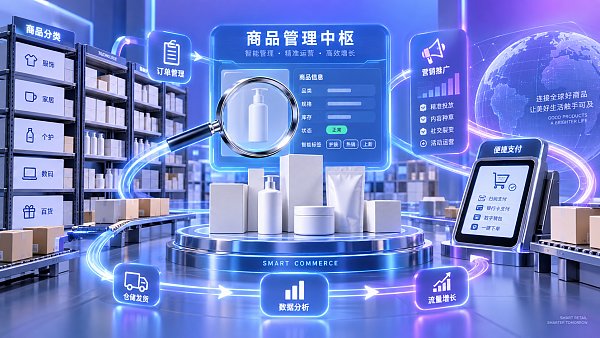
During the demonstration stage, many businesses are easily drawn to templates, visual effects, and automated copywriting, while overlooking the fact that product data is the most frequently changing part of an online store. For brand websites with relatively few products and simple configuration relationships, lightweight AI website-building tools can usually meet requirements. However, when products include multiple specifications, colors, sizes, accessories, tiered pricing, or regional pricing, whether the system supports structured management will directly affect operational efficiency.
When selecting a solution, it is advisable to test with actual products rather than merely reviewing backend screenshots. At a minimum, confirm whether a product can be configured with multiple attributes and variants; whether categories, filters, and on-site search can display key parameters; whether bulk import, export, and modification are convenient; whether product images, manuals, videos, and certification materials have appropriate places to be presented; and how existing links are handled when products are discontinued or prices change. For manufacturing companies and B2B businesses, it is also necessary to determine whether the system can support both "Buy Now" and "Request a Quote" paths, avoiding the forced placement of complex products into a standard shopping cart.
Product management is not limited to backend entry. Frontend filtering logic, related recommendations, inventory notifications, and delivery-time descriptions affect whether buyers can quickly determine if a product suits their needs. AI can assist in extracting selling points and generating specification comparison tables, but key technical parameters, conditions of use, and compliance descriptions should still be reviewed by business personnel. Publishing unverified generated content directly on product pages may lead to after-sales disputes and undermine brand credibility.
Payment Integration Must Be Evaluated in Terms of Market, Business Entity, and Fulfillment Capabilities
E-commerce conversions often stall at the checkout page. A payment solution involves more than simply "connecting credit cards"; it also concerns the business entity, account-opening qualifications, business category, settlement currencies, settlement cycles, refund processing, and risk-control rules. Payment preferences vary among users in different countries and regions. Businesses should first identify their primary sales markets, then verify whether the website-building system can integrate the intended payment services and whether the payment process supports local languages, currencies, and tax displays.
It is particularly important to distinguish between "supporting multi-currency display on pages" and "actually accepting payments in multiple currencies." The former improves the browsing experience, while the latter involves payment channels and settlement arrangements. If a business handles retail, wholesale, and custom orders simultaneously, it should also assess discount codes, shipping rules, tax settings, order splitting, refunds, and manual review capabilities. High-ticket or customized products may not necessarily be suitable for one-step payment completion; retaining paths for inquiries, appointment-based communication, or deposit payments often better reflects actual transaction processes.
This evaluation approach is similar to investment budget management: it is not enough to look only at initial procurement costs; subsequent integration, maintenance, and adjustment costs must also be considered. For cross-department digital investments, businesses may refer to the budget coordination approach emphasized in Strategies and Practices for Preparing Annual Investment Budgets for State-Owned Enterprises, evaluating website development, payment services, content maintenance, advertising testing, and data tools within the same cycle to avoid discovering after the website goes live that there is no budget room for critical capabilities.
SEO Is Not "Automatically Generated Articles," but a Controllable Site Structure
AI's contribution to SEO is straightforward: it can help organize keyword topics, generate initial drafts of product descriptions, create content outlines, and provide foundational text for multilingual pages. However, whether search traffic remains stable depends more on whether the website allows businesses to control core elements. Page titles, descriptions, URLs, image alt text, canonical links, redirects, sitemaps, and robots settings are all fundamental control capabilities that a website-building platform needs to provide.
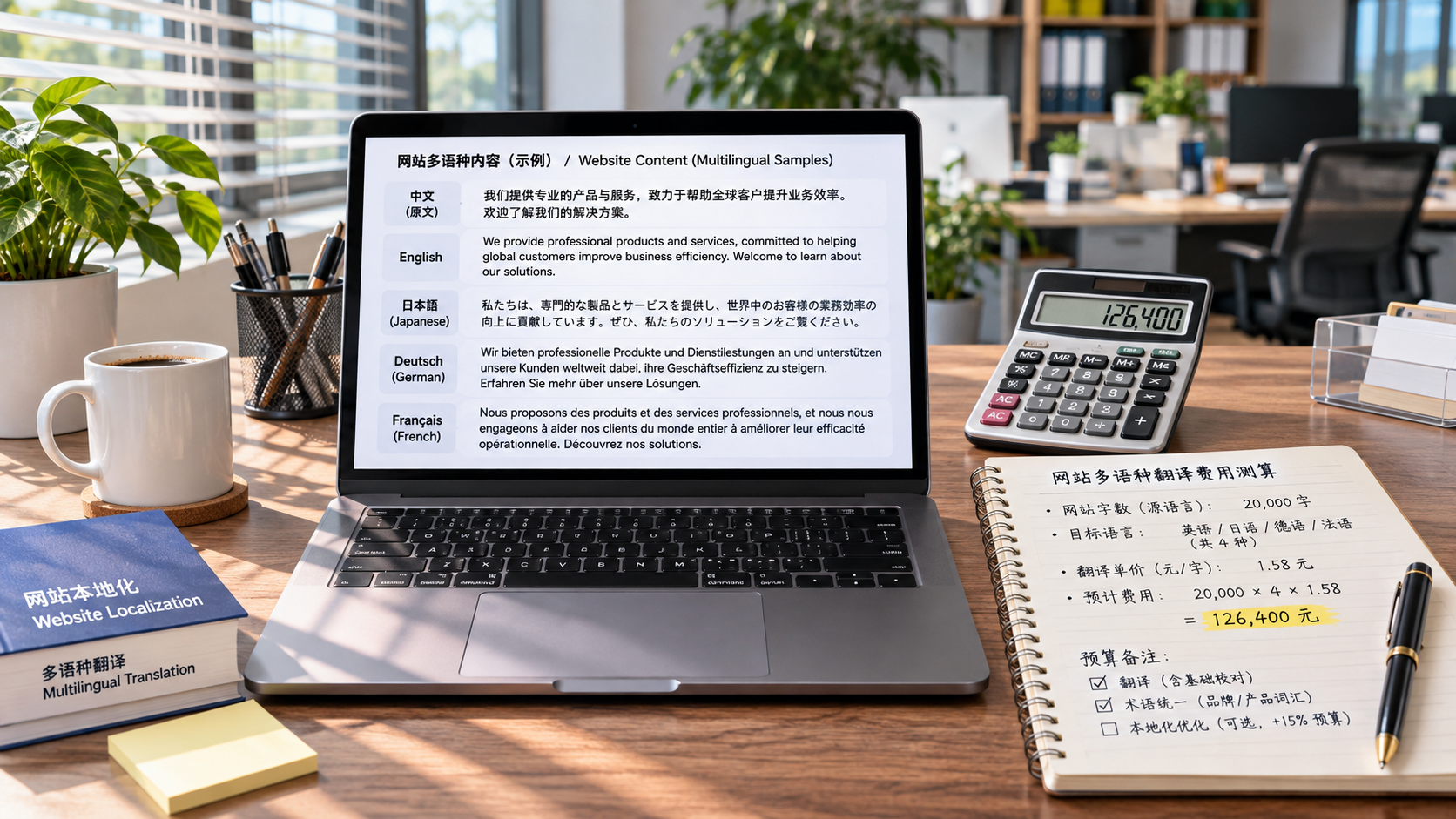
E-commerce sites should also pay particular attention to duplicate content. Different variants, filtered pages, paginated pages, language versions, and promotional pages can easily generate large numbers of similar URLs. If the system cannot properly handle canonical page relationships, or if automatically generated content is highly repetitive, search engines may struggle to determine which page is most worthwhile to index. For multilingual online stores, businesses should not simply translate Chinese pages sentence by sentence and publish them in bulk. They should also verify whether product naming, units of measurement, purchase motivations, and delivery information are appropriate for different markets, and confirm that link relationships between language versions can be properly recognized.
Another frequently overlooked factor is performance. No matter how rich the visual effects on the homepage may be, the mobile experience can decline if product listings, image loading, and checkout paths are too heavy. Decision-makers do not need to study every technical detail themselves, but they should require service providers to explain how images are optimized, whether page components can be controlled, whether third-party plugins will slow down the website, and how existing links will be retained after redesigns. SEO is an ongoing operational capability, not a feature that can be completed by checking a box before launch.
Integrated Capabilities Determine Whether a Website Can Truly Participate in Customer Acquisition
For businesses expanding overseas, an independent website typically serves simultaneously as a brand showcase, advertising landing page, organic search channel, social media destination, and order conversion tool. If a website-building tool only solves page generation, businesses still need to manage advertising pixels, conversion events, form leads, content updates, and traffic attribution on their own, making the operational chain easy to break. Platforms better suited for long-term use should enable website building, e-commerce, SEO, advertising, and social media operations to work together toward the same business objectives, rather than forming separate data silos.
Since its establishment in 2013, Yiyingbao Information Technology (Beijing) Co., Ltd. has provided services including intelligent website building, SEO optimization, social media marketing, and advertising based on artificial intelligence and big data, serving foreign trade companies, manufacturing plants, cross-border sellers, and brands expanding overseas. Its self-developed cloud intelligent website-building system, cross-border e-commerce system, and AI+SEO/GEO optimization system cover scenarios such as multilingual corporate websites, B2B inquiry websites, and B2C online stores. For businesses targeting markets across North America, Europe, Southeast Asia, the Middle East, or Latin America, the practical value of such integrated capabilities is that interfaces for promotion, content, and multilingual operations can be reserved during the website-building stage, rather than rebuilding infrastructure after traffic has already arrived.
Make the Final Decision Based on Actual Business Processes
There is ultimately no universal answer to whether an AI website-building tool is suitable for e-commerce. Businesses with few SKUs, standardized transaction models, and a desire to quickly validate overseas markets can prioritize solutions with efficient launch capabilities and complete basic e-commerce and payment functions. Businesses with complex products, multiple channels, or stable existing orders should place data migration, integration scalability, permission management, content governance, and SEO controllability higher on their priorities.
Before signing a contract, it is advisable to conduct a complete trial using a set of real SKUs: from product import, category filtering, and multilingual display to order placement, payment, refunds, order notifications, and organic search page checks. A tool that can smoothly complete this workflow is closer to a business's actual needs. AI can make website building faster, but whether e-commerce can continue to grow still depends on whether products, transactions, and traffic can withstand the test of daily operations.
Related Articles
 Do SaaS website security features cost extra?
 How do the long-term maintenance costs of SaaS website building compare with outsourced website development?
 How Does an AI Website Translation SaaS Platform Calculate Translation Costs?


Related Products
 Yiyingbao SaaS Intelligent Website Building and Marketing SystemYiyingbao SaaS Intelligent Website Building and Marketing System, AI-powered no-code website building, rapid creation of multilingual B2B international websites in 10 minutes, global server acceleration, AI-powered SEO optimization, helping businesses connect efficiently with global markets. The perfect integration of technology and operation makes building an international trade website remarkably simple
 AI+SEM Intelligent Advertising Marketing SystemAI+SEM drives intelligent ad creation, empowering full-funnel precision advertising marketing. The system automatically generates weekly/monthly reports, AI recommends keywords and target countries, monitors core metrics in real-time with intelligent alerts, and enables one-click high-conversion ad solutions to help quickly acquire customers and improve ROI.
 AI+SEO Dual-Engine System Optimization ServicesYiyingbao’s AI+SEO dual-engine optimization system helps foreign trade enterprises acquire high-quality organic traffic through AI-powered keyword research, content generation, and comprehensive technical optimization, significantly improving search rankings and conversion rates.
 AI+SNS Social Media Marketing SystemYingbao AI+SNS Social Media Marketing System - Precision social capture for the social media era. Supports one-click content synchronization across major platforms like Facebook and LinkedIn. AI intelligently rewrites posts for enhanced relevance. 24/7 AI customer service and user profiling analysis empower businesses to efficiently expand into global markets.
 AI+SEO营销解决方案易营宝AI+SEO营销解决方案,通过AI批量写作、智能生成TDK、精准关键词扩词等功能,全面优化网站SEO效果,提升流量与转化率。助力企业构建高效智能网站新生态。
 AI+SEM Advertising Marketing SolutionsAI+SEM Advertising Marketing Solution leverages AI technology to deeply empower SEM ad campaigns. It automatically generates weekly/monthly reports using AI, presenting account data across multiple dimensions for comprehensive insights into campaign performance and trends. The system precisely recommends keywords and target countries, intelligently generates high-conversion ad copy, and enables one-click activation of efficient campaign plans to help businesses rapidly acquire customers. Simultaneously, it monitors core metrics in real time, intelligently identifies abnormal fluctuations, and issues timely alerts to ensure stable, high-return advertising results.
 Domain Name ServicesEasyWin provides professional domain name services, including intelligent queries, one-stop registration, brand protection, and full lifecycle management, helping businesses build a digital brand image.
 EasyOperate B2C Cross-Border E-Commerce Platform & Independent WebsiteEasyStore B2C Cross-border E-commerce Independent Store is an intelligent website building and cross-border e-commerce integrated solution independently developed by EasyStore Information Technology (Beijing) Co., Ltd. The system is specially designed for small and medium-sized as well as large export enterprises, integrating 'website building, operation, marketing, advertising, and conversion' into one, helping enterprises quickly establish cross-border e-commerce independent stores to achieve brand globalization and global sales growth.
The platform supports multiple languages, multiple currencies, and multi-channel marketing, with built-in AI intelligent translation and SEO optimization systems, suitable for mainstream markets such as Southeast Asia, Europe and America, Latin America, and the Middle East, assisting Chinese manufacturing enterprises in efficiently deploying international e-commerce strategies. SSL证书易营宝提供专业SSL安全证书服务,包括单域名和泛域名证书,确保网站数据传输加密、身份验证和完整性保护,助力企业建立安全可信的在线业务环境。









