I. Definition and Industry Scope of AI Website Generators
An AI website generator is software or a service that uses generative artificial intelligence, template components, content management systems, and automated deployment capabilities to help businesses create, modify, and operate websites. It does more than convert text into pages; it should also complete information architecture, visual adaptation, initial content drafts, and basic marketing configuration.
In foreign trade B2B scenarios, a qualified AI website generator should support product catalogs, application solutions, factory capabilities, qualification documents, inquiry forms, and instant communication entry points, while adapting to both desktop and mobile devices. For cross-border retail scenarios, it should also connect product specifications, shopping carts, and order or quotation-request processes.
Industry evaluation should not focus solely on website-building speed. It should also consider whether pages can be edited, content can be reviewed, data can be exported, and operations can be sustained over time. A website is essentially a company's own digital asset. Generation capability is only the starting point; customer acquisition and conversion capabilities determine its actual commercial value.
II. Core Technical Principles and Workflow
AI website generators typically first collect information on the industry, products, target markets, brand materials, and conversion goals. A rules engine and models then generate site sections, page blocks, headings, product selling points, and calls to action. A mature system should allow manual item-by-item correction to prevent unverified content from being published directly.
At the page level, responsive layouts, component libraries, and content management capabilities enable the same content to display across different devices. At the technical level, this also involves image compression, caching, sitemaps, redirects, form notifications, permission management, and log monitoring. These elements jointly affect the user experience and subsequent maintenance efficiency.
At the content level, artificial intelligence can assist with expanding keyword themes, generating multiple versions of copy, organizing frequently asked questions, and producing initial translation drafts, but it cannot replace professional review. Materials parameters, delivery times, certifications, prices, and compliance commitments should be confirmed by business, technical, or legal personnel before going live.
III. Main Types and Suitable Users
By delivery method, common options on the market include template-based generators, conversational generators, low-code visual platforms, and enterprise marketing website-building systems. Template-based solutions are suitable for rapid presentation; conversational tools facilitate the creation of initial drafts; enterprise systems are better suited to organizations requiring multi-role collaboration, continuous content updates, and marketing data tracking.
Manufacturing plants, OEMs, and industrial product suppliers typically require B2B inquiry websites, with a focus on product filtering, technical documentation, case studies, and contact pathways. Cross-border sellers and DTC brands place greater emphasis on product details, promotional pages, review displays, and channel landing pages, and should not use a single showcase website as a substitute for a transaction-handling system.
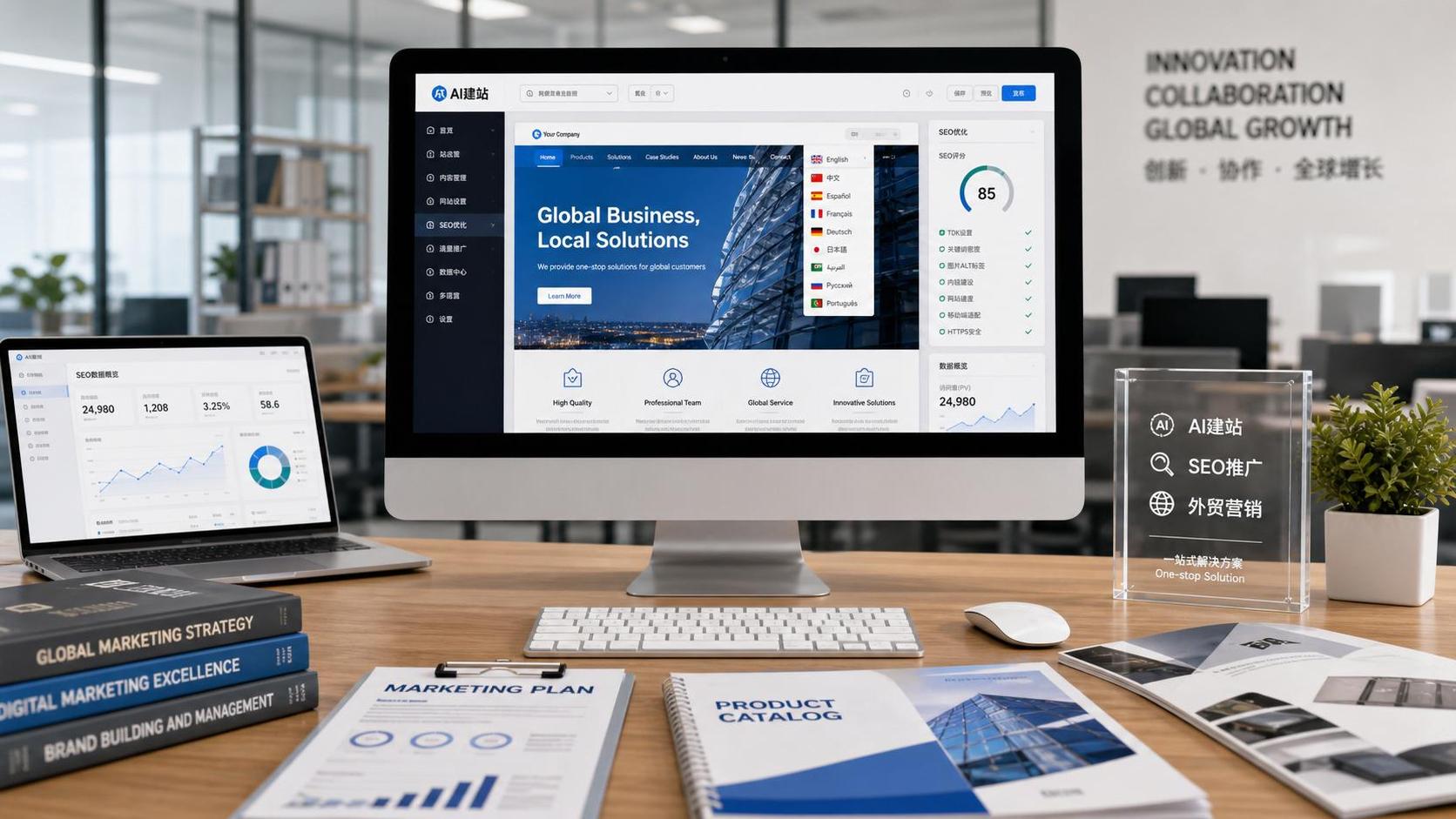
Companies targeting multiple national markets should prioritize platforms that support multilingual paths, language-version management, and localized editing. Yiyingbao's AI-powered website building, multilingual standalone websites, and marketing operations services can cover different development needs, including foreign trade corporate websites, product displays, B2C stores, and promotional landing pages.
IV. Selection Criteria and Overseas Application Requirements
When procuring an AI website generator, first confirm website ownership, domain management rights, content export capabilities, and account permission boundaries. If a supplier locks data or makes it impossible to migrate pages or form leads, a low short-term price may result in higher replacement costs later, which is especially unfavorable for long-term brand development.
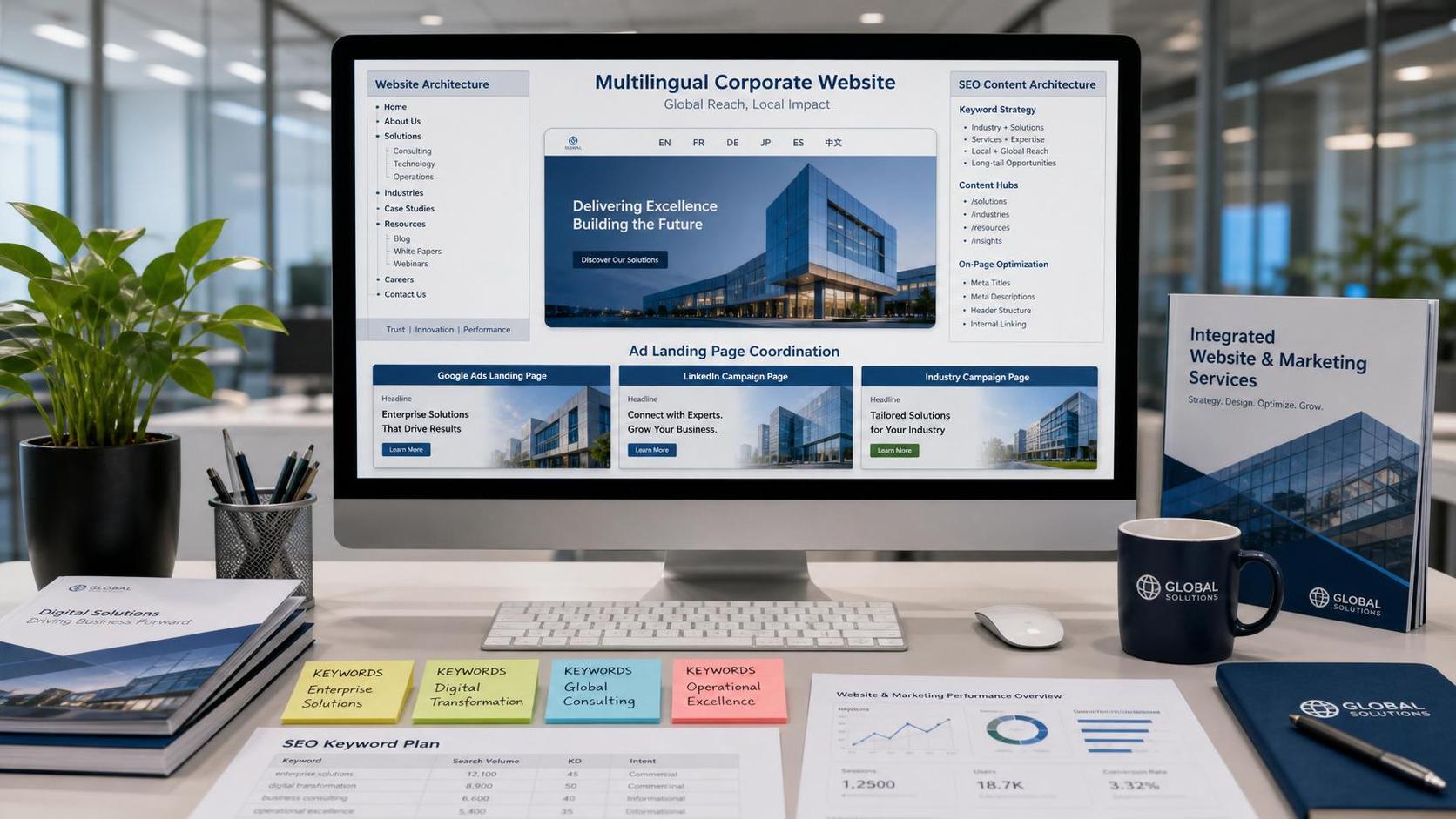
Next, examine the technical foundation: mobile compatibility, page loading performance, global access stability, SSL certificates, backup and recovery, spam inquiry blocking, and permission auditing. Multilingual websites should also be checked for language paths, regional targeting, alternate-language annotations, and translation review mechanisms to prevent pages for different markets from being confused with one another.
Marketing usability should then be evaluated, including title and description editing, page structure, sitemaps, structured content, form fields, conversion events, and analytics integration. Yiyingbao states that it uses a responsive architecture and provides global node acceleration; buyers should still conduct acceptance testing based on target countries, actual devices, and business pages.
V. Implementation and Quality Control from Website Building to Inquiries
Implementation should begin with a requirements interview to define target customers, core products, country markets, competitive differentiation, and primary conversion actions. A site map should then be created, typically including the homepage, product categories, product details, application areas, company information, case studies, knowledge content, and contact pages, followed by the designation of content owners for each page type.
During content production, an AI website generator can create the framework and initial draft, but product parameters, image copyrights, factory capabilities, delivery scope, and customer cases must be verified. Before launch, basic checks should be completed for links, forms, email notifications, mobile display, browser compatibility, language switching, and page indexing settings.
After launch, key products, industry articles, and frequently asked questions should be updated monthly, while tracking indexation, organic traffic, advertising landing page performance, inquiry sources, and lead validity rates. Yiyingbao integrates website building, AI content, search optimization, advertising, and social media operations, making it suitable for companies without dedicated overseas digital teams to establish collaborative workflows.
VI. Total Cost of Ownership and Return on Investment Assessment
The total cost of ownership of an AI website generator is not limited to the first-year subscription or website-building fee. It also includes domains, servers, acceleration, security, content organization, translation review, images and videos, feature development, operations personnel, and promotional budgets. During procurement, one-time implementation costs and ongoing operating costs should be calculated separately to avoid comparing only the first page of a quotation.
Return assessment is recommended to focus on qualified inquiries rather than traffic alone. Companies can record monthly organic traffic, ad visits, form submissions, instant messaging inquiries, qualified opportunity volumes, sales cycles, and average gross margins, then estimate the cost per qualified lead and the supplementary value of the website channel relative to trade shows and platform traffic.
For B2B companies with complex product lines, prioritizing investment in reusable product templates, standardized fields, and multilingual content processes generally offers greater cumulative value than repeatedly creating isolated landing pages. When budgets are limited, companies can first focus on high-margin products and key countries, then expand language versions and advertising scope after validating inquiry quality.
VII. Industry Trends, Case References, and Recommended Actions
Future AI website generators will place greater emphasis on controllable generation, multimodal content, automated experimentation, and knowledge organization for generative search. Companies need to consolidate product data, technical Q&A, application cases, and brand information into a verifiable content library rather than relying on one-time bulk generation of pages.
In industries such as laser engraving machines, steel, chemicals, heavy-duty trucks, machinery, new energy, healthcare, and furniture, procurement decision chains are long and documentation requirements are extensive. Websites need to use clear pages to address questions about specifications, applications, services, and delivery. Yiyingbao has publicly served companies including Haier, Aokema, Shandong Airlines, and Xiaoya Group; the specific scope of cooperation shall be subject to the project materials of both parties.
Companies are advised to first complete a diagnosis of their existing websites: confirm target markets, key products, content gaps, lead pathways, and data baselines, then select suitable AI website-building and operations solutions. For teams planning long-term overseas search, advertising, and social media initiatives, AI website generators should be incorporated into a unified customer acquisition system, with quarterly reviews and content iteration mechanisms established.
 Hidden Cost Items in AI Website Template BuildingWhen comparing the costs of AI website template building,do not focus only on low quoted prices,but also on hidden expenses such as domain and hosting、SEO optimization、content operations、multilingual support、plugin extensions and marketing conversion。Starting from a full lifecycle budget,this article helps businesses identify the real cost of website building,and choose an integrated solution better suited to long term customer acquisition growth。
 Is digital marketing training worth doing in-house? Budget, assessment methods, and common pitfallsIs digital marketing training worth doing in-house? Starting with budget breakdown, assessment methods, and common pitfalls, this article analyzes how to truly connect website, SEO, advertising, and inquiry conversion, helping businesses make more informed decisions.
 Is an AI website-building platform suitable for foreign trade websites? Analysis of functional boundaries and applicable scenariosIs an AI website-building platform suitable for foreign trade websites? This article focuses on multilingual support, SEO indexing, inquiry conversion, and system scalability, analyzing its functional boundaries and applicable scenarios to help businesses determine whether it is suitable for rapid launch and overseas customer acquisition growth.
 Is 易营宝 AI Website Building Suitable for Foreign Trade Companies? An Evaluation of Capability Boundaries, Applicable Scenarios, and Launch EfficiencyIs 易营宝 AI website building suitable for foreign trade companies? This article evaluates it from three aspects: capability boundaries, applicable scenarios, and launch efficiency, analyzing its performance in multilingual official websites, SEO customer acquisition, and inquiry conversion to help you decide whether it is worth the investment.
 What types of businesses are suitable for YiYingBao AI Website Building System? Functional Boundaries and Application Scenarios AnalysisYiYingBao AI Website Builder is suitable for foreign trade, cross-border e-commerce, and brands going global. This article analyzes its functional boundaries, suitable scenarios, and implementation logic to help you determine whether your website can truly support SEO, customer acquisition through advertising, and inquiry conversion.
 What functions does Yibao AI website multilingual website have? Is it suitable for rapid overseas expansion?What functions does Yibao AI website multilingual website have? This article analyzes its AI website building, multilingual deployment, SEO optimization, and advertising synergy capabilities to help you determine whether it is suitable for enterprises to expand overseas quickly and improve indexing and overseas inquiry conversion.
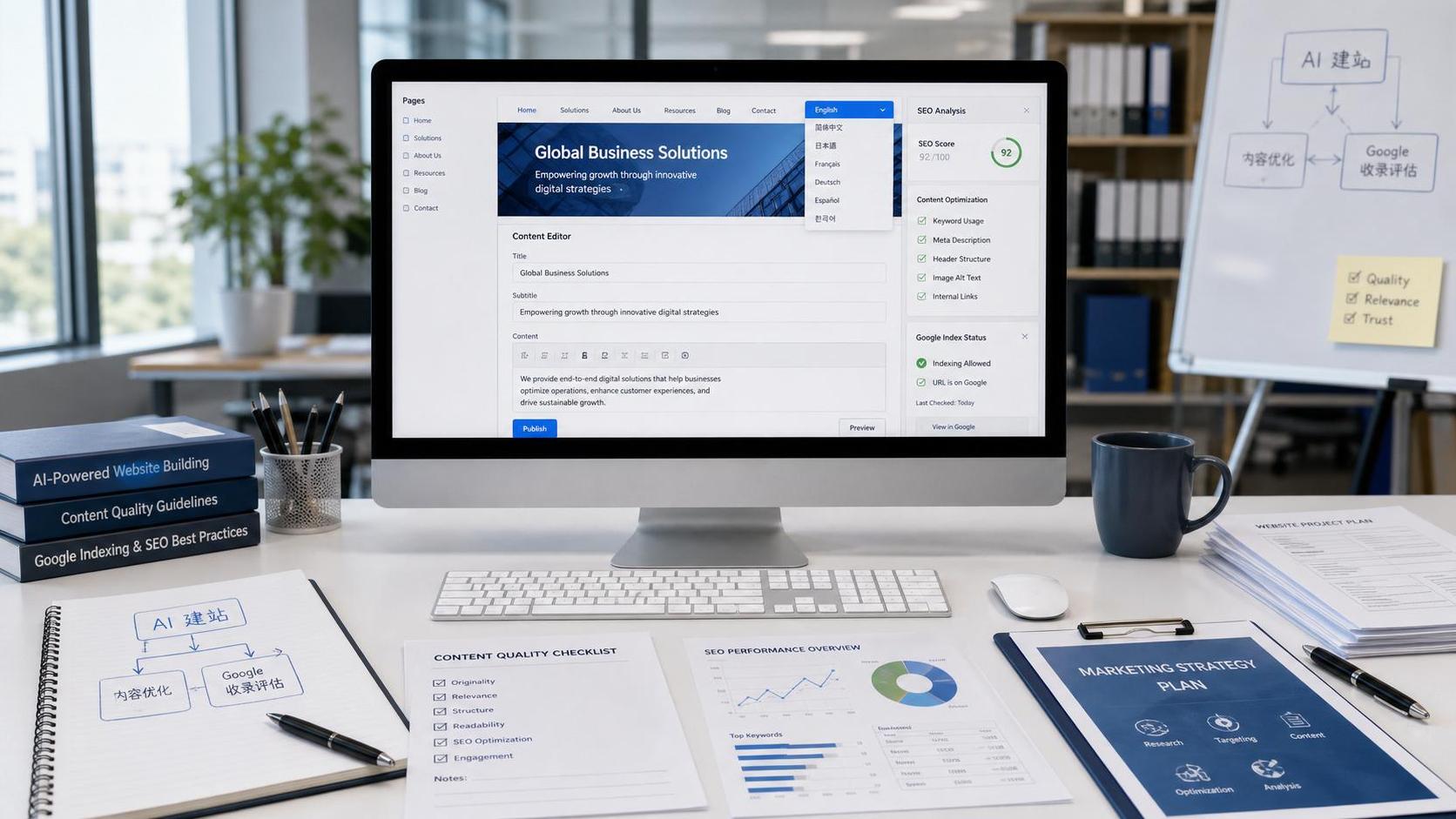
 Can AI-generated website content pass Google review? First clarify the quality standards and risk pointsCan AI-generated website content pass Google review? The key is not AI, but content quality, search intent matching, and site credibility. This article helps you understand Google’s evaluation logic, common risk points, and a more stable integrated website building and SEO optimization solution.
 Is Eyingbao's AI Website Builder Reliable?Is Eyingbao's AI Website Builder reliable? This article provides a comprehensive analysis from the perspectives of technical capabilities, website-building efficiency, multilingual SEO, advertising coordination, and service support to help you determine whether it is truly suitable for overseas marketing and customer acquisition. A must-read before making your choice.