









- Which customer acquisition channels will be affected by cross-border marketing trends in 2026?Sep 06, 2026View details
- Which homogenization risks should be considered in an analysis of the AI-powered website building industry?Aug 30, 2026View details
- How Will AI Marketing Trends 2026 Change Advertising Budget AllocationAug 28, 2026View details
- Is the EV SSL certificate market shrinking or upgrading? How should companies assess certificate procurement?Aug 11, 2026View details
- Why the old AMP SEO 2020 practices no longer work and what has changed in current optimization prioritiesAug 02, 2026View details
- How to Choose Topics for an Industry News Section to Attract More Organic Search TrafficJul 29, 2026View details
How to get started with YouTube marketing in the U.S. market? An analysis of content positioning, ad placement methods, and conversion paths
When marketing YouTube to the US market, why is it important to first clarify "who you're selling to"?
How to get started with YouTube marketing in the US market? Many companies' first reaction is to shoot videos and run ads, but what truly determines the results is not how fast you act, but how accurately you choose the right direction.
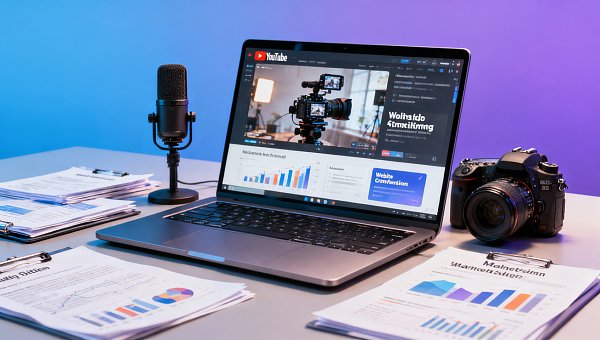
From a practical business perspective, American users are very direct in their judgment of content. Whether a video is valuable or not is basically determined within the first thirty seconds. If the content is wrong, no amount of budget will guarantee conversions.
This also means that when doing YouTube marketing in the US market, the most important thing in the initial stage is not to increase the number of users, but to establish a clear path: content positioning, placement methods, on-the-ground execution, and lead conversion. No link can be broken.
For foreign trade companies, manufacturing plants, and cross-border brands, YouTube is not only a channel for exposure, but also a channel for building trust. Users will judge your professionalism, delivery capabilities, and brand stability through videos.
Step 1: First, determine the content positioning for YouTube marketing in the US market.
Content positioning is not a list of topics, but rather answering three questions: Who are you serving, what problem are you solving, and what actions do you hope users will take after reading the content?
If the target is B2B inquiries, the focus of the content is usually not on being entertaining, but on being professional and credible. Product demonstrations, production processes, application cases, and industry comparisons are often more effective than general entertainment content.
If the goal is to generate sales on a B2C independent website, the content pace needs to be faster. Unboxing, hands-on experience, reviews, and scenario-based displays are more effective at connecting with users and improving ad conversion rates.
It is recommended to divide the content into three categories first to avoid it becoming increasingly disorganized later on.
- Cognitive category: Solving the question of "who you are", such as brand introduction, factory strength, core advantages.
- Education category: Solving the question of "how can you help me", such as user tutorials, industry knowledge, and common misconceptions.
- Conversion-oriented: Solving the question "Why should I contact you now?", such as customer case studies, promotional activities, and solution demonstrations.
The biggest pitfall for YouTube marketing in the US market is having too much content. It seems like you're posting everything, but there's no clear, memorable message. Users won't remember you, and naturally, they won't click on your website or submit inquiries.
Step 2: Choose a suitable delivery method for the current stage.
In the US YouTube marketing market, there are generally two paths: organic growth and advertising. For most companies, a more stable approach is to pursue both paths simultaneously, but with a clear priority.
Organic operations are suitable for accumulating long-term assets. As videos are searched, recommended, and continuously watched, customer acquisition costs decrease over time. The downside is slower scaling and higher requirements for content quality.
Advertising is ideal for quickly validating the market. You can faster identify which headlines, creatives, and demographics are more likely to click and convert, making it easier to scale up your budget later.
In actual deployment, it is recommended to start with these methods.
- Skipable video ads: Suitable for brand exposure and lead generation; the creative should clearly state the core benefits within the first five seconds.
- In-feed video ads: better for testing click intent; cover and title determine open rate.
- Remarketing ads: targeting people who have watched videos or visited websites, typically have higher conversion rates.
If you have a limited budget, don't rush into large-scale scaling. YouTube marketing in the US market is better suited to starting with small-scale testing and then iterating based on views, clicks, and conversion rates.
Step 3: Establish a smooth conversion path from video to inquiry.
For many companies doing YouTube marketing in the US market, the problem isn't traffic, but engagement. People may watch videos and click on ads, but if they don't take any further action after entering the website, leads naturally won't be retained.
Therefore, video is just the entry point; what truly impacts the transaction is the subsequent landing page, form design, trust verification, and follow-up efficiency.
A qualified conversion path should include at least four stages.
- The video provides clear action guidance, such as getting a quote, scheduling a demonstration, and viewing case studies.
- The landing page content should match the video theme to avoid any disappointment for users after they are redirected.
- The page displays credible information, such as customer reviews, case studies, certifications, and delivery processes.
- The forms should be kept as simple as possible, with a low barrier to entry, and a fast response mechanism should be set up.
This step is especially crucial for companies that integrate website and marketing services. Marketing to the US market on YouTube is not a single, isolated effort, but rather the result of a collaborative effort encompassing site development, SEO optimization, ad placement, and data tracking.
The advantage of AI-driven website building and overseas marketing platforms like YiYingBao lies in their integration of website building, advertising, content, SEO, and data analysis. The benefits are direct: every video's traffic is seen, tracked, and continuously optimized.
Step 4: How to create content that better suits the viewing habits of American users?
For YouTube marketing in the US market, the way content is presented is more important than the content itself. Many materials contain good information, but if the narration is too flat and the pacing too slow, users will quickly swipe away.
Expressions more suitable for the US market typically have several distinct characteristics: direct opening, highlighting benefits upfront, specific case studies, clear language, and concise transitions.
You can refer to this content structure.
- Present a question or answer directly within the first five seconds to attract viewers to continue watching.
- The middle section uses demonstrations, data, or scenarios to illustrate the product's value.
- The ending provides a single, clear action, without simultaneously requiring users to follow, leave a message, download, or inquire.
Some teams also incorporate industry methodologies into their channel content, such as creating features on organizational management, training mechanisms, and team growth. If this content is relevant to business scenarios, it can enhance their professional image. Topics like innovative strategies for talent resource development and management in the knowledge economy era are more suitable for inclusion in knowledge extension or case study scenarios, naturally showcasing the brand's comprehensive service capabilities.
Step 5: Use data to determine if YouTube marketing in the US market is the right approach.
When doing YouTube marketing in the US market, you can't just look at the number of views. High views don't guarantee effectiveness; many clicks don't necessarily mean sales. What's truly valuable is the performance data across the entire value chain.
In the initial stage, it is recommended to focus on these indicators.
If a video gets a lot of views but generates few inquiries, it's usually not because there's no market demand, but because there's a break in the conversion process. Either the content is targeting the wrong audience, or the landing page isn't capturing their interest.
Common pitfalls in the initial stage, and more stable coping methods.
YouTube marketing in the US market may seem to have low barriers to entry, but in reality, common problems are quite common.
- They only focused on playback, ignoring conversion rates. As a result, the channel was busy, but business didn't grow.
- The videos and the official website are disconnected. Users are drawn in by the content but can't find the next step.
- The creative materials haven't been updated in a long time. Once ad fatigue sets in, costs will rise significantly.
- There is a lack of localization. While the information is complete, it doesn't align with the viewing habits of American users.
A more conservative approach is to view YouTube marketing in the US market within the overall overseas customer acquisition system. Site structure, keyword strategy, ad accounts, audience targeting, and remarketing mechanisms all need to be planned in tandem.
Once content, website, and advertising form a closed loop, YouTube will become more than just a platform for posting videos; it will become a growth portal that continuously generates inquiries and orders.
Conclusion: First, establish the smallest closed loop, then gradually scale up the effectiveness of YouTube marketing in the US market.
Returning to the initial question, how do you get started with YouTube marketing in the US market? The answer isn't complicated: first, define your content positioning, then choose the appropriate delivery method, and finally, steadily connect video traffic to your website and conversion efforts.
For companies aiming for long-term overseas growth, the most worthwhile investment isn't in a single viral hit, but in a replicable methodology. As long as the content direction is accurate, data feedback is rapid, and the workflow is smooth, YouTube marketing in the US market can gradually transform from a trial channel into a stable source of customer acquisition.
Starting with a specific audience segment, three types of content, and a single landing page is often more effective than launching a large-scale test from the outset. This approach makes it easier to identify the problems and achieve results.
Related Articles



Related Products
 Yiyingbao SaaS Intelligent Website Building and Marketing SystemYiyingbao SaaS Intelligent Website Building and Marketing System, AI-powered no-code website building, rapid creation of multilingual B2B international websites in 10 minutes, global server acceleration, AI-powered SEO optimization, helping businesses connect efficiently with global markets. The perfect integration of technology and operation makes building an international trade website remarkably simple
 AI+SEM Intelligent Advertising Marketing SystemAI+SEM drives intelligent ad creation, empowering full-funnel precision advertising marketing. The system automatically generates weekly/monthly reports, AI recommends keywords and target countries, monitors core metrics in real-time with intelligent alerts, and enables one-click high-conversion ad solutions to help quickly acquire customers and improve ROI.
 AI+SEO Dual-Engine System Optimization ServicesYiyingbao’s AI+SEO dual-engine optimization system helps foreign trade enterprises acquire high-quality organic traffic through AI-powered keyword research, content generation, and comprehensive technical optimization, significantly improving search rankings and conversion rates.
 AI+SNS Social Media Marketing SystemYingbao AI+SNS Social Media Marketing System - Precision social capture for the social media era. Supports one-click content synchronization across major platforms like Facebook and LinkedIn. AI intelligently rewrites posts for enhanced relevance. 24/7 AI customer service and user profiling analysis empower businesses to efficiently expand into global markets.
 AI+SEO营销解决方案易营宝AI+SEO营销解决方案,通过AI批量写作、智能生成TDK、精准关键词扩词等功能,全面优化网站SEO效果,提升流量与转化率。助力企业构建高效智能网站新生态。
 AI+SEM Advertising Marketing SolutionsAI+SEM Advertising Marketing Solution leverages AI technology to deeply empower SEM ad campaigns. It automatically generates weekly/monthly reports using AI, presenting account data across multiple dimensions for comprehensive insights into campaign performance and trends. The system precisely recommends keywords and target countries, intelligently generates high-conversion ad copy, and enables one-click activation of efficient campaign plans to help businesses rapidly acquire customers. Simultaneously, it monitors core metrics in real time, intelligently identifies abnormal fluctuations, and issues timely alerts to ensure stable, high-return advertising results.
 Domain Name ServicesEasyWin provides professional domain name services, including intelligent queries, one-stop registration, brand protection, and full lifecycle management, helping businesses build a digital brand image.
 EasyOperate B2C Cross-Border E-Commerce Platform & Independent WebsiteEasyStore B2C Cross-border E-commerce Independent Store is an intelligent website building and cross-border e-commerce integrated solution independently developed by EasyStore Information Technology (Beijing) Co., Ltd. The system is specially designed for small and medium-sized as well as large export enterprises, integrating 'website building, operation, marketing, advertising, and conversion' into one, helping enterprises quickly establish cross-border e-commerce independent stores to achieve brand globalization and global sales growth.
The platform supports multiple languages, multiple currencies, and multi-channel marketing, with built-in AI intelligent translation and SEO optimization systems, suitable for mainstream markets such as Southeast Asia, Europe and America, Latin America, and the Middle East, assisting Chinese manufacturing enterprises in efficiently deploying international e-commerce strategies. SSL证书易营宝提供专业SSL安全证书服务,包括单域名和泛域名证书,确保网站数据传输加密、身份验证和完整性保护,助力企业建立安全可信的在线业务环境。









