I. Definition and Business Value of YouTube Marketing
YouTube marketing refers to the systematic activities through which companies communicate product information to target markets and generate business opportunities through channel operations, video content publishing, search optimization, paid advertising, creator collaborations, and off-site conversion tracking. For B2B foreign trade companies, it serves both as a showcase and as a trust-verification channel before purchasing decisions.
Compared with text-and-image communication, video can more intuitively demonstrate equipment operation, manufacturing processes, material details, team capabilities, and after-sales procedures, making it suitable for explaining complex products. By reviewing watch duration, demonstration completeness, and comment interactions, buyers can initially assess a supplier's level of professionalism and communication costs.
Effective YouTube marketing should not focus solely on views, but should establish metrics based on target countries, buyer roles, product margins, and sales cycles. Brand exposure can focus on reach and viewing quality, while lead generation should prioritize video-driven traffic, form submissions, valid inquiry rates, and subsequent contribution to closed deals.
II. Technical Principles of Platform Distribution and Video Conversion
YouTube typically distributes content based on a combination of video topic relevance, titles and descriptions, subtitles, viewing behavior, engagement signals, and users' historical preferences. Companies should first define the specific problem a video addresses, then configure accurate titles, chapters, subtitles, and description links to avoid a disconnect between title promises and content.
The beginning of a video should quickly explain the application scenario, core problem, and verifiable product value; the middle section should address questions through factories, samples, testing, or installation processes; and the ending should provide clear next steps such as catalog downloads, quotation requests, or consultation bookings. Stacking corporate slogans too early often reduces effective viewing.
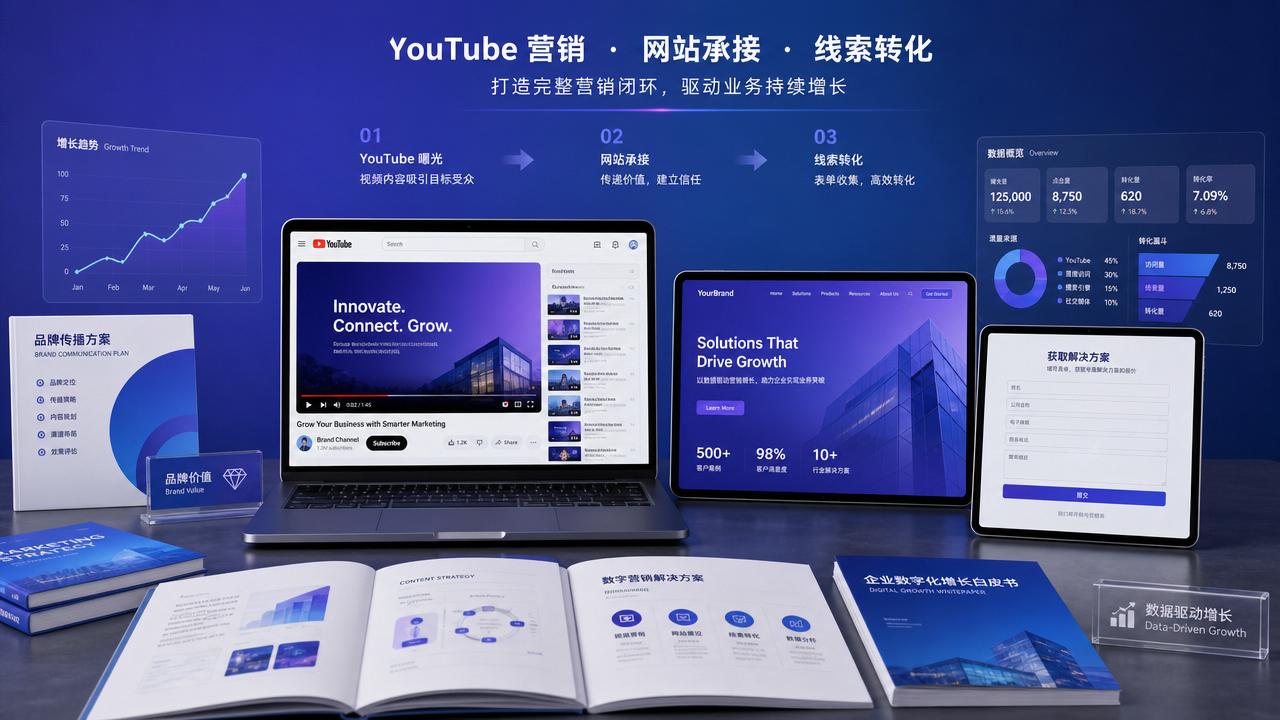
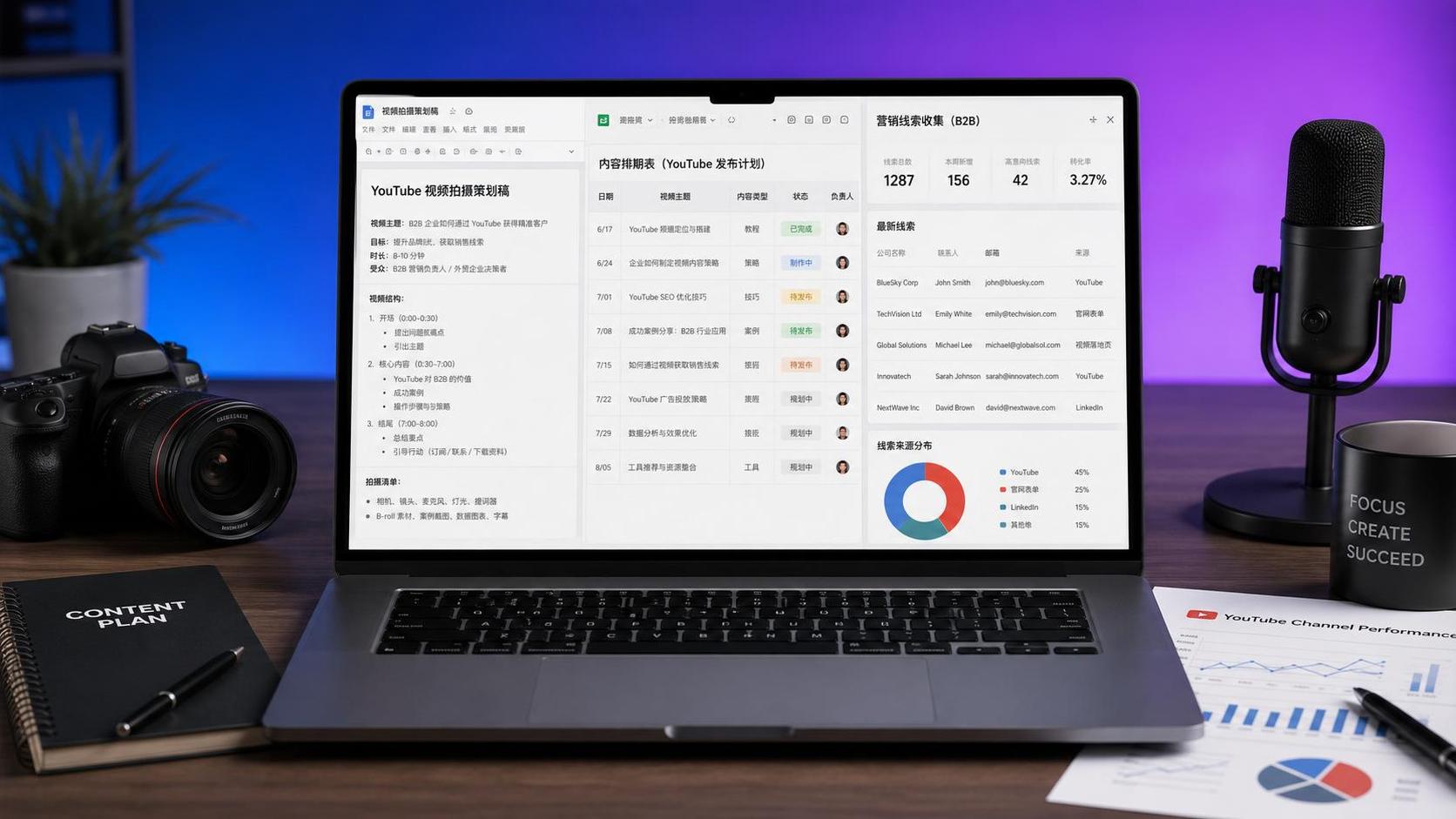
Conversion tracking should connect videos, advertising accounts, independent website landing pages, and sales follow-up records. Parameterized links can be used to distinguish organic channel traffic, remarketing traffic, and advertising traffic, while reviews should be conducted by inquiry source, region, product model, and deal stage to reduce the bias of assessing performance based only on views.
III. Common Content and Advertising Categories for Companies
By marketing objective, YouTube marketing can be divided into brand awareness, product education, demand capture, and customer retention content. Brand videos are suitable for establishing a corporate image, product demonstrations for explaining specifications and advantages, application solution videos for addressing clear demands, and customer Q&A for shortening repeated communication time.
Manufacturers can prioritize videos on factory inspections, production line capabilities, equipment operation, installation and maintenance, comparative testing, industry applications, and frequently asked questions. For products with high order values or long decision cycles, key processes and limitations should be retained, avoiding the presentation of results alone without the evidence buyers care about.
At the advertising level, companies can select reach-focused video ads, traffic-driving ads, and remarketing ads according to their objectives. New markets should first test the alignment of audiences, creatives, and landing pages; for audiences who have already visited the website or watched videos, more specific cases, quotation consultations, or product materials can be used to gradually increase lead intent.
IV. Suitable Companies, Scenarios, and Website Conversion Standards
YouTube marketing is particularly suitable for industries that need to demonstrate capabilities, such as machinery and equipment, laser engraving machines, steel, chemicals, new energy, automotive parts, medical products, furniture, and agricultural food. It is also suitable for OEM, ODM, foreign trade companies, and businesses expanding their brands overseas. The more complex the product and the higher the purchasing risk, the more evident the value of video becomes in building understanding and trust.
Videos should not direct users straight to a general-information homepage, but rather to a product page, solution page, or inquiry page consistent with the video topic. The page should clearly provide specifications, applications, contact channels for delivery-time discussions, company qualification information, cases, and contact methods such as WhatsApp and email, while maintaining a smooth loading and form-filling experience on mobile devices.
Yiyingbao can combine YouTube marketing with multilingual independent websites, product pages, forms, and overseas marketing operations. Its responsive website-building, AI content assistance, and global node deployment capabilities are suitable for companies that need unified management of video traffic acquisition and website conversion; actual access speed and performance should still be tested based on the target region, page content, and network environment.
V. Service Selection, Implementation Process, and Quality Control
When selecting YouTube marketing services, companies should first confirm whether the service provider understands the target industry, major export countries, and B2B sales process. Buyers need to clarify who plans and produces the videos, ownership of material copyrights, channel permissions, advertising account ownership, data access permissions, and monthly deliverables, so that assets can continue to be used after the cooperation ends.
The implementation process usually includes customer research, keyword and audience segmentation, topic scheduling, script review, filming and editing, subtitle localization, publishing optimization, advertising testing, and data reviews. Where equipment specifications, safe operation, or compliance statements are involved, the company's technical, quality, or sales managers should review them to ensure that video descriptions are consistent with actual delivery.
Quality control should not focus only on visual polish, but also check audio clarity, subtitle accuracy, consistency of brand information, accuracy of product models, link accessibility, and whether mobile landing pages function properly. Yiyingbao's AI-powered website-building and multilingual content capabilities can reduce repetitive work involved in content updates and multi-site maintenance, but manual verification remains a critical step.
VI. Total Cost of Ownership and Return on Investment Evaluation
The total cost of ownership for YouTube marketing usually consists of strategic research, filming or material preparation, editing and subtitles, multilingual localization, channel operations, advertising budgets, independent website page development, data tools, and sales follow-up. On-site filming for industrial products, complex animation, and multilingual versions can significantly affect investment per video.
When evaluating returns, short-term and long-term value should be differentiated according to the sales cycle. In the short term, companies can assess valid visits, forms, appointments, and the cost of qualified inquiries; in the medium and long term, they should observe whether videos continuously generate search traffic, remarketing audiences, growth in branded keywords, and sales conversions. Measuring performance only by cost per click can easily overlook the cumulative value of content assets.
Companies with limited budgets can first build a content library around products with high margins, high repurchase rates, or clearly defined inquiry value, and then add advertising investment to better-performing videos. When websites, advertising, and social media are procured separately, coordination and data fragmentation costs should also be included; the value of integrated operations lies in making it easier to continuously verify the complete path from viewing to inquiry.
VII. 2026 Trends and Recommendations for Ongoing Operations
YouTube marketing in 2026 will place greater emphasis on content discoverability, verifiability, and cross-channel reuse. Short videos are suitable for rapid reach and topic testing, while long videos are suitable for explaining complex solutions; both should serve the same product theme and enhance information completeness through subtitles, chapters, description pages, and independent website content.
Generative tools can assist with initial script drafts, multilingual subtitles, title variations, and content organization, but they cannot replace judgment regarding product facts, cultural context, and purchasing decisions. Companies should accumulate authentic factory materials, technical Q&A, application cases, and after-sales knowledge so that their channels become content assets that can be continuously updated and verified by customers over the long term.
It is recommended to review topic coverage, viewing retention, country distribution, website conversion, and sales feedback quarterly, and remove content that cannot support business objectives. Yiyingbao has served multiple industries, including machinery, new energy, and chemicals. Its website development, Google advertising, social media operations, and GEO content operations can serve as collaborative directions, while companies should still determine their pace and investment based on their own market data.
 How YouTube videos can generate inquiriesYouTube not only boosts brand exposure but also creates an measurable lead growth path through content strategy, website landing pages, data tracking, and remarketing. Learn how businesses can use YouTube videos to reduce communication costs, improve lead quality, and choose integrated marketing services for sustained conversions.
 How to do YouTube marketing for B2B conversion? Topic selection, publishing cadence, and lead handoff methodsHow to do YouTube marketing for B2B conversion? This article breaks down practical methods for integrating website and marketing operations, from topic design and publishing cadence to lead handoff, helping you improve lead generation, inquiry quality, and long-term customer acquisition efficiency.
 Is YouTube marketing more suitable for brand exposure or lead generation? What are the criteria for making the judgment?Is YouTube marketing more suitable for brand exposure or lead generation? Based on the website + marketing services integration scenario, this article breaks down three key criteria: audience stage, conversion capacity, and data attribution, helping businesses clarify investment direction and improve conversion efficiency.
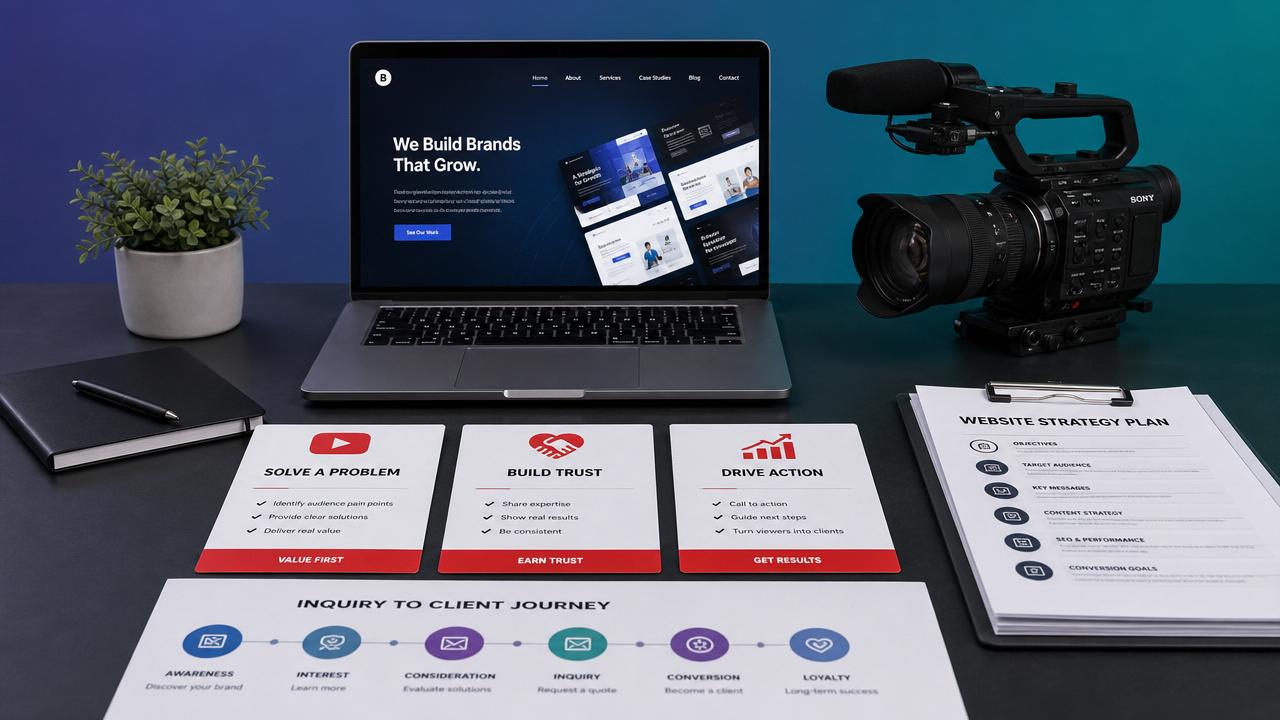
 How to choose YouTube marketing content topics? Three types of high-conversion video ideas for overseas customersHow to choose YouTube marketing topics to more easily get overseas customer inquiries? This article focuses on three types of high-conversion video ideas: problem-solving, trust-building, and action-driving, and explains how to align them with your website, SEO, and landing pages to improve traffic acquisition and conversion efficiency.
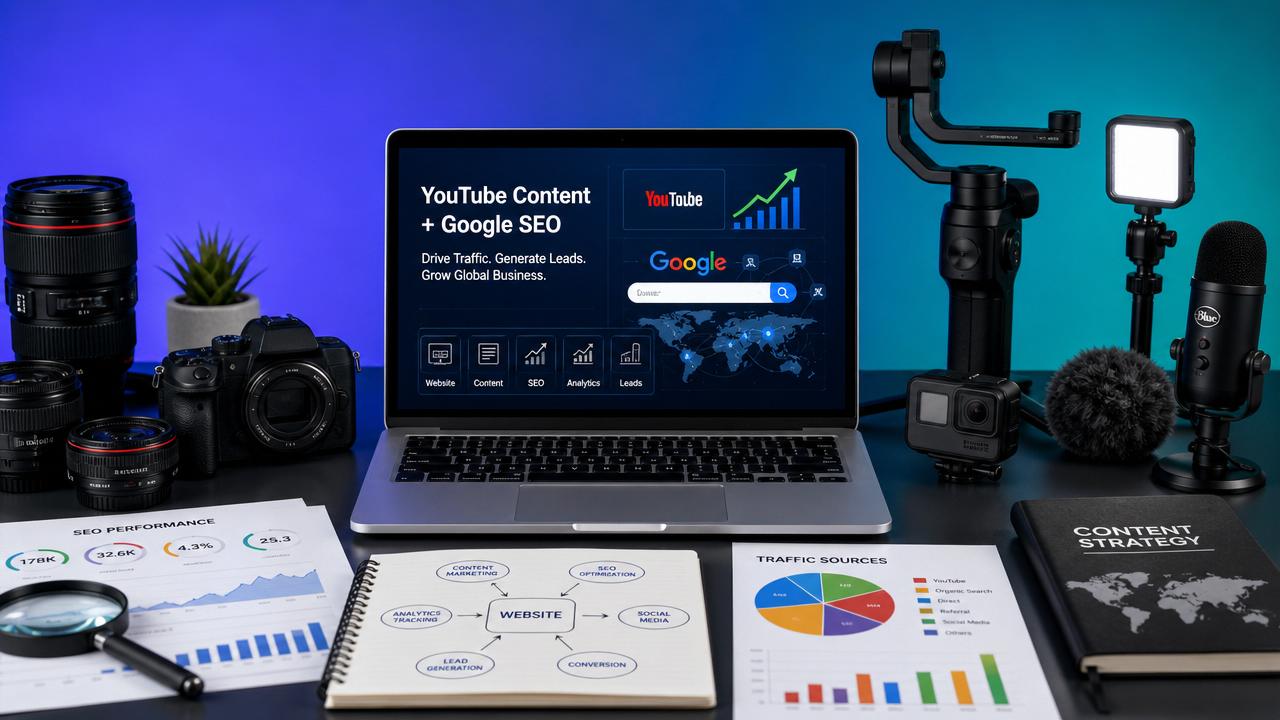
 How should YouTube marketing and Google SEO work together to improve the quality of overseas inquiries?How can YouTube marketing work in synergy with Google SEO to improve the quality of overseas inquiries? This article breaks down the path to high-quality lead generation from keyword strategy, content alignment, website conversion, and data metrics, helping businesses acquire more accurate overseas customers.
 How to get started with YouTube marketing in the U.S. market? An analysis of content positioning, ad placement methods, and conversion pathsHow to get started with YouTube marketing in the U.S. market? This article breaks down the U.S. users' viewing habits and data optimization strategies from content positioning, ad placement methods to landing page conversion paths, helping businesses build a stable customer acquisition loop more quickly.