









- China-Europe Railway Express and CIIE Hold Business Matchmaking Event, Focusing on Cross-Border E-commerce B2B ExportsNov 07, 2026View details
- China’s Ministry of Commerce Responds to Additional Charges on Low-Value Imports Imposed by the EUNov 06, 2026View details
- Two Internet Development Reports Released at the 2026 World Internet ConferenceNov 05, 2026View details
- Internet Business Revenue of Enterprises Above the Designated Size Reached RMB 1.716 Trillion in the First Three Quarters, with Profits Up 17.6%Nov 05, 2026View details
- Shopify's Third-Quarter Revenue and GMV Fall Short of Expectations, Sending Shares Tumbling Before the Market OpensNov 04, 2026View details
- Temu Sellers See a Decline in Traffic as the Platform’s Traffic Allocation ShiftsNov 04, 2026View details
Can Social Media Pages Help Exporters Generate Overseas Inquiries?
Can social media pages help foreign trade companies generate inquiries? Yes, but setting up a page and regularly posting products does not mean customers will get in touch. What matters is whether the content reaches relevant buyers, whether the page builds trust, and whether interested prospects can easily find product information and a way to request a quote. For most foreign trade companies, social media is better suited to lead generation and supporting sales than to handling the entire sales process on its own.
Does getting no direct messages mean the page is useless?
Not necessarily. For businesses dealing in industrial equipment, components, custom manufacturing, and similar products, buyers usually do not place an order after seeing a single post. They may first view a manufacturing process, then read the company profile, search for the company name, visit its independent website, and eventually request a quote by email. Social media may have influenced their purchasing decision without being the source of their final visit.
Conversely, a high number of likes does not necessarily indicate purchasing value. If most people engaging with the page are industry peers, job seekers, or users from markets outside your target areas, a lot of activity does not prove that your lead generation is effective. More useful than follower count is whether people in relevant roles visit the page, whether they view specific product pages, and whether inquiries include details such as specifications, quantities, intended use, and delivery time.
Which platform should you choose? Start with your customers, not the traffic
For businesses targeting corporate buyers, engineers, and distributors, LinkedIn may be a priority to assess. For products that benefit from visual presentation and businesses seeking to reach distributors or local operators, Facebook may be worth testing. For categories such as home furnishings and apparel that rely on visual communication, photo- and short-video platforms may also be considered. These are only screening guidelines, not guarantees of platform performance.
A more practical approach is to find out which platforms your existing customers and target companies use, what they discuss, and which roles take part. When resources are limited, it is more worthwhile to build a strong presence on one primary platform than to open several accounts and leave them inactive over time. A company page presents official information, but reaching people may also require employee participation, industry engagement, or paid promotion. Do not assume that buyers will see a post just because it has been published.
What content can prompt potential buyers to ask questions?
A common ineffective approach is to repeatedly post product photos with claims like “high quality and competitive prices.” Buyers still do not know whether the product is right for them after viewing the post, so they have little reason to continue the conversation. Content should help customers assess their options, not merely prove that the company is active.
For example, a custom sheet metal fabricator could explain which materials and surface finishes suit different operating conditions and what drawing information is needed before providing a quote, rather than just showing finished products. A packaging machinery manufacturer could demonstrate changeover procedures, suitable packaging materials, and maintenance access points. When discussing capacity, precision, or certifications, specify the test conditions or applicable scope; a brief demonstration is not a substitute for complete specifications.
Ideally, each post should give customers a specific reason to get in touch, such as “Share your material dimensions so we can confirm compatibility,” rather than simply saying “Contact us.” Factory operations, inspection procedures, and delivery preparations are also worth showing, but customer drawings, order details, and brand logos must be concealed unless permission has been granted.
Why do visitors still fail to inquire after clicking through?
The problem often lies in the transition between social media and the website: a post discusses a specific product, but its link leads to a generic homepage; customers browse on their phones, but the page loads slowly or the form is difficult to complete; or the product page has photos but no specification ranges or customization details. The content attracts interest, but the next step fails to capture it.
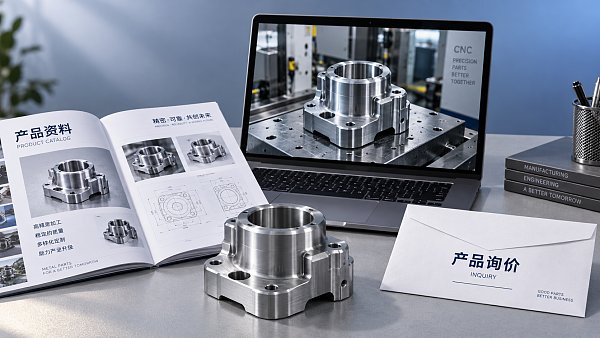
A smoother journey takes visitors from product content to the relevant product page, and from application-related content to the relevant solutions page, followed by an inquiry form, company email address, or instant messaging option commonly used in the target market. The form should first collect only the information needed to assess the requirement; there is no need to ask customers to complete a full purchasing profile from the outset.
This is also why website development and marketing need to be planned together. 易营宝 offers services including intelligent website building, multilingual websites, search optimization, overseas social media operations, and advertising. When evaluating an integrated solution of this kind, companies should focus on whether content, landing pages, lead records, and sales follow-up work together—not just compare how many posts are published each month.
How long does it take to assess results, and should you run ads?
It is not advisable to promise inquiries within a fixed number of days. The validation timeline varies for new product categories, equipment with long purchasing cycles, and standard consumables. Set review milestones at the outset and monitor reach among target audiences, qualified visits, inquiry quality, and subsequent quotation activity. Use links with source-tracking parameters alongside website analytics tools, and have sales staff record how customers learned about the company to reduce reliance on platform analytics alone.
If the content is already prompting inquiries from relevant audiences but organic reach is insufficient, you can test advertising on a small scale. If clicks are coming in but inquiries are scarce, first check the landing page and product fit. Advertising can increase opportunities for visits, but it cannot replace clear product information or fix a sales process in which no one responds.
Before getting started, choose one priority market, one main product to promote, and one primary platform. Prepare the corresponding landing page and contact details, and assign someone to respond. Ultimately, whether a page is worth continued investment depends on whether it generates purchasing conversations that can be moved forward—not on how busy the page looks.
Related Articles
 Google, Meta, and TikTok Sue over California Law on Social Media Use by Teens
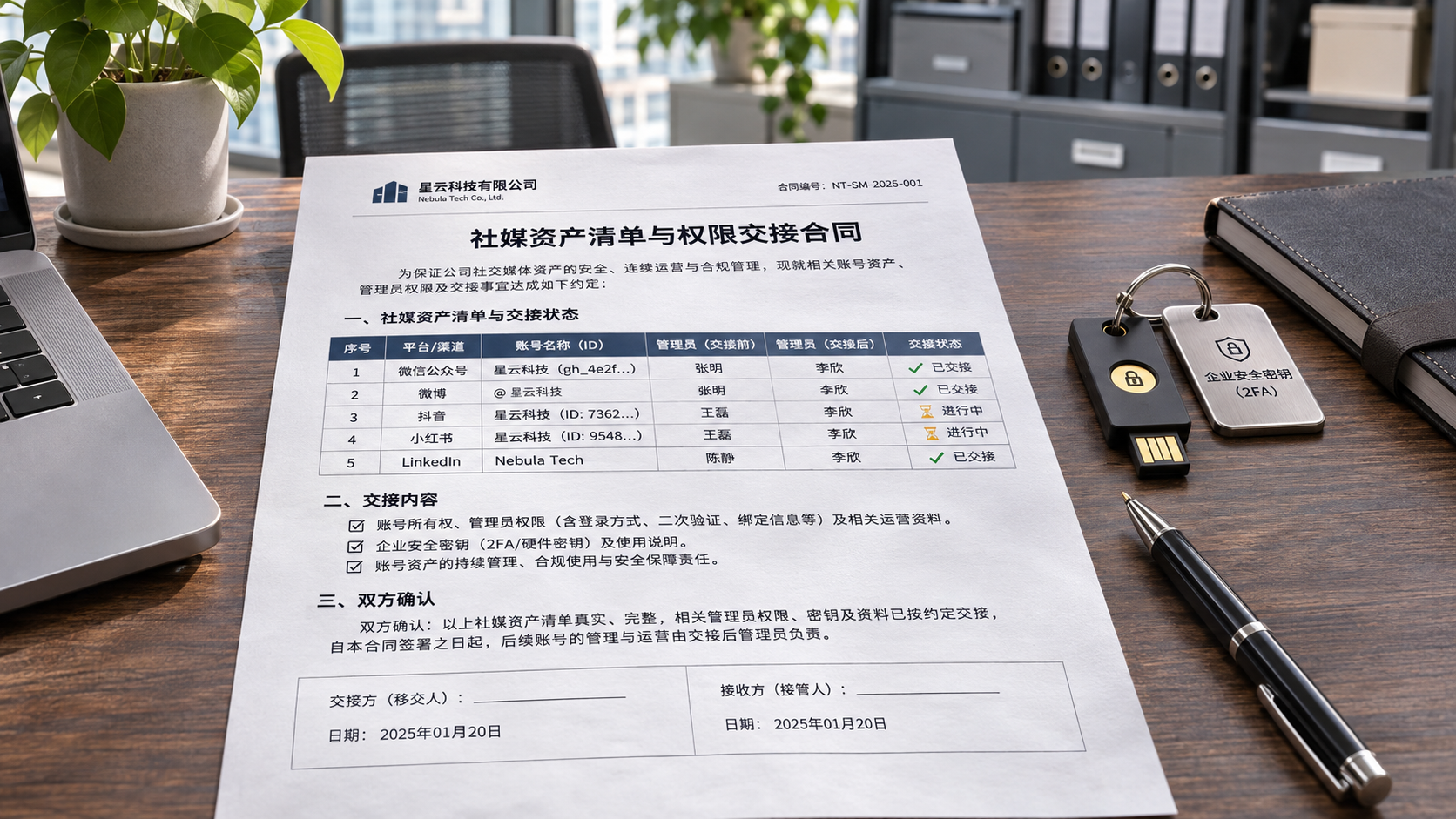
 How Should Account Ownership Be Defined in an Outsourced Overseas Social Media Marketing System?
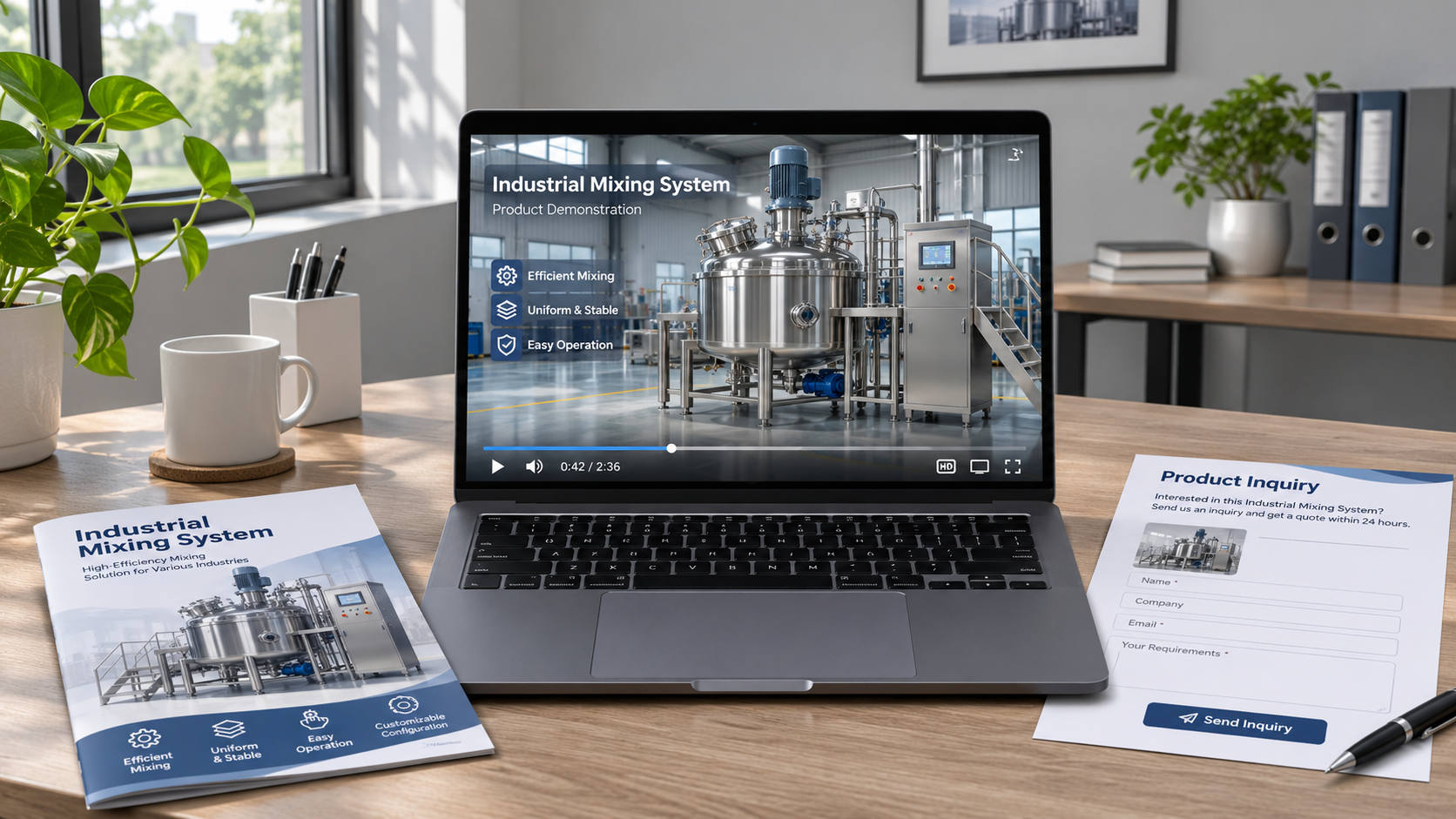
 How Can YouTube Video Marketing Measure Traffic to Your Website?

Related Products
 Yiyingbao SaaS Intelligent Website Building and Marketing SystemYiyingbao SaaS Intelligent Website Building and Marketing System, AI-powered no-code website building, rapid creation of multilingual B2B international websites in 10 minutes, global server acceleration, AI-powered SEO optimization, helping businesses connect efficiently with global markets. The perfect integration of technology and operation makes building an international trade website remarkably simple
 AI+SEM Intelligent Advertising Marketing SystemAI+SEM drives intelligent ad creation, empowering full-funnel precision advertising marketing. The system automatically generates weekly/monthly reports, AI recommends keywords and target countries, monitors core metrics in real-time with intelligent alerts, and enables one-click high-conversion ad solutions to help quickly acquire customers and improve ROI.
 AI+SEO Dual-Engine System Optimization ServicesYiyingbao’s AI+SEO dual-engine optimization system helps foreign trade enterprises acquire high-quality organic traffic through AI-powered keyword research, content generation, and comprehensive technical optimization, significantly improving search rankings and conversion rates.
 AI+SNS Social Media Marketing SystemYingbao AI+SNS Social Media Marketing System - Precision social capture for the social media era. Supports one-click content synchronization across major platforms like Facebook and LinkedIn. AI intelligently rewrites posts for enhanced relevance. 24/7 AI customer service and user profiling analysis empower businesses to efficiently expand into global markets.
 AI+SEO营销解决方案易营宝AI+SEO营销解决方案,通过AI批量写作、智能生成TDK、精准关键词扩词等功能,全面优化网站SEO效果,提升流量与转化率。助力企业构建高效智能网站新生态。
 AI+SEM Advertising Marketing SolutionsAI+SEM Advertising Marketing Solution leverages AI technology to deeply empower SEM ad campaigns. It automatically generates weekly/monthly reports using AI, presenting account data across multiple dimensions for comprehensive insights into campaign performance and trends. The system precisely recommends keywords and target countries, intelligently generates high-conversion ad copy, and enables one-click activation of efficient campaign plans to help businesses rapidly acquire customers. Simultaneously, it monitors core metrics in real time, intelligently identifies abnormal fluctuations, and issues timely alerts to ensure stable, high-return advertising results.
 Domain Name ServicesEasyWin provides professional domain name services, including intelligent queries, one-stop registration, brand protection, and full lifecycle management, helping businesses build a digital brand image.
 EasyOperate B2C Cross-Border E-Commerce Platform & Independent WebsiteEasyStore B2C Cross-border E-commerce Independent Store is an intelligent website building and cross-border e-commerce integrated solution independently developed by EasyStore Information Technology (Beijing) Co., Ltd. The system is specially designed for small and medium-sized as well as large export enterprises, integrating 'website building, operation, marketing, advertising, and conversion' into one, helping enterprises quickly establish cross-border e-commerce independent stores to achieve brand globalization and global sales growth.
The platform supports multiple languages, multiple currencies, and multi-channel marketing, with built-in AI intelligent translation and SEO optimization systems, suitable for mainstream markets such as Southeast Asia, Europe and America, Latin America, and the Middle East, assisting Chinese manufacturing enterprises in efficiently deploying international e-commerce strategies. SSL证书易营宝提供专业SSL安全证书服务,包括单域名和泛域名证书,确保网站数据传输加密、身份验证和完整性保护,助力企业建立安全可信的在线业务环境。









